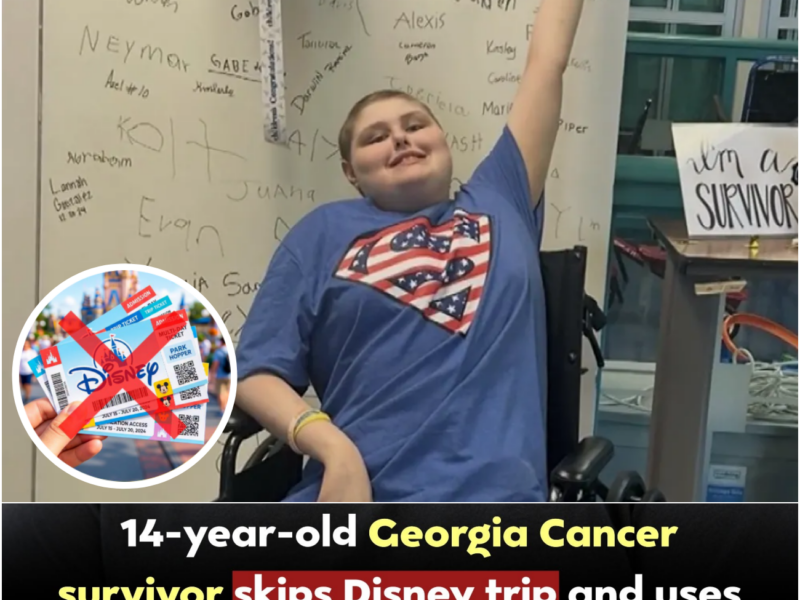
14-Year-Old Cancer Survivor Skips Disney Dream to Use Make-A-Wish Feeding Over 300 Homeless People Instead
Instead of Disney, a 14-Year-Old Cancer Survivor Chose to Feed 300+ People Experiencing Homelessness
At twelve years old, Jude Baker learned a truth that most people only encounter much later in life: the world can change without warning, and it rarely asks permission before it does.
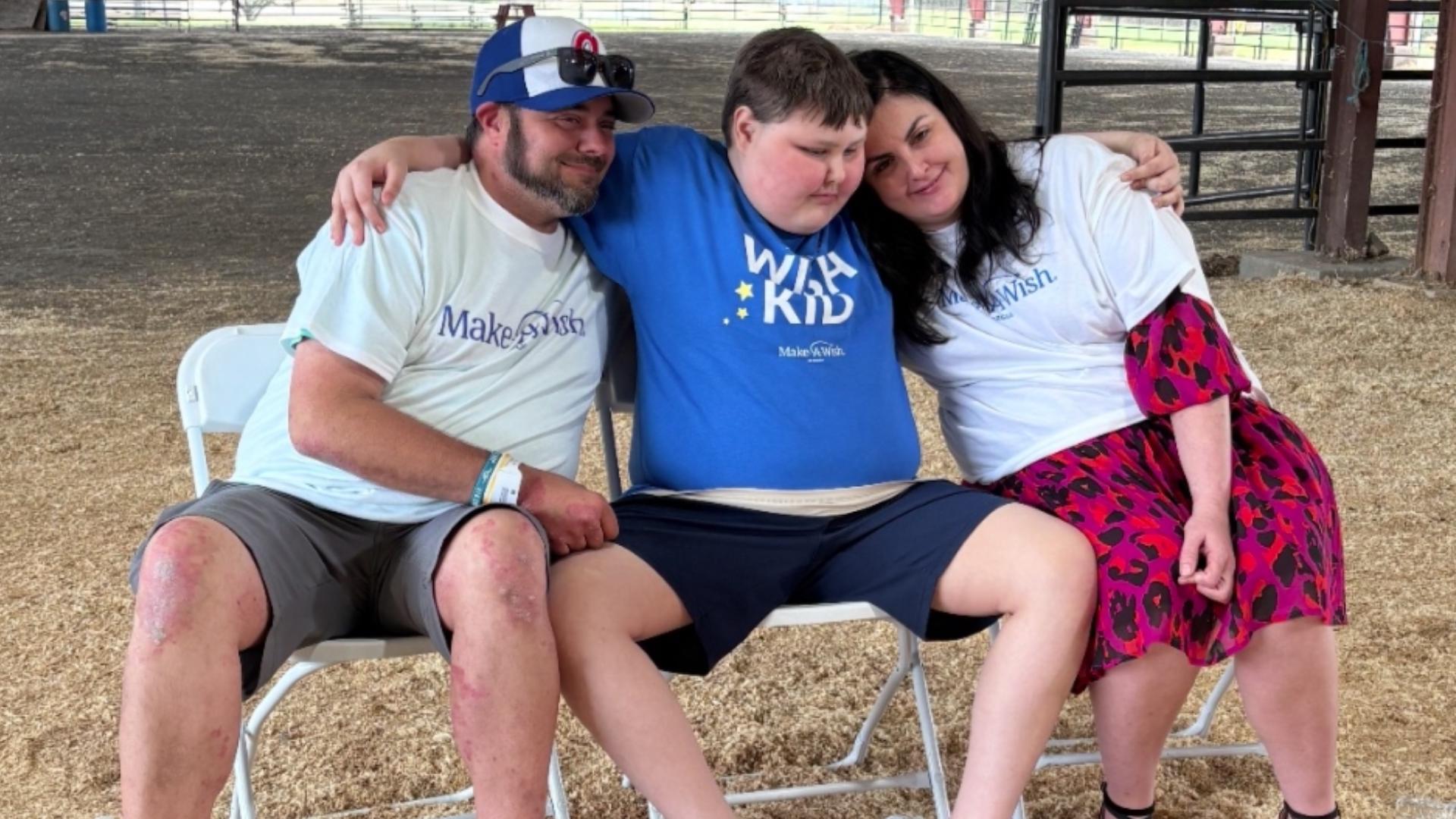
It began with what seemed like a lingering ache in his leg after soccer practice. At first, it was dismissed as something ordinary—growing pains, maybe a strain from running too hard. Jude himself didn’t think much of it. He was active, social, and used to brushing off small discomforts in favor of staying on the field with his friends.
But the pain didn’t go away.
It deepened instead, settling into something sharper, more persistent. Some nights it throbbed so intensely that sleep came in fragments. His parents noticed the shift before he did. There was a change in the way he moved, a slight hesitation when climbing stairs, a growing reluctance to join in physical activities he once enjoyed without thought.
A visit to the doctor was meant to provide reassurance. Instead, it opened a door into an entirely different reality.
After a series of tests, scans, and consultations, the word that emerged carried weight even before anyone fully understood it: **cancer**.
More specifically, Ewing sarcoma.
For Jude’s family, the diagnosis did not arrive with clarity. It arrived with confusion, fear, and a long list of questions that no one could immediately answer. What they did understand, however, was that their lives had just been divided into two parts: before and after.
At twelve, Jude was too young to fully grasp the long arc of what lay ahead, but old enough to sense the seriousness in the room when doctors spoke. He noticed the way his parents held themselves tighter, the way conversations slowed when he entered, and the way everyone around him seemed to be balancing hope and fear in equal measure.
Treatment began quickly.
Chemotherapy became a central structure of his life—appointments replacing school days, hospital corridors replacing hallways, and the steady rhythm of medical routines replacing the normal unpredictability of childhood. The first sessions were the hardest not only physically, but emotionally. His body reacted in ways he couldn’t control. Fatigue settled in heavily. His appetite changed. His hair began to thin.
But perhaps more difficult than the physical effects was the emotional isolation that came with long hours in hospital rooms. While other children continued their routines outside, Jude’s world shrank into scheduled treatments and recovery periods. Time felt different inside those walls—measured not in weeks or months, but in cycles of treatment and rest.
During this period, Jude’s awareness of the world began to shift in subtle but significant ways.
On the way to and from the hospital, he often looked out the car window. Atlanta’s streets were busy, full of motion and urgency. People hurried along sidewalks, carried groceries, waited at intersections, or sat quietly beneath overpasses. Among them were individuals experiencing homelessness—people holding signs, sitting with belongings gathered beside them, or simply existing in spaces where the world moved around them rather than with them.
At first, these were just passing images. But over time, they became something harder to ignore.
There was one man he remembered clearly: sitting near a busy intersection, wrapped in layers of clothing that didn’t seem sufficient for the weather. Jude saw him several times during different trips. Each time, the man was in roughly the same place, as if anchored there by circumstances beyond his control.
Jude didn’t have words for what he felt when he saw scenes like this. It wasn’t pity exactly. It was something closer to recognition—a quiet awareness that suffering existed in many forms, and that not all of it was visible inside hospital walls.
As his own treatment continued, that awareness deepened.
Chemotherapy sessions were long and draining. There were days when he felt too weak to speak much, days when even sitting upright required effort. Yet in those same moments, his mind often drifted back to what he had seen outside—the contrast between his structured care environment and the uncertainty of life on the streets.
He began to notice details others might overlook: how people waited in lines at shelters, how some carried worn backpacks, how others moved slowly as if conserving energy for an uncertain next moment. These observations accumulated quietly, shaping a growing sensitivity within him.
Jude was not alone in his fight. His family remained present through every stage of treatment, rotating hospital visits, managing logistics, and trying to maintain a sense of normalcy. Nurses and doctors became familiar faces. Over time, even the medical environment began to feel less foreign, though never entirely comfortable.
Still, cancer has a way of making childhood feel both accelerated and suspended at the same time. While physically Jude was going through experiences far beyond what most twelve-year-olds face, emotionally he was still learning how to interpret them.
:max_bytes(150000):strip_icc():focal(781x343:783x345)/Jude-Baker-1-031226-809538b0dc874f24b6501af454376942.jpg)
It was during one of his later treatment cycles that a significant milestone arrived: remission.
The words came carefully from his medical team, framed with caution and clarity. The cancer was no longer active. Treatment had done its work. For Jude and his family, the moment was overwhelming—not because everything was suddenly perfect, but because a long and uncertain chapter had reached a turning point.
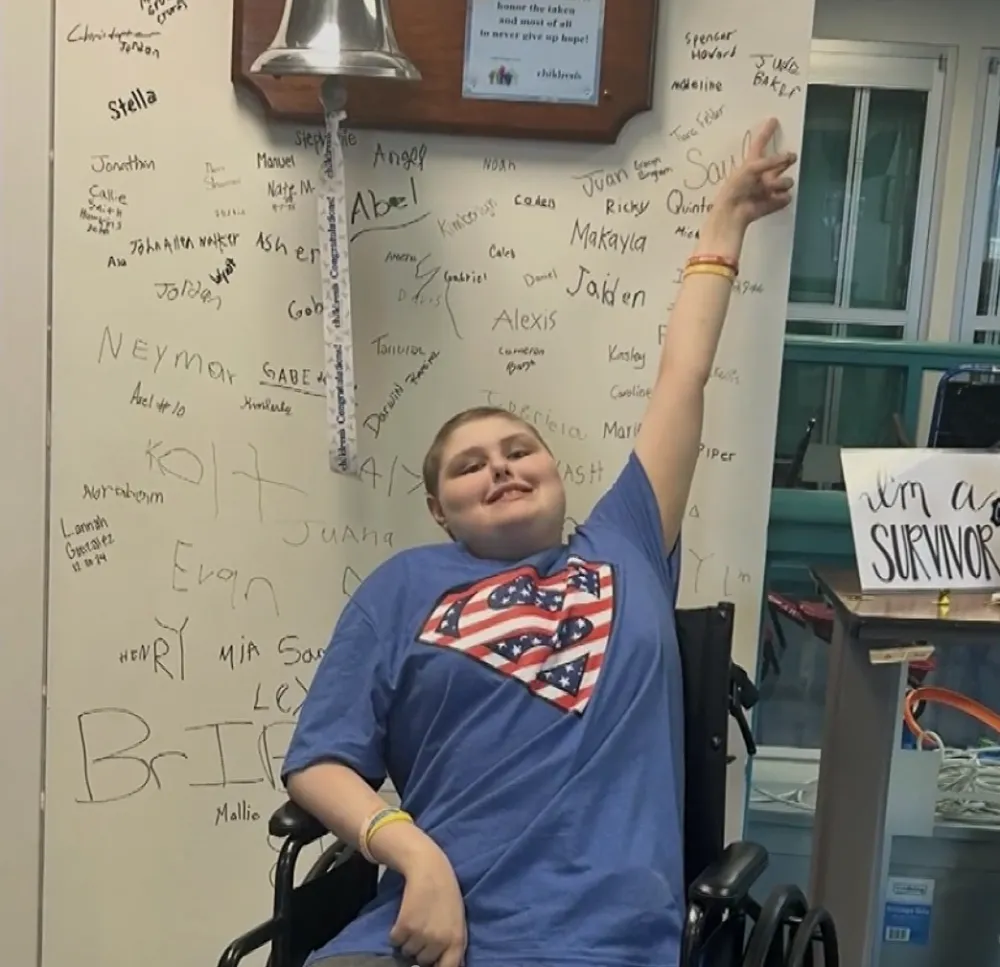
At the hospital, Jude participated in a small but meaningful tradition: ringing the ceremonial bell.
The sound echoed through the hallway, marking the end of his chemotherapy journey. For many patients, it represents victory, survival, and transition. For Jude, it was all of those things, but also something more complex. Relief and gratitude were present, but so too was a lingering awareness of what he had witnessed during his illness—the people he had seen struggling beyond his own experience.
As he stood there, the sound of the bell fading, he did not yet know what he would do with those thoughts.
But they stayed with him.
And in time, they would shape a decision that surprised almost everyone around him.