A 6-Year-Old’s Final Wish Brought Together 20,000 Bikers in One of the Most Heartwarming Acts of Kindness
20,000 Bikers Answer a Dying 6-Year-Old Boy’s Wish—A Powerful Moment That Touched Millions
The Thunderous Silence of Hope: How 20,000 Strangers Rewrote a Dying Boy’s Final Chapter
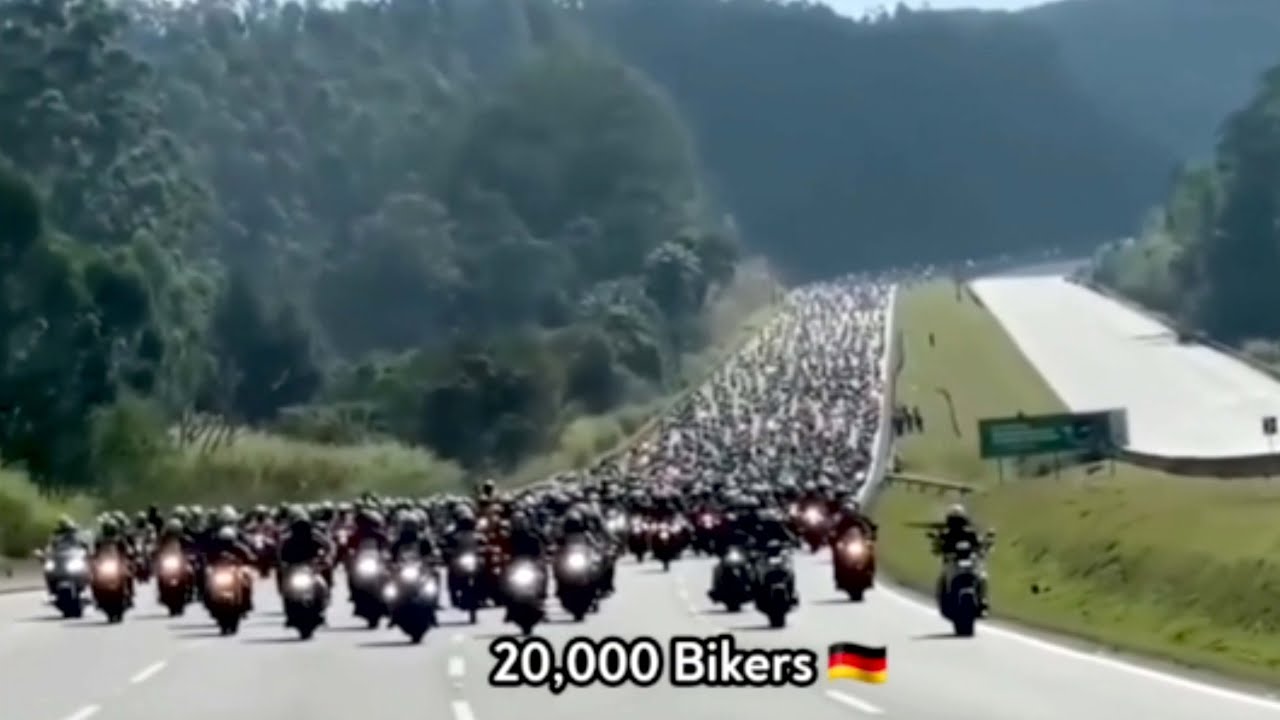
The world is often painted in shades of grey—a landscape defined by cynicism, division, and the quiet erosion of communal empathy. We live in an era where tragedy is consumed in 30-second soundbites and global crises are scrolled past with a flick of a thumb. But on one fateful July afternoon in 2021, the digital age delivered something it rarely produces: a miracle of pure, unfiltered human connection. In the small German town of Rhauderfehn, a six-year-old boy named Kilian Sass, his frail frame ravaged by terminal lymphoma, lay in his bed, his eyes fixed on the horizon, waiting for a sound he had loved since he could walk. He didn’t want toys. He didn’t want fame. He simply wanted to hear the roar of motorcycles one last time before his light was extinguished.
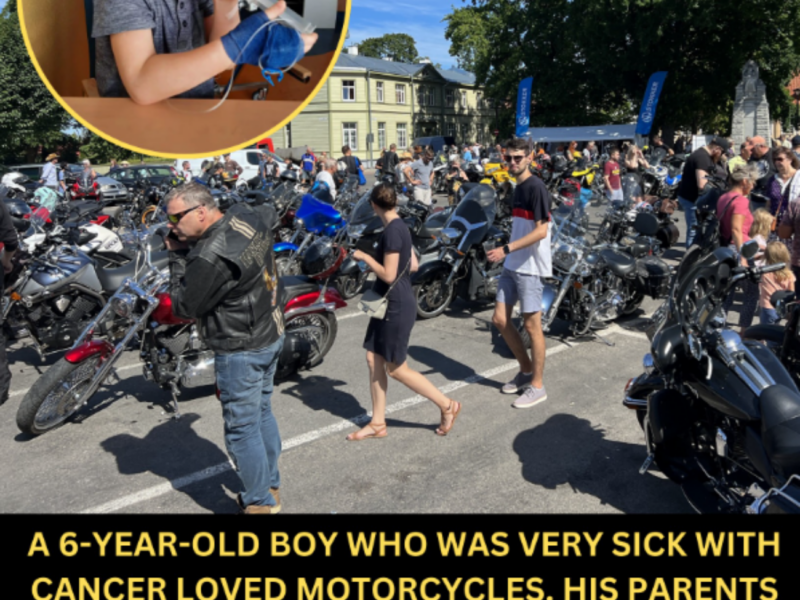
His family, acting on a desperate, flickering hope, posted a simple request online. They expected perhaps two dozen local riders to rumble past their home. They were hoping for a few minutes of noise—a “Krach für Kilian” (Noise for Kilian)—to bring a smile to a child who had seen too much pain. What they received instead was an earthquake of compassion that defied logic, scale, and the very boundaries of human expectation. As the sun climbed, the horizon began to tremble. It wasn’t an earthquake; it was the synchronized arrival of twenty thousand souls, a steel-and-leather tide rolling in from across Germany and beyond to ensure that one small boy’s final wish would be heard not just by him, but by the entire world.

The Physics of Compassion: When the Streets Became a Cathedral
When 20,000 motorcycles descend upon a quiet residential area, the result is typically a logistical nightmare. Yet, what occurred in Rhauderfehn was a masterclass in spontaneous, grassroots organization. The convoy, stretching for miles, transformed the local infrastructure into a conduit for empathy. The “Krach für Kilian” campaign, which began as a small social media post by a local club, morphed into a global symbol of what humanity is capable of when it sets aside its apathy.
The mechanics of this event are staggering. With approximately 15,000 to 20,000 riders participating, the parade lasted for hours, a relentless, deafening symphony of engines, horns, and sirens designed to honor a child who would not see his seventh birthday. For the scientific community studying collective behavior, this is an outlier—an instance where “herd behavior” was repurposed for profound altruism rather than panic or aggression. The sheer energy expended—thousands of gallons of fuel burned, hundreds of miles traveled—represented a massive, collective sacrifice of resources for a singular, non-utilitarian goal: the happiness of a stranger.
Future Scenarios: The Digitization of Human Solidarity
The Kilian Sass story offers a glimpse into the future of social cohesion. As our physical communities grow more fractured, we are seeing the rise of “digital tribes” that possess the capacity to mobilize in the physical world with unprecedented speed. If we look at the trajectory of “viral compassion,” we can anticipate a future where global networks are harnessed to address localized humanitarian needs in real-time.
Imagine, for instance, a future where such networks are leveraged for more than symbolic gestures—where digital mobilization is used to bridge gaps in medical care, supply chain distribution for disaster relief, or real-time support for the vulnerable. The success of the “Krach für Kilian” rally proves that the desire to do good is not extinct; it is merely latent, waiting for the right signal to ignite. When the world is at its darkest, it is not the grand institutions that save us; it is the spontaneous, chaotic, and beautiful decision of thousands of individuals to show up. Kilian Sass passed away one month after the event, but the echo of those twenty thousand engines serves as an enduring reminder: no one is ever truly alone, provided we are brave enough to ask for the noise.