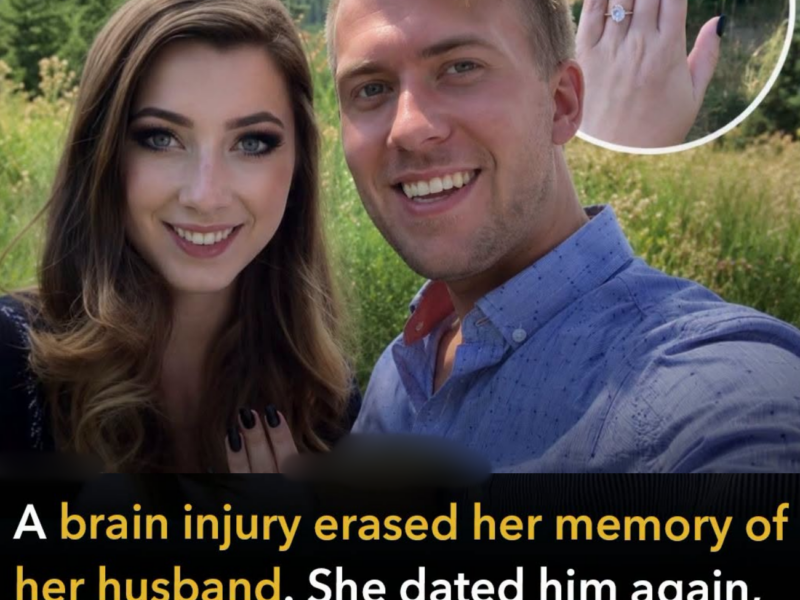
A Brain Injury Erased Her Memory of Her Husband—She Dated Him Again, Fell in Love Again, and Remarried Him on the Same Anniversary
A Brain Injury Took Her Memory—She Dated Her Husband Again, Fell in Love Again, and Remarried Him on Their Anniversary
She Woke Up Next to a Stranger—Then Fell in Love With Him All Over Again

There are mornings that begin quietly and end up splitting a life in two.
For Laura, that morning began like any other—except it wasn’t.
She opened her eyes expecting familiarity: the comfort of routine, the soft certainty of knowing where she was and who she was with. Instead, there was a man beside her in bed. He smiled at her like she belonged in his world, like this was just another ordinary day in a shared life.
But Laura did not recognize him.
Not his face. Not his voice. Not the life she was apparently living.
In that moment, there was no romance, no reassurance, no emotional continuity that could bridge the gap between what her mind believed and what her reality insisted upon. There was only confusion—and a terrifying void where her past should have been.
She was 23 years old, living in Canada, and according to everything around her—photographs, clothing, documents, a wedding album resting on a nearby surface—she was married.
But inside her mind, she was not 23.
She was 17 again.
And she was still in high school.
Final exams were approaching. Her life was supposed to be simple, structured, and still unfolding in the predictable rhythm of adolescence. Instead, she was trapped in a world she could not mentally connect to—surrounded by objects that suggested an entire adulthood she could not remember living.
Somewhere between who she had been and who she had become, a gap had opened—and it refused to close.
What Laura did not yet understand was that her life had already survived something catastrophic.
A steel pole had fallen during an event setup, striking her head with enough force to change everything that followed. The injury did not just wound her body—it rewrote her timeline. It erased years of memory, including the most intimate and defining chapter of her young adult life: meeting a man named Brayden, falling in love with him, and marrying him just nine months before the accident.
In one instant of impact, her memory did what no breakup, no distance, no conflict could ever do.
It vanished.
And with it, so did her husband.
The Man She Didn’t Know She Loved
Brayden was not a stranger to Laura’s life.
He was, in fact, the most important person in it.
At least, that was what everyone told her.
But memory is not a democratic system. It does not vote based on evidence or emotion. It simply exists—or it doesn’t. And for Laura, the entire emotional architecture of her marriage had been wiped clean.
What remained was disorienting logic: if this man was her husband, why did she feel nothing when she looked at him?
Why did his voice not trigger recognition?
Why did her heart not respond the way a wife’s heart was supposed to respond?
Brayden, meanwhile, faced a different kind of devastation.
He did not lose his wife in a single moment.
He lost her in pieces.
She was still physically present. Still breathing. Still speaking. Still occupying the same space in his life. But the person who looked at him now did not remember building a life with him.
To her, he was a stranger occupying the most intimate space imaginable.
And yet, when Laura first woke up after the injury, Brayden smiled.
Not because he wasn’t broken.
But because panic, he understood, would not help her heal.
So he began the long, uncertain work of rebuilding a life from scratch.
Living With a Blank Page
Traumatic brain injury does not always announce itself in dramatic ways after the fact. It lingers in the invisible spaces—memory, identity, continuity.
For Laura, the aftermath was not only amnesia. It was fragmentation.
She had to relearn how to read.
How to write.
How to speak with confidence in sentences that once came naturally.
Every task that once belonged to instinct now required conscious effort. And layered beneath all of it was a deeper crisis: the realization that people around her expected emotional responses she could not access.
There were photographs of events she did not remember attending.
Clothes she did not remember buying.
A wedding album documenting a life she could not retrieve from her own mind.
The most intimate relationship of her life had become historical fiction—something others could describe, but she could not feel.
And in the center of that emotional contradiction stood Brayden.
He did not force recognition.
He did not demand instant recovery of memory that no longer existed.
Instead, he began something far more patient—and far more painful.
He told her their story.
Again.
And again.
And again.
Reconstructing a Love That No Longer Existed—At Least in Her Mind

Every morning, Brayden left small notes for Laura.
Not dramatic declarations.
Not overwhelming emotional appeals.
Just fragments of truth:
Where they had gone together.
What they had laughed about.
How they had met.
What she used to say when she was tired.
What songs had mattered to them.
It was not storytelling for nostalgia.
It was reconstruction work.
Like trying to rebuild a house while the foundation remained invisible.
And yet, even as he spoke, there was an unbearable truth hanging over everything he did:
Love, in Laura’s mind, was not missing.
It was absent.
Brayden could describe it, but he could not make her feel it.
That was the silent tension in every interaction between them.
He was trying to remind her of a life she had lost.
She was trying to understand why a stranger was so invested in her existence.
And still, he stayed.
Not as a romantic gesture.
But as a decision made daily, under conditions no one prepares for.
The Day She Asked Him Out Again
Something shifted slowly.
Not in memory.
Not in sudden emotional recognition.
But in behavior.
Curiosity replaced resistance.
Familiarity replaced fear.
Trust began to form not from recollection—but from repetition.
Brayden was consistent.
Safe.
Patient in a way that did not pressure her to become someone she no longer was.
And then came a moment that changed everything—not because it restored the past, but because it created a future.
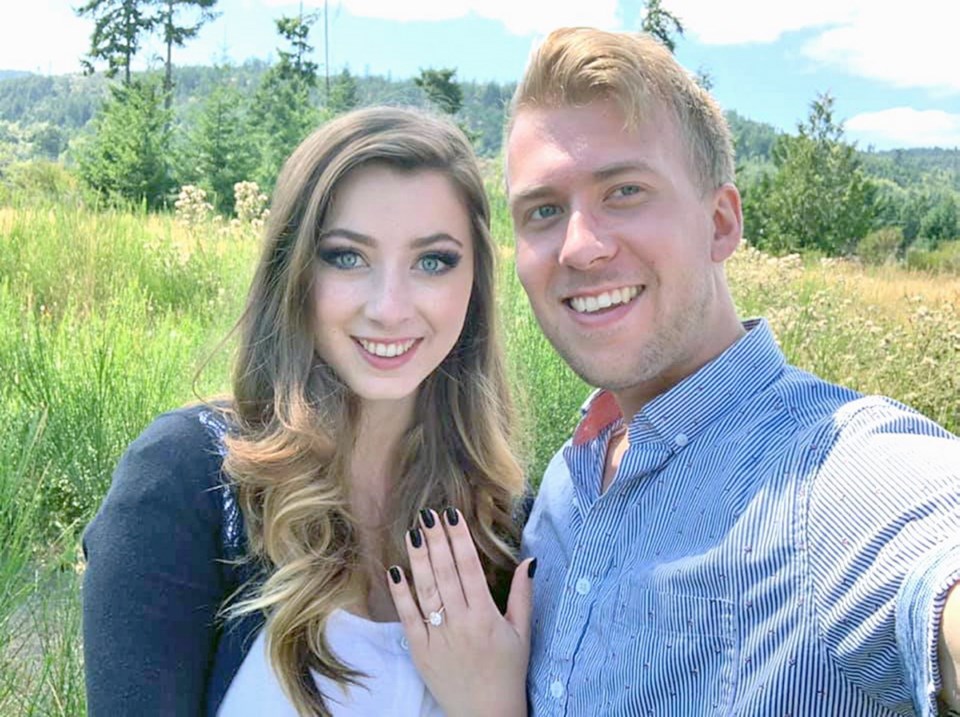
Laura asked him out.
It was simple. Ordinary. Almost disarmingly casual.
Mini golf.
No grand speeches. No emotional breakthroughs. No sudden return of lost memory.
Just two people spending time together in a way that didn’t require history.
By the third hole, something unexpected happened.
They were flirting.
Not because she remembered loving him.
But because she was experiencing him in real time.
This was the beginning of a strange and powerful transformation: Laura was not returning to her old life.
She was building a new one inside the ruins of the old.
Falling in Love Without Memory
What makes Laura and Brayden’s story unsettling—and deeply compelling—is its inversion of what most people understand about love.
Love is usually built on continuity.
Shared experiences.
Accumulated memory.
A timeline of moments that form emotional meaning.
Laura had none of that.
And yet, something still formed between them.
It did not emerge from recognition.
It emerged from repetition.
From presence.
From safety.
From laughter that did not depend on remembering the past.
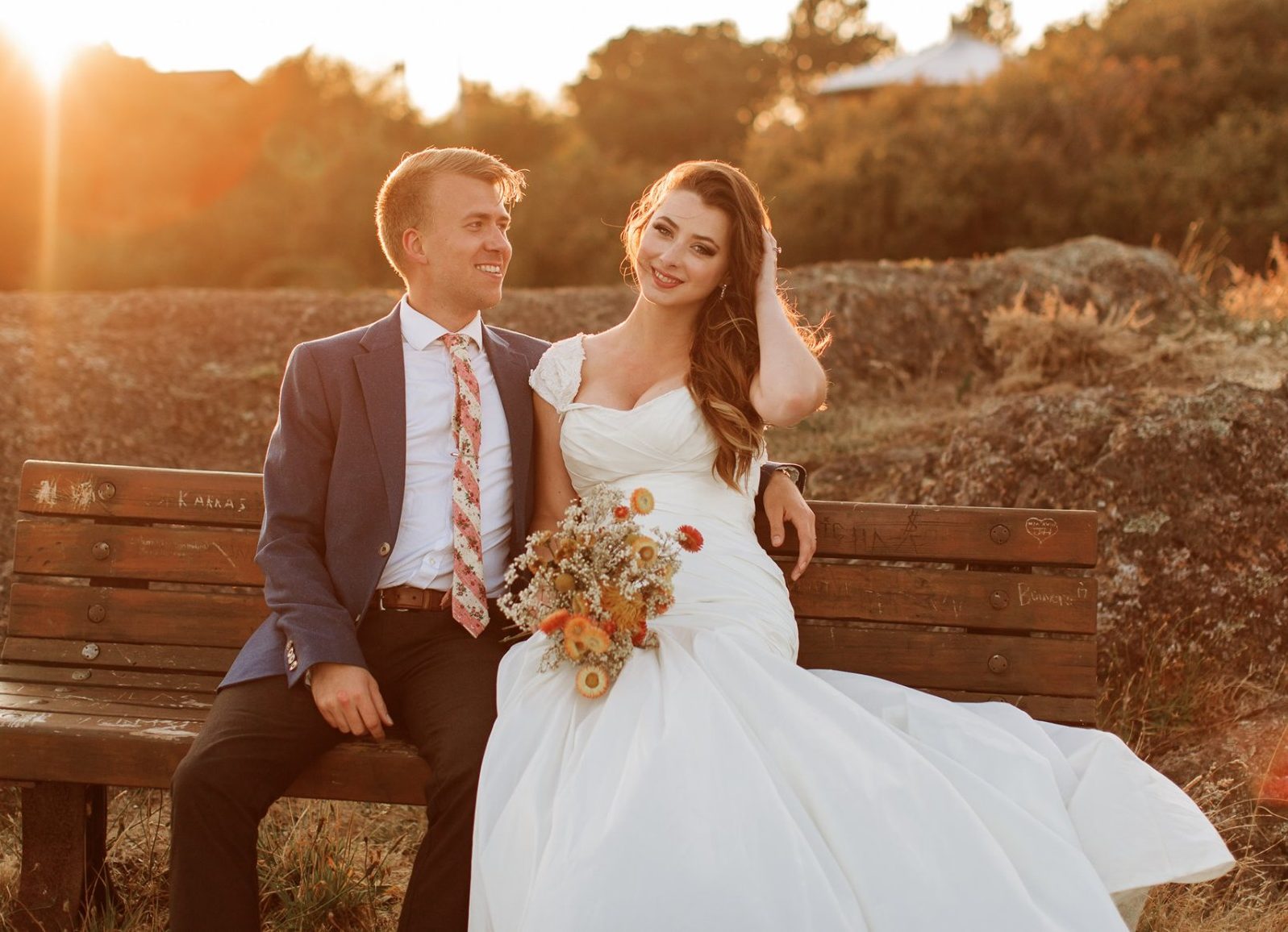
Brayden, who once knew her as his wife, now experienced something else entirely:
The slow reintroduction of the same person he had already loved—without her knowing she was that person.
And Laura, who had once been married, was now encountering love as if for the first time in her life.
Not restored.
Not recovered.
Recreated.
The Strange Weight of Second Beginnings
In many ways, what happened next defied conventional language.
Brayden did not simply “get his wife back.”
Laura did not simply “recover her memory.”
Instead, something far more unusual occurred:
A relationship was rebuilt without the anchor of shared history.
Brayden became her friend first.
Then her emotional anchor.
Then her romantic interest.
Then, slowly, her partner again.
But not because the past returned.
Because something new replaced it.
Laura did not fall in love again because she remembered loving him.
She fell in love again because she experienced love forming in real time.
And that distinction changes everything.
It suggests that love is not only memory.
It is also construction.

A Proposal Without a Past
When Brayden proposed again, it was not a repeat of history.
It was a recognition of something new.
The woman in front of him was not the same version of Laura who had once said yes years earlier.
And yet she said yes again.
Not because she was reclaiming an old promise.
But because she was choosing a present relationship that had proven itself through experience rather than recollection.
It was a second engagement that carried the weight of absence.
No shared memory guided her decision.
Only trust built in the aftermath of loss.
The Wedding That Should Not Have Been Possible—But Was
They chose to marry again on their original anniversary.
The date itself carried a paradox: it belonged to a past Laura could not access, but a present she was actively living.
In any traditional sense, this should have been impossible.
How do you celebrate a shared history with someone who does not remember it?
But the ceremony did not attempt to resurrect the past.
It acknowledged something more complex:
That love does not always require continuity to be real.
Sometimes it requires rebuilding.
Sometimes it requires choosing the same person again under entirely different circumstances.
Sometimes it requires accepting that the first version of a story is gone—but the second can still matter.
What This Story Really Reveals
At its surface, this is a story about memory loss.
But at its core, it is a story about identity, attachment, and the fragile architecture of love.
It forces a difficult question:
If you forget someone completely, but fall in love with them again—did love survive, or did it begin again?
For Laura, the answer is not theoretical.
It is lived.
She did not regain her past.
She built a present.
And in that present, she chose Brayden—not because he was familiar, but because he was consistent in a world that had become unfamiliar.
For Brayden, love became something even more radical:
Not remembrance.
But renewal without guarantee.
He could not rely on shared history.
He could only rely on who he chose to be in each moment beside her.
The Quiet Shock at the Heart of It All
The most shocking part of this story is not the injury.
Not the amnesia.
Not even the remarriage.
It is the emotional logic that emerged afterward:
That love can survive even when memory does not.
That relationships can be rebuilt without continuity.
That devotion can exist in two timelines at once—the one that was lost, and the one being created anew.
Laura may never recover the memories of her first marriage.
But she is not living without love.
She is living with a version of it that had to start over from zero.
And Brayden, who once feared losing everything, ended up discovering something even more unexpected:
That love is not only what you remember.
It is what you choose again when nothing feels familiar.
And sometimes, the most extraordinary love stories are not the ones that survive unchanged—but the ones that survive by beginning twice.