A Russian Prisoner Never Forgot the American POWs Who Shared Their Food in a Nazi Prison Camp
He Never Forgot the American POWs Who Shared Their Food in a Nazi Prison Camp—A Remarkable Story of Kindness That Endured for Decades
The Secret Across the Wire: The Forbidden Act of Mercy That Defied the Nazis
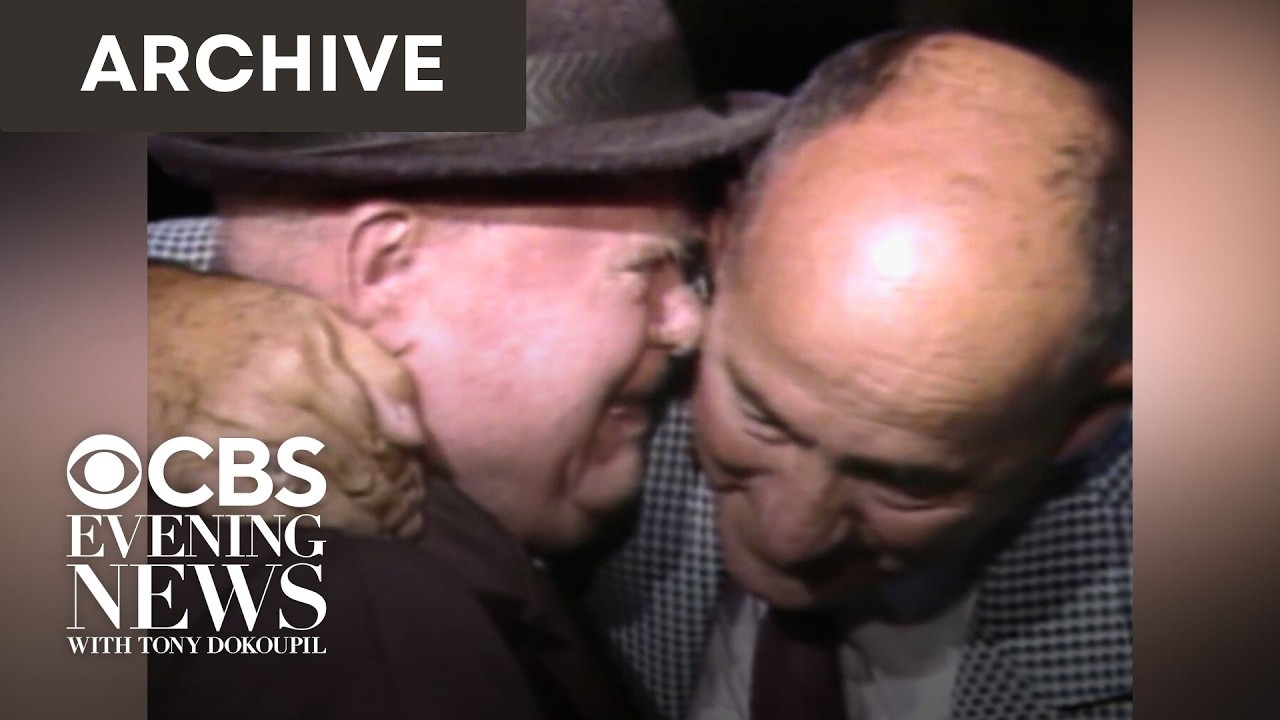
In the frozen, suffocating darkness of Stalag-B, death was not just a possibility—it was a nightly ritual. Men were not merely prisoners; they were skeletal shadows, slowly fading into the history of a war that had discarded them. Among them was Dr. Nikita Aseyev, a Russian prisoner whose days were spent in the hellish reality of forced labor and near-starvation. Yet, in the midst of this absolute nightmare, where even a whisper could lead to an execution, a silent, miraculous act of defiance began to unfold.
It was a secret war of compassion. Just eight meters across a double-barreled fence of jagged, electrified wire, a group of American prisoners of war watched their Soviet allies dying. They were farmers from the Midwest, city workers from Chicago, and doctors from Texas and New York. They saw the agony, the hollow eyes, and the desperation of men who had been left to starve by the Nazi regime. And then, they decided to do the impossible. They hatched a plan—a plan so dangerous that if caught, it would result in immediate death for everyone involved.
For three years, every single month, under the cover of darkness, these ordinary American men waited for a corrupt, sympathetic guard to turn his back. When the moment came, they threw parcels of their precious, life-saving Red Cross rations over the barbed-wire fence. These were not just food packages; they were lifeboats. They were the difference between life and death for hundreds of starving Russian soldiers. This was not a story found in textbooks; it was a hidden pact of brotherhood that remained in the shadows for 43 years, until one man’s relentless determination finally forced the truth into the light of the 1988 Reagan-Gorbachev summit.
The Unbreakable Bond: A 40-Year Wait for Justice
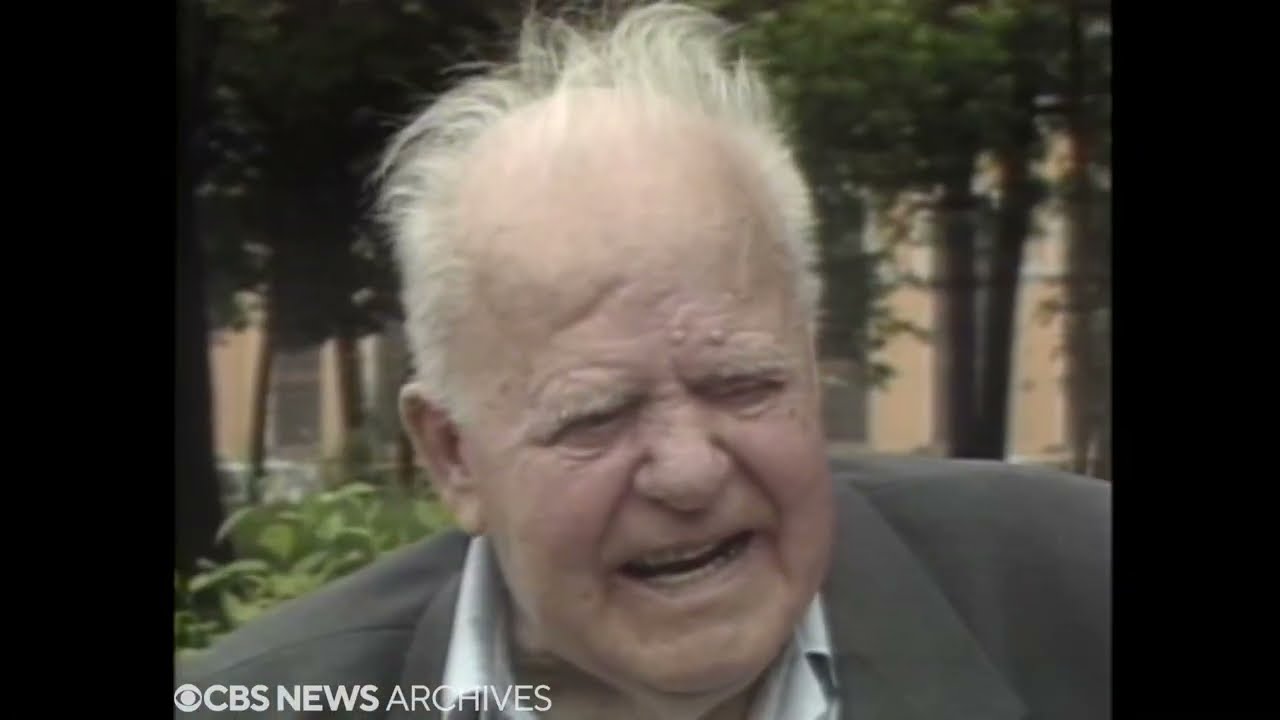
Dr. Aseyev, the camp’s only dentist, had memorized the names of those Americans. He had held onto them for four decades, guarding them like holy relics throughout the paranoia of the Cold War. In 1988, when the world’s attention was fixed on Moscow, he didn’t just hope to tell his story—he bulldogged his way into the pressroom, demanding to be heard.
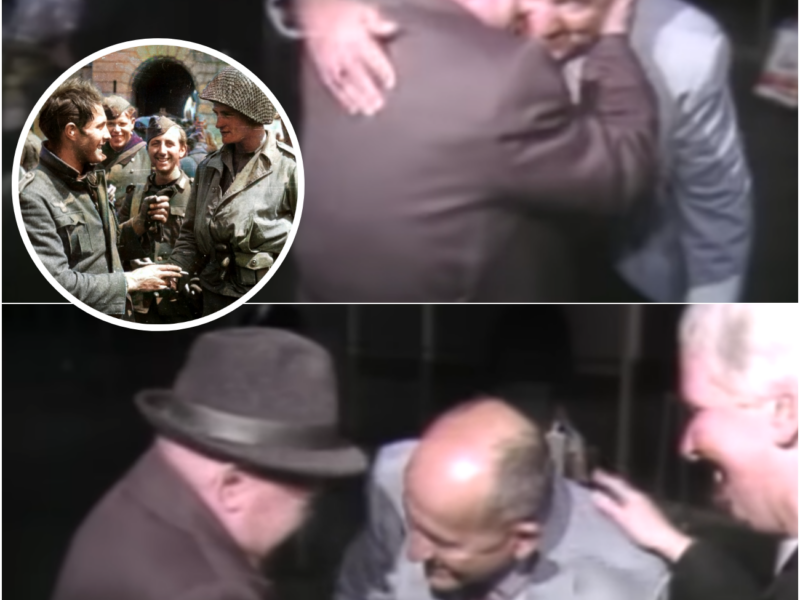
When he finally recounted how his life was saved, the world paused. He told of the monthly ritual: the tension, the silence, the packages flying through the air, and the harrowing reality of the guard who was eventually executed for his mercy. The Americans who had been part of this operation were identified, and the reunion that followed—the tears, the silent embraces, the realization that they were brothers who had been separated by both barbed wire and a half-century of geopolitical silence—was a moment of profound humanity.
The Cost of Compassion in a War Zone
To understand the sheer scale of what these men achieved, one must look at the grim statistics of the Eastern Front. Nazi policy for Soviet POWs was not just imprisonment; it was systematic liquidation. While Allied prisoners were often (though not always) subjected to the rules of the Geneva Convention, Soviet soldiers were viewed through a lens of racial hatred. Starvation was the primary weapon. Rations were often as low as 700 calories a day, leading to death by attrition.
The Americans at Stalag-B, despite their own hunger, understood that their rations were the only thing keeping their neighbors from the grave. By redistributing their food, they weren’t just being “charitable”—they were committing an act of wartime sabotage against the Nazi machine. The logistical bravery required to sustain this for three years is staggering. It involved coordination, intelligence, and a level of trust that is almost impossible to replicate in modern society.

A Legacy of Survival
The story of the Stalag-B ration drops is a mirror for our own times. It asks us to consider what happens when we choose to see our neighbor, even across the most formidable barriers. Today, we live in a world where history is often manipulated, yet stories like this serve as an anchor. They remind us that even in the absolute worst circumstances—when the world is at its most polarized and humanity is at its most brutal—there are those who choose to bridge the gap.
As we calculate the impact, one might wonder: how many lives were saved? If 1,300 parcels were thrown in one night, and this occurred monthly for three years, the survival rate among that specific group of Russian prisoners was likely exponentially higher than their counterparts in other sectors of the camp. These men were the living proof that empathy is not a weakness; it is a tactical force of nature.
Why This Story Matters Now
![Russian prisoners of war lifting up an American soldier after the US 9th Army liberated them from their camp at Eselheide Germany 9th April 1945 [3584 x 2647] : r/HistoryPorn](https://i.imgur.com/RcWtlsk.jpg)
The 1988 revelation wasn’t just a nostalgic piece of news; it was a revelation of what truly binds us. As Dr. Aseyev and the American soldiers stood together, their tears said more than any politician’s speech ever could. They proved that beneath the uniforms, beneath the propaganda, and beneath the ideologies of warring nations, the primal instinct to save another human being is the most powerful force on earth.