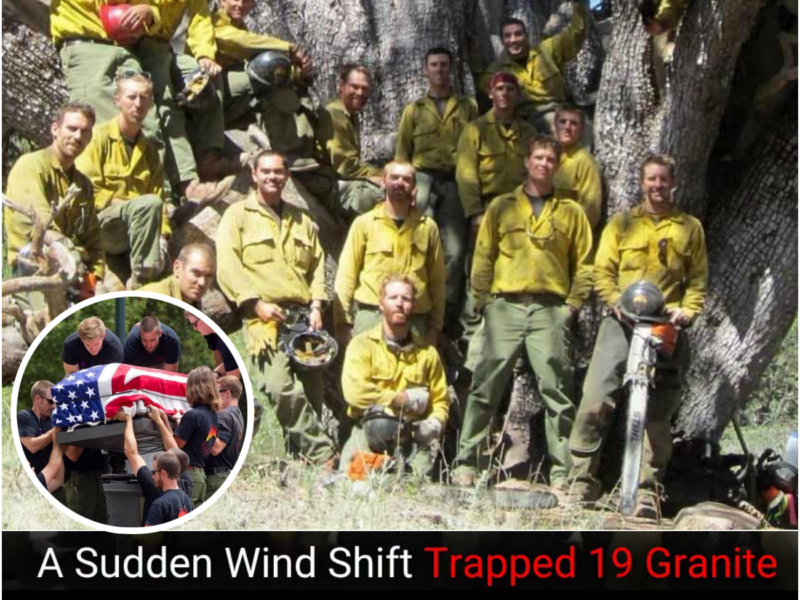
A Sudden Wind Shift Left 19 Granite Mountain Firefighters With No Escape as They Made the Ultimate Sacrifice Protecting an Arizona Community
A Sudden Wind Shift Left 19 Granite Mountain Firefighters Trapped as They Fought to Protect an Arizona Community
The Granite Mountain Legacy: Honor, Sacrifice, and the Eternal Vigil of the Hotshots

On a scorched hillside near Yarnell, Arizona, the air remains heavy with the weight of memory. It was June 30, 2013, when the Yarnell Hill Fire—born of a dry lightning strike and fueled by the relentless aridity of the American Southwest—transformed from a manageable wildfire into a furnace of mythic proportions. In the crucible of that afternoon, 19 members of the Granite Mountain Hotshots were lost. It was the deadliest wildland firefighting tragedy in the United States since 1933 and a wound that continues to reshape the landscape of American emergency response, public grief, and the cultural reverence for those who serve on the front lines of nature’s fury.
The story of the Granite Mountain Hotshots is not merely a chronicle of a disaster; it is a meditation on the fragility of human endeavor when faced with the uncontrollable power of the wild. To understand this tragedy is to understand the soul of the American West—a place defined by both its breathtaking beauty and its capacity for sudden, life-altering destruction.
The Elite: The Life of a Hotshot
To grasp the magnitude of the loss at Yarnell, one must first understand what a “Hotshot” crew actually is. They are the Navy SEALs of wildland firefighting. Unlike structural firefighters who tackle house or commercial fires, Hotshots are the front-line soldiers in the war against the wilderness. They are characterized by their extreme physical fitness, their ability to work for days on end with minimal rest, and their expertise in specialized tactics, such as constructing fire lines with hand tools and conducting controlled burns to “fight fire with fire.”
The Granite Mountain crew, based out of Prescott, Arizona, was the first municipal hotshot crew in the United States to achieve elite interagency status. They were a tight-knit brotherhood. For these men, the work was not just a job; it was a vocation. They were the ones who stepped into the smoke-choked canyons and scaled the ridges that others could not reach. They were the protectors of the community, the barrier between the wildfire’s hunger and the quiet homes of the valley.
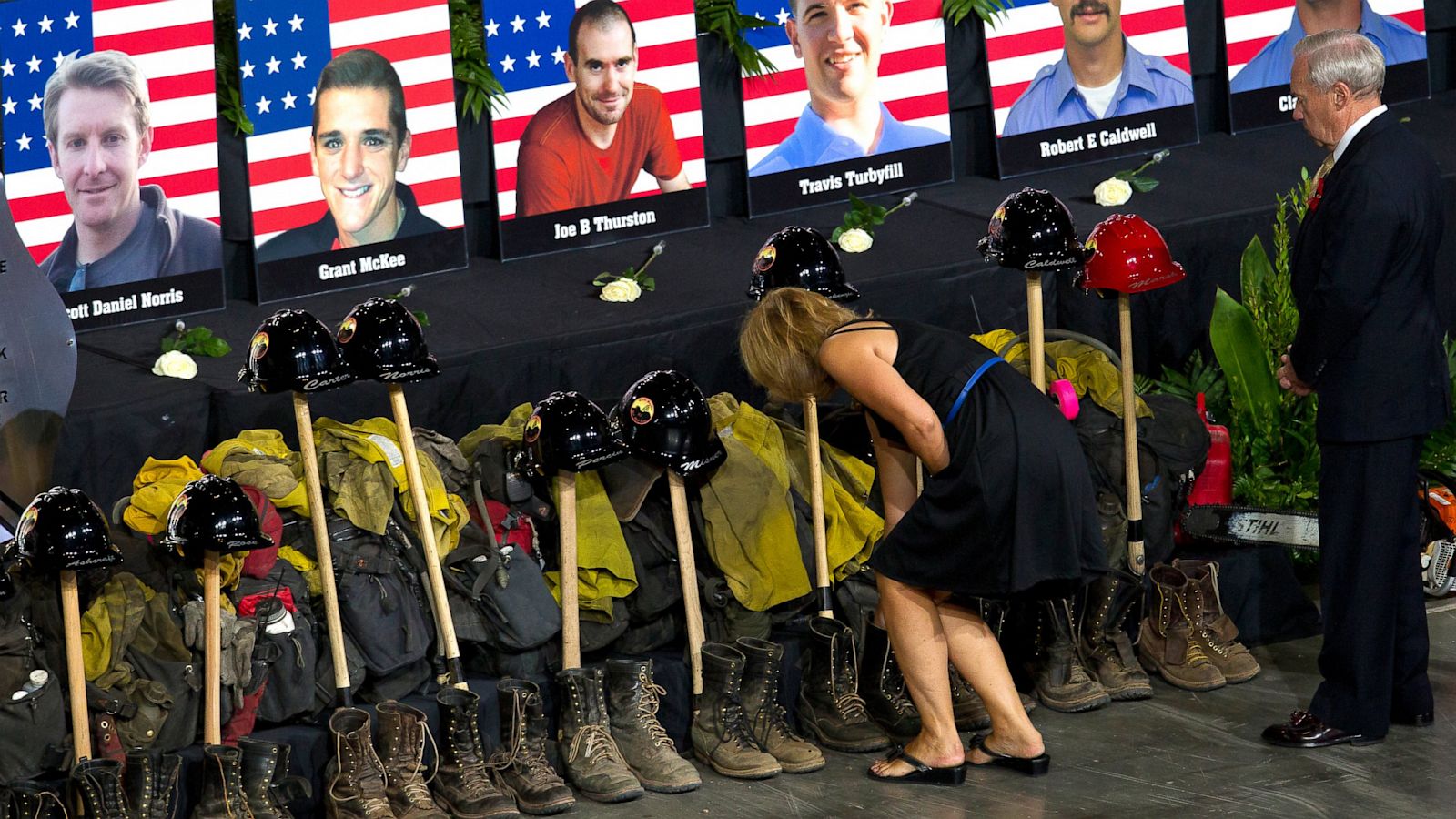
When they arrived at Yarnell, they were doing what they had been trained to do. They were performing a vital service for a community they lived in and loved. Their presence provided a psychological sense of safety for the residents of Yarnell, a reassurance that the best in the business were watching over the perimeter.
The Shift: The Nature of the Beast
Wildland fire behavior is notoriously unpredictable, but the events of June 30, 2013, were catastrophic in their suddenness. As the fire grew, the topography of the Yarnell Hill area created a perfect storm. The heat generated by the blaze itself created its own localized weather system, while a dramatic, sudden shift in winds drove the flames—towering nearly 70 feet high—into a horizontal, racing wall of fire.
In such a scenario, the physics of the environment leave little room for error. The crew found their primary escape route cut off. In the frantic, terrifying seconds that followed, the men deployed their emergency fire shelters—the last-ditch, reflective cocoons designed to protect a firefighter from radiant heat.
The tragedy, however, was not one of cowardice or lack of skill, but of the overwhelming, chaotic volatility of the fire. The intensity of the heat far exceeded the tolerances of the shelters. In a matter of minutes, the town of Prescott had lost 19 of its finest men. The silence that fell over that hillside was the silence of a nation stunned.

The Survivor’s Burden: Brendan McDonough
If the death of the 19 is the tragedy, the survival of Brendan McDonough is the enduring human story. At 21, McDonough was serving as the crew’s lookout, positioned at a vantage point away from the main group to monitor fire behavior and warn his comrades of encroaching danger.
His survival was a matter of inches and minutes—a twist of fate that separated him from the fate of his “brothers.” To be the lone survivor of such a close-knit unit is to carry an invisible weight that most of us cannot fathom. In the years since, McDonough has become a voice for the fallen, a man who has had to navigate the profound guilt, the grief, and the responsibility of keeping their memory alive. His reflection—”Thirteen years since I lost my brothers. Not a day goes by that I don’t think about them”—serves as a reminder that for those who survive, the fire never truly goes out.
The Memorial: A Place of Reflection
Today, the site of the tragedy is preserved as the Granite Mountain Hotshots Memorial State Park. Every year, over 18,000 visitors make the pilgrimage to walk the path to the site where the crew made their final stand.
In America, we have a unique way of processing trauma through memorialization. We turn the sites of disaster into spaces of national pilgrimage. The memorial at Yarnell is not just a collection of names; it is a space that challenges the visitor to contemplate the scale of the sacrifice. When you stand on that ridge, looking out over the landscape that they fought to save, you are confronted with the reality of their courage. It is a place where the grandeur of the Arizona sky meets the somber reality of human mortality.
A Legacy of Reform and Respect
The Yarnell Hill disaster led to sweeping changes in how the U.S. Forest Service and municipal departments manage wildland fires. Safety protocols were re-examined, communication strategies were overhauled, and the culture of risk assessment was deepened. The loss of the 19 was a catalyst for a new era of vigilance, ensuring that the lessons learned from their sacrifice are etched into the training of every firefighter who enters the woods today.
However, the legacy of the Granite Mountain Hotshots goes beyond policy. It is embedded in the American consciousness as a reminder of the inherent dangers of the natural world and the selfless men and women who interpose themselves between that world and our own.

Conclusion: The Fire Within
The Granite Mountain Hotshots were more than just a crew; they were a symbol of the American spirit of public service. They represent the archetype of the neighbor helping neighbor, the professional who bears the risk so that others do not have to.
As Governor Katie Hobbs lowers the flags to half-staff, she does so not just for the men of Prescott, but for the principle of service itself. The Yarnell Hill Fire was a tragedy, but it was also a testament to the fact that there are individuals among us who are willing to face the most terrifying forces of nature in order to protect our communities.
When we honor the 19, we are honoring the best of what it means to be an American. We are acknowledging that life is fragile, that the wild is indifferent, but that humanity—through the acts of the brave—can be profoundly, eternally resilient. The men of Granite Mountain are gone, but their courage remains a beacon, a fire of a different kind—one that warms the collective memory of a grateful nation.