After a Fatal Crash, a 29-Year-Old Vanished—Police Finally Tracked Her Down at a Golf Course
29-Year-Old Flees After a Deadly Crash—Police Later Find Her at a Golf Course in a Shocking Twist
Fatal Detour: The Night a Life Was Stolen on Route 25
The intersection of Country Club Road and North Fifth Avenue in St. Charles, Illinois, is the kind of suburban corner where the silence of the night is rarely interrupted. On the evening of Wednesday, April 1, 2026, that tranquility was shattered in an instant. Ryan Reszle, a 27-year-old former Army National Guard member and diesel mechanic, was riding the motorcycle he had purchased only one day earlier. He had his whole life ahead of him, but his journey was violently cut short by a white Jeep SUV that witnesses say turned directly into his path before fleeing the scene, leaving Ryan lying in the road, fatally injured.
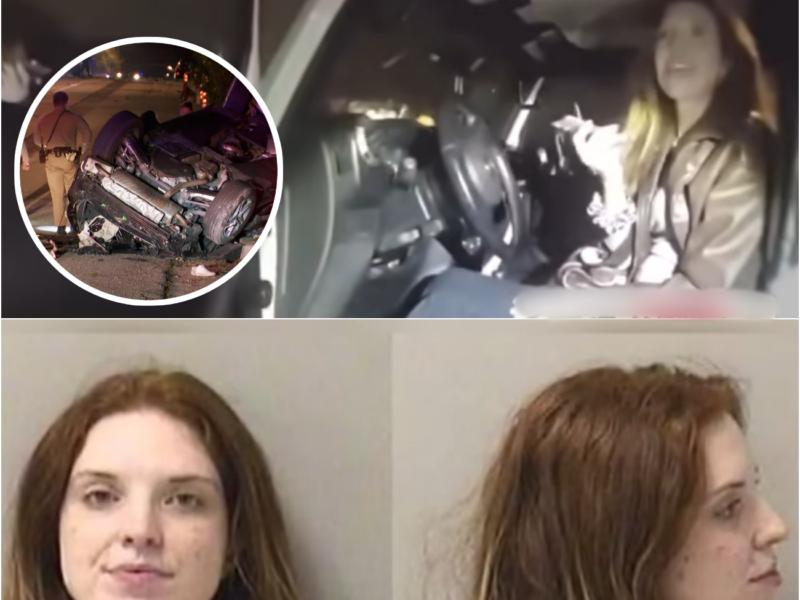
As emergency responders fought in vain to save Ryan’s life at the hospital, law enforcement launched an immediate, high-stakes search for the offending vehicle. It took only minutes for officers to track the Jeep to a nearby golf course. The car was hidden behind a fence, its front passenger side mangled and a tire blown out. Standing beside it was 29-year-old Morgan Ross.
From the moment the officers arrived, Ross adopted a persona of extreme distress. She claimed she was the victim, insisting she had been “t-boned” while turning left at a green light. She was frazzled, at times requesting an ambulance for “anxiety,” only to cancel the request moments later. To the experienced officers on the scene, however, the story didn’t add up. The physical damage to her Jeep was inconsistent with her description of the collision. By letting her retell her story, investigators watched as her narrative drifted, creating an inescapable trap of her own making.

The investigation took a darker turn when officers searched the interior of the Jeep. Scattered amongst her belongings were empty cans of hard seltzers and a baggie of white powder, later identified as cocaine, along with rolled-up dollar bills. When offered field sobriety tests, Ross refused, attempting to deflect the investigation back to her own supposed victimhood. Her blood alcohol level, drawn later at a hospital, revealed she was well over the legal limit.
What made the situation even more chilling was that this was not Ross’s first encounter with the law. In 2019, she had been involved in a similar incident where she struck a mailbox, a fire hydrant, and a tree, resulting in a misdemeanor DUI conviction and court supervision. The justice system had given her a chance to learn, but according to prosecutors, she had chosen to ignore the gravity of her past actions, leading to the preventable death of Ryan Reszle.

At her detention hearing, the assistant state’s attorney argued that no amount of monitoring could ensure public safety. Consequently, the judge ordered Ross held without bond. She now faces serious charges, including failure to report a crash involving death, aggravated DUI causing death, and reckless homicide.
As this case moves through the court system, it serves as a stark, tragic reminder of the consequences of impaired driving. The tragedy is amplified by the final moments captured on body camera: while a young man lost his life, the primary concern of the accused was not for the victim, but for her own time in custody.

In the wake of this disaster, the community of St. Charles—and the public at large—are left to grapple with a haunting question: What is the true deterrent for repeat DUI offenders? Is it harsher sentencing, better rehabilitation, or a fundamental shift in how society views these “accidents”? For the family of Ryan Reszle, the answer is likely too little, too late. As legal proceedings continue, the case of the golf course crash remains a harrowing example of how one individual’s reckless choice can permanently erase the potential of a bright, young life, leaving a hollow space that no verdict can ever truly fill. The road to justice is long, but for those watching this case, the facts are already screaming a demand for accountability that cannot be silenced.