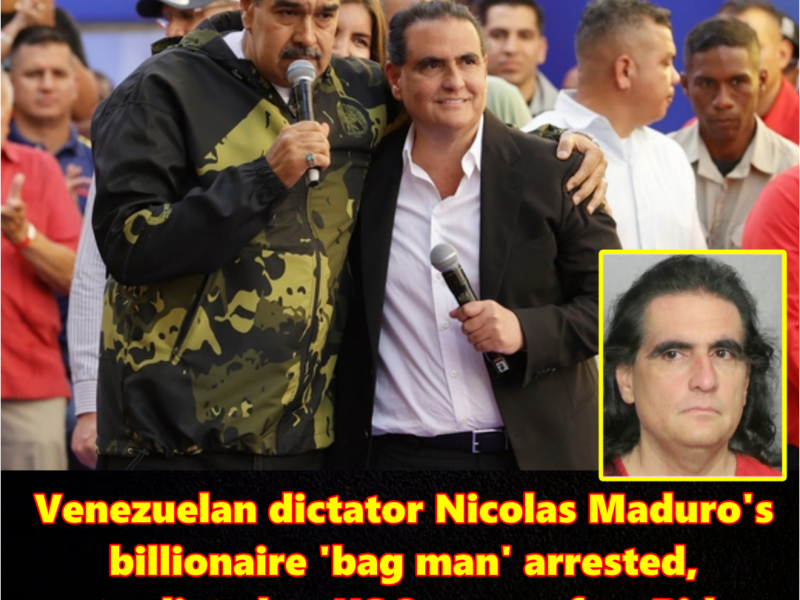
Alleged associate of Nicolás Maduro extradited to the U.S. years after Biden-era pardon, reigniting major corruption investigation and political fallout
Alleged associate of Nicolás Maduro extradited to the U.S. years after Biden-era pardon, reigniting major corruption investigation and political fallout
Maduro’s Alleged Money Man Returns To U.S. Custody In A Stunning Turn That Could Shake Venezuela’s Fallen Power Circle

The man once described by American investigators as one of Nicolás Maduro’s most important financial operators is back in U.S. custody, and the timing could hardly be more explosive.
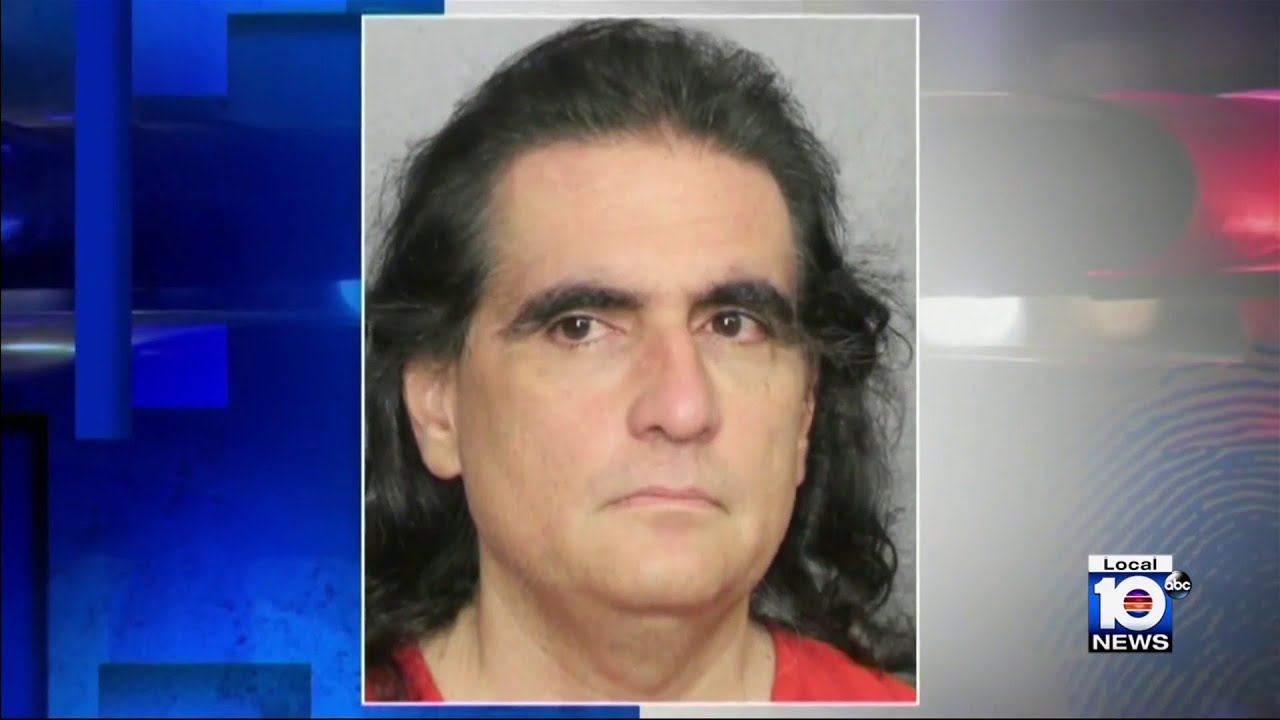
Alex Saab, a Colombian-Venezuelan businessman whose name has long been tied to allegations of bribery, shell companies, inflated state contracts and political survival inside Venezuela’s ruling elite, has been deported to the United States less than three years after President Joe Biden granted him clemency in a controversial prisoner exchange. Venezuela’s migration agency said Saab was sent to face criminal proceedings in the United States, while U.S. and international reporting described the move as part of a widening legal and political reckoning around Maduro’s former inner circle.
For years, Saab was more than a businessman in the eyes of Washington. He was portrayed by U.S. authorities as a fixer, a dealmaker and a gatekeeper to money that helped sustain Maduro’s rule through sanctions, shortages and international isolation. His supporters called him a diplomat and a victim of political persecution. His critics saw him as something far more consequential: a man who understood where the money moved, who received it, who protected it and how it may have helped keep one of Latin America’s most controversial governments alive.
Now, after his reported arrest in Caracas earlier this year and his deportation to the United States, the question facing investigators is not merely what Saab did. It is what he knows.
That question may be what makes his return so dangerous for those who once stood closest to Maduro.
According to recent reporting, Saab had previously been detained in Cape Verde in 2020 while traveling to Iran, then extradited to the United States on corruption-related charges before being released in 2023 as part of a prisoner swap that freed detained Americans. His release became a political flashpoint in Washington, where critics argued that an alleged financial operator for Maduro had been handed back to Caracas without enough accountability. Supporters of the exchange said the Biden administration had secured the release of Americans from Venezuelan detention, a goal that carried urgent humanitarian and diplomatic weight.
But Saab’s latest return to American jurisdiction has reopened that debate with a sharper edge.
The man who once walked free now appears to be returning under circumstances that could reshape cases far larger than his own. Reuters and the Associated Press reported that Venezuelan authorities deported Saab to face U.S. legal proceedings, a move that signals a striking shift in cooperation between Washington and Venezuela’s current leadership under Delcy Rodríguez.
The optics are stunning. A figure once protected by Venezuela’s power structure is now being handed over by that same state. A man once freed by Washington is now back in its grasp. And a political system that once revolved around Maduro may be turning inward, separating survivors from liabilities.
To understand why Saab matters, one must begin with the thing that has haunted Venezuela for more than a decade: money.
Venezuela is a country of vast oil wealth, yet millions of its citizens endured hunger, migration, shortages and collapsing public services during years of political and economic crisis. As sanctions tightened and the Maduro government became more isolated, access to food imports, fuel deals, gold flows and foreign intermediaries became more than economic questions. They became tools of political survival.
Saab emerged in that world.
American prosecutors have accused him and associated networks of profiting from state-linked contracts, including programs tied to housing and food imports. One long-running focus has been Venezuela’s CLAP food program, a government system intended to deliver subsidized food boxes to poor families. U.S. authorities have alleged that politically connected figures used inflated contracts, shell companies and bribery to siphon money from Venezuelan public programs while ordinary citizens struggled to obtain basic goods.
That allegation is what gives the Saab case its emotional force for many Venezuelans and its political force in Washington. This is not merely a story about obscure financial paperwork or offshore accounts. It is a story about food, scarcity and power. It is about whether people close to the top of the Venezuelan state enriched themselves while families waited in lines, medicine disappeared from shelves and millions left the country in search of survival.
Saab has denied wrongdoing in past proceedings, and any new U.S. case against him will have to be proven in court. But the reason his name has remained so prominent is that American investigators have long viewed him not as an isolated operator, but as a bridge between money and political power.

That is why his deportation is not being treated like an ordinary criminal transfer.
It lands like a signal.
For Washington, Saab could represent a witness, a defendant, a pressure point or all three. For Venezuela’s current leadership, handing him over may serve as proof of cooperation with U.S. authorities and a dramatic break from the Maduro era. For Maduro loyalists, it may be read as betrayal. For prosecutors, it may open a door into financial arrangements that were once difficult to penetrate from the outside.
And for Saab himself, it presents a brutal calculation: fight alone, negotiate, or reveal what he knows.
The most suspenseful part of this story is not the flight that carried Saab back toward U.S. justice. It is the silence that may follow before he decides what to say.
Because if U.S. prosecutors are right about his proximity to Maduro’s money, Saab may not simply be a defendant. He may be a map.
A map of companies. A map of contracts. A map of intermediaries. A map of alleged payments. A map of people who believed they would never have to explain themselves in an American courtroom.
That is the nightmare scenario for anyone who depended on secrecy.
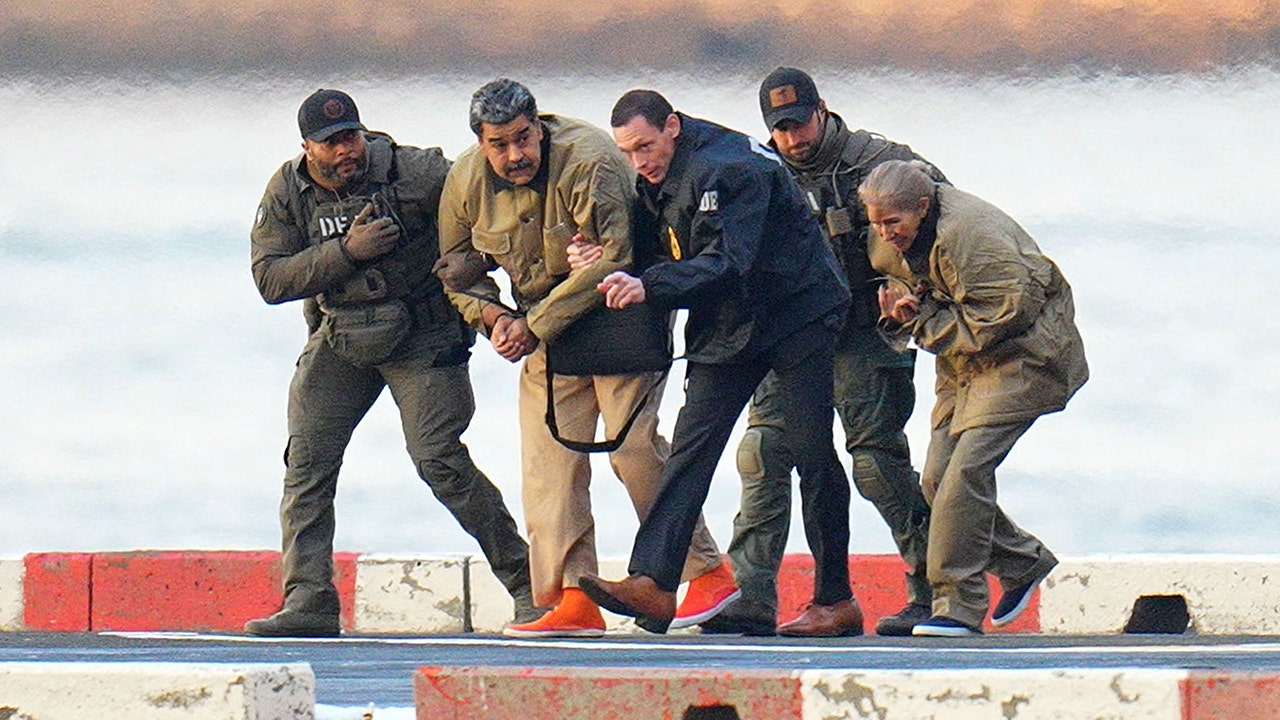
The case also arrives at a moment when Venezuela’s internal politics appear to have shifted dramatically. Recent reporting describes Maduro and his wife, Cilia Flores, as facing U.S. criminal proceedings in New York after a major American operation earlier this year, allegations they deny. Whether viewed through the lens of criminal justice, geopolitics or regional power, the broader development has placed Venezuela’s former ruling network under an extraordinary level of scrutiny.
In that environment, Saab’s return becomes more than a legal development. It becomes a test of loyalty inside a fractured political order.
Delcy Rodríguez, once Maduro’s vice president and now described in recent reports as Venezuela’s acting leader, appears to be moving against figures associated with the old power structure. That creates a political drama worthy of Washington thrillers: the former insiders of a fallen government facing a new leadership eager to demonstrate distance, discipline and cooperation.
But the stakes are not fictional. They are diplomatic, legal and deeply human.
For American officials, the Saab case touches on one of the hardest dilemmas in foreign policy: whether to negotiate with authoritarian governments to free detained citizens, even when those negotiations require concessions to people accused of serious crimes. Biden’s 2023 decision to release Saab was defended as part of a deal that brought detained Americans home. But critics argued then, and may argue even more loudly now, that freeing him gave up leverage over a man who could have been central to understanding Maduro’s financial machinery.
Now that Saab is reportedly back in U.S. custody, both sides of that argument will claim vindication.
Those who supported the 2023 exchange can say American lives were saved and Saab eventually returned to face justice. Those who opposed it can say the U.S. should never have let him go in the first place.
But the larger question may be whether Saab’s return gives prosecutors something they could not obtain before: cooperation.
In major corruption and organized-crime cases, the person who keeps the ledgers can be more valuable than the person who gives the speeches. Politicians make public claims. Financial operators leave trails. Invoices. Transfers. Corporate registries. Emails. Banking relationships. Shipping documents. Contract records. Conversations with intermediaries. The hidden architecture of power often survives in documents long after slogans vanish.
If Saab has access to that architecture, his value to prosecutors could be enormous.
American readers may recognize the pattern from major cases involving mafia families, corporate fraud or international bribery: the first arrest makes headlines, but the first insider to talk can change everything. That person can transform suspicion into narrative. Narrative into evidence. Evidence into indictments. Indictments into pressure. Pressure into more cooperation.
That is why the Saab case has the feel of a locked room beginning to open.
For years, the U.S. pursued Maduro and his associates through sanctions, indictments and diplomatic pressure. But authoritarian financial networks are notoriously difficult to break. Money moves across borders. Companies appear and disappear. Loyalists claim political immunity. Records sit in foreign jurisdictions. Witnesses fear retaliation. Governments refuse cooperation.
Saab’s reported deportation suggests that at least one of those barriers may have weakened.
If Venezuela’s current authorities are willing to hand over a figure of Saab’s stature, they may also be willing to share documents, authorize interviews or cooperate in related investigations. That would represent a profound change from the era when Caracas denounced U.S. charges as imperial aggression and treated accused insiders as political symbols.
Saab himself once became such a symbol. Maduro’s government had described him as a diplomat and portrayed his earlier detention as an attack on Venezuela’s sovereignty. His release in 2023 was celebrated by Maduro allies as a victory. To see him now deported by Venezuelan authorities is therefore not only legally significant. It is politically humiliating for what remains of Maduro’s old circle.
The symbolism is hard to miss.
A man once defended as indispensable is now disposable.
That is often how collapsed power systems behave. Yesterday’s loyalist becomes today’s burden. Yesterday’s protected envoy becomes today’s bargaining chip. Yesterday’s secret keeper becomes tomorrow’s witness.
And secrets are the true currency of this story.
The American public may see Saab’s name and wonder why one businessman matters so much. The answer lies in the allegation that he was not merely moving money for himself. U.S. authorities have argued that his network intersected with Venezuelan state programs and Maduro-linked interests. If proven, that would make him part of a much broader system in which public contracts, political loyalty and personal enrichment allegedly fed one another.
The CLAP food program is especially sensitive because it touches the daily life of Venezuelans. In a nation where hunger and scarcity became political weapons, the distribution of food boxes was not only social assistance. It was a mechanism of control. Families dependent on government food could be pressured, monitored or politically conditioned. Allegations that insiders profited from such a program are therefore explosive because they strike at the moral center of the crisis.
The alleged scheme, as described in U.S. reporting and court-related accounts, involved inflated food contracts and companies used to route money through layers of transactions. To the average reader, that may sound technical. But the human translation is simple: money that could have helped feed desperate families may have been diverted through elite networks.

That is why Saab’s return could resonate beyond courtrooms.
For Venezuelan migrants in Miami, Houston, New York, Bogotá, Madrid and countless other communities, this is not an abstract legal story. It is connected to memories of leaving parents behind, sending remittances, watching children grow up in exile, and wondering how a country with some of the world’s largest oil reserves could collapse so completely.
For American lawmakers, it is a story about sanctions, prisoner swaps and the credibility of U.S. justice.
For prosecutors, it is about evidence.
For Caracas, it is about survival.
The legal road ahead may be complicated. Saab’s lawyers may challenge the basis of his deportation, the scope of any charges, the effect of Biden’s earlier clemency, or the admissibility of evidence gathered across multiple jurisdictions. His defense could argue political motivation, diplomatic status or selective prosecution, as his supporters have done in the past. Prosecutors, meanwhile, will likely try to narrow the case to documents, contracts, financial movements and specific alleged criminal conduct.
The 2023 clemency issue may loom especially large in public debate. According to reporting, Biden’s action related to Saab’s earlier legal exposure, but investigators have continued examining other alleged corruption matters, including food-import contracts and bribery conspiracies. That distinction is important. A pardon or clemency grant in one case does not necessarily erase every possible investigation into separate conduct. But politically, the nuance may be lost in the firestorm.
Expect critics to ask why Saab was released at all.
Expect defenders to point to the Americans freed in exchange.
Expect prosecutors to say the present case must stand on evidence, not politics.
And expect Saab’s every court appearance to be scrutinized for signs of cooperation.

In Washington, the story will almost certainly feed into a larger debate over how the United States handles hostile governments that detain Americans. The Biden administration’s prisoner exchanges were often attacked by opponents as incentives for hostage diplomacy. But administrations of both parties have faced the same brutal choice: leave Americans in foreign prisons or make painful concessions to bring them home.
The Saab case is a reminder that those concessions do not disappear. They return, sometimes years later, with new complications.
If Saab now helps U.S. authorities, the 2023 exchange may be reinterpreted as a temporary detour in a longer pursuit. If he fights and reveals little, critics may say Washington squandered leverage. If his case exposes deeper corruption, it may become one of the most consequential Latin America-related prosecutions in recent U.S. history.
The suspense lies in the uncertainty.
No one outside the legal teams knows what Saab may say. No one knows whether he possesses documents that directly implicate others. No one knows whether he will cooperate, resist or attempt to turn the case into a political trial. No one knows whether Venezuela’s current leadership will continue cooperating or stop when the trail gets too close to people still in power.
But everyone involved understands the danger of a man like Saab talking.
Financial operators rarely act alone. They know bankers, ministers, intermediaries, relatives, lawyers, contractors, pilots, customs officials and foreign contacts. They know which companies were real and which were fronts. They know which contracts were inflated and which signatures mattered. They know who demanded loyalty, who demanded payment and who demanded silence.
That knowledge can be more threatening than any public accusation.
For Maduro, the return of Saab to U.S. hands may be particularly perilous because American prosecutors have long alleged that Maduro’s government was not simply corrupt but criminally intertwined with trafficking and illicit finance. Maduro and Flores deny the charges against them, and they are entitled to the presumption of innocence in U.S. court. But if prosecutors can connect financial records, insider testimony and state contracts to a broader criminal theory, Saab could become a central figure in that effort.
That is why this moment feels like the beginning of a second act.
The first act was Saab’s rise: the businessman moving through sanctions-era Venezuela, allegedly helping build channels around pressure and scarcity.
The second was his capture in Cape Verde, extradition to the United States and dramatic release in a prisoner swap.
The third act may now begin in an American courtroom.
And it may be the most dangerous one yet.
The public should be cautious, however, about treating allegations as convictions. American news reporting must separate what is charged, what is alleged, what is reported and what is proven. Saab has not been convicted in the new proceedings described in recent reports. Maduro and Flores deny the criminal charges they face. Political narratives around Venezuela are intense, and every side has incentives to exaggerate.
Still, even with that caution, the significance of Saab’s deportation is undeniable.
It is rare for a government to surrender a figure once considered so close to its former leader. It is rare for a man freed in a major U.S. prisoner swap to return to American custody so quickly. It is rare for a corruption case to intersect so directly with geopolitics, sanctions, hunger, migration and the fall of a political strongman.
That combination is what makes the story so explosive.
In Miami, where Venezuelan exile politics run deep, Saab’s return will likely be seen as a long-awaited crack in the wall. In Washington, it will be examined as both a legal opportunity and a political vulnerability. In Caracas, it may send a chilling message to those who once believed proximity to power guaranteed protection.
That message is simple: the old guarantees may no longer apply.
The question is who understands that first.
If Saab cooperates, the fallout could move quickly. Prosecutors may ask him to identify accounts, companies and officials. Investigators may compare his statements with bank records and seized communications. Defense lawyers for other figures may begin preparing for new revelations. Venezuelan officials may brace for accusations that reach beyond the Maduro family. Former allies may rush to distance themselves.
If he refuses, the case still matters. His trial could bring documents into the public record. Witnesses could testify. Contracts could be dissected. The machinery of alleged corruption could be displayed piece by piece before an American jury.
Either path carries risk for the people who once orbited Maduro.
The larger geopolitical consequences may be just as significant. A Venezuela willing to cooperate with U.S. law enforcement could seek relief from sanctions, diplomatic normalization or economic breathing room. But cooperation comes with a price: it may require exposing the very networks that sustained the state for years. Rodríguez’s leadership, according to recent reports, appears to be targeting figures associated with Maduro’s long rule. That may help her consolidate authority, but it could also provoke backlash from factions that fear they are next.
Authoritarian systems often look strongest before they fracture. Their unity depends on shared interest, shared fear and shared secrecy. When one of those elements breaks, the others can collapse quickly.
Saab’s deportation may be one such break.
The man who allegedly knew too much is now in the hands of prosecutors who want to know everything.
For American readers, the story carries echoes of past international scandals: dictators’ bankers, cartel accountants, sanctioned oligarchs, offshore fixers and political bagmen who discover that loyalty has an expiration date. But Venezuela’s tragedy gives this case a particular weight. Behind every alleged contract scheme is a country that suffered. Behind every accusation of stolen public money is a population that endured blackouts, empty pharmacies and mass migration.
That is why the case should not be reduced to courtroom drama alone.
It is about accountability after collapse.
It is about whether powerful people can hide behind flags, titles and diplomatic language forever.
It is about whether the paper trail of a broken nation can finally speak.
And it is about one man, Alex Saab, who may now face the most important decision of his life.
He can remain silent and take his chances in the American legal system.
He can fight the charges and attempt to cast himself again as a political prisoner.
Or he can open the vault.
If he chooses the last path, the shockwaves could reach from federal courtrooms in New York and Florida to government offices in Caracas, bank records in offshore jurisdictions and exile communities across the United States.
The story is not over. It has just entered the room where secrets become evidence.
And in that room, the most powerful person may not be the former president, the acting leader or the prosecutor.
It may be the man who knows where the money went.