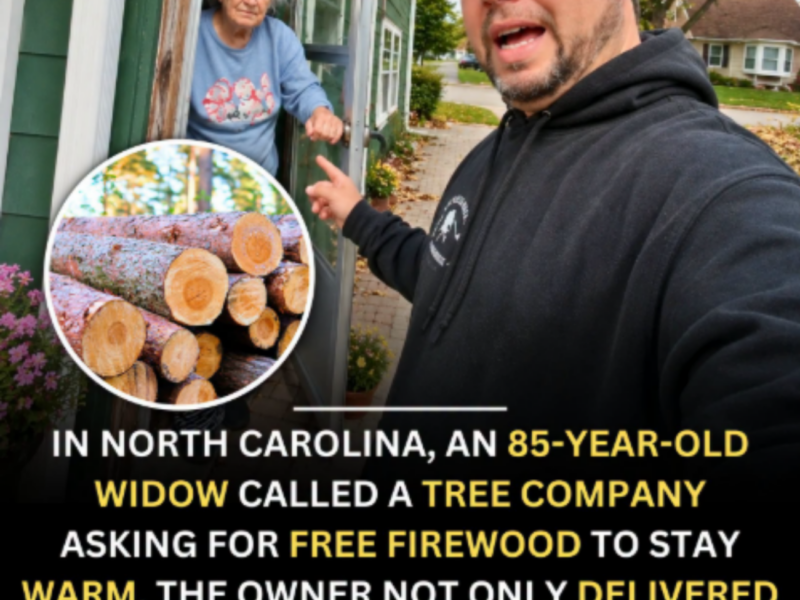
An 85-Year-Old Widow Couldn’t Afford Firewood—A Tree Company Owner Gave Her Much More Than She Asked For
An 85-Year-Old Widow Called for Firewood She Couldn’t Afford—The Tree Company Owner Who Answered Her Call Changed Her Life Forever
She Asked a Tree Company for Firewood. A Stranger Gave Her a Way Through Winter
The request was so modest that it almost disguised the emergency behind it.
Nana Abernathy did not ask for money. She did not ask anyone to repair her house, replace the tires on her car or solve the heating problems that had turned winter into something to fear.
She asked for wood.
At 85 years old, the widow was living alone in Icard, North Carolina, relying on Social Security and trying to keep her home warm as the temperature dropped. She called a local tree service with a question that must have required both courage and humility.
Did the company have any firewood it could spare?
She could not afford to pay for it.
For Paul Brittain, owner of Brittain Tree Care, the conversation could have remained a routine business call. Tree companies regularly produce branches, logs and wood debris. Some of that material is sold, some is processed and some must be hauled away. He could have told her what the wood cost, explained company policy or referred her elsewhere.
Instead, he listened.
The woman on the telephone was not searching for a bargain. She was trying to stay warm.
Brittain loaded firewood onto a truck and delivered it himself.
There was no invoice.
No payment arrangement.
No expectation that the 85-year-old widow would somehow repay the favor later.
He brought the wood because she needed it.
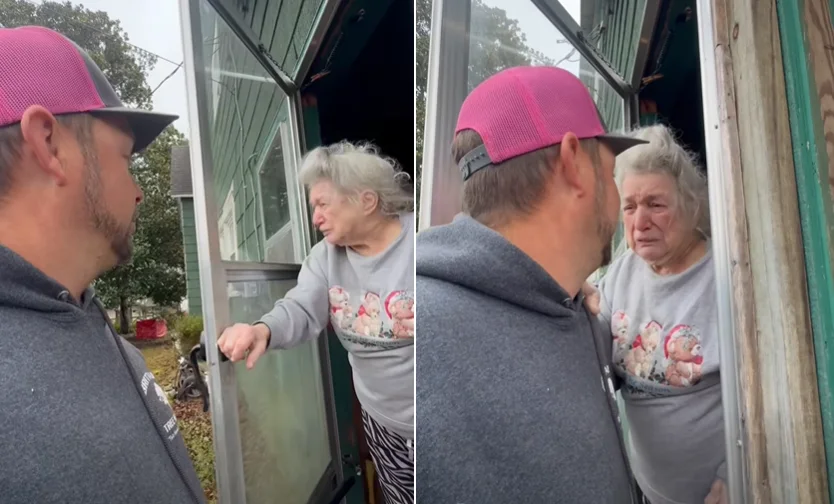
When the truck arrived at Abernathy’s home and the firewood began coming off, she cried. She hugged Brittain through her tears.
She had made one difficult phone call hoping for enough fuel to get through the cold.
She had no way of knowing that the man unloading the wood was about to notice everything else.
The roof was leaking.
The heating system was not working properly.
Her car needed new tires.
The firewood solved one immediate problem. The house revealed several more.
Brittain could have left after stacking the final piece of wood. He had already done far more than the woman had requested.
Instead, he came back.
He brought members of his crew. They repaired her roof. They addressed the heating and air-conditioning problems. They put new tires on her car.
None of it cost her anything.
Then Brittain created an online fundraiser to help Abernathy survive the winter with a measure of security instead of constant fear. The campaign raised more than $20,000.
A woman who had called a tree company asking for discarded wood found herself at the center of a community response.
She asked for heat.
What arrived was a lifeline.
The Phone Call
There is a particular kind of fear that comes with an approaching winter when there is not enough money.
For people living on fixed incomes, the season can become a series of calculations with no good answers. Food, electricity, medicine, transportation and home repairs all compete for the same limited dollars.
Heating cannot simply be postponed. Cold enters a house whether the resident can afford it or not.
A furnace that works poorly can turn a manageable utility bill into an impossible one. A leaking roof can let in water and damage the structure. A vehicle with unsafe tires can make every necessary trip dangerous.
For an older person living alone, these problems are not independent.
They multiply one another.
A car problem can prevent a trip to the store or doctor. A roof leak can create dampness, mold and further repair costs. A heating failure can become a medical emergency during a cold night.
Abernathy had spent much of her life solving problems without asking the public to notice. Like many older Americans, she belonged to a generation taught to endure quietly, stretch what money was available and avoid becoming a burden to others.
But firewood could not be produced through thrift alone.
At some point, she picked up the telephone.
She called Brittain Tree Care and admitted she could not pay.
That sentence may have been the hardest part of the request.
People often imagine poverty as a lack of money. It is also a series of humiliations.
It is asking a stranger for something basic.
It is explaining that a normal price is beyond reach.
It is waiting through the silence after the admission and wondering whether the answer will be pity, suspicion or rejection.
Abernathy was not seeking comfort in the abstract. She needed something physical enough to burn.
The company had wood.
She had cold rooms.
The distance between those realities was one person’s decision.
The Man Who Answered
Paul Brittain operated a business, not a social-service agency.
His company cut trees, removed dangerous limbs and handled work that requires heavy equipment, trained crews and physical risk. Every truckload carries costs: labor, fuel, maintenance and time.
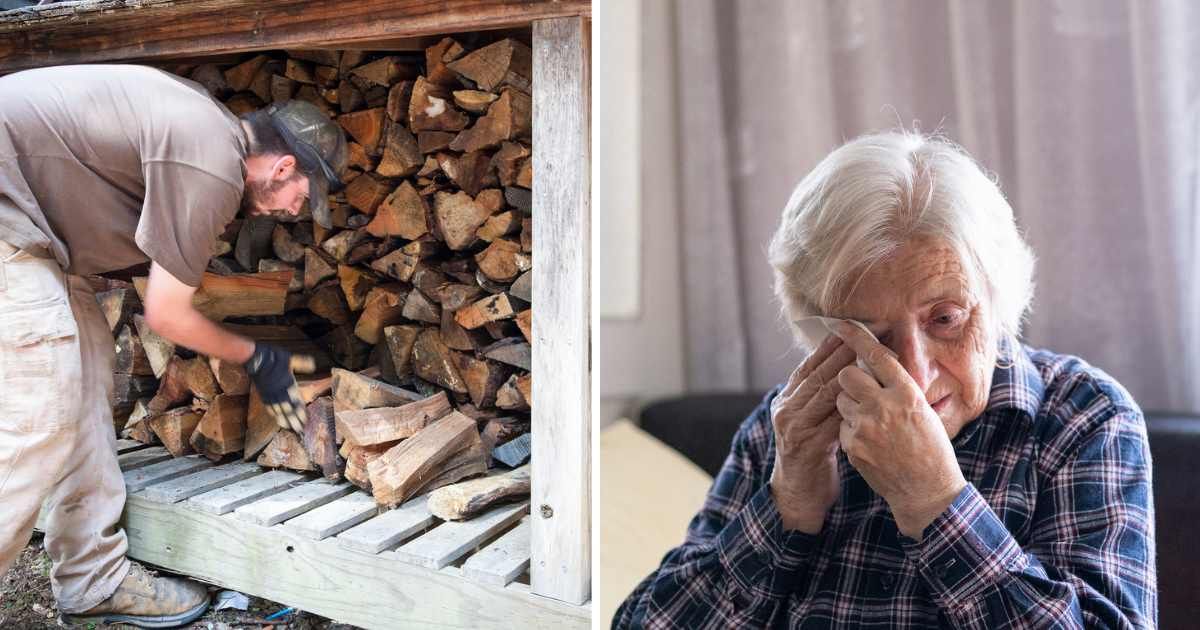
Giving away wood is not truly free for the person delivering it.
Someone loads it.
Someone drives it.
Someone unloads it.
The truck could be traveling to another job. The employees could be performing paid work. Even material that might otherwise be discarded must be processed and transported.
Brittain understood all of that.
He also understood what the woman was asking.
He did not begin by demanding proof of need. He did not turn the conversation into an application process. According to the account of what followed, he did not hesitate.
He loaded the truck.
Then he went to her house.
This is the point where many acts of kindness end. A specific need is identified and met. The person helping returns to normal life with the satisfaction of having done something decent.
The story might have been shared as a brief local example of generosity: Tree company gives free firewood to elderly widow.
That would have been enough.
But Brittain saw the house.
What a Delivery Driver Could Not Ignore
Homes tell stories their occupants may never volunteer.
A stained ceiling suggests water entering somewhere above. A bucket placed beneath a drip says the repair has been delayed. A room that feels colder than it should raises questions about the heating system. A vehicle sitting outside with worn tires reveals a problem that cannot be solved by keeping the car parked forever.
Brittain had come to deliver firewood, but the other problems were difficult to separate from the reason for the call.
The woman needed wood because she was trying to remain warm.
Yet the heating system itself was failing.
The roof was leaking.
Her transportation was unsafe.
The firewood would help, but only temporarily. It was a response to the visible symptom of a much larger crisis.
For an 85-year-old living alone, a roof repair is not simply a weekend project. It requires climbing, tools, materials, strength and knowledge. Heating and air-conditioning repairs require technical skill. New tires require money and transportation to a shop.
Abernathy could not solve these problems by wanting to solve them.
She needed people.
Brittain had already become one of them.
He faced another decision.
He could recognize the additional problems, express sympathy and leave.
Or he could treat what he had seen as something that now involved him.
He chose the second.
The Return
Brittain came back with help.
The exact sequence of work mattered less than the fact that the first delivery was not the end of his involvement. He and his crew began addressing the problems one by one.
They worked on the roof.
A leaking roof is an especially cruel problem for a homeowner with limited income. The longer it goes unrepaired, the more expensive it may become. Water can travel through insulation, wood and walls before appearing inside. A small opening above can create widespread damage below.
For a widow living alone, every storm can become another source of anxiety.
Will the leak worsen?
Will water reach electrical wiring?
Will part of the ceiling give way?
How much will the next rain cost?
Brittain’s crew repaired the roof without charging her.
Then came the heating and air-conditioning system.
The firewood had provided an immediate source of warmth, but the malfunctioning system threatened Abernathy’s ability to maintain a safe temperature throughout the house.
Heating repairs can cost hundreds or thousands of dollars depending on the problem. For a person living on Social Security, even a relatively modest repair bill may be unreachable.
The system was repaired.
Again, there was no bill.
Then Brittain addressed the car.
The tires needed replacement.
Tires are among the ordinary expenses that become dangerous when delayed. A driver may continue using worn tires because the vehicle still moves. The risk builds quietly: reduced traction, longer stopping distances and greater vulnerability during rain or winter weather.
For an older resident in a community where transportation may be necessary for groceries, appointments and prescriptions, simply giving up the car may not be realistic.
New tires were installed.
Abernathy’s vehicle became safer.
One by one, the problems that had surrounded her began to change.
The house would keep out the rain.
The heating would work.
The car could be driven with less fear.
The firewood remained, but it was no longer the only barrier between the widow and the winter.
Why the Story Felt Shocking
Nothing about helping an older neighbor should be shocking.
Yet the story spread because the scale of the response felt almost unbelievable.
Americans are accustomed to hearing about elderly people forced to choose between medicine and heat. They see fundraising campaigns for medical bills, housing repairs and funeral expenses. They know that one broken furnace or major car repair can destabilize a household living from one monthly payment to the next.
What they do not expect is for a business owner to encounter such a situation and keep helping until the immediate dangers have been addressed.
Brittain did not simply donate the product his company had available.
He stepped beyond the boundaries of his profession.
A tree-service owner could reasonably be expected to provide wood.
He was not expected to solve a roof leak.
He was not expected to repair a heating system.
He was not expected to buy tires.
He did these things because each problem affected the same person standing in front of him.
The acts were separate.
The reason was one.
Abernathy needed help.
The Hug Beside the Firewood
When Abernathy saw the wood being delivered, she broke down crying.
The emotional response made visible what the phone call had concealed.
This was not merely a customer pleased with a delivery.
She had been carrying fear.
The firewood represented warmth, but it also represented relief from being alone with the problem.
Someone had believed her.
Someone had arrived.
Someone had looked at her need and decided it mattered.
The hug she gave Brittain may have been the only form of repayment she could offer.
It was enough to explain why the delivery mattered.
For people who have never faced a winter without reliable heat, a pile of firewood may look ordinary. For Abernathy, it meant she would not have to sit in a cold house wondering what would happen next.
Her tears did not come because the wood was valuable in the commercial sense.
They came because the delivery told her she had not been abandoned.
The Winter Behind the Story
Winter is often romanticized in American culture.
Snow falls outside warm windows. Families gather near fireplaces. Holiday lights glow. Blankets, hot drinks and fires become symbols of comfort.
For low-income older adults, the same season can be dangerous.
A cold home can worsen existing medical conditions. Older bodies regulate temperature less effectively. Reduced mobility may make it difficult to move firewood, operate equipment or seek help during an emergency.
Social isolation increases the risk.
A younger person with a failed furnace may stay with friends or family, use space heaters carefully or arrange repairs through work connections. An 85-year-old widow may have fewer options.
Cold does not have to reach extreme levels to become harmful over time.
The fear can begin long before the first freezing night.
How much fuel is left?
Will the system fail completely?
Can the electric bill be paid?
What happens if the car cannot reach the store?
Abernathy’s request for firewood was therefore not small at all.
It was a survival plan reduced to one question.
Do you have any wood you can spare?
Social Security and the Mathematics of Scarcity
Living on Social Security often requires an expertise no financial planner teaches.
A fixed monthly payment must cover expenses that do not remain fixed. Food prices rise. Insurance costs change. Property repairs arrive without warning. Vehicles age. Medical needs increase.
There is no reserve large enough to absorb every emergency.
A widow may own her home and still be financially vulnerable. The house itself may be the largest asset she possesses, but it cannot easily pay for its own roof or furnace.
Selling may not be practical. Borrowing may be unavailable or dangerous. Moving may mean leaving the community, memories and independence built over decades.
So repairs are delayed.
A leak is managed with a container.
A heater is coaxed through another week.
Tires are driven farther than they should be.
Firewood becomes the most immediate solution because it can be burned tonight.
The public often encounters poverty through dramatic images: homelessness, hunger or eviction.
Abernathy’s situation represented another form.
She had a house.
She had a car.
She appeared to possess the basic markers of stability.
But the roof leaked, the heater failed and the tires were unsafe.
Ownership did not mean security.
It meant she was responsible for problems she could not afford to solve.
From Private Help to Public Appeal
Brittain could not repair every part of Abernathy’s future himself.
The immediate work reduced the danger, but winter would continue. Bills would arrive. Groceries, fuel and daily expenses would remain.
He created a GoFundMe campaign.
Crowdfunding has become one of the most revealing institutions in modern American life. It allows strangers to respond quickly to personal crises. It also exposes how often essential needs depend on public generosity.
Campaigns raise money for cancer treatment, rent, funerals, home repairs and disaster recovery. The stories compete for attention, and the ones that move people emotionally can receive extraordinary support.
Abernathy’s story contained every element likely to make viewers stop.
An 85-year-old widow.
A cold house.
A humble request for firewood.
A business owner who kept returning with help.
A hug beside a truck.
The campaign spread.
Donations came in.
The total passed $20,000.
For someone living month to month, that amount represented more than money.
It represented time.
Time without wondering whether the next emergency would be impossible.
Time to buy food, pay utilities and maintain the home.
Time to face winter with something closer to security.
The Crowd That Answered
Most of the people who donated would never meet Abernathy.
They would not sit in her living room or see the repaired roof. They would not ride in the car with the new tires or feel the heat moving through the house.
They responded to a story.
A stranger’s account transformed Abernathy from an unknown widow in North Carolina into someone thousands of people could imagine as their own mother, grandmother or neighbor.
The donations varied in size, but together they formed a public answer to the telephone call she had originally made.
She had asked one company for spare wood.
The request traveled beyond the company.
A community, both local and online, began responding.
This is one of the strange powers of the internet. It can spread cruelty, misinformation and humiliation. It can also allow a person’s need to cross distances that would once have made help impossible.
The same technology that often makes people feel isolated created a crowd around an 85-year-old widow.
Not every person could repair a roof or deliver wood.
They could contribute money.
They could share the campaign.
They could become part of the answer.
Charity or Community Responsibility?
Stories like Abernathy’s are often described as proof that kindness still exists.
That is true.
They also raise a more difficult question.
Why did an 85-year-old widow need a tree-company owner and online donors to secure heat, transportation and a sound roof?
The generosity deserves celebration.
The vulnerability should not be ignored.
A society can praise individual charity while still examining why basic safety depends on chance encounters. Abernathy’s circumstances were not created by a lack of personal responsibility. She had lived into old age, survived the loss of her spouse and maintained a home on limited income.
The crisis emerged because aging is expensive and fixed incomes do not expand when houses and vehicles break.
Brittain’s response was extraordinary.
It should not be the only mechanism available to people in similar situations.
For every widow whose phone call reaches someone willing and able to help, others receive a price estimate they cannot pay. Their roofs continue leaking. Their heaters remain broken. Their tires grow more dangerous.
Abernathy’s story inspires because the outcome was generous.
It disturbs because the beginning was common.
The Business Owner Who Kept Seeing Problems
Brittain’s role in the story was not only to provide resources.
He paid attention.
Many people could have delivered wood without examining anything beyond the unloading location. A worker focused on completing the task might not ask whether the heating system worked or whether the tires were safe.
Brittain noticed.
Attention is often the first act of compassion.
The roof leak existed before he arrived.
The heating problem existed before the phone call.
The worn tires had likely been visible for some time.
What changed was that someone with the ability to respond saw them and decided not to look away.
There is a moral risk in noticing another person’s hardship. Once it is seen clearly, ignoring it becomes a choice.
Brittain could have protected himself from responsibility by deciding the other problems were outside his business.
Instead, he widened the definition of the job.
The job was no longer delivering firewood.
The job was helping Abernathy get safely through winter.
A Crew Becomes a Community
Brittain did not do every part of the work alone.
His crew became involved.
That detail matters because generosity often expands through example. One person decides to act, and others begin seeing a role for themselves.
Employees who normally cut trees and clear property found themselves participating in the repair of a widow’s life. Their labor carried a different meaning.
The work may have involved familiar tools and practical skills, but the result was personal.
A roof repaired for free does not generate revenue.
It generates shelter.
A heating system restored without charge does not improve a quarterly report.
It warms a person’s home.
New tires purchased for a stranger do not advertise themselves once the car leaves.
They reduce the chance of an accident.
The crew’s involvement turned Brittain’s initial decision into a collective effort.
The company did not merely perform charity.
It temporarily became the support system Abernathy lacked.
What the Widow Received
The material benefits were easy to list.
Firewood.
Roof repair.
Heating and air-conditioning service.
New tires.
More than $20,000 in donations.
But the deeper benefit was harder to measure.
Abernathy received evidence that her life remained visible to other people.
Old age can bring a shrinking world. Friends and spouses die. Mobility decreases. Social circles become smaller. Problems inside a home may remain hidden because fewer visitors come through the door.
A widow can live surrounded by houses and still feel alone.
The response to Abernathy told her the opposite.
People noticed.
People came back.
People gave.
The firewood warmed the house.
The attention may have warmed something else.
The Power of Being Asked
Brittain’s actions were remarkable, but they began only because Abernathy asked.
This is not a simple lesson about requesting help. Asking can be dangerous emotionally. It can expose a person to rejection or judgment.
Still, the phone call created an opportunity that silence could not.
Abernathy may have believed she was asking for the smallest thing a tree company could spare. She did not present a list of every problem in her life.
She opened one door.
Brittain walked through it and saw the rest.
Many people hesitate to ask because they fear becoming a burden. They underestimate the possibility that others may want to help but do not know the need exists.
Abernathy’s call did not guarantee kindness.
It made kindness possible.
A Different Kind of Emergency Response
No sirens arrived at Abernathy’s house.
No official disaster was declared.
There was no television footage of floodwater, fire or wreckage.
Yet the conditions inside the home formed a slow emergency.
A leaking roof becomes more dangerous with every storm.
A failing heater becomes more serious as temperatures fall.
Unsafe tires remain a threat every time the car moves.
Firewood runs out piece by piece.
The crisis developed quietly enough that it might never have drawn public attention.
Brittain responded as though urgency did not require flashing lights.
He treated prevention as a form of rescue.
The roof was repaired before the next leak caused greater damage.
The heating was fixed before a cold night became dangerous.
The tires were replaced before a failure on the road.
The woman received help before the winter reached its worst point.
The Firewood as a Beginning
At first, the wood seemed like the solution.
It became the beginning.
That reversal gives the story its emotional structure.
The widow believed she understood what she needed most. Brittain discovered that the firewood was only the visible edge of a much larger hardship.
Every log unloaded made the house warmer.
Every additional act made the future safer.
The progression felt almost unbelievable because each step exceeded the one before it.
Free wood.
Then a repaired roof.
Then working heating and air conditioning.
Then new tires.
Then thousands of dollars from strangers.
What began as a delivery became a restoration of stability.
Why Americans Shared the Story
The story touched a national nerve because it represented both the best and worst of American life.
The worst was the vulnerability.
An 85-year-old widow living on Social Security could not afford basic winter needs. Her home and transportation had deteriorated beyond what she could repair.
The best was the response.
A local business owner treated her crisis as personal. His crew contributed labor. Online donors provided money. A woman who feared the cold was surrounded by people she had not known would come.
Americans often tell themselves that communities will respond when government systems, insurance or personal savings fail.
Sometimes they do.
This was one of those times.
The story offered proof that individual decency can interrupt hardship.
It did not prove that hardship had disappeared.
What Twenty Thousand Dollars Means
To a wealthy household, $20,000 may represent a vacation, investment or renovation.
To Abernathy, it could represent winter itself.
The money could cover heating expenses, food, transportation and future repairs. It could create an emergency cushion where none had existed.
The psychological difference is enormous.
Poverty forces attention onto the next problem.
Financial security allows a person to think beyond it.
Before the fundraiser, Abernathy’s planning horizon may have been measured in days: how much wood remained, how cold the night would become, whether the car could safely make another trip.
The donations extended that horizon.
She could think in weeks and months.
The money did not make her wealthy.
It made the future less immediately dangerous.
The Difference Between a Gift and a Lifeline
A gift adds something pleasant to a life.
A lifeline prevents a life from being overwhelmed.
The firewood was both.
It was offered freely, but it met a need tied directly to safety. The roof, heater and tires were not luxuries. They were systems supporting daily survival.
Brittain’s help was not decorative generosity.
It was structural.
He repaired the things holding Abernathy’s life together.
That is why the word “lifeline” fits.
He did not simply make her winter nicer.
He made it more survivable.
The Tears at the Truck
The image of Abernathy crying as the wood was unloaded remained central to the story because it captured the exact moment when despair began turning into relief.
She did not yet know everything that would follow.
The roof had not been repaired.
The heating system had not been fixed.
The tires had not been replaced.
The fundraiser had not raised thousands of dollars.
At that moment, she saw only that the immediate request had been answered.
That alone was enough to overwhelm her.
The later help expanded the story, but the first tears revealed how close she had been to feeling without options.
A Stranger Until He Wasn’t
Before the telephone call, Brittain and Abernathy may have been strangers.
Afterward, the word no longer seemed accurate.
Strangers are people without connection.
Brittain created a connection through action.
He did not need years of friendship or family obligation to decide that her wellbeing mattered. The need itself was enough.
Communities are often imagined as networks built through long relationships. But sometimes community is created instantly when one person responds to another.
A phone call crossed the distance.
A truck arrived.
A stranger became the person who came back.
The Question the Story Leaves Behind
The public response often focuses on Brittain’s character.
Would other business owners have done the same?
Would most people continue after delivering the wood?
The questions are understandable, but the story also challenges the audience more directly.
What problems have we noticed and decided were not ours?
Which older neighbors live in homes we have never entered?
Who is stretching food, medicine or heat behind a closed door?
Not everyone can provide a roof or raise $20,000.
Almost everyone can notice.
A telephone call can be returned.
A meal can be delivered.
A ride can be offered.
A local agency can be contacted.
A fundraiser can be shared.
Brittain’s actions were extraordinary in scale. The first act was ordinary.
He said yes.
The Roof Above Her
A repaired roof changes the emotional experience of rain.
Before the work, every storm could carry dread. Water entering a home is a reminder that the boundary between shelter and weather is failing.
Afterward, rain could strike the roof without becoming an indoor crisis.
That kind of security is easy to overlook when it has always existed.
For Abernathy, it was newly restored.
The repair did more than protect wood and walls.
It returned trust in the house.
Warm Air
A functioning heating system changes the way a person inhabits a home.
Without it, rooms shrink. A resident may remain near one heat source, close doors and avoid parts of the house. Daily life becomes organized around staying warm.
With reliable heat, the entire home becomes usable again.
The repair restored more than temperature.
It restored space.
Abernathy could move through the house without every room presenting a new calculation.
The Tires
New tires might appear less emotionally significant than a roof or heater.
They represented independence.
For an older widow, a safe car may preserve the ability to buy groceries, attend medical appointments and maintain relationships beyond the home.
Unsafe tires can turn independence into risk.
Replacing them protected both mobility and dignity.
Brittain’s help did not confine Abernathy safely inside the repaired house.
It helped her leave it.
A Winter Rewritten
Before the phone call, winter looked like a threat.
After the response, it looked different.
There was wood available.
The heater worked.
The roof was sound.
The car had safe tires.
Money had been raised.
The weather itself had not changed.
Abernathy’s ability to face it had.
This is what meaningful help does. It does not remove every difficulty from the world. It changes the balance between the difficulty and the person confronting it.
Winter remained cold.
She was no longer facing it alone.
The Story Behind the Heartwarming Headline
The headline practically wrote itself:
Widow asks for firewood, receives thousands in help.
But heartwarming stories often contain painful foundations.
The warmth comes from the rescue.
The pain lies in the fact that rescue was needed.
Abernathy’s story should make people feel hopeful.
It should also make them uncomfortable.
An 85-year-old woman had to confess to a business that she could not afford fuel. Her roof, heating system and car had all reached dangerous conditions before support arrived.
The happy ending does not erase the hardship that came first.
It reveals how much can change when someone responds.
The Company Truck
A tree-service truck is not usually mistaken for a vehicle delivering social aid.
It carries tools, wood and workers.
At Abernathy’s house, it became something else.
It arrived carrying heat.
Later, the company’s involvement carried repair, transportation safety and public attention.
The truck’s first arrival marked the moment her situation began moving in another direction.
For Abernathy, the sound of that vehicle approaching may have been the sound of a promise being kept.
She Did Not Ask for Everything
One of the most striking parts of the story is that Abernathy did not ask Brittain to solve her life.
She asked for wood.
The rest emerged because he noticed.
This protected her dignity in an important way.
She was not portrayed as demanding ever more assistance. She had limited the request to what she believed was reasonable.
Brittain expanded the response because he understood that the smallest request often sits on top of the largest need.
People in crisis may ask for less than they require.
They fear rejection.
They do not know what help is available.
They have grown accustomed to making do.
Compassion listens to the request.
Attention looks beyond it.
The Measure of a Business
Businesses are usually measured through revenue, growth and customer satisfaction.
Brittain Tree Care became known through a different calculation.
How did the owner respond when there was no profit to be made?
The answer reached far beyond Icard.
Brittain used company resources, personal time and public credibility to help a woman who could not become a paying customer.
In doing so, he demonstrated that a local business can be more than an economic institution.
It can be part of the community’s emergency infrastructure.
The Legacy of One Phone Call
The call produced more than a delivery.
It created a story that encouraged other people to reconsider the needs around them.
Some who heard about Abernathy may have donated to her fundraiser. Others may have checked on an elderly neighbor, contributed firewood or offered home repairs in their own communities.
Acts of kindness can reproduce themselves.
The original gesture becomes a model.
Not everyone can repeat the exact response, but they can repeat its logic:
A person has a need.
I have something that can help.
I should act.
The Life After the Viral Moment
Public attention eventually moves on.
Another story appears. Another fundraiser spreads. The names that once filled news feeds become less familiar.
Abernathy’s repaired roof remains after the attention fades.
The tires continue turning.
The heating system continues warming the house.
The money raised continues providing security.
That durability separates the response from a temporary viral gesture.
The help did not exist only for the photograph.
It changed the conditions of her life.
What Paul Brittain Actually Gave
The obvious answer is wood, repairs, tires and fundraising.
The deeper answer is permission to stop being afraid for a while.
Abernathy had been carrying several emergencies simultaneously. Each required money she did not have. The combined pressure likely made the future feel smaller and colder.
Brittain separated the problems and addressed them.
The roof could be fixed.
The heater could work.
The car could be safe.
The winter could be funded.
What had looked like one impossible situation became a series of solvable tasks.
He did not simply give resources.
He returned possibility.
The House in Icard
Somewhere in Icard, the house remained standing.
The roof no longer leaked as it had.
Warm air moved through the rooms.
Firewood waited to be burned.
A car with new tires sat outside.
To anyone passing, the property might have looked ordinary.
That ordinariness was the achievement.
A crisis had been prevented from becoming catastrophe.
An older woman could remain in her home with greater safety.
The best acts of rescue sometimes restore a life to a condition the outside world barely notices.
The Last Log Off the Truck
When the final piece of firewood came off Brittain’s truck, the original request had technically been fulfilled.
He could have driven away with a clear conscience.
The widow had wood.
The company had done a good deed.
The story could have ended.
Instead, the last log became the beginning of the real story.
Brittain looked beyond the pile.
He saw the house.
He saw the car.
He saw the woman.
Then he returned.
A Lifeline in Work Boots
Heroes in American stories often arrive in uniforms.
Firefighters, police officers, soldiers and medical workers are trained to respond.
Brittain arrived in the context of ordinary business.
His tools were meant for trees.
His truck was meant for jobs.
His crew was meant to earn a living.
Yet when the need appeared, those resources became instruments of rescue.
The response required no title and no official authority.
It required willingness.
The Meaning of “Free”
Every service Abernathy received was described as free.
But the work had value.
Someone absorbed the cost.
Brittain and others paid through labor, materials, money and time. Donors transferred part of what they had to a woman they did not know.
“Free” meant Abernathy did not carry the cost.
The community did.
That is one definition of solidarity: a burden too heavy for one person is distributed among many.
She Asked for Firewood
The sentence remains powerful because of everything that followed.
She asked for firewood.
Not a new life.
Not public attention.
Not thousands of dollars.
Firewood.
The scale of the request showed how narrowly she had defined hope.
Enough wood to remain warm.
Brittain widened it.
A dry roof.
A working heater.
A safe car.
Money for winter.
A community.
The Stranger Who Did Not Stop at Enough
Brittain had done enough after the first delivery.
Then he did more.
He had done enough after repairing the roof.
Then he did more.
He had done enough after fixing the heating system.
Then he did more.
He had done enough after replacing the tires.
Then he created the fundraiser.
The pattern explains why the story moved people.
Most kindness ends when obligation has been exceeded.
Brittain kept asking what remained.
The Winter She Expected and the Winter She Received
Abernathy likely expected a season defined by scarcity.
She would ration wood.
Watch the weather.
Worry about the roof.
Limit trips in the car.
Hope the heating system survived.
Instead, the season began with a truck arriving.
Then workers returned.
Then donations appeared.
Her winter was not made perfect. Aging, grief and financial limitation did not disappear.
But fear lost some of its control.
A Community That Showed Up
Communities often celebrate themselves through festivals, slogans and local pride.
Their true measure appears when someone vulnerable asks for help.
In this case, the response began with one business owner and expanded outward.
Workers contributed.
Donors participated.
Strangers shared the story.
The community was not defined by geography alone. It included people online who would never visit Icard.
They showed up through what they could give.
The Final Accounting
At the beginning, Abernathy lacked money for firewood.
At the end, she had:
A supply of wood.
A repaired roof.
A functioning heating and air-conditioning system.
New tires.
More than $20,000 in donated support.
The list is impressive.
The emotional accounting is larger.
She began with uncertainty.
She ended with evidence that other people cared whether she remained warm, dry, mobile and safe.
What Kindness Looked Like
It looked like a telephone call being answered.
It looked like wood stacked on a truck.
It looked like an older woman crying beside a delivery.
It looked like workers returning to a house after the original job was complete.
It looked like tools on a roof.
It looked like heat moving through rooms.
It looked like new tires beneath an old car.
It looked like small online donations joining one another until the total passed $20,000.
Kindness did not remain an emotion.
It became material.
The Lifeline
The word “lifeline” is often used loosely.
Here, it was literal enough.
Heat protects life.
A sound roof protects health.
Safe tires protect a driver.
Money protects against the next emergency.
Brittain and the donors gave Abernathy more than comfort. They reduced risks that could have become serious or fatal.
The original request was humble because the woman asking had narrowed her expectations to the smallest possible rescue.
The response restored what hardship had taken from her imagination.
She could ask for wood.
Other people could see a future worth protecting.
The Story That Remains
Long after the fundraiser total stops changing and the social-media posts disappear from public attention, one image remains at the center of the story.
An 85-year-old widow watches firewood being unloaded.
She cries.
She reaches for the man who brought it.
At that moment, neither of them knows exactly how far the act will spread.
She believes she has received enough to keep warm.
He has already begun seeing the other things that need repair.
The hug marks the point where a business transaction that never became a transaction turned into something larger.
She had called a company.
A community answered.
She had asked for firewood.
A stranger gave her a way through winter.