BREAKING: Evan Spiegel and Miranda Kerr Help Erase $550 Million in Medical Debt for Californians
Evan Spiegel and Miranda Kerr Make Massive Impact by Wiping Out $550 Million in Medical Debt
The Letter That Erased Half a Billion Dollars: How Evan Spiegel and Miranda Kerr Helped Wipe Out Medical Debt for 261,000 Californians
For thousands of Californians, the news will not arrive with a phone call, a press conference, or a warning.

It will arrive in the mail.
A plain envelope. A name printed on the front. A letter from a nonprofit many recipients may never have heard of. And inside, a message so unexpected that some people may read it twice, then a third time, searching for the catch.
The debt is gone.
Not reduced. Not delayed. Not moved to another collector. Gone.
For more than 261,000 people across California, medical bills that may have followed them for years are being wiped away through a massive debt relief effort funded by Snap Inc. Chief Executive Evan Spiegel and his wife, model and entrepreneur Miranda Kerr.
The scale is staggering: more than $550 million in medical debt erased.
The number is difficult to absorb because it is not one bill. It is not one hospital account. It is not one family’s crisis.
It is more than a quarter-million Californians — patients, parents, workers, seniors, caregivers, students, and people who may have already endured the pain of illness only to discover that the financial consequences lasted far longer than the emergency itself.
In San Diego County alone, roughly $99 million in medical debt is being erased for 40,369 people. In Los Angeles County, $26.7 million is being wiped away for 17,466 people. Other counties across the state are also seeing millions of dollars in relief.
And for many recipients, there is nothing to fill out. No application. No essay explaining hardship. No line to stand in. No public confession of financial pain.
They will simply receive a letter telling them that a burden they carried has been lifted.

That is what makes the story feel almost unreal.
In a country where medical debt can haunt credit reports, strain marriages, delay care, and force families to choose between treatment and groceries, one philanthropic gift has turned into one of the largest statewide medical debt relief efforts California has ever seen.
But behind the headline is a deeper American story — one about sickness, money, shame, inequality, generosity, and the shocking mechanics of a system where a few million donated dollars can eliminate more than half a billion dollars in bills that ordinary families could never pay.
The announcement came through Undue Medical Debt, a national nonprofit that specializes in buying and abolishing medical debt. The organization does not pay hospitals the full face value of every bill. Instead, it purchases qualifying debt in bulk, often at a steep discount, the way collection agencies do. The difference is that Undue Medical Debt does not chase the patient.
It cancels the debt.
That is the hidden twist at the center of the story. The $550 million figure does not mean Spiegel and Kerr wrote a check for $550 million. Their donation allowed the nonprofit to acquire and erase medical debt at scale, turning one gift into relief that stretched across hundreds of thousands of lives.
For families on the receiving end, the technical details may matter less than the result. A bill that once sat in a drawer, triggered a collection notice, or created a knot in the stomach every time the phone rang could suddenly vanish.
The emotional power of that moment is difficult to overstate.
Medical debt is unlike many other forms of debt. It often does not come from luxury, risk, or ambition. It comes from a diagnosis. A crash. A fever that would not break. A child’s emergency. A parent’s surgery. An ambulance ride. A hospital stay that began with fear and ended with paperwork.
For many Americans, the debt arrives after the trauma. The body heals, but the bill remains.

That is why this California relief effort has touched a nerve far beyond the state. It is not simply a celebrity philanthropy story. It is not only a billionaire couple making a public donation. It is a window into one of the most painful contradictions in American life: people can survive a medical crisis and still feel punished for needing help.
Spiegel and Kerr framed their gift around that reality. Their message was simple: when someone is sick or recovering, the focus should be on healing, not on bills that follow a family for years.
That statement lands with force because millions of Americans know exactly what that means.
They know what it means to avoid opening an envelope because it may contain another demand. They know what it means to ignore a call from an unknown number because it may be a collector. They know what it means to delay a doctor visit because the last one produced a bill they still have not paid.
They know the private arithmetic of medical debt: rent or payment plan, medicine or utilities, groceries or collections.
For more than 261,000 Californians, that arithmetic is about to change.
The letters are expected to begin arriving in mid-July. Undue Medical Debt says recipients cannot request relief directly because the process is based on the debt the nonprofit is able to acquire from providers, hospitals, physician groups, or collectors. People typically qualify if their income is at or below 400% of the federal poverty level, or if their medical debt equals at least 5% of their annual income.
That means the relief is targeted toward people for whom the bills are not merely inconvenient. They are financially burdensome.
The people receiving these letters may not all be unemployed or destitute. Many may be working. Some may have insurance. Some may have done everything they believed they were supposed to do. They may have chosen covered providers, paid monthly premiums, and still found themselves staring at charges that felt impossible.
That is the quiet scandal of medical debt in America. It does not only affect the uninsured. It can hit people who are insured but undercovered, people who face deductibles, out-of-network surprises, ambulance charges, emergency room fees, or long recovery costs that spill beyond what a plan can protect.
A single illness can become a financial event.
A single accident can follow someone for years.

The story of one former recipient, identified by Undue Medical Debt as Brooklyn from Woodland, California, gives the numbers a human face. She described being in a traumatic car accident during a medical crisis in 2018 and receiving an ambulance bill of more than $4,600. For years, she said, the debt haunted her as she tried to rebuild her life, return to school, and raise her daughter as a single mother.
Then came the letter.
The bill was gone.
Her reaction was not only about money. It was about feeling that someone believed she deserved another chance.
That is the emotional center of this entire effort. Medical debt is not just a financial problem. It can become an identity. It can make people feel irresponsible even when they were simply unlucky. It can make them feel ashamed for getting sick, ashamed for needing care, ashamed for not being able to pay a bill that was never realistic in the first place.
Debt relief does not erase the injury, the illness, or the anxiety that came before it. But it can interrupt the punishment.
In California, the punishment has been spread widely.
Undue Medical Debt’s county breakdown shows how large the relief is. San Diego County tops the list with more than $99 million erased for more than 40,000 people. Riverside County follows with nearly $69.5 million erased for more than 35,000 people. San Bernardino County will see more than $56.5 million erased for over 32,000 people. San Joaquin County will receive more than $45 million in relief. Los Angeles County, the nation’s most populous county, will see nearly $26.8 million eliminated.

The numbers look like a government program. But this is not a government program.
It is private philanthropy operating inside a broken marketplace.
That is where the story becomes more complicated.
The same mechanism that makes this relief possible also reveals the strange reality of American medical debt. Bills that can devastate a family may later be sold for a fraction of their listed value. A debt that once looked immovable can become cheap enough for a nonprofit to buy and abolish.
To a patient, a $5,000 bill is a mountain. In the debt market, that same bill may be part of a bundle sold for pennies on the dollar.
This gap between face value and market value is what allows Undue Medical Debt to turn donations into enormous relief. Every dollar can stretch dramatically because the nonprofit is not negotiating one bill at a time at full price. It buys portfolios of qualifying debt in bulk.
The model is powerful. It is also unsettling.
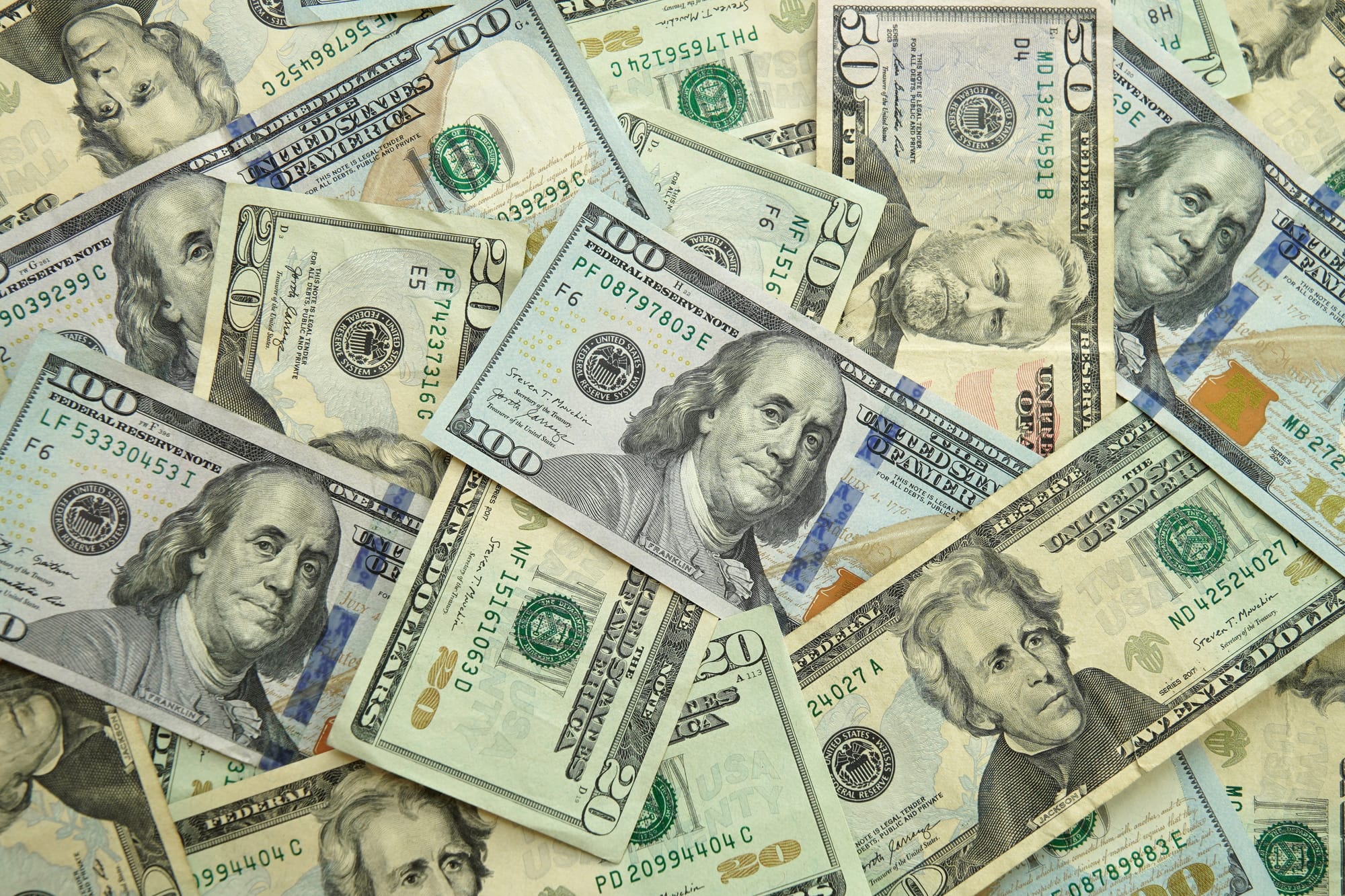
It forces a question: if a debt can be erased for so little, why was it allowed to crush someone for so long?
That question sits beneath the celebration.
For recipients, the answer may not matter immediately. Relief is relief. A family that has been carrying an impossible medical bill does not need a lecture on healthcare finance before feeling gratitude. They need the burden gone.
But for the country, the question matters. A philanthropic act can be generous and still expose a system that should never have required philanthropy in the first place.
That tension is why the Spiegel-Kerr gift is drawing attention. It is both an act of kindness and a mirror. It shows what can happen when wealth is used to remove suffering. It also shows how many people were suffering quietly.
California is an especially powerful setting for this story. It is home to Silicon Valley fortunes, Hollywood wealth, expensive coastal cities, deep inland poverty, world-class hospitals, and some of the highest costs of living in the nation. It is a place where extreme prosperity and financial fragility often exist side by side.
A billionaire can live minutes from families who are one ambulance ride away from financial collapse.
Evan Spiegel’s own story is deeply tied to California. He co-founded Snapchat, built one of the most recognizable social media companies in the world, and became one of the youngest tech billionaires of his generation. Miranda Kerr, known internationally as a model and founder of KORA Organics, has built her own public brand around wellness, beauty, and entrepreneurship.
Together, they are wealthy, famous, and highly visible.
But this donation does not operate like a traditional celebrity charity moment. There is no single hospital wing with a name on it. No gala photo that explains the full impact. No one recipient standing onstage as the symbol of the entire campaign.
Instead, the impact will unfold privately, letter by letter, across California.
One person may open the envelope at a kitchen table after work. Another may read it in a parked car. Another may hand it to a spouse and ask, “Is this real?” Another may cry before reaching the end.
Some may be suspicious. In an era of scams, spam, fake notices, and predatory collection schemes, a letter saying that debt has disappeared can sound too good to be true. That is one reason public announcements matter. Recipients need to know the letter is legitimate.
The emotional drama is built into the delivery itself. The relief does not arrive as a check. It arrives as the absence of a claim. The family does not receive money to spend. They receive freedom from money already demanded.
That distinction is important.
Sometimes the greatest financial gift is not giving someone more. It is taking away what has been holding them down.
For many families, that can mean more than a balanced account. It can mean sleeping through the night. It can mean answering the phone again. It can mean going back to a doctor without fear that an old bill will resurface. It can mean no longer feeling trapped by a crisis that ended years ago.
The psychological burden of medical debt is real. People with unpaid medical bills often report stress, anxiety, and fear. Some delay care because they are worried about adding new bills to old ones. Others cut back on food, utilities, savings, or education. In some households, medical debt becomes a family secret.
Parents may hide it from children. Adult children may hide it from aging parents. Couples may argue about it behind closed doors.
The bill becomes more than paper. It becomes pressure.
That is why the phrase “fresh start” resonates. It may sound simple, even sentimental, but for people carrying medical debt, a fresh start can be concrete. It can mean a credit path that slowly improves, a budget that finally works, or a sense that the future is no longer being dragged backward by the past.
This is especially significant because medical debt often comes after people have already suffered physically. A person recovering from cancer, surgery, a car accident, childbirth complications, or a chronic condition may be forced to become a financial negotiator at the exact moment they are least able to fight.
They must call billing departments, dispute charges, request charity care, understand insurance codes, and answer collectors — all while trying to heal.
The system demands stamina from people who are already exhausted.
Undue Medical Debt’s model bypasses the individual fight. It does not require recipients to prove their worthiness in a public way. It does not ask them to turn their pain into a fundraising campaign. It quietly removes eligible debt once the organization has acquired it.
That quietness is part of the dignity.
There is no need for a recipient to perform gratitude online. No need to explain why they fell behind. No need to convince strangers that their illness was serious enough, their poverty deserving enough, their struggle authentic enough.
The debt is simply abolished.
Still, the larger debate is unavoidable.
In recent years, medical debt has become a major political and economic issue in the United States. State and local governments have explored debt relief partnerships. Consumer advocates have pushed for reforms. Hospitals have faced pressure over billing practices. Credit reporting changes have sparked national debate. Philanthropists have increasingly stepped into the gap.
Supporters of debt relief call it one of the highest-impact forms of giving because a relatively small donation can erase a large amount of nominal debt. Critics caution that while debt cancellation helps individuals, it does not fix the underlying reasons bills become unaffordable.
Both views can be true.
For the person opening the letter, the relief is not symbolic. It is real. For the healthcare system, however, the erased debt is evidence of a continuing failure.
A country should not need billionaires to rescue patients from bills attached to necessary care. But when the bills already exist, refusing relief because the system is imperfect would punish the very people most in need of help.
That is the moral complexity of the Spiegel-Kerr gift. It is not a cure for America’s healthcare affordability crisis. It is a massive intervention inside that crisis.
The scale makes it impossible to dismiss.
More than 261,000 Californians is not a small audience. It is larger than the population of many American cities. If every recipient stood in one place, the crowd would fill stadiums. Behind every number is a household budget, a medical history, and a story most strangers will never hear.
Some of these debts may be old. Some may have been written off by providers. Some may no longer be actively pursued with the same intensity as a fresh bill. But that does not mean they were harmless. Old debt can still create fear, confusion, and financial limits. It can still appear in records, collections, or personal calculations. It can still influence whether someone seeks care again.
Debt does not need to be new to hurt.
The relief also challenges a common American belief: that unpaid bills are always the result of bad choices. Medical debt complicates that narrative because illness is not a choice. Accidents are not choices. Emergencies do not wait for savings accounts to be ready.
A person can be responsible, hardworking, insured, and still overwhelmed.
That is why the public response to these stories is often emotional. People see themselves in the recipients. They know how close they are, or once were, to the same situation.
A medical bill can turn a stable life unstable with shocking speed.
One week, a family is managing. The next, a diagnosis changes everything. Work hours disappear. Childcare costs rise. Transportation to appointments becomes expensive. Insurance covers some costs but not all. Bills arrive from separate providers: hospital, doctor, lab, anesthesiologist, ambulance, imaging center. Each envelope tells only part of the story, but together they create a wall.
Families try to climb it. Many cannot.
When they fall behind, the language changes. The patient becomes a debtor. The recovery becomes an account. The emergency becomes a balance.
That transformation can feel dehumanizing.
This is why debt erasure carries emotional force. It reverses the label. It tells people, in effect, that their hardship is not a moral failure.
For Spiegel and Kerr, the donation also fits into a broader pattern of California-focused philanthropy. In 2022, they paid off student loan debt for graduates of Otis College of Art and Design in Los Angeles. Spiegel has also been involved in relief efforts connected to the devastating Los Angeles County wildfires, including commitments to recovery initiatives.
Those earlier efforts matter because they suggest this latest gift is not an isolated publicity gesture. It is part of a broader interest in debt, opportunity, and California communities.
Still, this medical debt relief effort is different in size and emotional reach.
Student debt affects dreams. Medical debt affects survival.
Both can shape a life, but medical debt carries the added weight of physical vulnerability. Nobody wants to remember an ambulance ride as a financial mistake. Nobody wants a cancer diagnosis to become a credit problem. Nobody wants the birth of a child, the treatment of a parent, or the emergency care of a spouse to become a source of long-term shame.
Yet that is exactly what happens in many American households.
The announcement also arrives at a time when affordability dominates public anxiety. Housing, groceries, insurance, energy, childcare, and healthcare have stretched families across the country. In California, those pressures are especially sharp. Even middle-income households can feel financially fragile. For low-income families, one unexpected medical bill can be devastating.
Medical debt is often the bill that arrives after every other bill has already been paid.
Rent is due. Gas is needed. Food cannot wait. Utilities must stay on. Children need supplies. Then the hospital bill appears, asking for money that does not exist.
Many people do not refuse to pay. They simply cannot.
The debt then enters a shadow system. It may be bundled, sold, resold, discounted, pursued, reported, disputed, forgotten, and rediscovered. The patient may not understand where it went, who owns it, or whether paying one collector will end the matter.
For someone already struggling, the process can feel impossible to navigate.
Undue Medical Debt’s approach cuts through that maze by acquiring qualifying debt and abolishing it. The organization then sends letters notifying recipients. There are no tax consequences for the recipient in these cases, according to the nonprofit’s general model, because the relief is treated as a gift.
That detail matters because many people fear that any forgiven debt may create another bill. The goal here is the opposite: no payment, no application, no new burden.
The relief is designed to arrive without strings.
That is why the letters may become some of the most important pieces of mail these families receive all year.
Imagine opening an envelope expecting another demand and finding release instead. Imagine seeing a balance that once represented panic reduced to zero. Imagine realizing that a bill connected to one of the worst moments of your life no longer has power over your future.
That moment is the human story beneath the statistics.
The public may remember the headline: “$550 million erased.” Recipients may remember the sentence that told them they were free.
But the story should not end with gratitude alone.
It should also force a national reckoning with the math.
If $550 million in medical debt can be erased through a discounted purchase, what does that say about the original prices? What does it say about the collection market? What does it say about the way hospitals account for unpaid bills? What does it say about the gap between what patients are charged and what debts are ultimately worth to buyers?
These are uncomfortable questions because they expose the difference between healthcare as care and healthcare as finance.
The patient experiences the bill as a moral obligation. The market may treat it as distressed paper.
That contrast is shocking.
A family may spend years feeling crushed by a debt that investors value at a tiny fraction of its face amount. A collector may pursue a balance that the original provider has already discounted internally. A person may skip care because of a number that the system itself does not expect to fully recover.
This does not mean every bill is fake or every provider is malicious. Healthcare financing is complex. Hospitals face real costs. Providers need to be paid. Insurance systems are difficult. Charity care rules vary. Administrative burdens are enormous.
But complexity does not erase the human consequence.
When ordinary people cannot understand, predict, or afford the cost of care, the system produces fear. When fear keeps people away from doctors, medical debt becomes not only a financial issue but a public health issue.
That is why debt relief can help people re-engage with healthcare. If someone believes the medical system will only produce bills they cannot handle, they may avoid it until conditions worsen. Removing old debt may make it easier for them to seek care again.
That benefit is harder to measure than dollars erased, but it may be just as important.
A person who goes back to the doctor sooner may avoid a worse crisis later. A parent who no longer fears collections may focus on a child’s treatment. A patient who feels less ashamed may ask for help before it is too late.
Debt relief can restore trust, or at least reduce fear.
The California gift also highlights a broader shift in modern philanthropy. Some wealthy donors are looking for interventions that produce immediate, measurable impact. Medical debt relief offers dramatic leverage: a donation can translate into many times its value in canceled bills. It produces clear numbers, compelling stories, and direct household relief.
That makes it attractive in an era when people are skeptical of vague charitable promises.
Here, the outcome is specific: $550 million erased. More than 261,000 people affected. County totals listed. Letters sent.
The clarity is powerful.
But there is also a risk that such stories become too neat. The public may cheer the generosity and move on, leaving the underlying crisis untouched. The families helped by this gift deserve celebration. The system that made the gift necessary deserves scrutiny.
Both must remain in view.
Spiegel and Kerr’s gift can be understood as an act of compassion. It can also be understood as an indictment of the status quo. In the wealthiest country on earth, a medical emergency can still become a financial trap. In one of the wealthiest states in America, hundreds of thousands of people carried debt tied to healthcare they needed.
That should shock people.
Not because a billionaire couple helped, but because so many needed help.
The most haunting part of the story is not the size of the gift. It is the silence that came before it.
Before the announcement, these debts existed in private. They were scattered across households, hidden in mail piles, attached to memories of hospital rooms and anxious nights. They did not form a single visible crisis until someone bought and erased them together.
Suddenly, the scale became visible.
More than half a billion dollars.
More than 261,000 Californians.
That is the kind of number that transforms private hardship into public evidence.
The recipients may never meet Evan Spiegel or Miranda Kerr. They may never attend a charity event or appear in a campaign video. They may simply go on with their lives a little lighter than before.
That is the quiet beauty of the effort. It does not require the recipients to become symbols. It lets them remain people.
A mother can buy groceries without mentally subtracting from a medical payment. A worker can answer the phone without dread. A senior can stop worrying that an old bill will surface again. A student can focus on school. A patient can think about health instead of collections.
Those are not abstract outcomes.
They are the texture of everyday relief.
In American news, stories about billionaires often follow familiar patterns: wealth, power, controversy, influence, luxury, political spending, corporate decisions. This story is different because the central action is subtraction.
Something was removed.
The drama is not about what was built, bought, or displayed. It is about what disappeared.
A debt disappeared from a record. A fear disappeared from a household. A monthly worry disappeared from a family budget. A reminder of illness disappeared from the mail.
That disappearance may not solve everything, but for the person experiencing it, it can feel enormous.
The coming weeks will likely bring more attention as letters arrive. Some recipients may share their stories publicly. Others may stay quiet. Many may simply feel relief in private.
The public should resist the temptation to measure the value of this effort only by social media reaction. The deepest impact may happen in homes where no camera is present.
A person may sit alone at a table and cry. A couple may hug in a hallway. A parent may tell a child that things are going to be a little easier. Someone may finally throw away a folder of old bills.
That is newsworthy, too.
At the same time, policymakers, healthcare leaders, insurers, and advocates should see the announcement as a challenge. Charity can rescue people from yesterday’s debt. It cannot by itself prevent tomorrow’s bills from becoming the next crisis.
Without broader reform, new medical debts will continue to accumulate. New patients will receive new bills. New families will make impossible choices. New portfolios of unpaid debt will eventually be sold.
Debt relief is a powerful response, but prevention is the harder goal.
The United States must still confront why medical care so often produces financial ruin. It must confront opaque pricing, insurance gaps, aggressive billing, insufficient charity care access, and the administrative complexity that leaves patients confused and exposed. It must confront why people who are sick are expected to become experts in coding, coverage, appeals, and collections.
Until those issues are addressed, philanthropy will remain both a blessing and a warning.
For now, though, hundreds of thousands of Californians are receiving something rare: unrequested mercy from a system that usually demands action, proof, payment, and persistence.
The letter will not undo the accident. It will not reverse the diagnosis. It will not erase the hours spent worrying, the arguments over money, or the appointments delayed out of fear.
But it will erase the debt.
And sometimes, that is enough to let a person breathe again.
The story of Evan Spiegel, Miranda Kerr, and Undue Medical Debt is ultimately not just about wealth. It is about the strange power of a single decision to alter hundreds of thousands of lives. It is about what happens when money is used not to buy attention, but to remove pressure. It is about the difference between charity that decorates a reputation and charity that changes the mail arriving at a family’s home.
For more than 261,000 Californians, the impact will be personal.
A bill they could not pay will no longer be waiting.
A collector may never call.
A balance that once felt permanent will be gone.
The shocking part is that half a billion dollars in medical debt could disappear at all.
The hopeful part is that, for hundreds of thousands of people, it did.
And sometime in mid-July, as letters begin landing across California, families who thought they were opening another reminder of hardship may instead discover something almost unimaginable in American healthcare.
A fresh start.