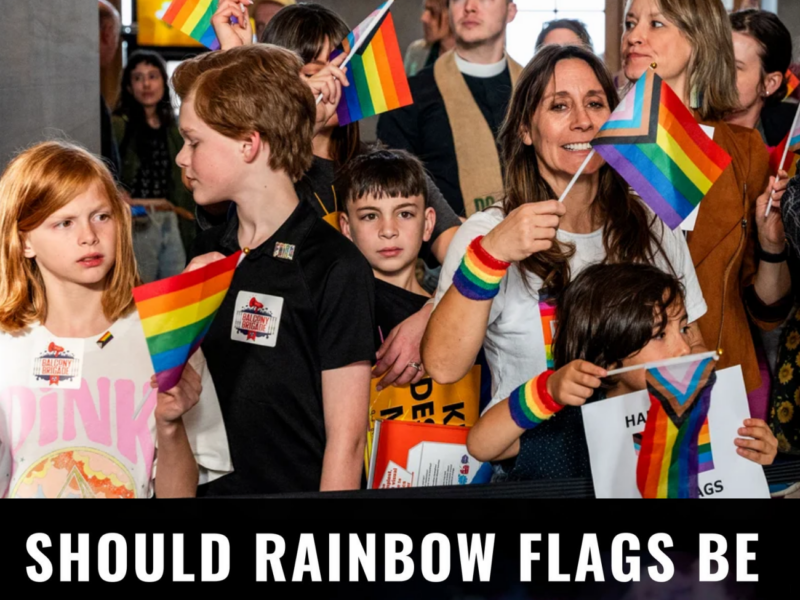
BREAKING: Heated Debate Erupts Over Whether Rainbow Flags Should Be Allowed in Schools and Preschools
Should Rainbow Flags Be in Classrooms? Heated Debate Ignites Over Schools and Early Education Settings
In classrooms across the United States, a quiet but deeply emotional debate has been unfolding—one that rarely stays quiet for long once it reaches school board meetings, parent group chats, or viral social media threads.
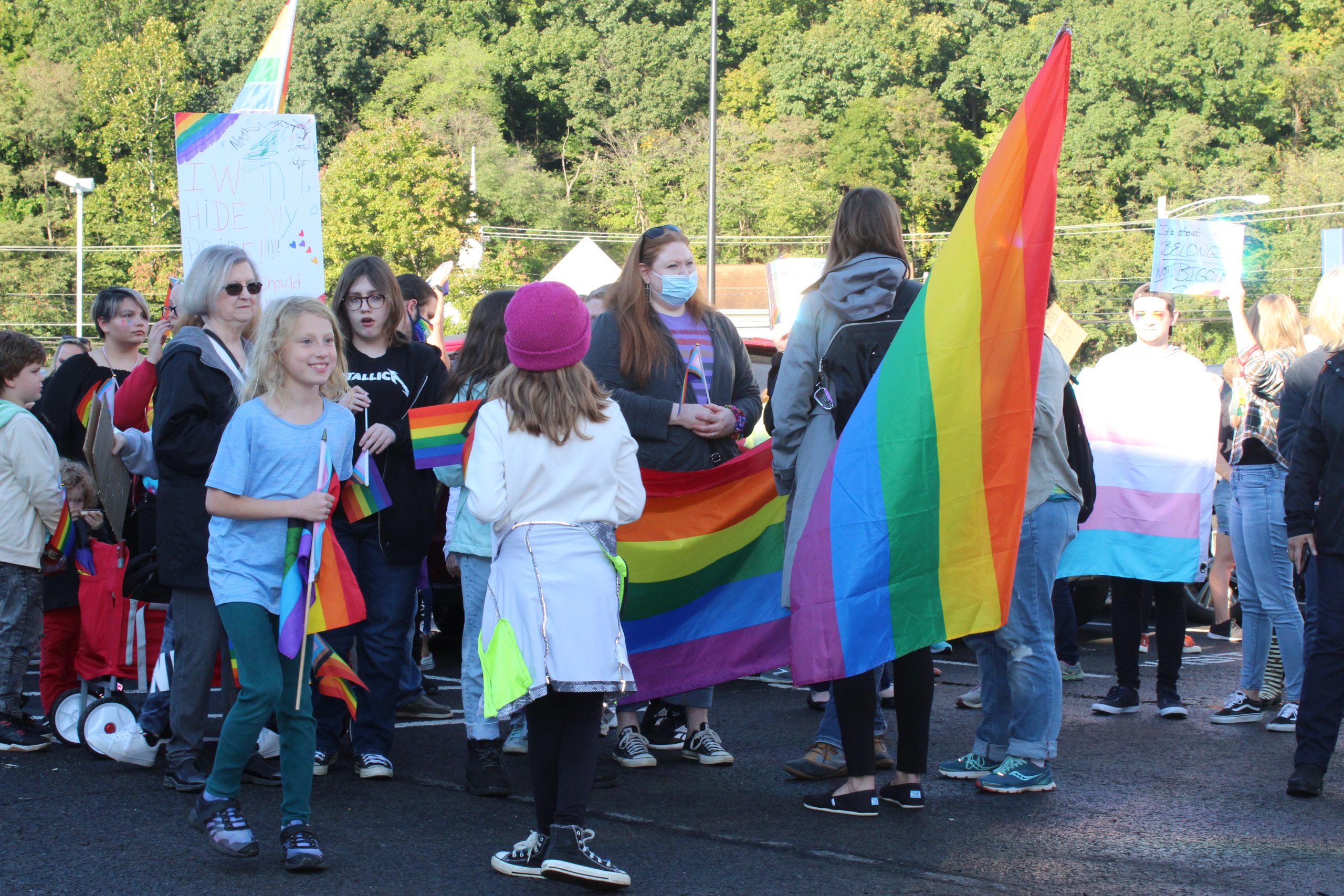
At the center of the discussion is a symbol that has become instantly recognizable around the world: the rainbow flag. To some, it represents inclusion, safety, and belonging for LGBTQ+ students. To others, it raises concerns about political neutrality in schools, parental authority, and the boundaries of what public education should represent.
And in today’s hyperconnected media environment, even a single image of that flag hanging in a hallway can ignite a nationwide argument.
The question being asked—sometimes calmly, often not—is simple on its surface but complex underneath: should rainbow flags be displayed in preschools and schools, or should they be removed in the name of neutrality?
The answer depends on who you ask. But the intensity of the disagreement reveals something larger about how America understands education, identity, and childhood itself.
The School as a Symbolic Battleground
Public schools have always carried expectations that extend beyond academics. They are expected to teach math and reading, but also to function as spaces where children learn how to exist in society—how to interact, how to respect differences, and how to understand the world around them.
That dual role is where tension often begins.
For many educators and administrators, symbols like the rainbow flag are not intended as political statements, but as signals of safety. In their view, school environments are not neutral spaces in the abstract—they are lived environments where students bring their identities, fears, and social realities every day.
Supporters of visibility argue that some students arrive at school already feeling isolated or different. For those students, visible symbols of acceptance can function as reassurance that they are not alone and will not be excluded or targeted.
But critics see the same symbols differently. They argue that public schools, funded by taxpayers with diverse beliefs, should not display imagery associated with contested cultural or political debates. In their view, neutrality is not indifference—it is fairness.
This disagreement is not just about flags. It is about what schools are supposed to be.
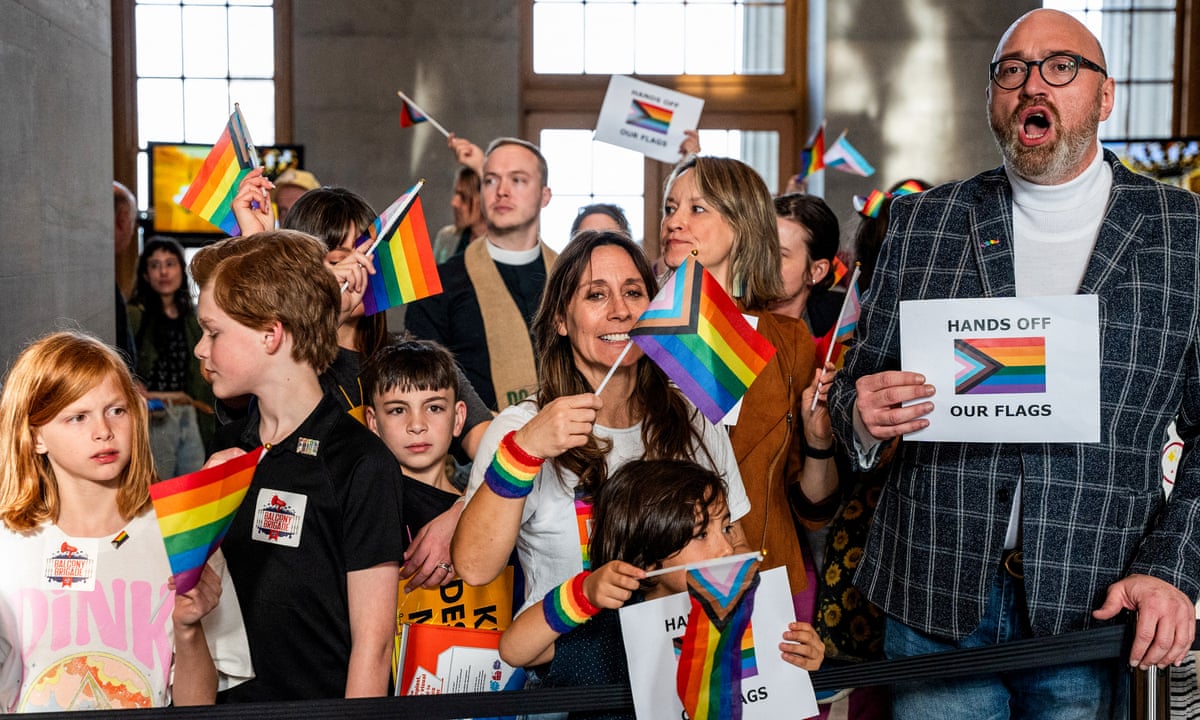
What the Rainbow Flag Represents—and to Whom
The rainbow flag has evolved over decades as a symbol of LGBTQ+ pride and visibility. For many students and educators, it is associated with anti-bullying initiatives, inclusion programs, and efforts to reduce harassment in schools.
In classrooms where it is displayed, it is often accompanied by broader messaging about respect and kindness rather than explicit political advocacy.
However, interpretation varies widely depending on personal, cultural, and regional perspectives.
For some parents, especially those who prefer that discussions of gender and sexuality remain within the home, the flag represents a broader cultural shift in how identity topics are introduced in childhood settings. Their concern is not necessarily about inclusion itself, but about whether schools should be the place where such symbols appear at all.
Others see those concerns as misunderstanding the purpose of inclusion efforts. They argue that visibility is not indoctrination, but acknowledgment—that students who exist in every community deserve to see themselves reflected in the environment where they learn.
This fundamental divide is why the debate rarely settles. Each side is often responding to a different definition of what the symbol means.
The Question of “Neutrality”
At the heart of the argument is a powerful concept in American civic life: neutrality.
Those who advocate for removing symbols like rainbow flags from schools often frame their position around the idea that education should remain politically neutral. In their view, classrooms should focus strictly on academics and avoid signaling alignment with social or cultural movements.
But neutrality itself is not a simple standard. Even the decision to display—or not display—certain symbols can be interpreted as a position.
For example, some educators argue that removing all identity-related symbols does not eliminate messaging; it simply shifts what is visible and what is invisible. A school that avoids all representation may still communicate a sense of exclusion to students who are already marginalized.
On the other hand, those advocating for removal argue that expanding symbols into every corner of school life risks blurring the line between education and advocacy.
The challenge is that both perspectives rely on competing definitions of fairness.
The Experience Inside Schools
Beyond policy debates and public arguments, schools themselves operate in a more grounded reality.
Teachers and administrators are often focused less on symbolism and more on daily interactions: preventing bullying, supporting mental health, and ensuring students feel safe enough to learn.
In many schools, inclusion messaging is part of broader anti-bullying campaigns rather than a standalone ideological initiative. Posters, assemblies, and classroom discussions often emphasize respect for differences of all kinds—not limited to identity topics.
In that context, symbols like rainbow flags are often viewed as one piece of a larger environment rather than the centerpiece of instruction.
However, school staff also find themselves navigating increasing scrutiny. A single decoration in a hallway can become the subject of a formal complaint, a school board discussion, or even national attention.
This has created a climate where educators must constantly evaluate not only what they teach, but how every visual element of the school environment might be interpreted by different audiences.
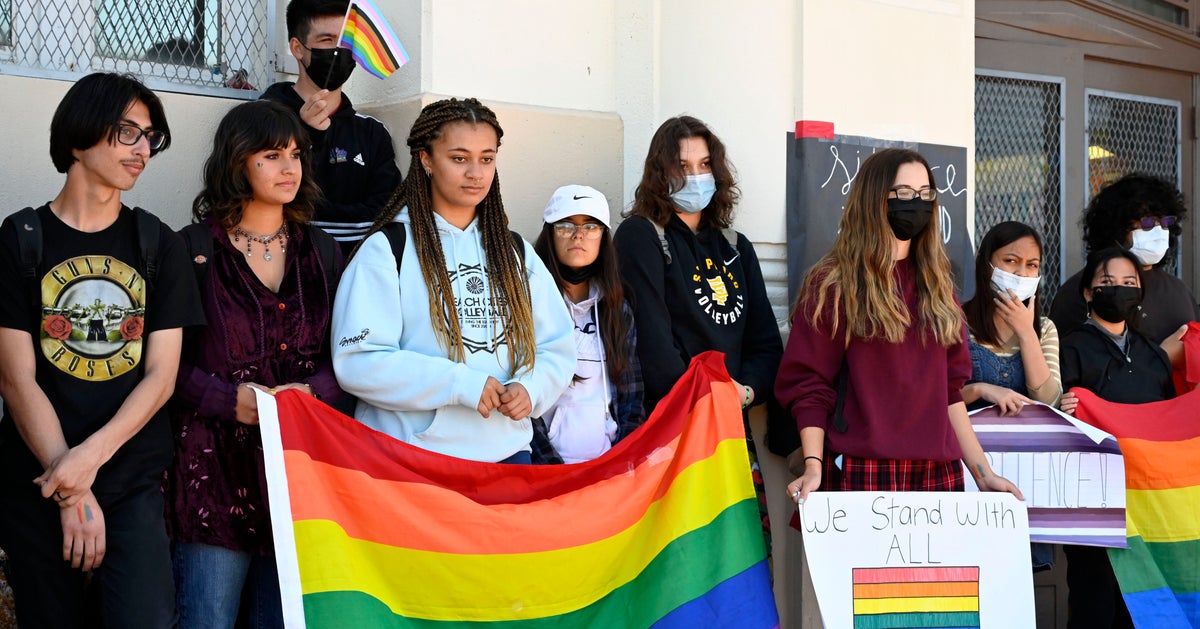
The Role of Parents and Local Control
One of the most persistent themes in this debate is the role of parents in shaping educational environments.
In the United States, public education is deeply localized. School boards, often elected by community members, are responsible for setting policies that reflect local values. This structure means that decisions about symbols in schools can vary significantly from one district to another.
For parents advocating restrictions, this local control is essential. They argue that families should have a strong voice in determining what is appropriate for their children’s classrooms, especially when it involves topics they view as sensitive or complex.
Other parents argue just as strongly that schools must reflect the diversity of the communities they serve. In their view, removing inclusive symbols may send a message—intentional or not—that certain students are less welcome.
The result is a recurring cycle: school board meetings become arenas where deeply personal beliefs are debated in public forums, often under intense emotional pressure.
Social Media Amplification and the Speed of Conflict
What might once have remained a local discussion now often becomes a national story within hours.
A single photo of a classroom display can circulate widely online, stripped of context and reinterpreted through competing narratives. Comment sections quickly transform into polarized debates, and local decisions are reframed as evidence of broader national trends.
This amplification effect intensifies pressure on schools and parents alike. Decisions that were once routine now carry symbolic weight far beyond their original scope.
In many cases, the speed of online reaction outpaces the ability of educators or policymakers to respond with clarity. By the time context is provided, the narrative has already spread.
Children at the Center, Adults in Conflict
Lost in much of the public debate is the perspective of students themselves.
For younger children, symbols in classrooms are often not processed in ideological terms. A flag may be seen simply as part of the room’s visual environment, much like posters, books, or artwork.
Older students, however, may interpret these symbols more consciously, particularly if they relate to identity or belonging. For some, visible inclusion can provide reassurance during formative years. For others, conflicting messages from home and school can create confusion or tension.
This variability underscores a key challenge: schools serve children at vastly different developmental stages, all within the same institutional space.
The Broader Cultural Context
The debate over rainbow flags in schools is part of a larger national conversation about identity, education, and public space.
Across many domains—libraries, sports, workplaces, and entertainment—similar questions have emerged about representation and neutrality. What should public institutions reflect? And who gets to decide?
These questions do not have simple answers because they involve competing values: inclusion, neutrality, freedom of expression, and parental authority.
Each value is widely supported in principle, yet difficult to balance in practice.
The Illusion of a Simple Answer
Online discussions often present the issue in binary terms: either schools should display rainbow flags as a commitment to inclusion, or they should remove them entirely to maintain neutrality.
But in practice, school systems operate in a far more complex reality. Policies are shaped by legal guidelines, community input, educational goals, and practical considerations about student well-being.
Some districts adopt compromise approaches, such as limiting symbolic displays while maintaining written anti-bullying policies. Others allow individual classrooms discretion, resulting in variation even within the same school.
The diversity of approaches reflects the absence of a single national consensus.
Conclusion: A Debate About More Than Flags
At its core, the controversy over rainbow flags in schools is not just about a piece of fabric or a wall decoration. It is about how communities define belonging, how institutions express values, and how childhood is shaped in public spaces.
For some, the flag represents safety and recognition in environments where students may otherwise feel unseen. For others, it represents a boundary they believe schools should not cross in expressing cultural or ideological positions.
Both perspectives emerge from deeply held beliefs about what education is for—and what it should not be.
And as long as those underlying questions remain unresolved, the debate is unlikely to disappear. Instead, it will continue to resurface wherever schools, parents, and communities intersect—each side convinced that the stakes are not symbolic, but real.
Because in the end, what is being debated is not just what hangs on classroom walls, but what kind of world children are being prepared to enter.