BREAKING: Jimmy Kimmel Returning to TV for Special Hosting Gig While Still on Hiatus From Late-Night Show
HE’S BACK! Jimmy Kimmel Returns to TV With Surprise Hosting Gig Amid Months-Long Hiatus From Jimmy Kimmel Live!
Jimmy Kimmel’s Return: Inside His TV Comeback, Summer Hiatus Strategy, and the Changing Landscape of Late-Night Television

LOS ANGELES — For most late-night hosts, summer means silence.
For Jimmy Kimmel, it means something closer to a carefully orchestrated reset.
While “Jimmy Kimmel Live!” enters its traditional seasonal hiatus, the veteran host is not disappearing from television entirely. Instead, he is preparing for a return to another familiar stage: the revival of “Who Wants to Be a Millionaire,” set to premiere its new season on July 22 on ABC.
It is a move that underscores both Kimmel’s evolving role in American television and the broader transformation of late-night entertainment itself—where hosts are no longer confined to a single format, a single desk, or even a single genre.
A Second Act Inside a Summer Break
Kimmel’s annual summer pause from late-night hosting has become a recognizable rhythm for the show. What began as a practical break has evolved into a structured tradition, allowing guest hosts—often comedians, actors, and musicians—to rotate through the iconic desk while the host steps away from nightly production demands.
But this year, his time away from “Jimmy Kimmel Live!” comes with a twist.
Instead of stepping fully out of the spotlight, Kimmel is stepping into another one.
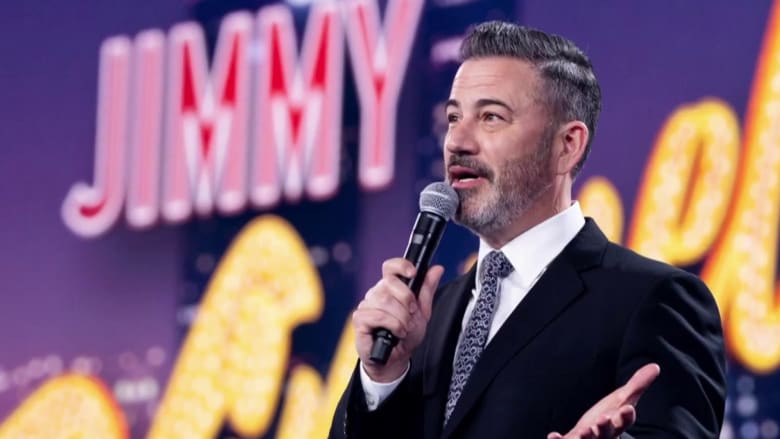
ABC’s announcement confirms that “Who Wants to Be a Millionaire” will return for its fifth season since its modern revival, with Kimmel once again serving as host and executive producer.
The game show, originally created in the United Kingdom and popularized in the United States by Regis Philbin in 1999, became a cultural phenomenon during its early years. It transformed ordinary contestants into national television events, turning each question into a moment of suspense watched by millions.
After its original primetime run ended in 2002, the format continued in syndication for years, with multiple hosts carrying the torch—including Meredith Vieira, Cedric the Entertainer, Terry Crews, and Chris Harrison—before eventually concluding its daytime run in 2019.
Kimmel helped bring the show back to network television in 2020, reintroducing it to a new generation of viewers while preserving its core suspense-driven format.
Since then, the revival has become a seasonal fixture.
The Guest Host Era on Late Night
While Kimmel steps away from his nightly responsibilities, “Jimmy Kimmel Live!” continues with a rotating lineup of guest hosts—a structure that has become increasingly common across late-night television.
This summer’s lineup includes a mix of established entertainers and unexpected picks: Tiffany Haddish, Colman Domingo, Ike Barinholtz, Anthony Anderson, and Jelly Roll, among others.
The inclusion of such a wide range of personalities reflects a broader shift in late-night programming. No longer anchored solely by a single voice, these shows increasingly function as collaborative platforms, allowing different comedic styles and cultural perspectives to temporarily reshape the format.

Among the more talked-about names is Rosie O’Donnell, whose participation as a guest host has drawn attention given her long-standing visibility in political and entertainment discourse.
For ABC, the rotating-host model ensures continuity. For audiences, it introduces unpredictability.
And for Kimmel, it provides something rare in late-night television: a structured break.
A Career Built on Flexibility
Kimmel’s decision to take summers off began in 2020, initially framed as a response to the demanding production environment during the pandemic era. Over time, it evolved into a consistent practice, allowing him to balance family life with the relentless schedule of nightly broadcasting.
Unlike traditional television roles that require year-round presence, late-night hosting has increasingly adapted to hybrid schedules, digital content expansion, and multi-platform appearances.
Kimmel’s dual role—late-night host and game show executive—illustrates how modern television personalities often operate across multiple formats simultaneously.
In the past, such a split identity would have been unusual. Today, it is increasingly standard.
The High-Stakes World of Late Night Television
Behind the familiar humor and celebrity interviews lies a competitive and politically charged industry.
Late-night television has, in recent years, become more than entertainment. It functions as commentary, cultural critique, and sometimes political flashpoint.
Hosts are no longer just comedians. They are public figures whose monologues are dissected in real time across social media, news outlets, and political commentary shows.
Kimmel himself has been part of that evolution, often blending humor with pointed commentary on current events. That visibility has helped define his career—but it has also placed him within broader debates about media influence and political speech.

Production Disruptions and Industry Pressure
Like many late-night programs, “Jimmy Kimmel Live!” has faced production interruptions in recent years due to industry disruptions, including labor disputes, network scheduling shifts, and broader media uncertainty.
Temporary suspensions of production are not unusual in modern television, especially in environments shaped by strikes, affiliate scheduling decisions, or special programming events.
In such cases, shows often resume after brief pauses, though even short interruptions can generate speculation about broader industry tensions.
Kimmel has previously described production pauses as disruptive but survivable, emphasizing the resilience required to maintain a nightly broadcast schedule in an unpredictable media landscape.
The Changing Identity of Late-Night Hosts
What makes Kimmel’s current moment notable is not a single event, but the accumulation of roles, responsibilities, and formats that define his presence in television today.
He is no longer solely a nightly monologue host.
He is a game show revival figure.
A producer.
A seasonal broadcaster.
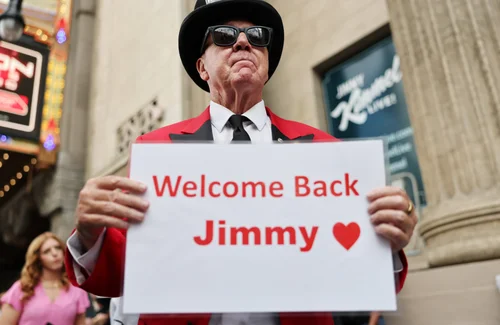
And a part-time presence in a genre that increasingly depends on adaptability rather than permanence.
This evolution reflects a broader industry trend.
Late-night television is no longer confined to a single desk in a studio.
It is distributed across streaming platforms, social media clips, primetime specials, and game show revivals.
Kimmel’s schedule is, in many ways, a reflection of that fragmentation.
A Summer That Isn’t a Break From Television—Just From Routine
While audiences may see Kimmel’s summer hiatus as a break, it is more accurately a shift in medium rather than a departure from work.
The return of “Who Wants to Be a Millionaire” ensures his continued presence on network television, even as his late-night desk is temporarily occupied by others.
It is a reminder that modern television careers are no longer linear.
They are cyclical.
Interchangeable.
And increasingly designed around multiple overlapping formats.
Looking Ahead
When “Jimmy Kimmel Live!” returns from its summer rotation, it will do so in a media environment that continues to evolve at high speed.
Audience habits are changing.
Streaming competition remains intense.
And traditional broadcast television continues to adapt to fragmented attention spans.
For Kimmel, the challenge remains the same as it has been for years: staying relevant in a medium that never stops changing.
For now, however, he is stepping into a familiar role once again—guiding contestants through high-stakes questions where one answer can change everything.
And in a television landscape defined by uncertainty, that kind of suspense still has an audience.