Canada’s First Dementia Village Is Changing the Way People Live With Memory Loss
Inside Canada’s First Dementia Village—The Groundbreaking Community Redefining Care, Freedom, and Dignity for People Living With Dementia
The Memory Revolution: Inside the Village That Refuses to Call Itself a Home

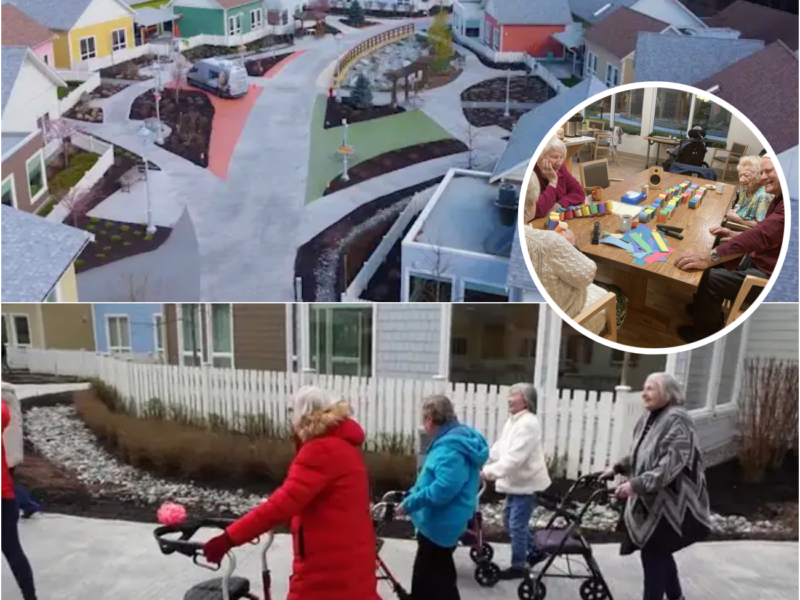
The gray, sterile hallway of a traditional nursing home is a soundscape of beeping monitors, hushed whispers, and the shuffle of clinical scrubs. For decades, this has been the accepted reality for those navigating the fog of dementia. It is a world of restricted movement, institutionalized schedules, and the quiet, crushing realization that one’s life as an individual has effectively ended. But in a quiet corner of Langley, British Columbia, a radical experiment is taking place—one that replaces the hospital corridor with a cobblestone street, and the patient label with the neighborly title of “villager.”
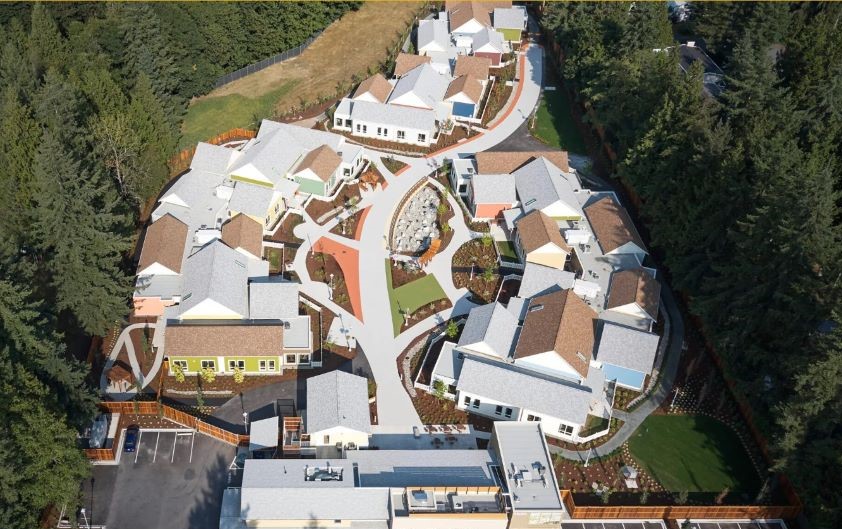
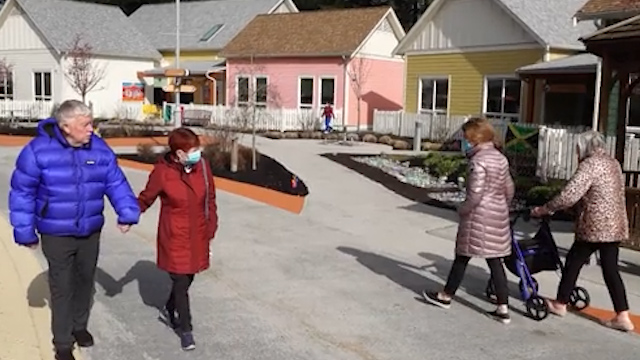
This is Canada’s first dementia village, a five-acre enclave designed to look, feel, and function like the outside world. Here, the locks don’t feel like traps, and the staff wear jeans and sweaters instead of sterile white coats. It is a place where a former mountain climber named Allen, whose life was once defined by world travel and the thrill of racing cars, can still find a sense of adventure. When the early stages of dementia made his old life—managing a household, operating appliances, navigating complex social interactions—impossible, the world seemed to shrink. But within the walls of this village, his world has expanded again. He can walk to the salon, visit the farm, or enjoy a cup of hot chocolate, all within a community that expects him to keep living.
The shock of the village is its simplicity. It does not attempt to “cure” the incurable; it attempts to humanize the process of living with it. By removing the institutional barriers that trigger agitation—the locked doors, the feeling of confinement, the rigid hierarchy—the village fosters a level of calm and autonomy that traditional facilities often fail to provide. It is a stunning rebuke to the conventional wisdom that suggests safety and freedom are mutually exclusive.
The Architecture of Dignity
The village in Langley is not an isolated phenomenon. It is the spiritual successor to the global “dementia village” movement, which was pioneered in 2009 by the Hogeweyk village in the Netherlands. Eloy van Hall, a co-founder of the original project, sought to transform dementia care by normalizing the environment. “You have to get rid of the institution,” he argued, recognizing that people do not want to live with the clinical regulations that characterize traditional long-term care.
The impact of this philosophy is backed by mounting evidence. Research consistently shows that small-scale, home-like living concepts result in better health outcomes, reduced reliance on psychotropic medications, and a higher overall quality of life. In these villages, residents live in small houses with front doors, living rooms, and private bedrooms, mimicking the domestic environments they inhabited their entire lives. The goal is to provide a sense of place, a sense of belonging, and the security of a community that knows you—not by your chart number, but by your story.

The Crisis of Care
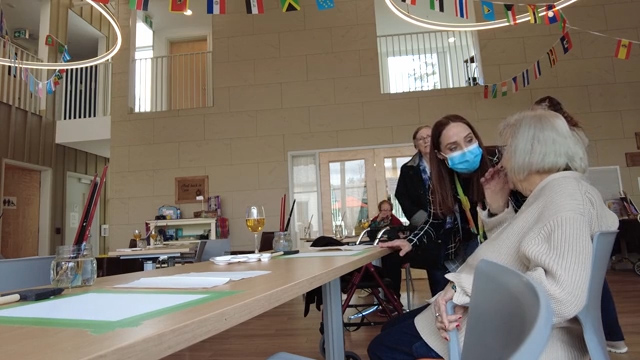
Yet, beneath the idyllic imagery of colorful houses and community farms, a sobering reality persists. As of 2023, nearly 700,000 Canadians are living with dementia, a number projected to soar to 1.7 million by 2050. Our current infrastructure, heavily tilted toward an acute-care model, is woefully unprepared for this demographic tsunami. Most nursing homes remain trapped in the hospital-setting design: long corridors, rows of rooms, and large, echoing dining halls that feel more like cafeterias than home kitchens.

Dr. Habib Chowdhury, a professor of gerontology at Simon Fraser University, warns that this model is fundamentally flawed. We have spent decades building environments designed for medical oversight rather than social engagement. The cost of this systemic inertia is paid in the agitation, isolation, and diminished quality of life experienced by hundreds of thousands of seniors. The village model provides a roadmap, but it is not a silver bullet. In Langley, the cost of living ranges from $8,000 to $10,000 per month, reflecting the intensive care and specialized staffing required. For the average family, this is a prohibitive price point.
The Path Forward: Beyond the Village
If the dementia village is the gold standard, the challenge of the next two decades is to figure out how to scale it. Is it possible to apply these “person-first” principles to existing facilities? Can governments subsidize this model as effectively as they do traditional nursing homes? The Dutch experience suggests it is possible, but it requires a fundamental shift in how we allocate public health budgets. It means moving away from the “efficiency” of large-scale institutions toward the “humanity” of small-scale social models.
For Allen, the village is not a policy debate or a financial calculation. It is a space where his dignity remains intact. He can no longer climb mountains, but he can still be kind, still be gentle, and still experience the small joys of a life lived in connection with others. The village recognizes what the rest of the healthcare system often ignores: that dementia does not strip a person of their need for adventure, for socialization, or for a home that actually feels like a home.
As we look toward the future, the lessons of Langley and Hogeweyk are clear. We must demand a transformation that is not just cosmetic, but structural. We need to stop thinking of dementia care as a purely medical necessity and start viewing it as a social imperative. Because eventually, the question of how we care for the most vulnerable among us will be the question that defines our society. And if the current model is a hallway with no doors, it is time we started building a village instead.
The story of these pioneers offers a glimpse into a world where aging is not hidden behind closed doors, but celebrated with the grace and freedom every human being deserves. The revolution in care is here; the only question left is whether we are willing to invest in it.