Chadwick Boseman Faced Public Comments About His Weight Loss While Privately Fighting Colon Cancer in Silence
Chadwick Boseman Faced Online Scrutiny Over Weight Loss as He Privately Battled Colon Cancer
The Silence Behind the Smile: How Chadwick Boseman’s Private Battle With Cancer Changed the Way America Sees Fame, Health, and Judgment
Prologue: The Image the World Thought It Understood
For millions of fans around the world, Chadwick Boseman was more than an actor.
He was a symbol.
A king from Wakanda. A baseball legend on screen. A civil rights icon reborn in modern cinema. A figure of discipline, dignity, and quiet strength who seemed to carry himself with a purpose larger than Hollywood itself.
So when audiences began noticing changes in his appearance in the late 2010s—subtle at first, then more pronounced—the public response unfolded in a way that is now painfully familiar in the age of social media.
Comments appeared. Questions spread. Speculation grew.
Why was he losing weight? Was he sick? Was it for a role? Was something wrong?
What no one outside his closest circle knew at the time was that the question itself was already too late.
Behind the scenes, Boseman was fighting colon cancer.
And he was doing it quietly.
For years.
Chapter 1: The Rise of a Cultural Icon
Before the headlines about illness and loss, Chadwick Boseman’s career was defined by a rare combination of artistic precision and cultural significance.
He did not simply play roles—he embodied historical figures in a way that made audiences feel as if they were witnessing living memory.
Jackie Robinson in 42 . James Brown in Get on Up . Thurgood Marshall in Marshall .
Each performance carried weight beyond entertainment. Each role seemed chosen with intention, as if Boseman understood that representation was not just visibility—it was responsibility.
Then came 2018.
Black Panther was released.
And everything changed.
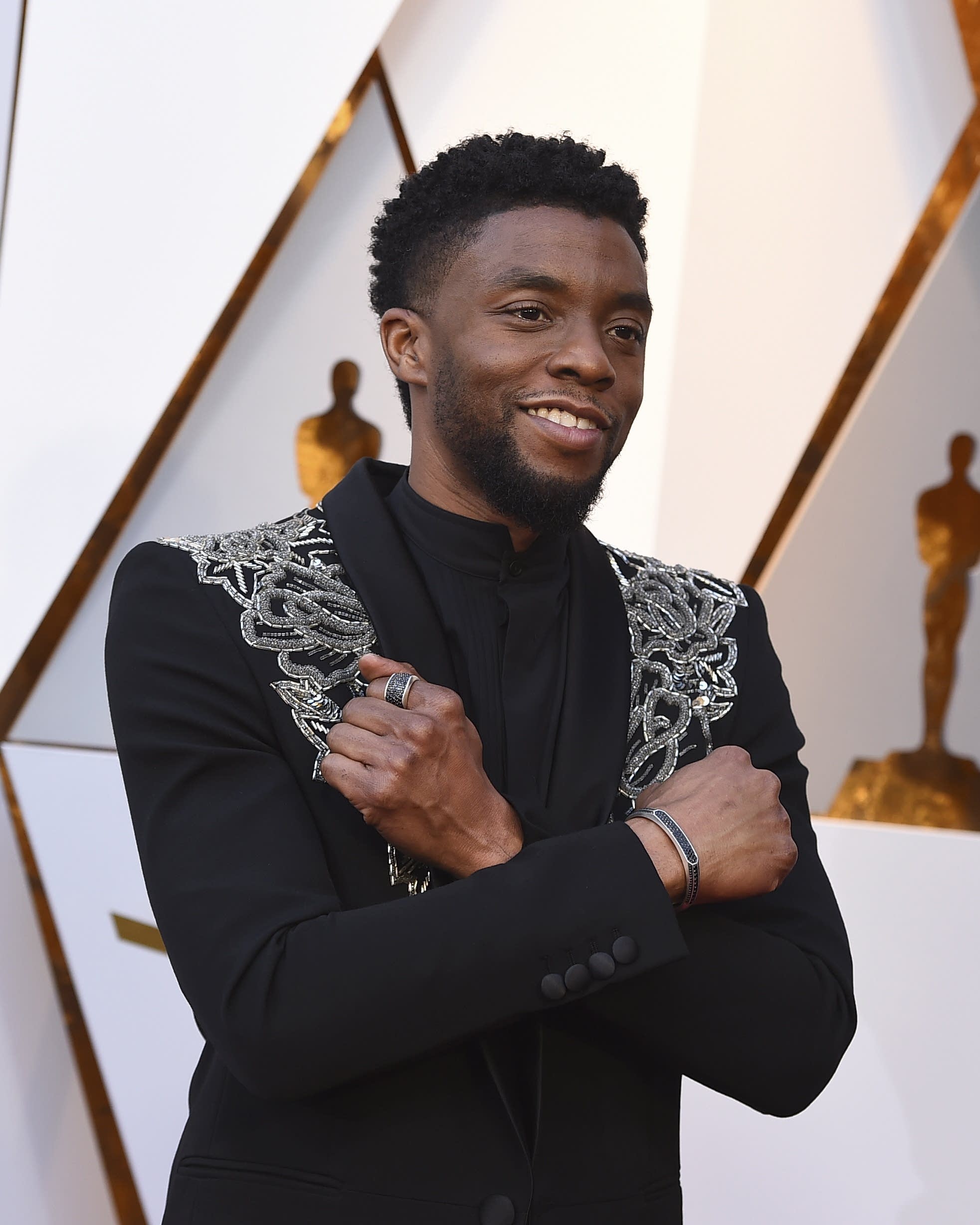
The film became a global phenomenon, breaking box office records, reshaping Marvel’s cinematic universe, and becoming a cultural milestone far beyond superhero storytelling.
At the center of it was Boseman as T’Challa—stoic, thoughtful, powerful, and deeply human.
To many viewers, he was not acting.
He was becoming something larger than himself.
But even as the world celebrated him, something far more serious was unfolding away from cameras and red carpets.
Chapter 2: The Beginning of an Unseen Battle
Chadwick Boseman was diagnosed with stage III colon cancer in 2016.
He did not announce it publicly.
He did not pause his career.
He did not frame his work around illness or use his condition as part of his public identity.
Instead, he continued working.
Chemotherapy sessions and surgeries became part of a life that also included film sets, interviews, choreography rehearsals, and press tours.
From a journalistic standpoint, this fact alone reshapes everything that came after.
Because while audiences saw a rising global icon, they were witnessing someone simultaneously undergoing some of the most physically demanding years of his life.
Cancer treatment is not abstract. It is exhausting, invasive, and often invisible to the outside world. It affects energy levels, weight, appearance, and endurance.
And yet Boseman continued to perform at the highest level of his profession.
That contradiction—public strength and private fragility—would later become central to how his legacy is understood.
Chapter 3: The Internet Notices a Change
As Boseman’s film appearances continued, particularly during and after Black Panther , segments of online audiences began to focus on a different narrative.
Photos circulated. Comparisons were made. Side-by-side images appeared across social media platforms.
The tone varied, but the pattern was consistent: speculation about his weight loss.
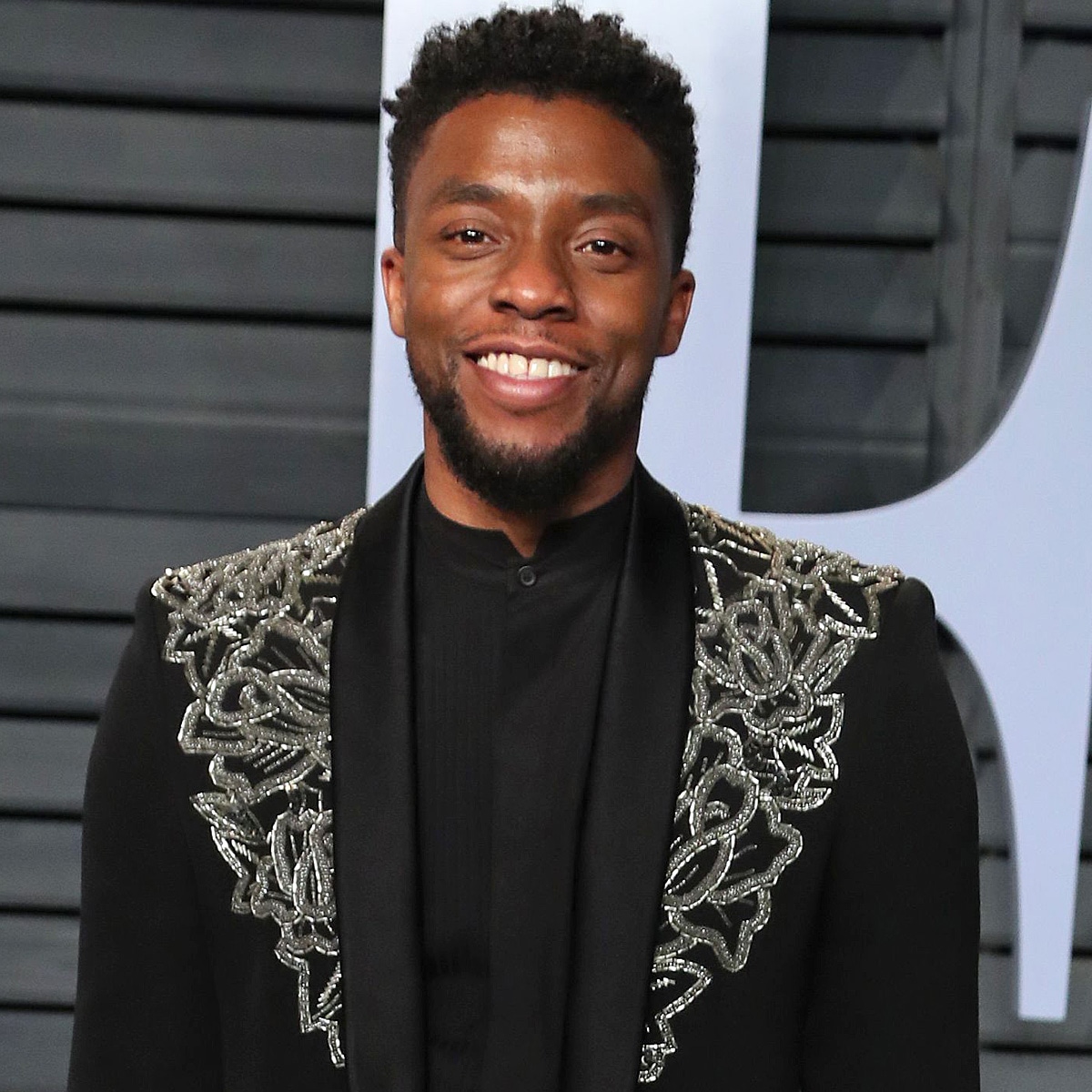
Some assumed it was preparation for a role. Others joked. Some expressed concern. A portion of the commentary, as is often the case online, turned critical or dismissive.
What was missing from nearly all of it was context.
Boseman himself never publicly addressed the speculation.
He did not explain. He did not respond. He did not correct the narrative unfolding around him.
From the outside, his silence was interpreted in different ways—professional restraint, privacy, focus.
From the inside, it was something else entirely: survival.
Chapter 4: The Discipline of Privacy
In American celebrity culture, silence is often misunderstood.
Public figures are expected to explain themselves, to manage narratives, to respond to commentary in real time. The absence of explanation is frequently filled by speculation.
But Boseman’s approach reflected a different philosophy—one rooted in separation between public work and private life.
Friends and collaborators have since described him as intensely focused, deeply committed, and unwilling to allow personal struggle to overshadow the work itself.
That decision—to continue working without disclosure—created a paradox.
The more he declined to explain his physical changes, the more the public filled in the gaps themselves.
And the more visible he became, the less visible his actual condition remained.
Chapter 5: Working Through Illness
Between 2016 and 2020, Boseman continued to take on physically and emotionally demanding roles.
Film production is not forgiving under normal circumstances. Long hours, physical strain, travel, press obligations, and emotional intensity define the job.
Now imagine doing all of that while undergoing cancer treatment.

By every account, Boseman did not reduce his artistic output. If anything, his work became more concentrated, more deliberate.
He continued to deliver performances that required physical presence, emotional depth, and public visibility—often without audiences knowing what was happening behind the scenes.
This is where the story becomes difficult to fully comprehend.
Because it is one thing to admire an actor’s discipline.
It is another to realize that discipline was being exercised under conditions most people would consider unsustainable.
Chapter 6: The Weight of Public Perception
As online commentary intensified, Boseman became an example—without consent—of a broader cultural issue: the interpretation of visible change without context.
In the digital age, bodies are constantly analyzed. Weight loss is scrutinized. Appearance is compared across time. Every change becomes data for public discussion.
But what is often missing is humility: the acknowledgment that appearance rarely tells the full story.
In Boseman’s case, that gap between perception and reality was absolute.
The public saw transformation.
He was living treatment.
The public saw speculation.
He was managing illness.
The public saw a celebrity image evolving over time.
He was fighting for his life.
Chapter 7: The Final Years
By 2020, Boseman’s condition had progressed.

He continued working, including voice roles, film appearances, and projects that would later be released posthumously.
Even as his health declined, he remained active in his craft, maintaining the professional identity that had defined him for decades.
On August 28, 2020, Chadwick Boseman died at his home in Los Angeles, surrounded by family.
He was 43 years old.
The announcement revealed publicly for the first time what had been kept private for years: that he had been living with colon cancer since 2016.
The reaction was immediate and global.
Shock. Grief. Disbelief.
For many fans, the news did not simply feel like the loss of an actor.
It felt like a reinterpretation of everything they had seen over the previous years.
Chapter 8: The Internet Rewrites Its Own Memory
One of the most striking effects following Boseman’s death was the retrospective reevaluation of earlier online commentary.
Posts about his weight loss were revisited.
Comments that once seemed casual or speculative now appeared uncomfortable in hindsight.
The same images that had been analyzed for aesthetic change were now understood through a different lens entirely.
What had once been entertainment discourse became a lesson in uncertainty.
Because suddenly, every assumption made about his health during those years had to be re-examined.
And none of it had included the truth.
Chapter 9: Black Panther and the Weight of Legacy
Black Panther itself took on a new emotional dimension after his passing.
What had been a cultural celebration became something more layered—a reminder of the person at its center.
The film’s themes of leadership, sacrifice, identity, and responsibility began to feel inseparable from Boseman’s real-life discipline and private struggle.
Audiences rewatched scenes not just for storytelling, but for meaning that extended beyond fiction.
T’Challa’s quiet strength on screen became even more resonant in light of what Boseman had endured off screen.
The boundary between character and actor blurred in public memory.
Chapter 10: What His Silence Meant
In retrospect, Boseman’s decision not to publicly disclose his illness raises difficult but important questions.
Was it an act of protection—for his privacy, his work, his audience? Was it a personal choice to separate identity from illness? Or was it simply a desire to live without being defined by diagnosis?
There is no simple answer.
What is clear is that his silence shaped how the world experienced him—both during his life and after his death.
It allowed audiences to see only the surface.
It protected the depth beneath it.
Chapter 11: The Larger Cultural Lesson
Boseman’s story is often framed as inspirational, but it also functions as a warning about the limitations of public perception.
In an era where visibility is constant, it is easy to assume that what we see is complete.
But his life demonstrates the opposite.
People can be performing at the highest level of their careers while privately enduring extraordinary hardship.
Appearance can be misleading.
Silence can be misunderstood.
And judgment—especially in online spaces—can be based on incomplete information.
Chapter 12: The Ethics of Looking
After Boseman’s death, a broader conversation emerged about how society discusses public figures’ bodies.
When is it appropriate to comment on appearance? What responsibility does the public have when speculating about health? And how do platforms shape narratives that can quickly spiral beyond accuracy?
There are no simple rules.
But his story makes one point unavoidable: visibility does not equal transparency.
A photograph captures a moment.
It does not capture a medical history.
Epilogue: The Man Behind the Legend
Chadwick Boseman’s legacy is often described in terms of roles, awards, and cultural impact.
But beneath those achievements lies a quieter narrative—one defined by endurance.
He continued working while undergoing treatment most people never knew about. He delivered performances that became global landmarks while managing a private battle few understood. He maintained dignity in public while facing fragility in private.
And he did so without turning his illness into spectacle.
In the end, the story that remains is not only about what he achieved on screen, but what he carried off screen.
A man who lived between two realities.
One the world saw.
One the world did not.
And the difference between them is where the lesson lives.
Because if there is anything his story reveals, it is this:
You never truly know what someone is fighting through, even when you are watching them closely.
And sometimes, the strongest people are the ones who never explain why they are struggling at all.