Doctors Once Told Dolph Lundgren He Had Just 2 to 3 Years to Live—Now the Actor Says He Has Won His 9-Year Battle With Cancer
Actor Dolph Lundgren Announces He Has Defeated Cancer After a Remarkable 9-Year Battle
Dolph Lundgren’s Final Fight: The Action Star Who Was Told He Had Years to Live—and Walked Out Cancer-Free
For decades, Dolph Lundgren made a career out of looking impossible to defeat.
:max_bytes(150000):strip_icc():focal(741x353:743x355)/Dolph-Lundgren-cancer-free-112724-tout-57ecdfcc262240529d314d905acb07fa.jpg)
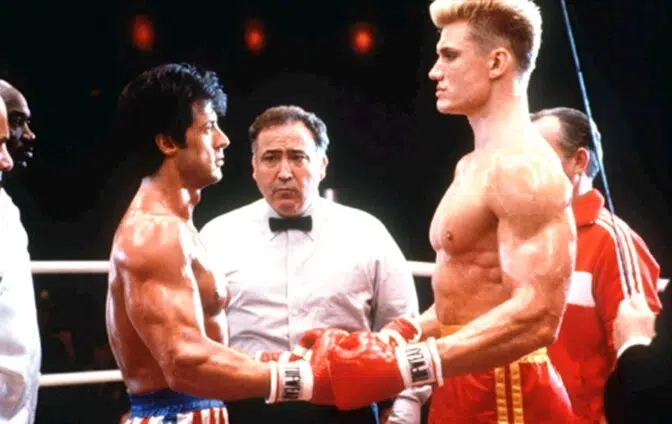
To American audiences, he was not merely an actor. He was a physical symbol. Tall, cold-eyed, controlled, and sculpted into the kind of screen presence that seemed engineered rather than born, Lundgren became one of the defining faces of 1980s and 1990s action cinema. He was Ivan Drago in *Rocky IV*, the Soviet machine who towered over the ring and delivered one of the most chilling lines in sports-movie history. He was the man moviegoers associated with power, violence, discipline, and an almost superhuman absence of fear.
But years later, far from the roaring crowds and choreographed punches of Hollywood, Lundgren found himself facing an opponent that did not care about fame, muscle, discipline, or mythology.
It began in 2015, when doctors found a cancerous tumor in his kidney and removed it. At first, the story seemed contained. There were follow-up scans. There was monitoring. There was the fragile relief that follows a successful procedure. For years, things appeared stable. Lundgren continued working, continued showing up on film sets, continued carrying the image of a man who could absorb punishment and keep moving.
Then, in 2020, something changed.
What he thought might be acid reflux turned into a medical discovery that would alter the course of his life. Doctors found more tumors. Later, a tumor appeared in his liver. The situation grew darker. The vocabulary shifted from routine monitoring to serious survival. By 2021, he had been told he might have only two or three years left, and Lundgren later said he could hear in the doctor’s voice that the real expectation may have been even less.
For a man who had built an entire public identity around strength, it was a brutal private reversal.
The body that had once made him famous was now the battlefield.
And this time, there was no script.
The Man America Thought It Knew
To understand why Lundgren’s cancer announcement struck such a powerful emotional chord, it helps to understand the character America had assigned to him.
In the American imagination, Dolph Lundgren was never just Dolph Lundgren. He was Ivan Drago, the towering opponent who looked as if he had been manufactured by a state laboratory. He was the icy figure who stood across from Rocky Balboa and seemed to represent not only another fighter, but another world. His breakthrough in *Rocky IV* made him globally recognizable, and that role followed him for decades.
But the real Lundgren was always more complicated than the screen image.
He was Swedish. He was a martial artist. He studied chemical engineering. He had the kind of academic background that complicated the easy stereotype of the silent muscleman. Behind the action-star exterior was a man who understood discipline not simply as performance, but as structure. Training, study, routine, language, physical control—these were not decorations around his life. They were part of his identity.
That is what made the diagnosis so unsettling.
Cancer did not attack the myth. It attacked the man beneath it.
For years, Lundgren kept the illness private. In an industry that sells youth and vitality as professional currency, silence can feel like protection. He continued working in films while undergoing treatment. He continued appearing in franchises and projects that depended on the audience believing in his physical durability. Behind that public continuity, however, was a medical story growing more dangerous with time.
The public saw the action star.
His family saw the patient.
And Lundgren was caught somewhere between the two.
The Diagnosis That Came Back
The first tumor, discovered in 2015, was removed from his kidney. After that, he underwent scans every six months, then yearly, and for a while the reports were reassuring. In many cancer stories, this is the period that looks like peace from the outside but feels like a suspended sentence from within. Life continues, but every scan carries a silent question.
Then came the return.
In 2020, while in Sweden, Lundgren began experiencing symptoms he initially thought were digestive. The problem was not ordinary reflux. Imaging showed more tumors. Surgery removed several, but the disease had not finished revealing itself. By the fall of 2021, a tumor had appeared in his liver, and it was large enough and complicated enough that removal was not simple.
The story had moved into its most frightening chapter.
Lundgren’s then-fiancée, Emma Krokdal, described the realization that the situation was much worse than they had first understood. Tumors were being discussed in multiple parts of the body. The kind of conversation no family wants to hear was suddenly unavoidable: maybe he should stop working, maybe he should spend more time with loved ones, maybe the future was no longer something to plan in decades.
Lundgren asked the question that patients often fear most.
How much time?
The answer was devastating: two or three years.
And he later said that he believed the doctor’s tone suggested even less.
For a man who had spent his career pretending to face death in fictional worlds, this was something else entirely. There were no cameras to cut away. No director to call reset. No fight choreographer. No stunt double. No heroic score rising behind him.

Only the quiet terror of a medical prognosis.
The Depression Behind the Strong Face
One of the most revealing parts of Lundgren’s story is that he did not present himself as untouched by fear.
He has admitted that the prognosis left him depressed. That word matters. It strips away the fantasy that strong people must respond to illness with immediate bravery. In reality, serious illness often begins by destroying the illusion of control. It changes the way a person hears time. It changes the meaning of ordinary plans. A movie schedule, a dinner reservation, a holiday, a birthday—everything becomes measured against the possibility that there may not be as many of them left as once imagined.
Lundgren’s concern was not only for himself. He thought about the people around him: his children, his partner, his family. That is one of the cruelest dimensions of a life-threatening diagnosis. The patient receives the medical news, but the emotional blast radius reaches everyone who loves them.
The world may have known him as Drago.
Cancer made him a father, a partner, and a mortal man in a hospital room.
That contrast is why the story feels so shocking. Americans are used to seeing action stars wounded onscreen. They are not used to seeing the action star admit that he believed the end might be coming.
The Second Opinion That Changed Everything
In many medical stories, the turning point arrives not as a miracle, but as a second look.
For Lundgren, that second look proved crucial. He sought another opinion while he was working in London, and the new medical approach changed the direction of his treatment. His cancer was kidney cancer, but doctors identified a mutation that could be targeted in a way more commonly associated with lung cancer treatment. That insight opened the door to a different therapy.
The impact was dramatic.
Lundgren later said that if he had stayed on the prior treatment path, he may have had only months left. With the new treatment, tumors began shrinking within three months. Over time, the shrinkage became substantial, with reporting describing tumors reduced by about 90 percent.
This is where the story changes from bleak to astonishing.
The man once told to prepare for the end was watching the disease retreat.

Not all at once.
Not magically.
But visibly, measurably, medically.
The plot of his life had shifted again.
Fighting While the World Didn’t Know
One of the most compelling features of Lundgren’s cancer battle is how long he carried it privately.
He did not immediately become a public cancer advocate. He did not reveal every scan, every procedure, every fear. For years, he simply kept going. He continued filming. He continued appearing in public. He continued to inhabit the role audiences expected from him.
That secrecy is easy to misunderstand.
Some people hide illness because they are ashamed. Some because they want privacy. Some because they fear being treated differently. Some because saying the diagnosis aloud makes it feel more real. For public figures, there is an additional pressure: once private suffering becomes public information, it no longer belongs only to the person living through it. It becomes a story, a headline, a narrative people discuss as if they own a piece of it.
Lundgren waited.
When he finally revealed in 2023 that he had been battling cancer for eight years, it landed like a delayed explosion. The public learned that the strongman image had been concealing a survival story all along. He had been walking through film sets and public appearances while carrying a diagnosis that, at one point, had made doctors talk about his remaining life in years.
That revelation changed the way many people saw him.
The muscles were no longer the story.
The endurance was.
The Final Procedure
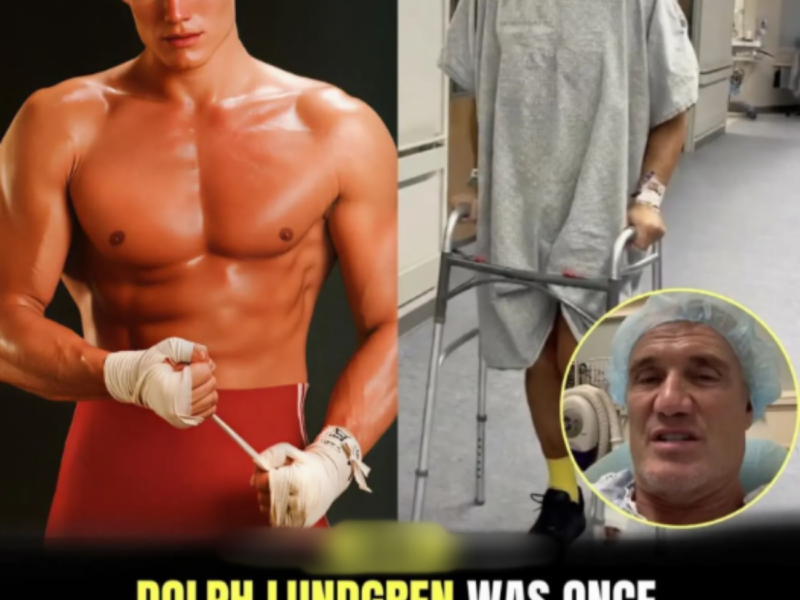
In November 2024, Lundgren posted a video from a hospital bed and announced that he was undergoing a lung ablation, a minimally invasive procedure used to destroy abnormal tissue with heat or cold energy. He said he was at UCLA to remove the last remaining tumor, adding that there were no cancer cells in his body anymore. His caption announced that he was finally cancer-free and grateful for a bright future.
It was a stunning reversal from the prognosis he had once received.
The man who had been told he might have only a few years left was now telling the world he had reached the other side of a nine-year battle.
But the announcement was not triumphant in the loud, cinematic way Hollywood might have staged it. There was no fictional final punch. No enemy collapsing in slow motion. No crowd erupting in victory.

There was a hospital bed.
A patient about to undergo another procedure.
And a man who had learned, painfully, that survival is not the same as invincibility.
He called it a rough ride and said the experience taught him to live in the moment.
For an action star whose career had been built on spectacle, the message was almost startlingly simple.
Life is fragile.
Enjoy it while you have it.
The Shadow of the 1980s Body
There is another layer to Lundgren’s story that makes it especially relevant to American culture.
In reflecting on his health, he has publicly wondered whether parts of his earlier action-star lifestyle—especially steroid use during the era when hyper-muscular male bodies dominated Hollywood—may have played a role in his cancer battle. Public reporting and interview material have noted that Lundgren admitted using anabolic steroids off and on from the mid-1980s to the mid-1990s, and he has looked back on that period with questions.
This point must be handled carefully. There is no public medical conclusion proving that steroid or testosterone use caused his cancer. Lundgren himself has framed it as a question, not a diagnosis. Cancer is complex, and assigning a single cause without medical evidence would be irresponsible.
But culturally, the question is powerful.
Lundgren came of age in an era when Hollywood rewarded bodies that looked almost unreal. Action cinema did not merely celebrate fitness; it often amplified physical extremes into mythology. Men were expected to look bigger, harder, stronger, and more indestructible from one film to the next. The camera turned muscle into destiny. Audiences applauded the illusion.
Decades later, Lundgren’s reflections raise an uncomfortable question: what happens when the body built for the screen has to answer to biology?
The action-hero era sold the fantasy that intensity had no cost.
Lundgren’s cancer battle suggests a more complicated truth.
Even the strongest body is not beyond consequence.
America’s Love Affair With the Indestructible Man
American popular culture has always had a weakness for the indestructible male hero.
The cowboy who never breaks.
The soldier who never quits.
The boxer who gets up after every knockdown.
The action star who walks through fire, bullets, explosions, betrayal, and pain with a jaw set in silence.
Dolph Lundgren fit that tradition perfectly. He was not just strong; he looked designed for strength. His face, accent, height, and physicality made him believable as the ultimate opponent. In *Rocky IV*, he was not written as a normal fighter. He was written as a machine. That image followed him long after the movie ended.
But the cancer story reverses the myth.
The man America had watched as an almost inhuman force was forced into the most human condition imaginable: uncertainty. He had to wait for scans. He had to hear doctors speak in careful tones. He had to undergo procedures. He had to consider mortality. He had to think about family, regret, and the possibility that the story might end earlier than expected.
This is why the public response to his cancer-free announcement was so emotional.
It was not simply relief for a celebrity.
It was the collapse of a cultural illusion and the birth of a more meaningful one.
Lundgren had not beaten cancer because he was Drago.
He survived because of medicine, persistence, second opinions, treatment advances, family support, and a willingness to keep fighting when the first prognosis seemed grim.
That is a different kind of strength.
And it may be more powerful than the old one.
The New Meaning of Survival
By 2025, Lundgren was speaking publicly about being NED—“no evidence of disease”—and described himself as doing very well. He also said he had changed his relationship with physical intensity, working out regularly but being kinder to himself and less extreme than before.
That shift may be one of the most revealing parts of the entire story.
In his earlier life, intensity helped make him famous. Training harder, pushing further, performing stunts, building the body, accepting risk—these were part of the identity. But after cancer, intensity itself came under review. Lundgren suggested that the illness had made him more grateful and more aware of the people he loved. He even reflected that without the experience, he might have continued living too intensely and risked himself in other ways.
That is not the kind of lesson action movies usually teach.
In the movies, the hero wins by pushing harder.
In real life, survival sometimes means learning when not to.
For Lundgren, the victory was not just medical. It was philosophical. He emerged not as the same man restored to his old habits, but as someone who had reconsidered the meaning of strength.
Strength was no longer only force.
It was restraint.
It was gratitude.
It was presence.
It was the ability to say: I am alive, and that is enough to change everything.
The Suspense of Waiting
Cancer stories are often told backward once the outcome is known.
After survival, the timeline becomes neat. Diagnosis. Treatment. Setback. Second opinion. Breakthrough. Remission. Victory.

But lived forward, there is nothing neat about it.
There is only waiting.
Waiting for scans.
Waiting for pathology.
Waiting to know whether a treatment is working.
Waiting through side effects.
Waiting for a doctor to enter the room.
Waiting for language that can change an entire family’s emotional weather in seconds.
The suspense in Lundgren’s story was not the theatrical suspense of cinema. It was the medical suspense of not knowing whether the next result would bring hope or devastation.
That kind of suspense is quieter, but far more terrifying.
The audience watching from a distance can now see the arc: a man diagnosed in 2015, facing recurrence years later, receiving a dire prognosis, finding a new treatment, watching tumors shrink, and eventually announcing he was cancer-free.
But Lundgren did not live it as an arc.
He lived it as a series of doors.
Behind each door could be relief.
Or worse news.
The Family Behind the Fight
Serious illness has a way of changing the emotional hierarchy of life.
Career matters, but less than before.
Public reputation matters, but less than before.
Money, schedules, roles, premieres, press tours, social events—all of it can suddenly seem distant compared with the faces of the people who may have to live with your absence.
Lundgren has spoken about the impact of the diagnosis on his family and the people close to him. When he received the grim prognosis, his thoughts included his children and his partner. That detail cuts through the celebrity surface and makes the story universal.
Every person facing mortality confronts a private version of the same question:
What will happen to the people I love?
That question is not cinematic. It is domestic. It lives in kitchens, cars, bedrooms, hospital waiting rooms, and late-night conversations. It is the question that makes even the strongest person feel helpless.

For Lundgren, the fight was never only about extending his own life.
It was about staying present for those who mattered most.
Why This Story Resonates Now
Lundgren’s survival story comes at a time when American audiences are increasingly drawn to celebrity narratives that reveal vulnerability behind carefully managed images.
For decades, stars were expected to appear untouchable. Illness was hidden. Weakness was edited out. Public relations machinery turned people into brands, and brands rarely admitted fear.
But modern audiences respond differently. They want the human underneath the icon. They want confession, recovery, struggle, and truth. They want to know that the person who looked invincible onscreen was also frightened in real life.
Lundgren’s story offers that contrast in its purest form.
The man who once played the ultimate opponent was nearly defeated by something invisible.
The man who looked engineered for dominance had to rely on doctors, science, and hope.
The man who represented physical extremity now talks about moderation, gratitude, and being kinder to his body.
That is not just a health update.
It is a cultural reversal.
The Shock of the Comeback
The most shocking part of Lundgren’s cancer story is not that he became ill. Illness can reach anyone. It is not impressed by fame, wealth, beauty, or discipline.
The shocking part is the distance between the prognosis and the outcome.
He was told he might have only a few years. At one point, he believed the situation might be even worse. Then a second opinion and targeted approach changed the trajectory. Tumors shrank. Procedures followed. In 2024, he announced he was cancer-free. In 2025, he publicly described himself as NED and back to normal activity, though with a gentler approach to training.
That kind of reversal captures the American imagination because it resembles the comeback story the country has always loved.
But this one is not fiction.
There is no guarantee built into it.
That is what makes it powerful.
A comeback in a movie is written. A comeback from cancer is fought through uncertainty.
The Actor and the Lesson
There is an irony at the center of Dolph Lundgren’s life that now feels almost poetic.
He became famous playing a man who was presented as a product of physical perfection, scientific enhancement, and ruthless strength. Decades later, his own survival depended not on physical dominance, but on medical precision: mutation analysis, targeted therapy, repeated procedures, and the insight of doctors willing to look again.
The screen version of strength was blunt.
The real version was specific.
The screen version destroyed opponents.
The real version endured treatment.
The screen version never admitted weakness.
The real version had to.
That is the deeper emotional force of the story. Lundgren’s cancer battle did not confirm the old myth of the action hero. It replaced it with something better.
He did not survive because he was indestructible.
He survived after learning that he was not.
The Final Bell
In boxing movies, the final round is always obvious. The music swells. The hero rises. The crowd understands what is happening before the final punch lands.
Real life is less generous.
There may be no single final round. There may only be another scan, another procedure, another cautious update, another day of feeling well enough to train, work, laugh, and call the people you love.
When Dolph Lundgren announced he was cancer-free, it did not erase the nine years that came before it. It did not erase the fear, the surgeries, the prognosis, the depression, or the private conversations that the public will never fully know. But it gave the story a new chapter—one that seemed nearly impossible when a doctor was telling him to spend more time with family.
For millions of people who grew up watching him as the terrifying Ivan Drago, the update felt like something more than celebrity news. It felt like a man stepping out from behind one of Hollywood’s hardest masks and showing the world what real endurance looks like.
Not cold.
Not mechanical.
Not invulnerable.
Human.
Alive.
Grateful.
Changed.
Dolph Lundgren once became famous for playing a fighter built to break another man.
Decades later, he became something far more compelling: a survivor who had nearly been broken himself, only to emerge with a different understanding of strength.
The old action hero won by overpowering the enemy.
The older, wiser man won by staying alive long enough to learn that every ordinary day is its own victory.