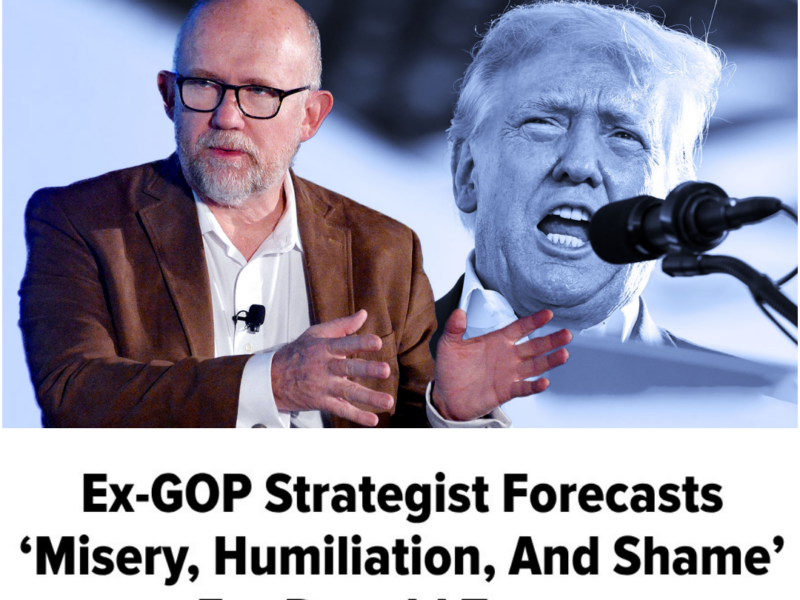
Former GOP Strategist Predicts Political “Humiliation” Ahead for Donald Trump as New Criticism From Conservatives Intensifies
Former GOP Strategist Predicts Political “Humiliation” Ahead for Donald Trump as New Criticism From Conservatives Intensifies
No Escape for Trump: A Grim Forecast from a GOP Insider
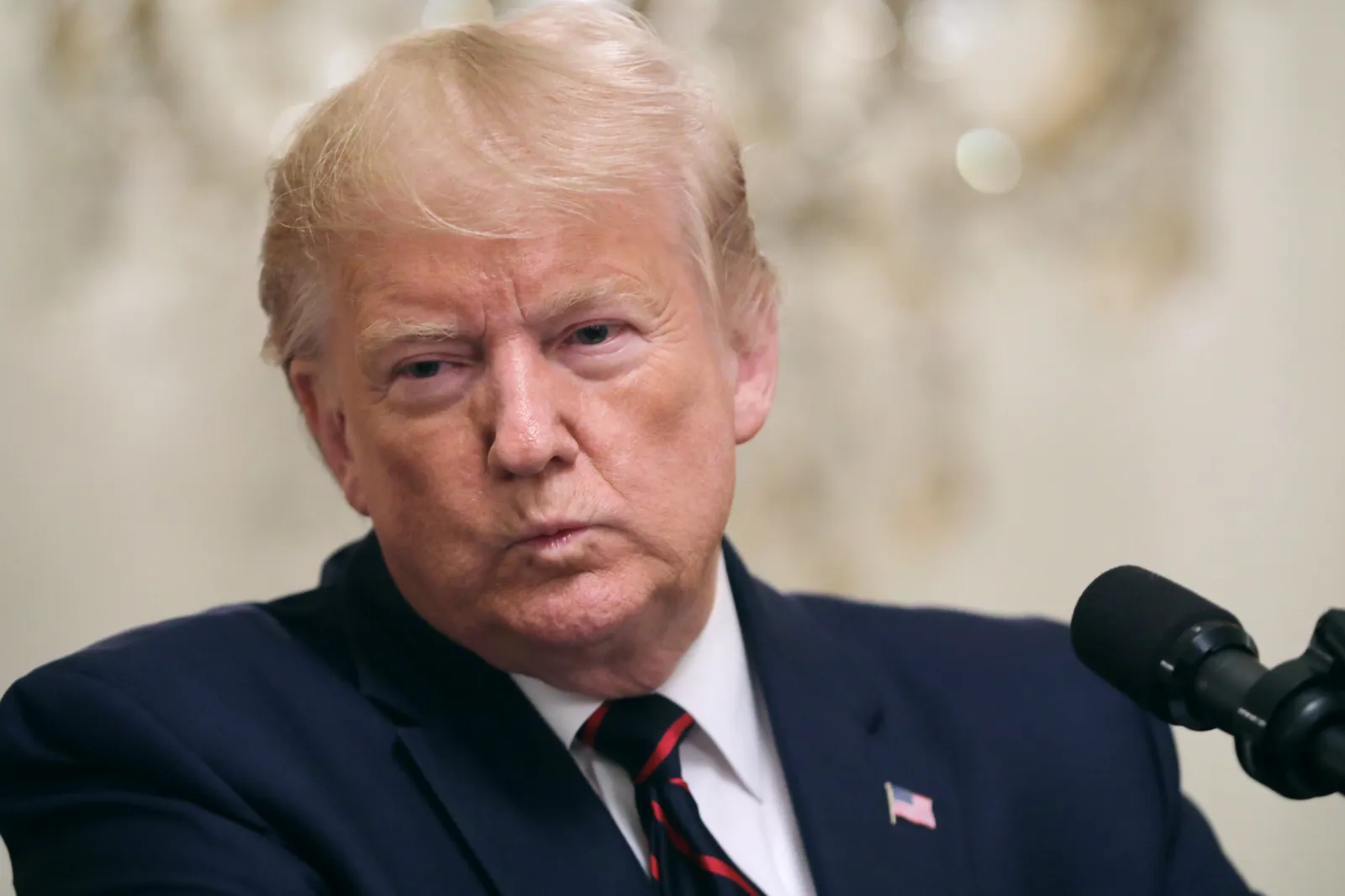
In the annals of modern American political drama, few voices carry the weight of both experience and betrayal. Rick Wilson, a former GOP strategist whose career spans the campaign trail of George H.W. Bush in 1988 to the co-founding of the anti-Trump Lincoln Project, delivered a public warning this week that reads less like political commentary and more like a foreboding prophecy. On his Substack platform Wednesday, Wilson offered a pitch-black rebuke of President Donald J. Trump, predicting “misery, humiliation, and shame” for the commander-in-chief and his movement.
For readers accustomed to partisan sparring, the intensity of Wilson’s words is jarring. He painted a vision of a presidency teetering on the edge, with internal cracks widening and external pressures mounting, and suggested that the current trajectory of Trump’s political life may be approaching a breaking point.
Wilson’s assessment is rooted in the escalating U.S. military engagement in the Middle East, which he portrays not merely as a foreign policy misstep but as an event likely to unravel the president’s political apparatus. “Nothing will save you now, Donald,” he wrote. “Not the war. Not the lies. Not today’s loyalists, tomorrow’s traitors. Not the terrified little men orbiting your shrinking political sun. Not the algorithms, not the oligarchs, not the endless stream of garbage Fox and Twitter propaganda pumped into the veins of a movement that’s finally, visibly, unmistakably breaking apart. You chose this.”
It is a scathing critique, yet Wilson does not stop at rhetoric. He places the potential exposure of Trump’s inner circle at the center of his warning. With the possibility of Democrats regaining control of both chambers of Congress, he foresees a rigorous period of oversight, investigation, and public reckoning.
“You’re afraid of impeachment. Of course you are,” Wilson continues. “It’s the word that haunts you, the specter you can’t quite outrun. But impeachment is the least of your problems. What you should fear, what should keep you pacing the halls of the Residence at three in the morning, is oversight. Relentless, grinding, methodical exposure.”

The scenario Wilson paints is as detailed as it is damning. A Democratic House and Senate would not merely pursue impeachment articles, he argues. They would open the books on the president’s actions, subpoena documents, bank records, and communications, and put allies, enablers, and even family members under scrutiny. In Wilson’s telling, Trump’s most loyal supporters may prove ephemeral, while the legal and procedural machinery of government would relentlessly expose every vulnerability.
Wilson’s concerns extend beyond legal peril; he frames the situation as a narrative of political hubris meeting inevitable collapse. The war in the Middle East, he argues, is emblematic of Trump’s leadership style: impulsive, mismanaged, and cloaked in bravado. “You chose a foolish, off-the-rails war, launched in folly and haste, sold with the usual cocktail of bravado and bullshit, and already curdling into the kind of slow, grinding catastrophe that has buried presidencies before yours,” Wilson wrote. “You wrapped yourself in the flag, barked about strength, and promised an easy victory. What you delivered instead was chaos.”
Here, the essay underscores a critical tension in Wilson’s argument: the contrast between appearance and reality. The president’s supporters, Wilson notes, may rally to any narrative, spinning even absurd claims into viral online memes in defense of Trump. Yet some realities—economic pressures, public opinion, and the consequences of foreign policy—remain resistant to political spin. “You can spin a lot of things in modern America,” Wilson explains. “You can tell MAGA cultists we’ve always been at war with the planet Saturn, and they’ll spin up a billion memes about it just to own the libs, but you can’t spin the price on the sign at the gas station. That number is your approval rating now.”
In crafting this analysis, Wilson relies on a combination of political acumen, historical context, and dramatic rhetoric. His writing draws upon the history of impeachments, presidential overreach, and public scandals, offering a cautionary tale that feels more like a thriller than a newsletter post. Yet the warning is rooted in procedural reality. Oversight committees, subpoena powers, and investigatory channels exist precisely to uncover misuse of power, and Wilson’s forecast relies heavily on these institutional mechanisms.
Beyond the mechanics of oversight, Wilson delves into the symbolic and moral dimensions of Trump’s presidency. He recalls previous essays in which he highlighted abuses of power, such as the administration’s handling of sensitive legal documents in the Epstein files. There, he argued that the black redactions symbolized not merely secrecy but a systemic abuse, a deliberate concealment of harm done to victims. “The administration wanted a lid on the pot, a lib-owning middle finger to America. Instead, they turned the heat to high and walked away,” Wilson wrote. “That’s why the black marker isn’t just ink. It’s power. It’s a new form of abuse, striking the lives and hearts of women who have suffered far, far too long.”
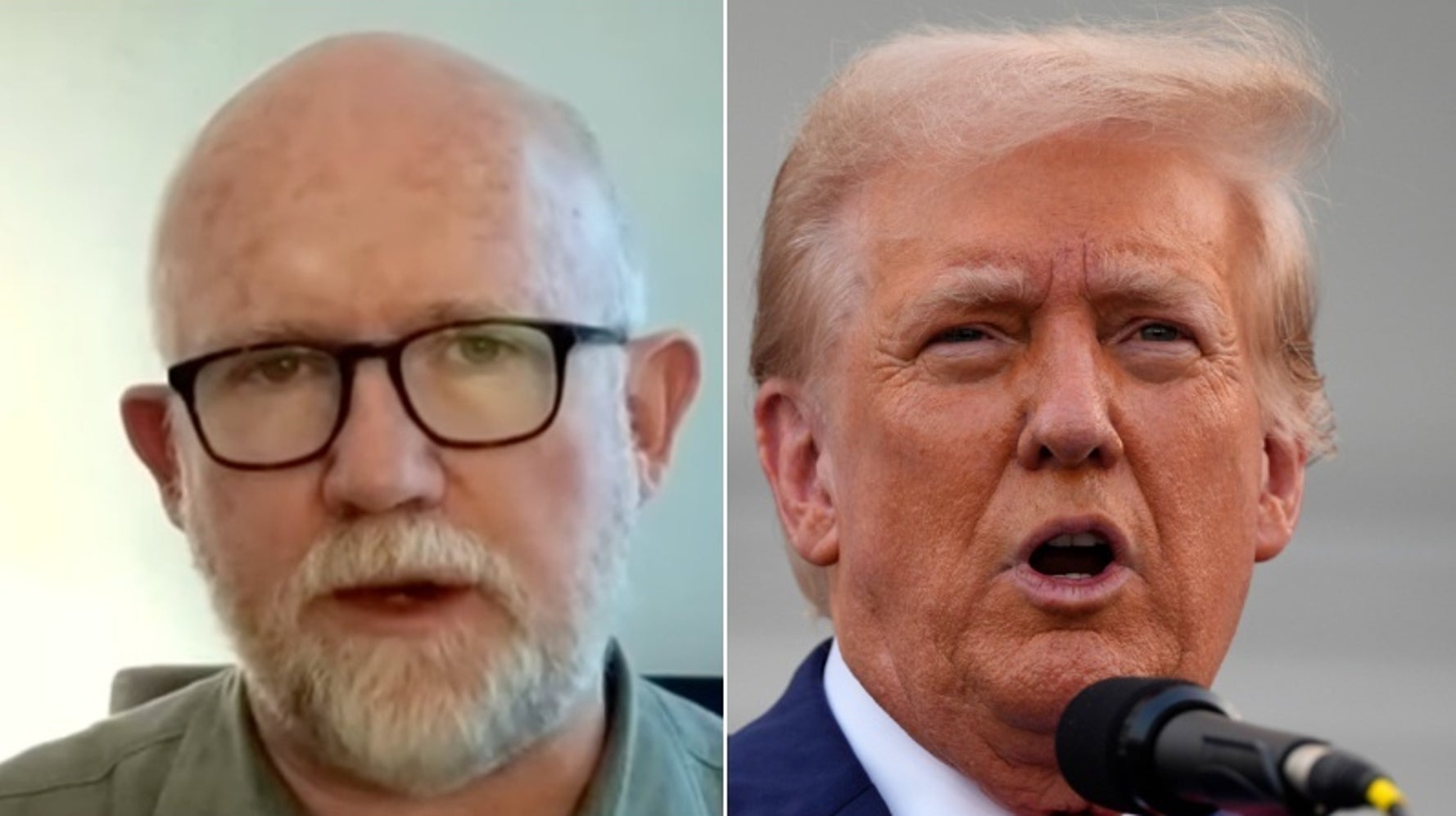
This perspective sheds light on the moral framing that underpins Wilson’s critique of Trump. To him, the current presidency is not merely politically vulnerable but ethically compromised. The intersection of mismanagement, opportunism, and alleged malfeasance creates a combustible situation, one he predicts will culminate in both personal and political humiliation for the president.
Wilson’s language is deliberately apocalyptic. The repeated invocation of “misery, humiliation, and shame” is a narrative device as much as a warning. It situates the reader in the midst of an impending collapse, where each misstep and miscalculation compounds the president’s exposure. For an audience attuned to the theatrics of political reporting, the essay reads like a suspense novel, complete with a protagonist blind to the forces converging around him and a chorus of observers anticipating the inevitable fall.
Underlying the drama, however, are real political calculations. The prospect of a Democratic resurgence in Congress, Wilson argues, will transform oversight into something more than a procedural formality; it will become a thorough, unrelenting examination of the executive branch and the networks surrounding it. Banking records, communications, and contractual obligations could all become public fodder, he warns, potentially ensnaring family members and low-level associates in legal scrutiny.
Wilson also addresses the narrative control Trump has long relied upon. In the age of social media, algorithms, and echo chambers, perception management has been a central strategy. Yet even the most sophisticated media manipulation cannot obscure tangible realities. Gas prices, economic indicators, military casualties, and public dissatisfaction are difficult to obscure or spin, serving as concrete metrics by which leadership is judged.
For political observers, Wilson’s essay is both a warning and a roadmap. It lays out, with meticulous detail, the pressures facing the president and the likely consequences of continued missteps. The essay also illustrates the broader vulnerability of political movements overly reliant on personality cults rather than institutional resilience. In Wilson’s view, Trump’s network of support is brittle, dependent on loyalty that may falter in the face of legal and political exposure.
The rhetoric is stark, but the implications are profound. If Wilson’s predictions hold, the Trump presidency could confront simultaneous crises on multiple fronts: political, legal, and public opinion. Each crisis compounds the others, creating a cascading effect that could culminate in the very “misery, humiliation, and shame” he predicts.

Moreover, Wilson frames these crises not merely as abstract risks but as the direct consequences of choices made by the president himself. The decisions that led to the current state of affairs—foreign policy gambits, management of public narratives, and handling of sensitive legal matters—are portrayed as self-inflicted wounds. In this sense, Wilson’s essay operates as a moral fable as well as a political analysis: actions have consequences, and leadership devoid of prudence invites scrutiny and downfall.
For Americans watching from outside the inner political circles, the essay offers a rare glimpse into the mindset of a former insider who has both observed and opposed the president. Wilson’s career, spanning traditional Republican campaigns and overt anti-Trump activism, gives him a dual perspective: he understands the machinery of power and the vulnerabilities within the party structure. This lends credibility to his dire predictions and enhances the essay’s suspenseful quality.
It is also important to note the strategic timing of Wilson’s essay. As the political landscape evolves—particularly with rising tensions in the Middle East, the looming possibility of midterm elections, and the continued scrutiny of Trump’s past actions—the essay amplifies a sense of immediacy. The convergence of foreign policy blunders, domestic political shifts, and the potential resurgence of investigative oversight sets a stage that is as dramatic as any thriller, yet grounded in the mechanisms of government.
Wilson’s message is unmistakable: the president cannot rely on the past strategies that have sustained his political brand. Loyalists may abandon him, media narratives may falter, and the legal system may expose vulnerabilities previously obscured. The president, according to Wilson, faces a multifaceted challenge in which each miscalculation could accelerate the unraveling of his influence.
In the broader context of American political reporting, essays like Wilson’s serve a dual function. They inform readers of possible futures while also shaping the discourse around accountability, transparency, and the consequences of executive power. By articulating the stakes in such vivid terms, Wilson compels readers to consider not only the immediate political ramifications but also the enduring institutional and ethical implications of leadership.
As the nation watches, questions linger: Will oversight and investigation reveal previously concealed information? How resilient is the president’s base in the face of tangible consequences? Can public opinion, driven by objective realities such as economic hardship or military casualties, withstand the tide of rhetoric and spin?
Wilson’s essay, ultimately, is a story of hubris, exposure, and the inevitable reckoning that accompanies power misused. For readers seeking clarity amidst the noise of modern political discourse, it offers a compelling—if unsettling—narrative: choices have consequences, and even the most powerful figures are not immune to scrutiny, exposure, and, as Wilson chillingly predicts, misery, humiliation, and shame.
In recounting the arc of Trump’s presidency and Wilson’s forecast, one sees the contours of a suspenseful drama unfolding in real time. From foreign policy miscalculations to the mechanics of oversight, the essay weaves together legal, political, and ethical dimensions into a cohesive, cautionary narrative. It is a rare instance where political reporting achieves both immediacy and literary tension, providing a roadmap to the potential consequences of decisions made at the highest levels of government.
Wilson’s warning, darkly prophetic, resonates because it is rooted in both experience and principle. It underscores the vulnerabilities inherent in personality-driven political movements, the risks of untested foreign interventions, and the inevitability of institutional oversight. For Trump, the essay signals that no measure of media manipulation or partisan loyalty can indefinitely obscure the consequences of choices made.
Ultimately, “No Escape for Trump” is more than an essay; it is a case study in accountability, a narrative of impending consequence, and a suspenseful chronicle of a presidency under siege from the very forces it once commanded. Whether history will confirm Wilson’s predictions remains to be seen, but the essay stands as a stark reminder that power is transient, and the mechanisms of oversight, law, and public scrutiny are enduring.
The stakes are high, the warnings stark, and the implications far-reaching. For those following the unfolding drama of American politics, Wilson’s words offer both a forecast and a cautionary tale—a story of hubris, exposure, and the relentless consequences of leadership choices in the modern era.