Gavin Newsom Faces Scrutiny After Report Claims Majority of Bestseller Sales Came From His Own Political Network
Gavin Newsom Faces Scrutiny After Report Claims Majority of Bestseller Sales Came From His Own Political Network
The Illusion of Success: Did Gavin Newsom Buy His Way onto the Bestseller List?

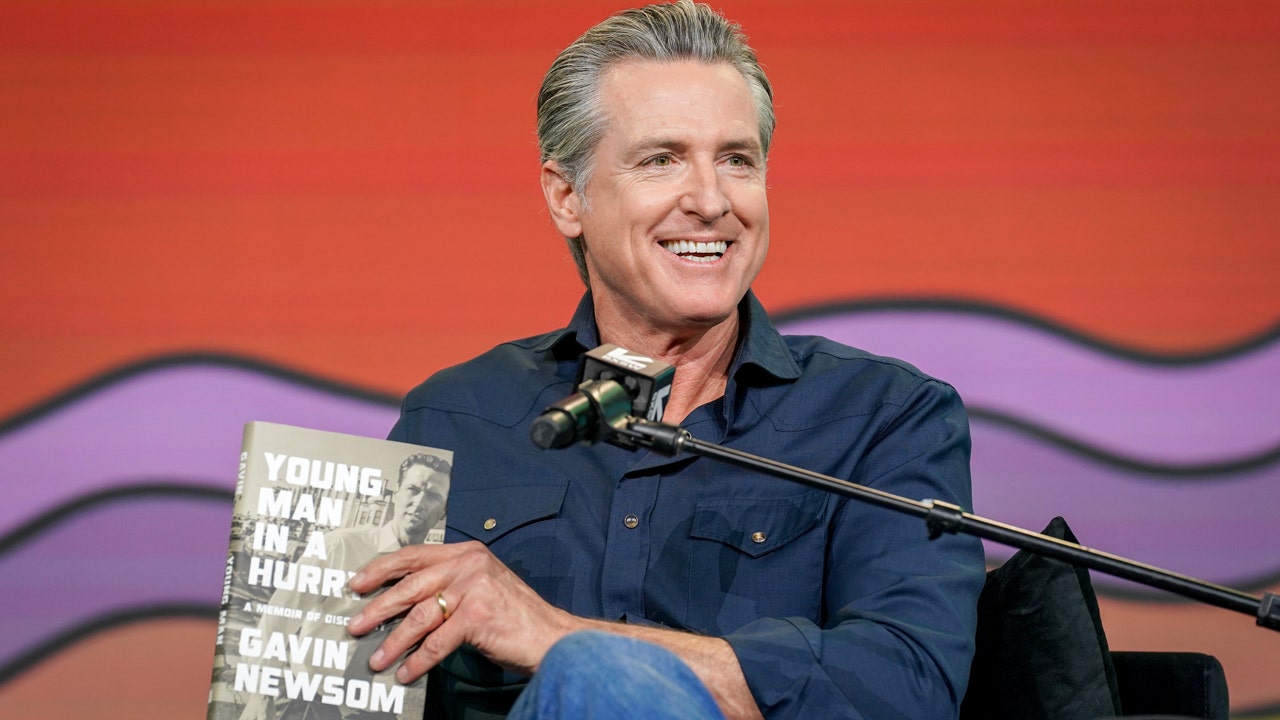
In the high-stakes world of American politics, perception is everything. A bestseller isn’t merely a collection of bound pages; it is a profound cultural signal, a testament to a candidate’s reach, influence, and—most importantly—the genuine desire of the American public to hear their story. For Governor Gavin Newsom, the launch of his memoir, Young Man in a Hurry, was crafted to be exactly that: the ultimate, flawless launchpad for a future presidential run. But behind the glitzy book tours and the prestigious “New York Times Bestseller” sticker, a cold, hard paper trail suggests a much different, more unsettling reality.
What was presented to the public as an organic, grassroots phenomenon—a story of a man connecting with the people—appears to have been a carefully orchestrated illusion. Behind the polished image of a governor connecting with the common voter lies a massive, million-dollar machine designed to manufacture legitimacy. New federal disclosures have cracked the veneer of this “triumph,” revealing that nearly two-thirds of the book’s total sales were not the result of curious readers walking into bookstores, but of a calculated, massive purchase by Newsom’s own political action committee.
This is not just an embarrassing PR stumble; it is a fundamental breach of trust. When a politician asks for your vote, they are asking for your trust. When they present a manufactured bestseller list to imply they have national momentum, they are betting on the idea that you won’t look at the fine print. But in this case, the fine print is a dagger—literally.
The Anatomy of a Manufactured Hit
On March 4th, 2026, the political world was presented with a triumphant statistic: 91,000 copies of Young Man in a Hurry sold. Newsom’s team explicitly claimed these were “organic, in-person, and online non-bulk purchases.” In the world of publishing and political influence, the word “non-bulk” is the holy grail. It signals that real people, with real money, chose to buy the book because they wanted to read it.

Yet, seven weeks later, the curtain was pulled back. Financial disclosures revealed that Newsom’s Campaign for Democracy Committee funneled $1,561,875 to the Porch Light Book Company—a firm that specializes specifically in, you guessed it, bulk book distributions. Math, as they say, does not lie. With industry trackers estimating total print sales at approximately 97,400 copies, those 67,000 bulk-purchased copies account for roughly two out of every three books sold.
Without the intervention of his own PAC, the “bestseller” would have faced a far more modest reception. Excluding the bulk purchases, only about 30,000 copies were bought by actual, individual readers. For a sitting governor with significant national name recognition, that is not a phenomenon—it is a quiet, underwhelming reality.
The Dagger in the List
Perhaps the most damning evidence doesn’t come from partisan rivals, but from the institution that bestowed the title upon him: The New York Times. When the book appeared on their non-fiction list, it carried a small, often overlooked symbol—a dagger.
A Times spokesperson confirmed that this symbol appears when the paper has reason to believe that sales include a significant mix of bulk purchases. This is the paper’s subtle way of flagging a “manufactured” bestseller. Notably, in 2015, the Times went much further with Republican Senator Ted Cruz, refusing to list his book entirely despite bulk purchases that were a mere tenth of what Newsom’s committee spent. While Cruz was banned, Newsom was given a spot on the list, albeit with a warning flag that most readers never saw.
The Donor Dilemma
This leads to the most uncomfortable question: whose money paid for this? The funding came from the very supporters who donated to Newsom’s Campaign for Democracy Committee. Many of these donors were small-dollar contributors who believed they were funding a legitimate political cause—like the push for Proposition 50—only to see their contributions utilized to manufacture a vanity metric for the governor’s political resume.
By their own admission, the campaign treated the book not as a product to be sold, but as a list-building tool. Donors were offered the book in exchange for donations, essentially creating a closed loop where the campaign’s money became the “customer,” and the “bestseller” label became a marketing tool for future donor pitches.

The Future: A Dangerous Precedent
If this trend continues, we are entering a new era of political theater where “bestseller” status is bought, not earned. Imagine a future where presidential candidates routinely utilize million-dollar “dark money” slush funds to carpet-bomb the bestseller lists to create a false aura of inevitability.
If voters are conditioned to trust these lists as indicators of popular support, they are being led by a fabricated consensus. This undermines the very integrity of the democratic process. When a candidate can manufacture their own popularity, the “will of the people” becomes a slogan rather than a reality. We are looking at a future where the truth is secondary to the algorithm, and the “bestseller” list becomes just another high-priced billboard on the road to the White House.