He Bought a Deserted Island for $12,000, Brought It Back to Life, and Turned Down a $50 Million Offer to Protect It
He Spent $12,000 on an Abandoned Island and Brought It Back to Life—Why He Rejected $50 Million
The Sovereign of the Sanctuary: Brendon Grimshaw and the Price of Paradise
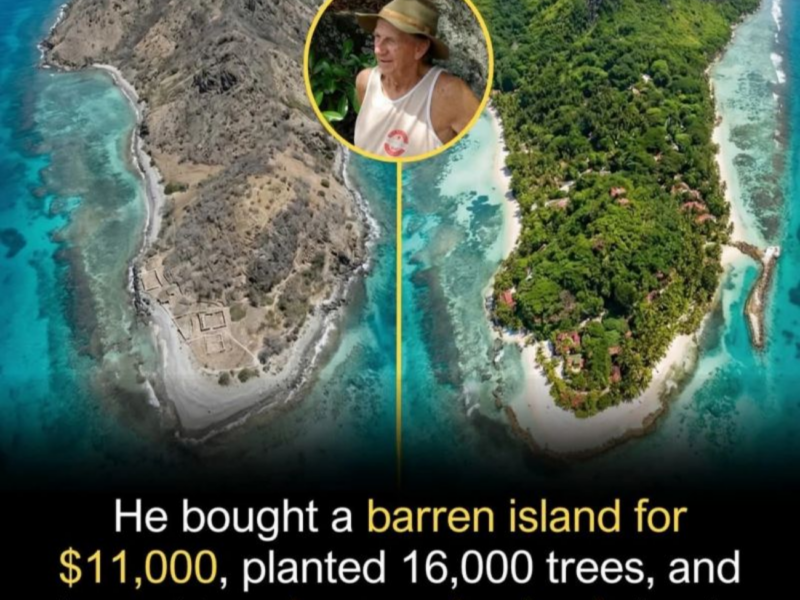
In the middle of the 20th century, the world was gripped by a frantic, post-war acceleration. Industrialization, urban sprawl, and the promise of “progress” were consuming landscapes with unprecedented speed. It was in this atmosphere of global expansion that a British newspaper editor named Brendon Grimshaw made a choice that would have seemed, by the standards of his time, profoundly illogical. In 1962, he purchased Moyenne Island, a tiny, weed-choked scrap of land in the Seychelles, for the modest sum of $12,000. He didn’t buy it to flip it. He didn’t buy it to build a resort. He bought it because, amidst the encroaching tide of modern development, he wanted to save a small piece of the world from itself.

The story of Brendon Grimshaw is a modern parable of stewardship. It stands in stark contrast to the American ideal of “maximizing value,” challenging us to consider whether the greatest achievement of a human life is the wealth we accumulate or the sanctity we preserve.
The Raw Material of Potential
When Grimshaw first stepped onto Moyenne, it was not the pristine tropical paradise one might imagine. It had been abandoned for decades. It was a tangle of invasive weeds, thick undergrowth, and neglect. It was, for all intents and purposes, a dead end.
For most of us, such a property would be viewed through the lens of “development potential.” We would see it as a blank canvas for a hotel, a private getaway, or an investment opportunity. Grimshaw, however, saw it as a responsibility. Along with his partner, René Antoine Lafortune, he began the grueling, manual process of restoration. There were no bulldozers or environmental consultants; there were only hands, shovels, and the slow, rhythmic labor of planting 16,000 trees.
This period of Grimshaw’s life was an act of penance—an attempt to undo the damage that humanity had inflicted upon this tiny patch of Earth. He was not just clearing brush; he was curating a lost ecosystem. He was, day by day, creating a sanctuary where there had been only wilderness.
The Geometry of Value: The $50 Million Question
As the Seychelles transitioned into a premier luxury tourism destination, the value of land on Moyenne soared. Developers saw the island not as an ecosystem, but as a potential gold mine. They saw the vistas, the beaches, and the exclusivity that a five-star resort could command. Eventually, the offers reached the dizzying height of $50 million.
For a man of average means, $50 million is not just money; it is a ticket to a life of unimaginable luxury and influence. It is the kind of offer that is designed to be accepted. And yet, Grimshaw’s response was a simple, devastating question: “Where would the birds nest? Where would the tortoises live?”
This is the hinge upon which the story turns. Grimshaw recognized a fundamental truth that our modern economic system often fails to account for: that some things have a value that cannot be captured in a ledger. A giant tortoise, a nesting bird, and a flourishing forest are not “assets” in the traditional sense; they are inhabitants of a living world that has a right to exist independent of our human desire for profit.
By declining the $50 million, Grimshaw did not just reject a paycheck. He asserted his moral sovereignty over his own life and his own land. He proved that an individual, when armed with a clear sense of purpose, can withstand the crushing weight of the global market.
The Architecture of a Legacy
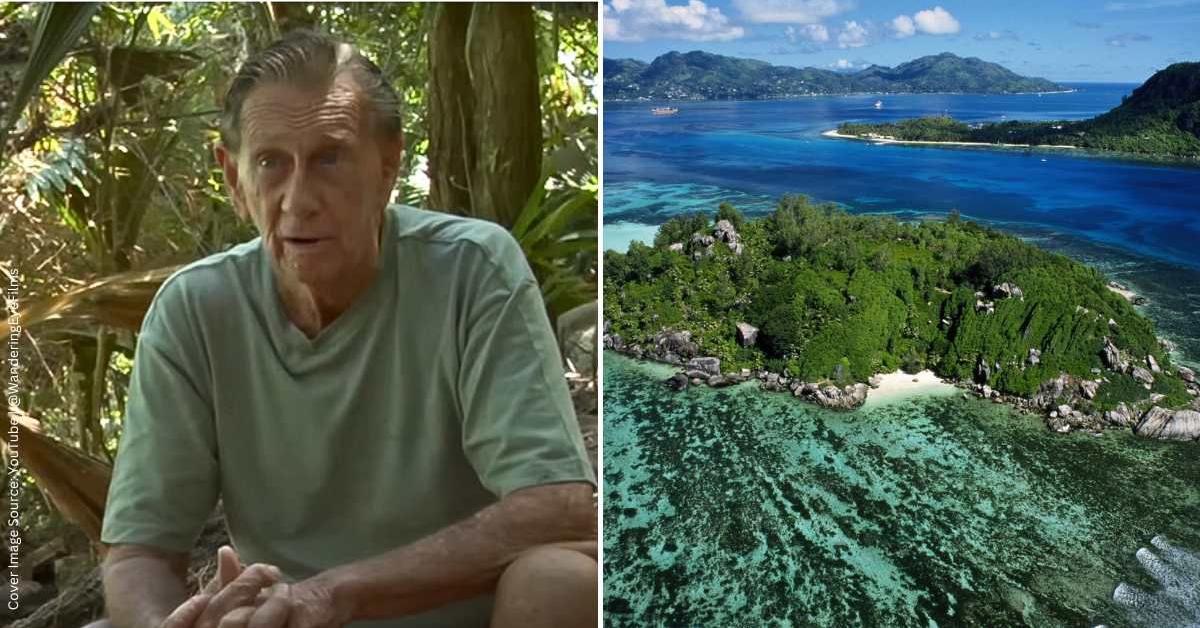
In 2009, Moyenne Island was officially declared a protected national park. It was the culmination of nearly 50 years of work. Today, it stands as one of the smallest national parks in the world—a rare, green jewel in an ocean of commercial development.
The island is home to over 120 Aldabra giant tortoises, a species that had once been on the brink of extinction. It is a haven for native trees and bird species that have been pushed out of the rest of the archipelago. But more importantly, the island serves as a living monument to the power of the individual.
In America, we often feel as though the scale of environmental degradation is so vast that our individual actions are meaningless. We look at climate change, habitat loss, and species extinction, and we feel the paralysis of the small. Brendon Grimshaw’s life is a corrective to that cynicism. He didn’t try to save the whole planet; he saved his island. And in doing so, he showed us that if we all took responsibility for our own “island”—our own patch of earth, our own sphere of influence—the world would look vastly different.
A Challenge to the American Dream
The American Dream is often sold to us as a trajectory of accumulation—a bigger house, a larger portfolio, a higher status. But Grimshaw’s life presents an alternative version of the dream: a trajectory of preservation.
He didn’t seek to “add” to the world; he sought to “restore” it. He didn’t seek to build his legacy in steel and glass; he built it in root and leaf. In a culture that is increasingly obsessed with the ephemeral—with digital wealth, viral fame, and instant gratification—there is something profoundly radical about a man who spends half a century tending to trees and tortoises.
Grimshaw reminds us that our legacy is not what we leave behind in our bank accounts; it is what we leave behind in the landscape. When he died, he didn’t leave a fortune to his heirs; he left a park to the world. He understood that wealth is a fleeting commodity, but a living, breathing ecosystem is an inheritance that can endure for centuries.

Conclusion: The Quiet Authority of the Steward
The story of Moyenne Island is an invitation to reconsider our own relationship with the spaces we inhabit. How many of us treat the land we occupy as a temporary resource to be exploited, rather than a permanent trust to be managed?
Brendon Grimshaw was an editor, a man of words and ideas. But his most significant work was not written on paper; it was written on the soil of Moyenne. He proved that even a tiny, deserted island can be a world unto itself if we are willing to treat it with reverence.

He declined the $50 million not because he didn’t understand the value of money, but because he understood the true value of the world. He knew that one giant tortoise, basking in the sun of a protected forest, is worth more than all the luxury suites that could ever be built. He chose the birds over the bank account. He chose the trees over the tourism. He chose a legacy of life over a legacy of wealth.
As we move forward into a century that will undoubtedly demand more from us in terms of environmental stewardship, let us remember the man who spent his life tending to the weeds, planting the trees, and protecting the inhabitants of a tiny island in the Seychelles. He was the sovereign of his own sanctuary, and he taught us that the greatest act of defiance in a world obsessed with growth is the quiet, persistent act of preservation. He chose to protect it. And in doing so, he protected something precious within us all.