How $300 Thermal Shelters Are Helping Homeless People Survive Freezing Winters Across America
How American Cities Are Using $300 Thermal Shelters to Keep Homeless People Warm Even in -40°F Temperatures
The Frozen Frontier: How $300 Shelters Are Fighting the Silent Killer in American Cities
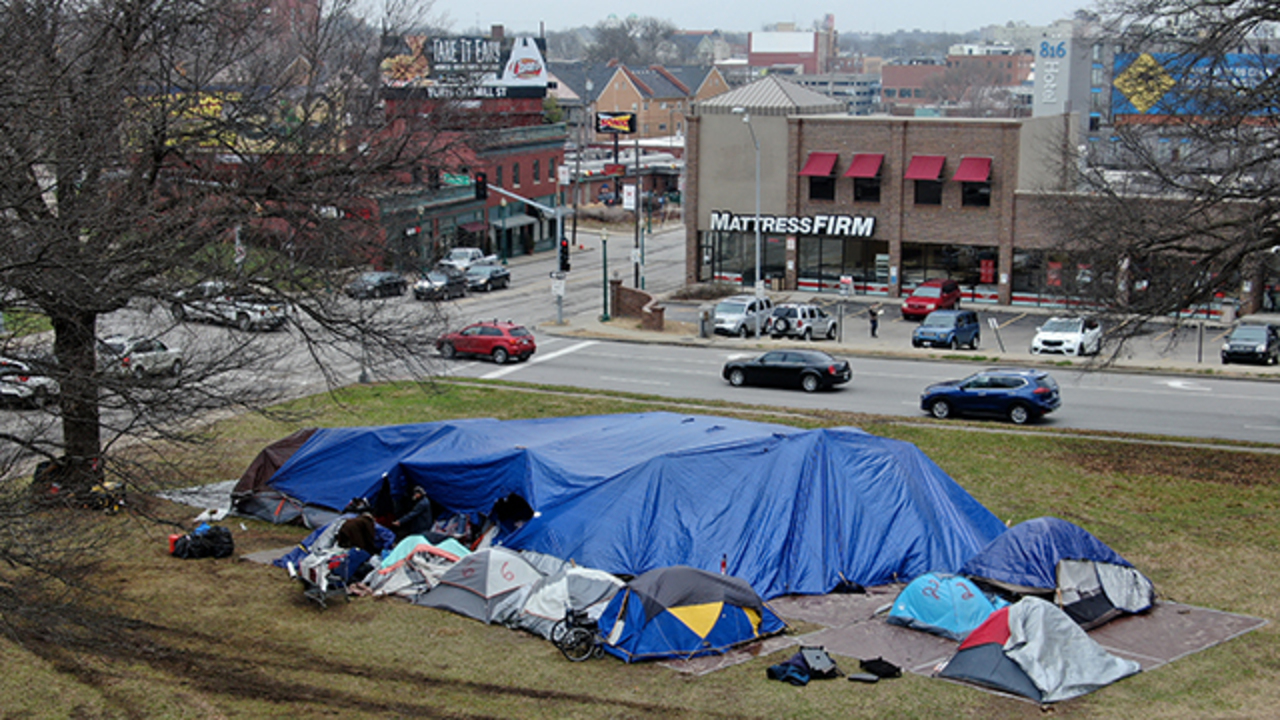
In January 2025, New York City found itself paralyzed by a cold front so intense that the city officials were forced to cancel the annual homeless count. It was a stark admission of failure—a public acknowledgement that the environment on the streets had become so lethal that not even trained, well-equipped volunteers could safely navigate the outdoors. For the estimated 4,500 people sleeping unsheltered, however, there was no option to stay inside. For them, that extreme temperature was not an emergency to be avoided; it was simply a Tuesday night.
As the wind chill threatened to snap the life out of anyone exposed to it, a quiet revolution was already unfolding in other parts of the country. In the parking lots of churches and the neglected peripheries of midsized American cities, engineers, nonprofits, and desperate local councils were ignoring the standard, failed bureaucracy of traditional housing. They began asking a question that sounded almost too simple to be effective: “Instead of spending millions on massive, often inaccessible shelter buildings, what if we could build something small, warm, and nearly indestructible for the price of a used smartphone?”
This question marked the beginning of one of the most practical, if controversial, innovations in emergency housing in decades. Across the United States, the crisis is accelerating. In 2023 alone, roughly 2,520 people died from hypothermia, a figure that represents a 35% increase from just ten years prior. In 2022, during brutal winter storms that swept across the Great Plains and the Eastern Seaboard, that death toll climbed past 3,500. Yet, for all the funding poured into “Code Blue” programs and emergency warming centers, the most vulnerable citizens continue to fall through the cracks.

The reason for this failure is complex. Many homeless individuals struggle with severe mental illness that makes crowded, noisy gymnasiums genuinely terrifying. Others have been victims of theft or physical violence within the shelter system and would rather gamble with the elements than share a floor with strangers. Then there are the pet owners—for whom a dog is often their only companion—and the elderly, who fear the contagious illnesses that rip through congregate housing. Consequently, many of those who die from hypothermia do so within literal walking distance of a warming center they refused to enter.
The Physics of Survival
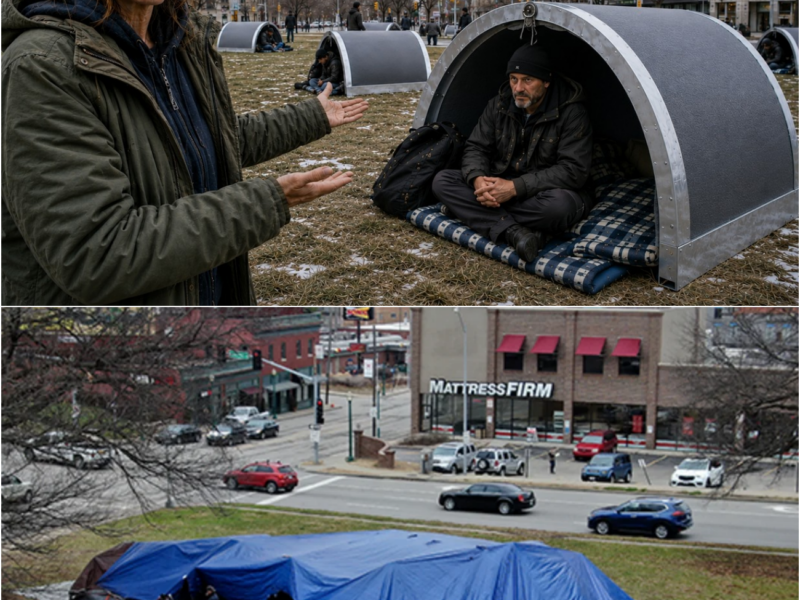
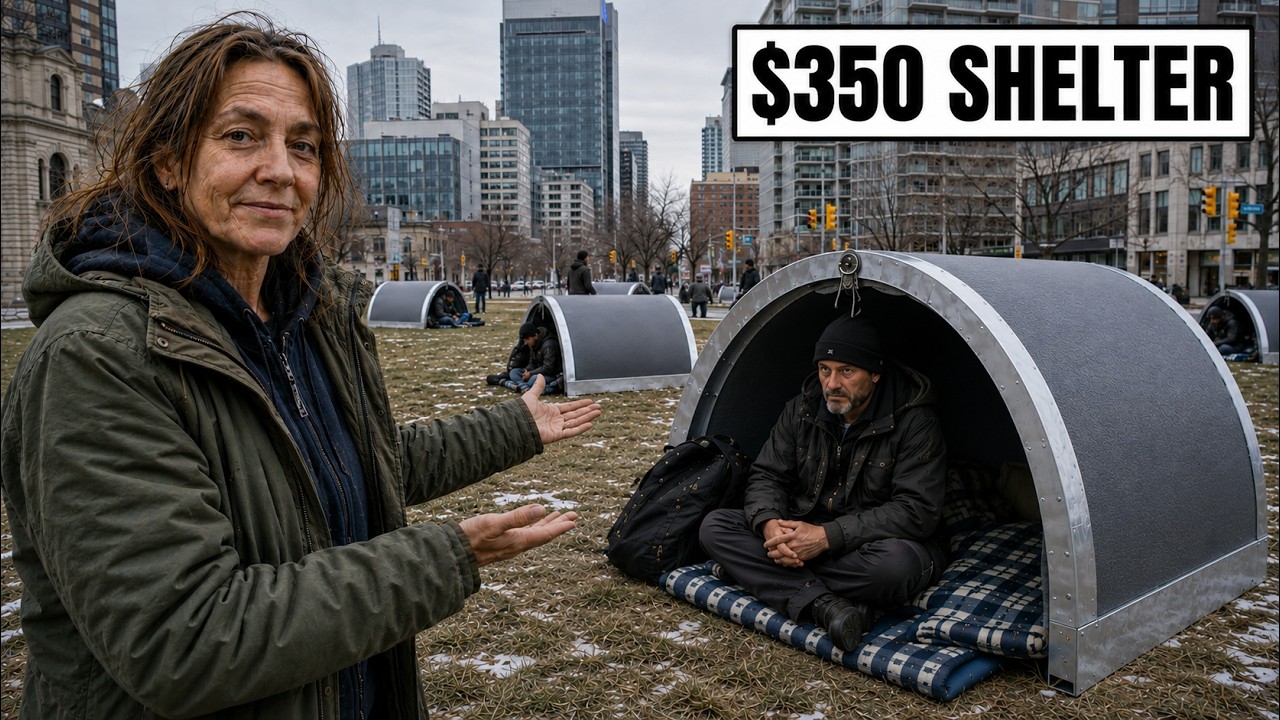
The breakthrough in Aurora, Colorado, in 2021 changed the conversation entirely. Confronted with a massive deficit in available beds as winter approached, the city council authorized the purchase of 30 insulated ice fishing tents. At approximately $300 each, these structures were not fancy, nor were they permanent. They lacked solar panels, smart sensors, and high-tech security systems. However, they provided the one thing the victims of extreme cold desperately needed: a thermal barrier.
The science behind this is grounded in basic physics. A resting human body generates roughly 100 watts of heat—about the same as an old incandescent light bulb. In open air, especially in windy or moist conditions, that heat is stripped away almost instantaneously. Once a person’s core temperature drops below 95°F, hypothermia sets in. By providing an insulated, windproof shell, a person can trap that body heat, raising the interior temperature by 20 to 30 degrees compared to the outside air. It is the difference between life and death.
Bridging the Gap to Permanent Housing
While the $300 tents proved that basic thermal protection was viable, the model soon evolved. Companies like Pallet, based in Everett, Washington, began deploying villages of modular, composite-panel shelters across the United States. These units, which cost roughly $7,500, offer a significant step up: they are lockable, weather-resistant, and provide a modicum of privacy that is essential for long-term recovery.
In cities like Salt Lake City, Utah, this approach has been taken to a more advanced level. By pairing hard-shell pods with 24-hour caseworker support, officials have created a “low-barrier” community that does more than just shelter individuals—it provides a bridge to stability. Residents like Sydney, a 48-year-old who found herself homeless in Utah, noted that having her own private space allowed her to focus on job applications rather than the constant, grinding anxiety of protecting her belongings and her person in a communal space.
Lessons from Abroad and the Future of Housing
The most sophisticated iteration of this concept originated in ULM, Germany, where designers created the “Ulmer Nest.” These solar-powered, timber-and-steel capsules feature a sensor network that tracks temperature, humidity, and occupancy, alerting social workers when someone uses a pod. This allows for a gentle, human-centric follow-up the next morning, connecting individuals with services in a way that feels supportive rather than interrogative.
Looking toward the future, the integration of these technologies—thermal efficiency, privacy, and supportive service tracking—could fundamentally alter how urban environments accommodate their most marginalized populations. As the homeless population continues to skew older, with researchers at UC San Francisco projecting that the number of unhoused individuals over 65 will triple by 2030, the need for these specialized interventions will only grow.
These thermal shelters do not “solve” homelessness; they do not replace the need for affordable permanent housing, healthcare, or economic opportunity. However, they stop the dying. By shifting the goal from the impossible task of curing a massive, systemic crisis overnight to the pragmatic, achievable mission of saving lives in the next 12 hours, these cities are rewriting the rules. The success of the $300 shelter is a testament to the fact that when we prioritize human life over aesthetics or bureaucracy, we can find answers in the most unexpected places.
The battle against the elements is far from won, but the path forward is becoming clearer. By ensuring that no one is forced to face a -40°F night without a thermal barrier, American cities are finally addressing the immediate, visceral reality of the homelessness crisis, proving that even a simple, low-tech solution can be the most profound act of compassion.