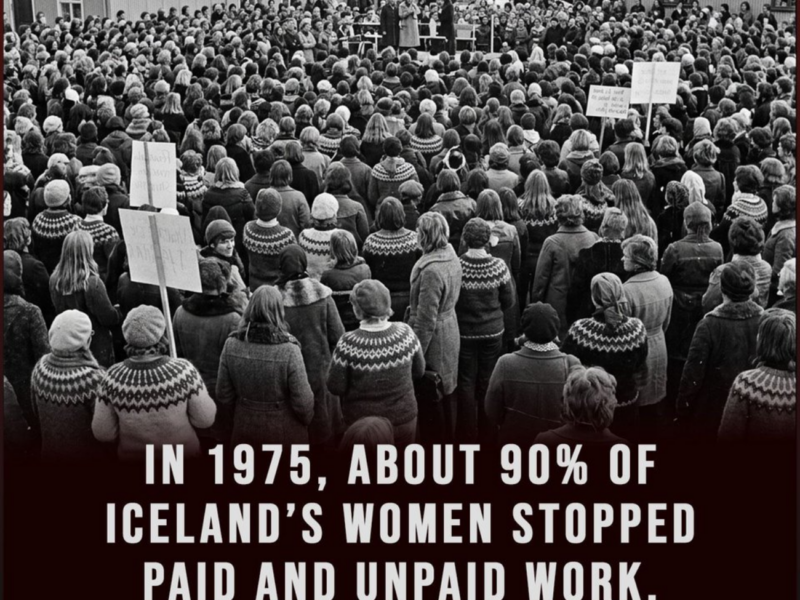
In 1975, 90% of Iceland’s Women Refused Paid Work, Housework, and Childcare for One Day—The Entire Nation Quickly Realized How Much It Relied on Them
In 1975, 90% of Iceland’s Women Refused Paid Work, Housework, and Childcare for One Day—The Entire Nation Quickly Realized How Much It Relied on Them
PART 1 — THE DAY AN ENTIRE COUNTRY STOPPED MOVING

On the morning of October 24, 1975, Iceland woke up to a strange feeling.
Something was missing.
The streets were still there.
The buildings stood exactly where they had always stood.
The cold Atlantic winds continued sweeping across the island nation.
But something invisible — something that had quietly powered everyday life for generations — had suddenly disappeared.
The women had stopped.
They stopped going to their jobs.
They stopped running businesses.
They stopped teaching classrooms.
They stopped working in factories and offices.
And they stopped doing something society had rarely recognized as “work” at all.
They stopped cooking meals.
They stopped cleaning homes.
They stopped caring for children.
They stopped carrying the endless responsibilities that kept families, workplaces, and communities functioning.
For one extraordinary day, approximately 90 percent of Iceland’s women walked away from both their paid jobs and unpaid duties.
They did not leave because they were angry at their families.
They did not leave because they wanted chaos.
They left because they wanted the world to finally see something that had always been there but was almost never counted.
Women’s work mattered.
And without it, an entire country would struggle to move.
In 1975, Iceland was often viewed as a modern and progressive nation.
It had a strong economy built around fishing, industry, and trade.
It had democratic institutions.
It had a reputation for independence and resilience.
But behind the image of progress was a reality that many women knew all too well.
Their contributions were everywhere.
Yet their voices were often missing.
Women worked.
They worked in offices.
They worked in schools.
They worked in hospitals.
They worked in shops and factories.
They worked on farms.
But even after leaving their paid jobs, many women began a second shift at home.
Preparing meals.
Washing clothes.
Raising children.
Managing households.
Supporting husbands and families.
Planning the details of daily life that allowed everyone else to continue.
The work never truly ended.
And much of it was invisible.
There was no paycheck.
No official job title.
No retirement benefit.
No economic measurement showing how much value these tasks created.
It was simply expected.
For many women, that expectation had become impossible to ignore.
They knew they were essential.
But society often acted as if they were replaceable.
The idea behind what became known as **Women’s Day Off** did not appear overnight.
For years, Icelandic women had been organizing, discussing, and demanding change.
They questioned why women were paid less than men.
They questioned why leadership positions were dominated by men.
They questioned why the work they performed at home was treated as something natural rather than something valuable.
In workplaces, women often faced limited opportunities.
In politics, women were dramatically underrepresented.
In everyday life, many decisions affecting society were made without women having an equal voice.
The frustration was growing.
But the organizers understood something important:
A traditional protest could be ignored.
A speech could be forgotten.
A petition could be placed in a drawer.
But what if the work women performed every day simply stopped?
What if the country had to experience the absence of something it depended on?
What if Iceland could not avoid seeing the truth?
The plan was simple but powerful.
For one day, women would refuse to perform their usual responsibilities.
They would not call it a strike.
They would call it a day off.
The difference was intentional.
The message was not that women were refusing to contribute.
The message was that women had been contributing all along.
They were showing what happened when their contributions were removed.
The organizers wanted men, businesses, and government leaders to understand a reality many had never been forced to confront.
A society does not run only because of the jobs people are paid to do.
It runs because millions of hours of unpaid effort happen quietly every day.
And much of that effort came from women.
When October 24 arrived, the impact was immediate.
Across Iceland, women made a collective decision to stop.
In offices, empty desks appeared.
In factories, normal routines changed.
In schools, many classrooms struggled because teachers and workers were absent.
At home, families suddenly faced responsibilities that had often been handled without recognition.
Men who had never considered childcare a major challenge suddenly found themselves responsible for children throughout the day.
Some fathers brought their children to workplaces.
Others searched for temporary solutions.
Businesses adjusted.
Government offices adapted.
Everyone was forced to respond.
The country was experiencing something it had rarely experienced before:
A day without the invisible system of women’s labor.
—
One of the most surprising parts was not simply that women left their jobs.
It was that the country quickly discovered how many parts of everyday life depended on them.
The disruption was not caused by women refusing to help.
The disruption came because society had built itself around their constant effort.
For years, many people had assumed that meals would appear.
Children would be cared for.
Homes would function.
Workplaces would operate smoothly.
But behind all of those things were millions of decisions and hours of labor.
And suddenly, those hours were gone.
The country could see the missing pieces.

The image that became associated with that day was unforgettable.
Men carrying children through workplaces.
Offices trying to function with fewer employees.
Fathers learning the practical challenges of responsibilities many women had handled for years.
It was not a day of anger.
It was a day of revelation.
Women were not asking people to imagine their importance.
They were making people experience it.
For many participants, the most powerful part was knowing they were not alone.
Women across Iceland — from cities to rural communities — were taking the same action.
They were sending the same message.
Their labor had value.
Their voices mattered.
Their equality was not a favor to be granted.
It was something they had earned.
The event became one of the largest demonstrations for gender equality Iceland had ever seen.
And what happened next surprised even those who organized it.
The country did not simply return to normal the next day.
Because once people had witnessed how much women contributed, it became impossible to pretend they had not.
The silence created by women’s absence had been heard.
And Iceland was about to enter a new chapter.
A chapter that would reshape its politics, its laws, and eventually its place in the world.
But before the country could celebrate progress, it first had to confront an uncomfortable question:
How had an entire society depended so heavily on women’s work while failing to fully recognize it?
The answer would transform Iceland forever.
PART 2 — WHEN A NATION REALIZED WHAT IT HAD TAKEN FOR GRANTED
The morning after October 24, 1975, Iceland returned to normal.
But something had changed.
The streets looked the same.
The buildings were still standing.
Businesses reopened.
Children returned to schools.
Workers went back to their jobs.
From the outside, it appeared as if the country had simply moved on after one unusual day.
But inside Iceland’s homes, offices, and government buildings, something much deeper had happened.
The country had experienced a moment of realization.
For one day, Iceland had been forced to confront a truth that had existed for generations:
Women were not simply helping society function.
They were a major reason it functioned at all.
And once that truth became impossible to ignore, the conversation about equality could no longer be pushed aside.
Before the Women’s Day Off, many people understood women’s contributions in theory.
They knew women worked hard.
They knew mothers cared for children.
They knew households required effort.
But knowing something intellectually is different from experiencing it.
For decades, much of women’s labor had happened quietly.
It happened behind closed doors.
It happened before sunrise and after everyone else went to sleep.
It happened without applause, without recognition, and without being included in traditional measures of economic success.
The protest changed that.
For 24 hours, Iceland did not simply hear women asking to be valued.
The nation felt what their absence meant.
One of the most dramatic examples came through childcare.
Before the protest, childcare responsibilities were often considered primarily a woman’s responsibility.
Many fathers loved their children deeply, of course.
But the daily tasks of feeding, organizing, preparing, and caring for children were frequently handled by women.
On that day, many men suddenly faced a reality they had rarely experienced.
Children needed attention.
Meals needed preparation.
Schedules needed coordination.
Workplaces had to adapt.
Some fathers brought their children to their jobs because there were few alternatives.
Offices that normally operated smoothly became temporary childcare spaces.
Men carried babies through meetings.
Employees tried to balance professional responsibilities with family needs.
The experience was eye-opening.
Not because fathers were incapable.
But because many were discovering the amount of energy and planning involved in responsibilities that had long been underestimated.
The impact reached far beyond individual families.
Businesses felt the disruption immediately.
Companies that depended on women employees had to adjust their operations.
Government offices experienced delays.
Schools were affected because many teachers and workers participated.
Services that people assumed would always be available suddenly required solutions.
The country was not collapsing.
But it was slowing down.
And that slowdown revealed something powerful.
A society can easily overlook work when it happens every day.
People notice when a machine breaks.
They notice when a factory closes.
They notice when a business stops operating.
But they often fail to notice the constant human effort that keeps everything running.
Until that effort disappears.
The most surprising part of the day was perhaps how peaceful it was.
This was not a protest filled with anger or confrontation.
There were no demands shouted in the streets.
There was no attempt to create destruction.
The message was much simpler:
“Look at what happens when we stop.”
Women were not trying to punish Iceland.
They were trying to educate it.
They wanted people to understand that equality was not only about fairness.
It was also about reality.
A society that depends on half its population cannot afford to ignore that population’s value.
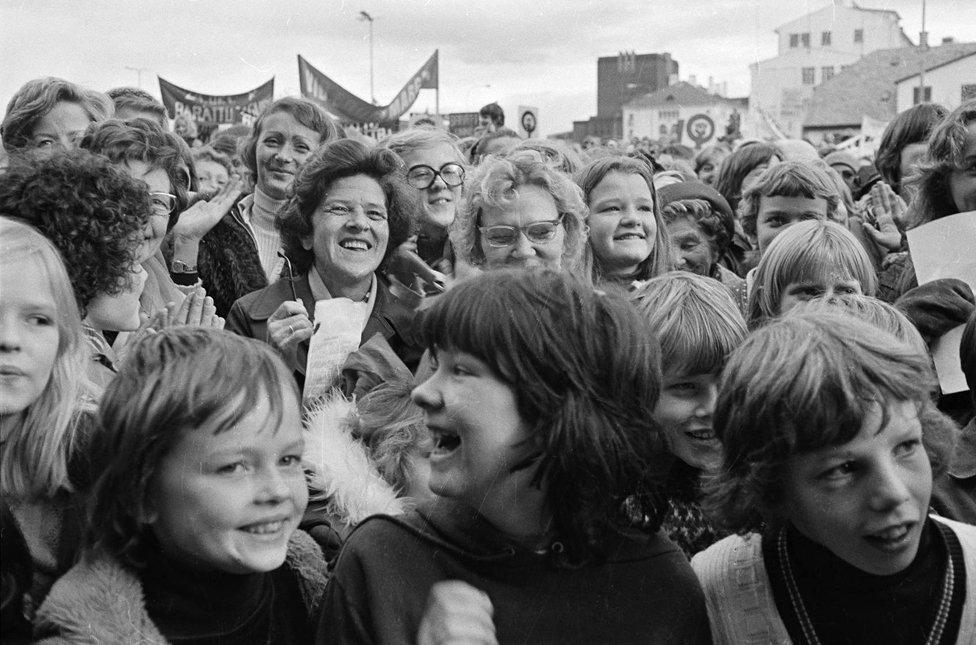
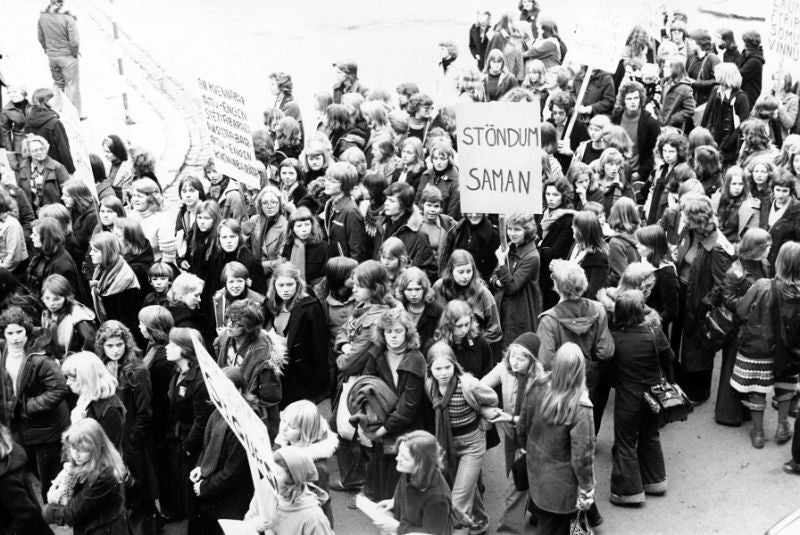
Across Iceland, thousands of women gathered in public spaces to stand together.
They shared stories.
They discussed their experiences.
They celebrated their unity.
Many participants later described the feeling as unforgettable.
For perhaps the first time, many women realized how many others shared the same frustrations.
They discovered that their personal struggles were not isolated.
The challenges they faced were part of a larger pattern.
The woman working long hours while still managing a household.
The mother whose efforts were considered “natural” instead of valuable.
The employee passed over for opportunities because of gender.
The citizen whose voice was missing from political decisions.
All of those experiences came together on one day.
The protest also changed how many men viewed the issue.
Some men who had previously considered gender inequality a distant or exaggerated problem began to see the imbalance more clearly.
They had experienced the responsibilities women carried.
They had seen the gaps created when women stepped away.
And for some, that realization became the beginning of change.
Social movements often succeed when they force people to experience something they previously ignored.
That is exactly what happened in Iceland.
The country was not simply debating equality anymore.
It was living through the consequences of inequality.
The effects of the Women’s Day Off continued long after the protest ended.
The momentum created by the event pushed Iceland’s leaders to respond.
The country began taking concrete steps toward greater gender equality.
Just one year later, in 1976, Iceland adopted its first Gender Equality Act.
The law represented a major shift.
It was a recognition that equal treatment between men and women was not merely a social issue.
It was a responsibility of government.
The protest had turned a conversation into action.
But the biggest transformation was not only found in laws.
It was found in expectations.
Before 1975, many people accepted traditional roles because they had always existed.
After 1975, more Icelanders began questioning those assumptions.
Why should certain jobs belong mostly to men?
Why should leadership positions exclude women?
Why should unpaid work remain invisible?
Why should the responsibilities of raising families fall so unevenly?
These questions became part of the national conversation.
And once those questions entered society, they could not easily disappear.
The story of Iceland’s Women’s Day Off spread internationally because it represented something larger than one country.
Around the world, women were facing similar challenges.
Different cultures.
Different economies.
Different traditions.
But a common experience:
Their work was essential, yet often undervalued.
Iceland showed what could happen when women collectively demonstrated that reality.
It was not just a protest.
It was a lesson.
Still, the journey was far from complete.
Passing a law did not instantly create equality.
Changing traditions did not happen overnight.
The women who participated understood that one day of action was only the beginning.
A society built over generations could not be transformed in 24 hours.
But they had achieved something incredibly important.
They had changed the conversation.
They had made invisible work visible.
They had forced a nation to look directly at the foundation beneath its feet.
Five years later, the world would witness another historic moment connected to Iceland’s changing views on women and leadership.
In 1980, Iceland elected Vigdís Finnbogadóttir as president.
She became the world’s first democratically elected female head of state.
Her victory did not happen by accident.
It emerged from years of women organizing, speaking, and demanding a greater role in society.
The seeds planted on October 24, 1975, had grown.
Looking back, many historians consider the Women’s Day Off one of the most important moments in Iceland’s modern history.
Not because the country stopped for one day.
But because that one day revealed something that had been hidden in plain sight.
A nation had discovered the value of the people who kept it running.
And once Iceland saw that truth, it could never completely forget it.
But the story was not over.
The next chapter would reveal how a small island nation transformed that moment of protest into a global symbol of gender equality — and how one woman’s historic rise to power would show the world what had become possible.