Man Jumps Into Freezing Water to Save 5-Year-Old Girl Who Fell Through Ice—Later Honored for His Heroic Rescue
A 5-Year-Old Fell Through Ice—One Brave Man Risked His Life to Pull Her to Safety
The Icy Crucible: Vipin Kumar and the Architecture of Instant Heroism

In the dead of winter, the city of Craiova, Romania, is a place defined by its biting chill—a landscape where the frozen surfaces of lakes and ponds become both a scenic backdrop and a silent, hidden danger. It was into this harsh, unforgiving environment that Vipin Kumar, a 47-year-old immigrant seeking new opportunities, ventured in January 2026. He did not go to the lake that day to become a hero; he went to walk, to reflect, and perhaps to dream of the life he was building in a foreign land. But in the span of a few heartbeat-rattling seconds, Vipin Kumar would find himself at the center of a life-or-death struggle, a moment that would transcend borders, cultures, and the freezing limits of human endurance.
When the ice broke beneath a five-year-old girl, the world around her descended into chaos. Panic is a natural, visceral response to catastrophe, yet Vipin’s response was something else entirely. It was an immediate, crystalline alignment of purpose. His story—the story of a man who traveled across the world only to save a life he had never known—is a profound study of what it means to be human in a world that often demands we look away.
The Instinct of the Stranger
To the American reader, Vipin Kumar’s actions resonate because they tap into a foundational ideal of our culture: the “Good Samaritan.” We love the archetype of the ordinary person who, without training or armor, steps into the breach when someone else is in trouble.
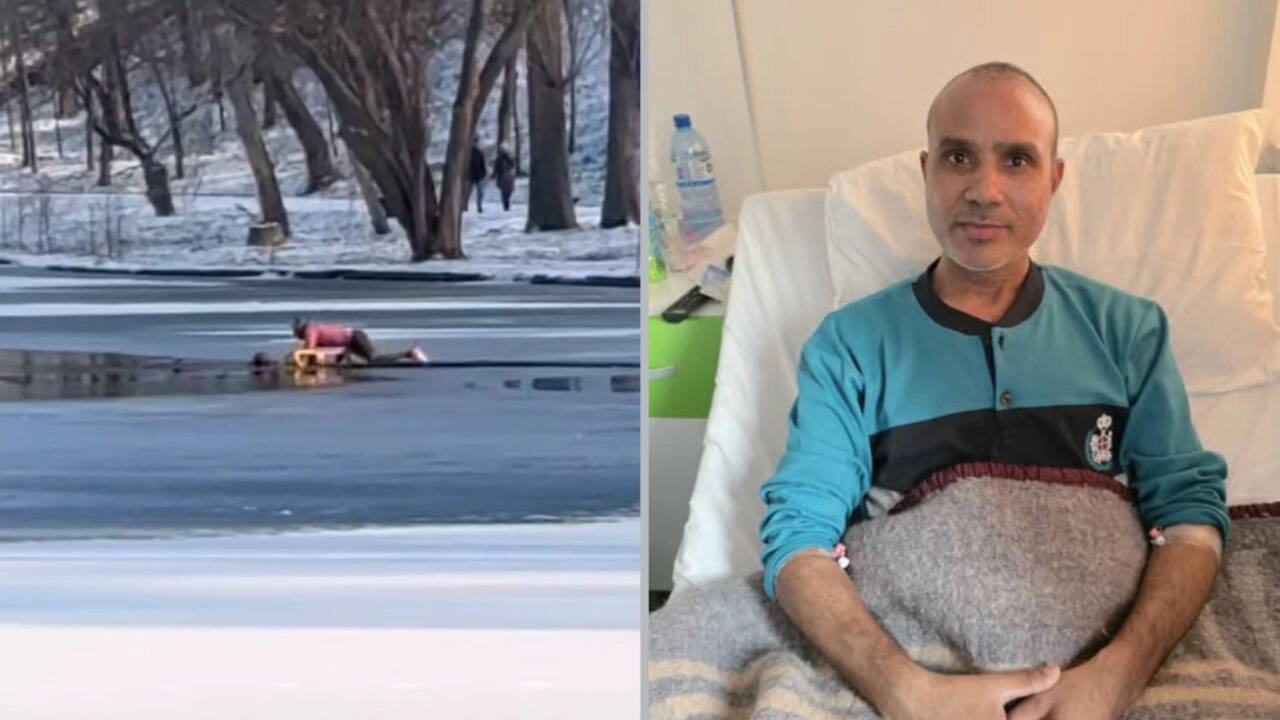
However, there is something unique about Vipin’s position as an immigrant in Romania. He was a man in transition, looking for work and navigating a new culture. Often, in such a position, there is a natural human inclination to remain invisible, to avoid drawing attention to oneself, and to prioritize one’s own safety in an unfamiliar setting. Vipin discarded all of that. When the girl fell, the social distance between the observer and the victim vanished. He did not stop to calculate the risk; he did not stop to consider the language barrier or the consequences of his own immersion in the icy depths. He simply moved.
This is the essence of heroism: the ability to bypass the ego and the instinct for self-preservation in favor of a higher, shared obligation to protect life.
The Thirty-Minute Vigil: A Battle Against Physics
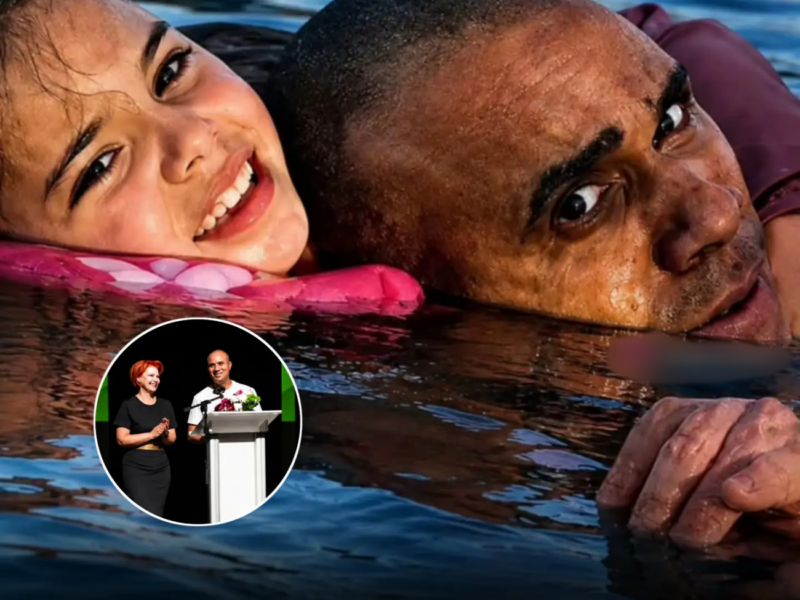
The most harrowing aspect of the Craiova rescue was not the initial jump, but the 30-minute endurance test that followed. Once the ice failed beneath Vipin as well, the situation transformed from a rescue mission into a fight for survival against the lethal onset of hypothermia.
Thirty minutes in freezing water is an eternity. As the cold seeps into the muscles, it inhibits the ability to swim, to grip, and to hold on. Vipin’s act of holding the child above the surface for that duration was an athletic and psychological feat of the highest order. It required a level of concentration that most of us will never have to summon. Every second was a battle against the numbing of his own limbs, against the creeping fatigue, and against the crushing awareness of how precarious their situation had become.
He was not just holding a child; he was holding the line between tragedy and hope. By keeping her head above the water, he was essentially acting as a human life raft, anchoring her existence until the rescue teams could finish the work he had begun.
The Language of Compassion
“I just tried to get her out of the water.”
Vipin’s explanation is refreshingly, almost frustratingly, simple. In a culture that often demands long, philosophical justifications for our actions, Vipin’s words remind us that true goodness rarely requires an explanation. It is a reflex. When asked, he didn’t invoke bravery or fate; he stated the objective. The objective was the child.
This is a powerful lesson for a world that feels increasingly polarized. We often get caught up in the abstract debates of what it means to be a “good citizen” or a “good person.” We build walls of ideology and identity. But in that lake in Craiova, those walls did not exist. There was only a human life in danger and a human being capable of reaching out.
The recognition he received—honorary citizenship from the city of Craiova and praise from the Indian ambassador—was not just for the act of rescue; it was for the way he bridged the gap between his home country and his host country. He became a symbol of humanity that required no translation.
The Immigrant’s Gift
There is a poignant irony in the fact that Vipin Kumar came to Romania looking for a job. In the global discourse on migration, we often hear arguments about what immigrants “bring” to a country. Usually, the conversation is centered on economics, labor, and GDP.
Vipin’s story reclaims the narrative of the immigrant as a provider of something far more precious than labor: he provided a future. By saving that five-year-old girl, he saved a lifetime of experiences, a family’s joy, and the untold potential of a young life. He gave the city of Craiova a gift that cannot be measured in currency. He reminded the people of his new home that the value of a neighbor—regardless of where they come from—is measured by their character.

The Architecture of Heroism in America
Why do we tell stories like this? Why do we, in America, look across the ocean to a lake in Romania and feel moved by a man we have never met?
Because we need these stories to remind us that the capacity for courage is dormant within all of us. We live in a time where it is easy to feel small, easy to feel overwhelmed by the scale of global problems, and easy to feel that our individual actions do not matter. Vipin Kumar proves that we are wrong. One man, one sled, one frozen moment in time—these were enough to alter the trajectory of a child’s life.
His story asks us to be ready. Not necessarily to jump into freezing lakes, but to be the person who notices when someone else is drowning, to be the person who doesn’t look away, and to be the person who prioritizes another human life when the moment of truth arrives.
Conclusion: The Ripple Effect
Vipin Kumar’s journey did not end when he was pulled from the water. It entered a new phase—a phase of being honored, recognized, and celebrated. But the true legacy of his actions is not the citizenship or the praise; it is the fact that a five-year-old girl is alive today because he refused to stand on the shore.

When we consider the life of a hero, we often think of the dramatic flourish. But real heroism is the refusal to accept that someone else’s fate is inevitable. It is the decision to intervene. Vipin Kumar, the man from India who went to Romania seeking a new start, became a reminder that our shared humanity is the most important foundation we have.
In the story of the ice, the water, and the thirty-minute wait, we find an enduring blueprint for what it means to serve. We may not all be called to jump into a freezing lake, but we are all called to hold the weight of others when they cannot stand on their own. Vipin Kumar held that weight. And because he did, the world is a little warmer, a little brighter, and a lot more hopeful than it was before he took that walk in January.