Meloni Fires Back as Trump’s Remarks Spark International Political Drama
Giorgia Meloni Responds After Donald Trump’s Controversial Photo Claim
The Atlantic Fracture: How a Photo Op Sparked a Diplomatic Firestorm Between Trump and Meloni
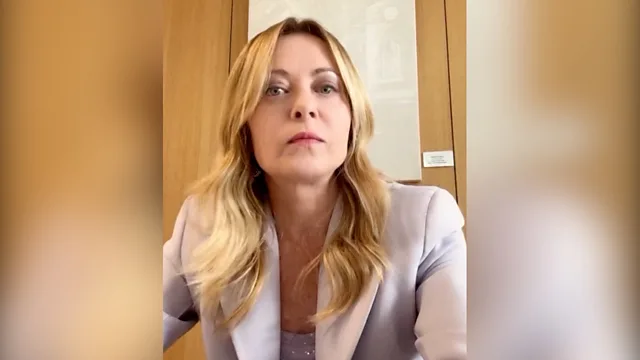
The G7 summit, traditionally a stage for orchestrated diplomacy and carefully curated optics, has become the improbable flashpoint for a spectacular diplomatic meltdown. In a move that has sent shockwaves from the halls of Rome to the corridors of the White House, United States President Donald Trump has leveled a blistering, highly personal accusation against Italian Prime Minister Giorgia Meloni. The charge? That the leader of a G7 nation literally “begged” him for a photograph—a claim that has shattered the facade of transatlantic unity and transformed a political partnership into an open, vitriolic feud.
As the echoes of the summits’ official communiques fade, they are being replaced by the raw, unfiltered noise of this public spat. For observers of international politics, the incident is far more than a petty squabble over a camera flash. It represents a potential tectonic shift in the Western alliance. Meloni, once heralded as the “Trump whisperer” of Europe—the sole EU leader to attend his second inauguration—has abruptly shed that persona, pivoting from an ally of convenience to a vocal antagonist. The Italian political establishment, usually reserved in its critiques of its most vital security partner, has united in an unprecedented display of defiance, characterizing the President’s comments as an existential insult to the Italian state.
The Anatomy of an Insult

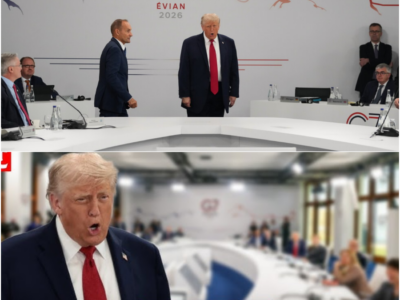
The firestorm erupted on a Friday morning, following a telephone interview broadcast on Italian television. In the interview, President Trump recounted his interactions at the recent G7 summit with his characteristic disregard for diplomatic niceties. He alleged that Prime Minister Meloni had approached him, desperate for a photograph, and that he had only acquiesced out of a sense of pity.
“I wasn’t obliged to take a photo,” Trump reportedly told the broadcaster, framing the interaction as an act of magnanimity toward a supplicant.
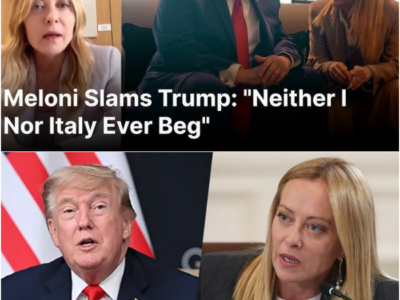
The reaction in Rome was instantaneous and ferocious. Meloni took to social media with a blistering rebuttal, rejecting the narrative with sharp, unyielding language. “Certain things merit an immediate reply,” she wrote, dismissing the President’s account as “completely fabricated.” She expressed genuine bewilderment at the attack, questioning why the leader of the free world would target an ally in such an undignified manner.
“Italy and I do not beg,” she declared, drawing a firm line in the sand.
A Diplomatic Crisis of Unprecedented Proportions
The backlash across Italy was not merely limited to the Prime Minister’s office. It was a total, cross-party condemnation. President Sergio Mattarella reached out in solidarity, a move that underscores the gravity with which the Italian state views the slight. Foreign Minister Antonio Tajani went a step further, announcing the cancellation of a high-profile, planned visit to the United States—a symbolic, yet highly significant, snub that signals a deep freeze in bilateral relations.
The rhetoric from the Italian government has grown increasingly apocalyptic regarding the damage inflicted by the Trump administration. Giovanni Battista Fazzolari, an undersecretary to the Prime Minister, issued a statement that questioned whether the President’s actions were born of “intent or ineptitude.” He did not mince words, accusing the President of single-handedly dismantling decades of historical relations between the United States and Europe.
“With his inappropriate outburst, he has managed no easy feat to make the US unpopular across the entire European continent,” Fazzolari added. The implication is clear: the damage is not merely to personal pride, but to the geopolitical scaffolding of the West.

From Whisperer to Basher: The Erosion of an Alliance
The transformation of Meloni from a Trump ally to a critic is perhaps the most compelling arc in this narrative. For months, she had positioned herself as the vital bridge between Washington and Brussels. She had invested significant political capital in cultivating a relationship with the Trump White House. However, the veneer of that partnership has been eroding for some time.
Policy divergences, once managed behind closed doors, have now erupted into the public sphere. The primary points of friction are significant: the US-led military campaign against Iran, which Meloni opposed, and her continued, staunch support for Ukraine, which stands in direct, and now increasingly public, contradiction to President Trump’s evolving strategy.
The “photo-gate” incident serves as the symbolic breaking point, the final transformation of the “Trump whisperer” into a vocal critic. This is not just a story about a photograph; it is a story about the collapse of a specific strategic vision for the Atlantic alliance.
Future Scenarios: The Cost of Isolation
If this relationship continues to spiral, the consequences for both the United States and Italy—and by extension, Europe—could be profound.

The Security Dilemma
Italy is a key NATO partner, hosting critical US military assets. A prolonged diplomatic rift could complicate logistical cooperation, intelligence sharing, and unified command structures. If the US-Italy relationship enters a “deep freeze” phase, the resulting vacuum in European leadership could be exploited by other geopolitical rivals, most notably Russia and China, who have long sought to exploit fissures within the Atlantic bloc.
The Economic Fallout
Beyond security, the economic implications are significant. Italy is a major trade partner for the US. A decline in political trust often precedes trade protectionism. If the Italian government continues to signal that the US is an unreliable or hostile partner, we may see a pivot in Italian investment strategies, potentially favoring deeper integration with alternative economic blocs.
A Domino Effect in Europe
The most dangerous scenario for the White House is a domino effect. If a stalwart ally like Italy is willing to publicly rebuke the US, other European leaders, particularly those with existing policy disagreements with Washington, may feel emboldened to follow suit. This would accelerate the trend of “strategic autonomy” in Europe—a vision where the EU acts as an independent power bloc, less beholden to the dictates of Washington.

Conclusion: A Tenuous Future
The spectacle of a diplomatic row triggered by a disputed photo op is symptomatic of a broader, more turbulent era in international relations. It highlights the vulnerability of personalistic diplomacy, where the quality of relations between nations is tied directly to the interpersonal dynamics of their leaders.
As the dust settles on this incident, one thing is clear: the era of the “Trump-Meloni alliance” is effectively over, and in its place lies a new, more unpredictable, and potentially more adversarial dynamic. The US now faces the prospect of a fractured European landscape, where even its closest friends are losing patience with the unpredictable nature of American foreign policy. Whether this is a temporary flare-up or the beginning of a profound, long-term alienation remains the burning question. One thing is certain: the world is watching, and the cost of this rift may be far greater than any single photograph could ever justify.