Michael J. Fox Feared His Wife Would Leave After His Parkinson’s Diagnosis at 29—But She Stayed by His Side Through Every Step of His Journey
Michael J. Fox Feared His Wife Would Leave After His Parkinson’s Diagnosis at 29—But She Stayed by His Side Through It All
The Diagnosis He Thought Would End His Marriage: How Michael J. Fox and Tracy Pollan Turned Fear Into a Life’s Work

For years, Michael J. Fox was one of the most recognizable faces in America. He was quick, charming, impossibly energetic, and seemingly built for the camera. On television, he moved with the timing of a born comic. In movies, he carried the screen with the confidence of someone who had found the exact rhythm of fame. To millions of viewers, he was the boyish star who never seemed to slow down.
Then, at 29 years old, his body sent him a message he could not understand.
It began quietly, almost cruelly, with something so small it could have been dismissed as stress, exhaustion, or the price of working too hard in Hollywood. A finger trembled. Not his whole body. Not his face. Not enough to announce catastrophe. Just a small movement, a tiny betrayal, the kind of thing a young man might stare at for a second and then try to ignore.
Fox was filming Doc Hollywood in 1991 when he noticed a tremor in his pinky finger, according to the account published by The Michael J. Fox Foundation. Soon after, he was diagnosed with young-onset Parkinson’s disease. He was only 29. He had been married to actress Tracy Pollan for just a few years. He had a career that many actors spend decades chasing. He also had a future that suddenly looked nothing like the life he had imagined.
The diagnosis was not just a medical event. It was a private earthquake.
Parkinson’s disease is often associated in the public imagination with older age. For Fox, the timing made it feel almost impossible to absorb. He was young, famous, newly married, and still climbing. His public image depended on motion, humor, timing, and ease. Yet his body had begun moving according to a different script.
The shocking part was not only that the diagnosis came so early. It was what Fox feared might happen next.
He feared that the woman he loved would leave.
In the mythology of Hollywood, marriages are fragile even in comfort. Fame can damage them. Schedules can stretch them. Ego can poison them. But illness introduces a different kind of test. It does not ask whether two people can survive applause. It asks whether they can survive fear, exhaustion, disappointment, and the long uncertainty of a future no one can fully control.
Fox had reason to be afraid. He was not simply asking Tracy Pollan to accept a diagnosis. He was silently wondering whether she could accept a life that might become increasingly difficult, unpredictable, and painful. Would she see him differently? Would she pity him? Would she become his caretaker instead of his partner? Would the marriage become a story of burden rather than love?
Those questions haunted him.
For seven years, Fox kept his Parkinson’s diagnosis hidden from the public. He continued working. He smiled for cameras. He took roles. He performed. He projected confidence while privately living with a secret that had the power to reshape everything. He disclosed the diagnosis publicly in 1998 and later founded The Michael J. Fox Foundation in 2000, which became one of the most visible forces in Parkinson’s research advocacy.
But before advocacy came denial.
Before the speeches, before the foundation, before the public courage, there was a man trying not to look directly at the truth.
Fox has spoken openly about drinking after his diagnosis. In one widely reported account, he described waking up after a night of drinking and seeing Tracy looking at him. She did not scream. She did not deliver a theatrical ultimatum. Instead, she asked a question that landed harder than anger ever could: “Is this what you want?” Fox later said that moment helped him stop drinking in 1992 and recognize that he still had choices.
It was a small sentence with enormous force.

“Is this what you want?”
Not: How could you do this?
Not: I’m leaving.
Not: You ruined everything.
The question gave him no easy place to hide. It asked him to look at himself. It forced him to confront the difference between suffering and surrender. It was tough love without cruelty. It was loyalty without enabling. And for Fox, it became a turning point.
The public often celebrates grand romantic gestures: red carpets, anniversary tributes, glamorous photographs, carefully written social media posts. But in real marriages, the defining moments often happen far from cameras. Sometimes love sounds like a hard question in a quiet room. Sometimes devotion is not soft. Sometimes it is the person beside you refusing to let you disappear into your worst fear.
That was the kind of love Tracy Pollan offered.
She did not treat him like a tragedy. Fox has repeatedly credited Pollan with helping him stay grounded, not by pitying him, but by remaining honest. Their marriage did not become a fairy tale because Parkinson’s made life easy. It became remarkable because Parkinson’s made life brutally real.
The couple had married in 1988 after meeting years earlier through their work on Family Ties . By the time Fox received his diagnosis, they had already begun building a family. Their first child, Sam, was born in 1989, and they would later have three more children: Aquinnah, Schuyler, and Esmé.
From the outside, the story can seem almost simple: a star gets sick, his wife stays, and together they endure. But that version misses the tension at the center of it. It misses the terror of being 29 and hearing that your body is changing in ways medicine cannot yet reverse. It misses the humiliation of trying to hide symptoms from colleagues. It misses the private calculations that can consume a person after a diagnosis: How long can I work? How long can I pretend? How long before everyone knows? How long before the people I love decide this is too much?
Fox did not immediately become a symbol of courage. He first became a man trying to survive the news.
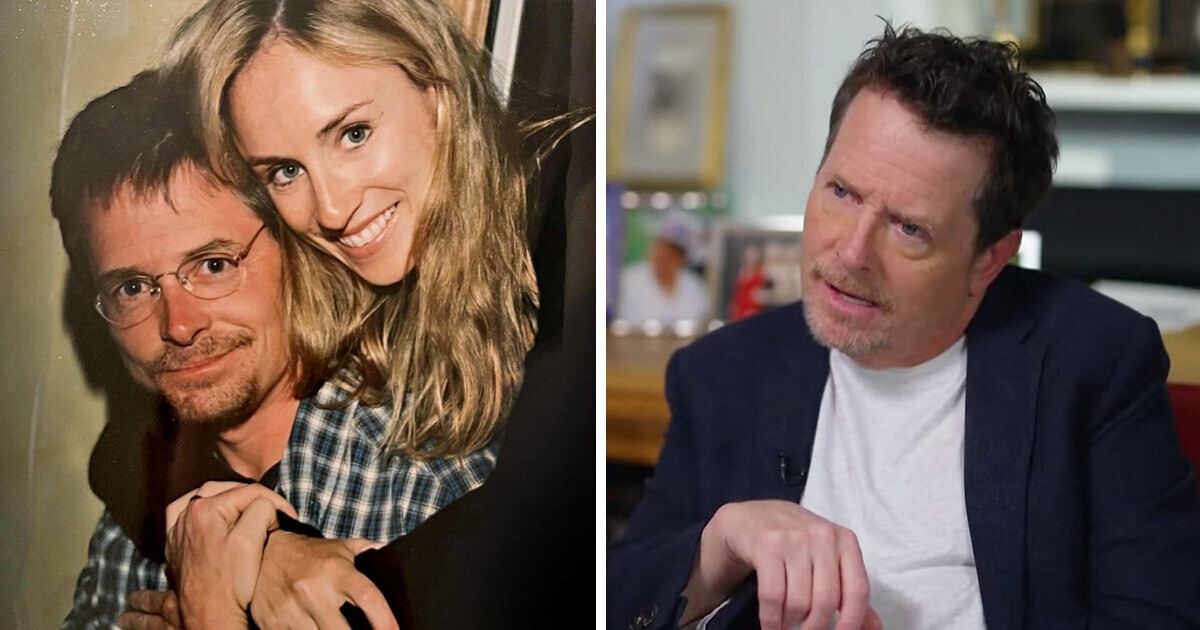
That is what makes the story so powerful. It is not a tale of instant heroism. It is a story of panic, concealment, addiction, confrontation, recovery, and purpose.
The audience saw Michael J. Fox as unstoppable. Parkinson’s forced him to learn that no one is.
In the early years after his diagnosis, secrecy became a kind of second job. He had to manage not only his career but the timing of his medication, the visibility of symptoms, the demands of performance, and the emotional weight of pretending. Fame is already a performance. Illness made the performance more exhausting.
To appear normal when you are frightened is its own form of labor.
Fox’s career did not stop immediately. In fact, for years many viewers had no idea what he was facing. That was part of the suspense of his real life. America watched him work without knowing that behind the familiar smile was a man negotiating with his own nervous system. Every public appearance carried an invisible question: could he get through it without revealing too much?
When Fox finally told the public in 1998, the revelation stunned many fans. The boyish star of Back to the Future and Family Ties had been living with Parkinson’s for years. The announcement changed the way people looked at him, but it also changed the way many people understood the disease.
Parkinson’s was no longer distant. It was not only an illness whispered about in older relatives or medical offices. It had a famous face, a young face, a face America knew.
But Fox did not want pity.
That distinction matters. Pity reduces a person to what has happened to them. Fox resisted that. He spoke with humor, honesty, and a kind of stubborn realism. He did not pretend Parkinson’s was easy. He did not decorate it with false optimism. But he also refused to let it become the only fact about him.
This is where Tracy Pollan’s role becomes even more significant. The person closest to him did not turn him into an object of sympathy. She remained his wife. His partner. His witness. His check on reality.
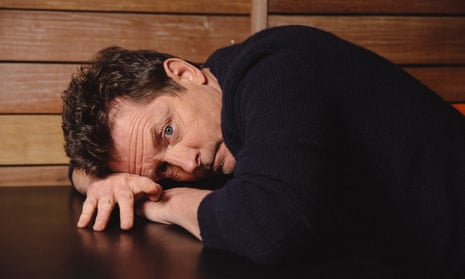
In American celebrity culture, illness is often flattened into inspiration. A person becomes either a hero or a victim. Fox’s story is more complicated, and therefore more human. He was scared. He drank. He hid. He worried his marriage might not survive. He made mistakes. Then he made different choices.
The question Pollan asked him did not cure Parkinson’s. It did something else. It interrupted the spiral.
Fox has described quitting drinking in 1992, shortly after that period of reckoning. The decision did not erase his diagnosis, but it gave him back a measure of agency. He could not choose whether he had Parkinson’s. He could choose what kind of man he would become while living with it.
That is the hidden drama of the story.
The disease took something from him, but the truth demanded something of him.
For a star whose identity had been tied to movement, timing, and youthful control, Parkinson’s represented a devastating reversal. It made the body unpredictable. It turned ordinary tasks into negotiations. It made public appearances physically risky and emotionally exposed. It complicated acting, the very craft through which Fox had built his life.
Yet it also pushed him toward a second act that may ultimately become as important as his first.
The Michael J. Fox Foundation, founded in 2000, has become a major organization dedicated to Parkinson’s research. Fox’s public role helped raise awareness, money, and urgency around a disease that affects millions worldwide. His diagnosis, once a secret he feared might destroy him, became the foundation of a global mission.
That transformation did not happen overnight. It was not clean or easy. It required Fox to move from concealment to disclosure, from fear to advocacy, from private shame to public purpose.
And through it all, Pollan stayed.
That fact has become central to the public’s fascination with their marriage. In a world where celebrity relationships often collapse under far less pressure, theirs endured through decades of illness, career changes, family life, and physical uncertainty. As of 2025, Fox and Pollan had been married for 37 years, and Fox described her as his best friend and partner in a People interview.
Their longevity is not shocking because marriage should be disposable. It is shocking because the culture around them often treats it that way.
Hollywood sells romance beautifully but rarely protects it. The industry thrives on reinvention, temptation, distance, ego, and applause. Fox and Pollan’s marriage has survived in a world that often rewards self-absorption. It has also survived a diagnosis that could have broken the emotional architecture of a young family.
What makes their story appealing to so many Americans is that it is not only about celebrity. It is about the fear that lives inside ordinary homes too.
What happens when the future changes without permission?
What happens when one spouse becomes sick?
What happens when the person who once seemed invincible becomes vulnerable?
What happens when love is asked to become patient, practical, and brave?
Fox’s fear that Pollan might leave was not irrational. It was human. Many people facing serious illness worry about becoming a burden. They worry that love will curdle into obligation. They worry that the person beside them will stay physically but leave emotionally. They worry that the marriage will become organized around appointments, symptoms, medications, and fatigue.
But Pollan’s response was not pity. It was presence.
There is a difference.
Pity looks down. Presence stays beside.

The power of their marriage lies in that difference. Pollan did not deny the severity of what Fox was facing. She did not pretend the disease was imaginary. She also did not make his diagnosis the total definition of their life together. That balance is rare. It requires strength from both people: the person living with the disease and the person living beside it.
Fox’s public humor has sometimes made the story easier for audiences to approach. He has a gift for making honesty feel survivable. But behind the humor is a relentless truth: Parkinson’s is progressive. It changes lives. It takes control and demands adaptation. Fox has never needed to exaggerate that reality. The facts are hard enough.
What he has done, again and again, is insist that hardship does not erase meaning.
That message resonates because it is not sentimental. It is earned.
The image of Fox as a young star receiving his diagnosis at 29 remains jarring. At that age, many people are still imagining a future of expansion. For Fox, the future suddenly narrowed. A doctor’s words introduced a countdown he could not calculate. He did not know how quickly symptoms would progress. He did not know how long he could keep working. He did not know how his marriage would change.
The suspense of his life was no longer written by screenwriters. It was written by uncertainty.
Yet the years that followed produced something unexpected. The diagnosis that initially drove him inward eventually pushed him outward. The secret became a platform. The fear became fuel. The marriage he feared losing became one of the strongest sources of stability in his life.
That arc is powerful because it reverses expectations.
A devastating diagnosis could have isolated him. Instead, it connected him to millions.
A private fear could have destroyed his marriage. Instead, his marriage became a public example of endurance.
A disease that threatened his identity as an actor helped reveal another identity: advocate, survivor, husband, father, and witness.
None of this makes Parkinson’s a gift. Fox himself has been clear in interviews that the disease is difficult and unwanted. The danger in inspirational storytelling is that it can make suffering sound useful only when it produces public triumph. But illness does not need to be romanticized to reveal character. Parkinson’s did not become good because Fox responded with courage. It remained hard. The courage was in responding anyway.
That is the emotional center of the story.
Fox did not defeat Parkinson’s. He learned how to live in defiance of its attempt to define him.
Pollan did not save him through magical devotion. She loved him with steadiness, honesty, and a refusal to reduce him to his diagnosis.
Their marriage survived not because they avoided pain, but because they faced it without turning against each other.
In the American imagination, Michael J. Fox will always be connected to speed: the time-traveling teenager, the quick-witted sitcom son, the actor whose comic energy seemed electric. But his later life has made him a symbol of something slower and deeper: endurance.
Endurance is less glamorous than speed. It does not explode across the screen. It accumulates quietly over years. It looks like showing up to appointments. It looks like adjusting expectations. It looks like laughing when possible and grieving when necessary. It looks like a spouse staying when fear says she might go.
Fox and Pollan’s story has endured because it offers something rare in celebrity culture: a love story that becomes more compelling after the fantasy is stripped away.
The diagnosis came early. The denial lasted years. The drinking became a warning sign. The question came from his wife. The recovery began. The truth eventually became public. The foundation followed. The marriage held.
That sequence is dramatic because it is real.
It is also deeply American in its structure: a fall, a reckoning, a reinvention, and a mission larger than the self.
Fox’s life after diagnosis became a form of public testimony. He showed that fear and courage can exist in the same person. He showed that denial is not the opposite of bravery; sometimes it is the painful road a person travels before bravery becomes possible. He showed that a body can change without erasing a life.
And Pollan’s role showed something just as important: love is not proven by saying the right thing when life is easy. It is proven in the difficult middle, when no one is applauding, when the future is unclear, when staying means accepting that the story will not unfold as planned.
The wedding vow “in sickness and in health” is familiar enough to become almost invisible. People say it in formal clothes, surrounded by flowers, music, family, and hope. But the vow does not reveal its weight at the altar. It reveals its weight later, in hospital rooms, quiet kitchens, difficult mornings, and moments when one person wonders whether they are still lovable.
Fox feared that he might not be.

Pollan answered by staying.
That answer did not remove the disease. It did not simplify the future. It did not spare them from hard years. But it gave Fox something fear had tried to take from him: the knowledge that he was not alone.
The most shocking part of the story, then, is not only that Michael J. Fox was diagnosed with Parkinson’s at 29. It is not only that he hid it from the public for seven years. It is not only that he struggled with alcohol before turning toward sobriety and advocacy.
The most shocking part is that the life he feared was ending became the life through which he reached millions.
The marriage he feared losing became one of the defining love stories of his public life.
The diagnosis he once hid became the cause he carried into the world.
That is why the story still holds people. It begins with a tremor, but it does not end with one. It begins with fear, but it does not end in fear. It begins with a man imagining abandonment and ends with a partnership that has lasted through decades of uncertainty.
Michael J. Fox once stood at the edge of a future he did not want, convinced that Parkinson’s might take not only his health but also his marriage, his career, and his identity.
Instead, the disease revealed the truth of the life around him.
His wife stayed.
He got sober.
He told the world.
He fought back.
And the boyish star America thought it knew became something even more powerful: a man who allowed the public to see him shaken, changed, vulnerable, and still standing.