Mississippi Mom Says She Was Fired After Hiring Her Son and His Friends for Summer Jobs to Keep Them Out of Trouble
Mississippi Mom Says She Was Fired After Hiring Her Son and His Friends for Summer Jobs to Keep Them Out of Trouble
On a humid morning in Clinton, Mississippi, the kind of summer heat that settles into asphalt and refuses to leave, a small Burger King on a roadside strip became the center of a story that would travel far beyond its drive-thru window.
At first, nothing about the shift seemed unusual.
Teenagers clocked in. Fryers hissed. Orders came in waves. A manager tried to keep pace with the lunch rush while also doing something she believed, at least in that moment, was bigger than the job itself.
But within days, that same workplace would be pulled into a controversy that split public opinion, triggered corporate scrutiny, and left a mother, her son, and three other teenagers suddenly without the summer jobs they thought they had just begun.
And at the heart of it all was a simple question that refused to go away:
Was this a violation of workplace policy—or a punishment for good intentions?
A Summer Plan That Started With Hope
Shakayla Dixon wasn’t trying to make headlines.
According to her own account, she was a Burger King manager in Clinton, Mississippi, and a mother trying to solve a problem that every parent understands in one form or another: what happens to teenagers during the long, unstructured stretch of summer?
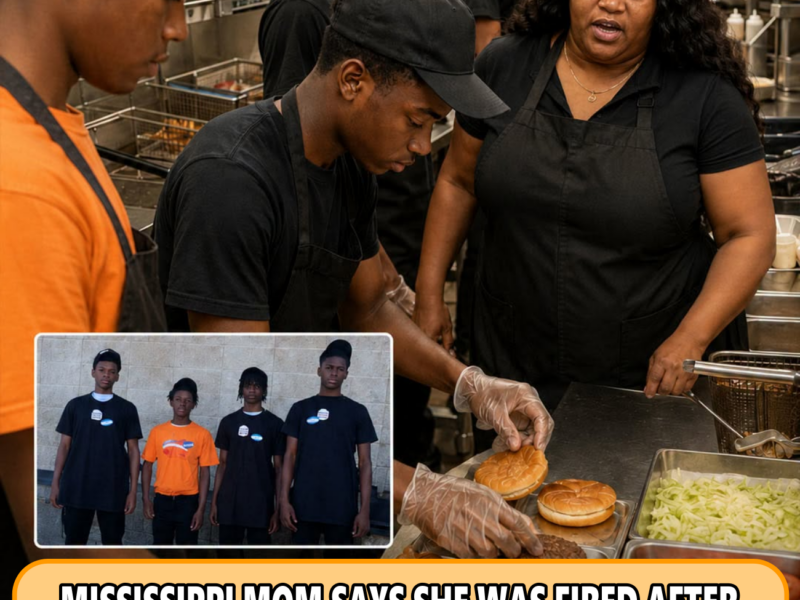
Her answer was direct. She hired her 15-year-old son, Corderrion Valentine, along with three of his friends.
The goal, she said, wasn’t just employment. It was structure. Responsibility. A daily routine. Something to keep the boys occupied, earning money, and away from the kind of idle summer days that can too easily spiral into trouble in any American town.
For Corderrion and his friends, the opportunity felt significant in a way adults sometimes underestimate. A first job is not just about wages. It is about identity. It is about stepping into a version of adulthood, even briefly, where you are trusted to show up, clock in, and be accountable.
For a brief moment, that is exactly what happened.
They worked.
They learned.
And, according to those who later spoke about it, they took pride in doing so.
What began as a small act inside a single fast-food location would soon spill into the wider internet.
The Viral Moment That Changed Everything
The first shift in the story wasn’t internal—it was digital.

Shakayla Dixon posted about the teens working. It was not framed as controversy. It was not intended as criticism. It was, by all accounts, a moment of pride: a mother showing that her son and his friends were doing something constructive with their summer.
The internet responded quickly.
In an era where short videos and posts can transform ordinary moments into national conversations, the image of teenagers working their first jobs struck a chord with many viewers.
Among those who amplified the story was entertainer Nick Cannon, who reportedly reshared the post and praised the idea of young people staying busy, earning money, and staying on a positive path during the summer months.
For a brief window of time, the narrative was overwhelmingly positive.
A mother had created opportunity.
Teenagers were working instead of drifting.
The internet, often quick to criticize, seemed unusually aligned in approval.

But that alignment would not last.
Because somewhere beyond the viral comments and reposts, a different conversation was beginning—one that did not focus on inspiration, but on policy.
The Call From Higher Management
According to Dixon’s account, the turning point came not online, but on the phone.
She said she received a call from higher management questioning the arrangement. The concerns, as reported by multiple outlets including the New York Post and others such as RetailWire and regional publications, centered on two issues:
The fact that she had hired her own son.
And questions regarding how the minors were being paid.
In corporate environments, especially within large franchise systems, employment rules are often strict and standardized. Fast-food chains operate under detailed policies governing hiring practices, wage structures, and especially the employment of minors.
At the center of the issue was not just whether the teens were working—but whether the way they were hired complied with corporate guidelines.
Dixon later said the situation escalated quickly.
She was told the arrangement was problematic.
And then, according to her account, the decision was made: she and the teenagers were let go.
The Fallout: A Summer Job Ends Suddenly
For Corderrion Valentine, the news landed in a way that went beyond workplace disappointment.
He and his friends had just entered a rhythm—showing up for shifts, learning tasks, earning their own money. Then, almost as quickly as it started, it ended.
Corderrion’s reflection, as reported in coverage of the incident, was not about policy or corporate structure. It was about possibility.
He suggested that without the job, he and his friends might have been left with fewer structured options for the summer—more time, more freedom, and potentially more exposure to the kind of trouble their mother had hoped to prevent in the first place.
That sentiment is what made the story travel beyond local news.

Because it touched a broader, recurring American theme:
What happens when good intentions collide with rigid systems?
A Workplace Policy Collision
The company at the center of the story operates one of the most recognizable fast-food systems in the world: Burger King.
Like many large corporations, Burger King locations are typically operated by franchisees. That means individual restaurants are often owned and managed by local operators, but they must still follow corporate standards and labor laws.
Those standards can include rules about hiring minors, avoiding conflicts of interest, and ensuring wage compliance.
In this case, the key issue appears to have been the intersection of family relationships and employment decisions inside a managerial structure.
To corporate compliance systems, hiring a direct family member—especially a minor—can trigger scrutiny. Not necessarily because the work itself is improper, but because it raises questions about oversight, fairness, compensation, and labor regulation adherence.
From a policy standpoint, these systems are designed to avoid favoritism or legal exposure.
From a human standpoint, they can feel rigid, even disconnected from intent.
And that tension is where this story lives.
Two Narratives, One Incident
By the time the story reached national attention, two competing narratives had formed.

Narrative One: Policy Enforcement
In this interpretation, the situation is straightforward.
A manager hired family members in a way that potentially violated corporate or franchise policies.
Higher management intervened.
The employment arrangement was terminated.
The system functioned as designed.
Narrative Two: Punished Good Intentions
In the opposing interpretation, a mother attempted to create opportunity for teenagers in her community.
The arrangement provided structure, responsibility, and income.
It gained public praise and viral attention.
Then, instead of being recognized as positive, it was shut down due to technical policy concerns.
And in that reading, the outcome feels less like enforcement—and more like loss.
Why the Story Went Viral
This was not simply a workplace dispute.
It became a cultural flashpoint because it intersected with several emotionally charged themes:
Youth employment.
Parental responsibility.
Corporate authority.
Economic opportunity.
And the fragility of goodwill inside rigid systems.
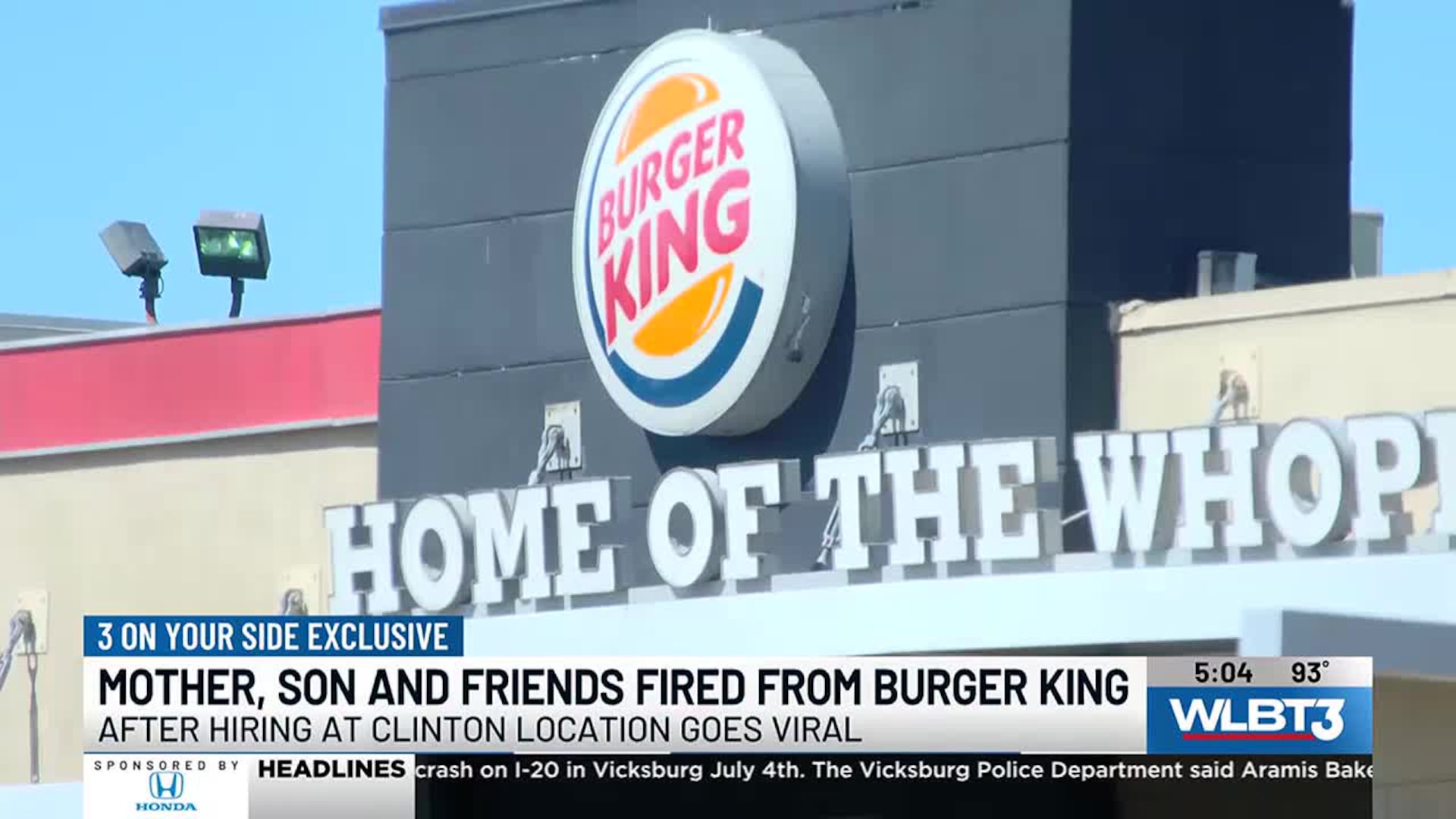
The image of teenagers working a summer job resonates strongly in the American imagination. It represents first steps into adulthood, small paychecks, and early lessons in responsibility.
That is why the story spread so quickly—and why it continued to generate debate even after the employment ended.
People were not just reacting to a firing.
They were reacting to what they believed the story represented.
The Role of Social Media Amplification
Once the story entered the social media ecosystem, its trajectory changed.
What might have remained a local employment issue became a national conversation because it was framed through short posts, reactions, and resharing.
The involvement of a high-profile figure like Nick Cannon added momentum. Viral content rarely travels on its own; it moves through networks of attention, endorsement, and emotional resonance.
But social media also compresses complexity.
A franchise policy issue becomes a moral debate.
A compliance question becomes a question of fairness.
A termination becomes a symbol.
And symbols are rarely neutral.
The Human Cost Behind Policy Language
Behind every corporate policy is an intention: fairness, consistency, legal protection, operational clarity.
But behind every policy enforcement is also a human consequence.
In Clinton, Mississippi, that consequence involved a mother and several teenagers who believed they had secured something meaningful for the summer.
For Dixon, the experience was reportedly rooted in intention, not violation.
For Corderrion and his friends, it was a brief moment of financial independence that ended abruptly.
And for observers, it became a question that is still difficult to settle cleanly:
When does structure protect people—and when does it remove opportunity?
A Broader American Pattern
This incident did not occur in isolation.
Across the United States, similar tensions surface repeatedly in workplaces where:
Family members are employed under supervision rules.
Minors enter structured work environments.
Franchise systems enforce standardized corporate policies.
Local managers navigate both community relationships and corporate compliance.
These environments often produce friction between what feels locally appropriate and what is formally allowed.
In that sense, the Mississippi Burger King incident is not just about one manager or one restaurant.
It is about the gap between human intention and institutional structure.
The Question That Remains
As the story circulated through news outlets, comment sections, and social feeds, one question consistently reappeared:
Was this fair?
The answer depends entirely on perspective.
From a corporate compliance standpoint, enforcing rules consistently is essential to avoid legal and operational risks.
From a community standpoint, a summer job for teenagers—especially one created by a parent—feels like a positive act that should be encouraged, not penalized.
Both interpretations can exist at the same time.
And that is what makes the story persist.
After the Headlines Fade
Most viral workplace stories disappear quickly.
But this one lingers because it contains no simple resolution.
There is no scandal in the traditional sense. No dramatic wrongdoing. No clear villain.
Instead, there is a collision between intention and regulation, between local decision-making and corporate structure, between what people feel is right and what systems are designed to enforce.
For Corderrion Valentine and his friends, the experience will likely be remembered not for the policy discussion it generated, but for the short time they had a job that made them feel responsible, capable, and seen.
For Shakayla Dixon, it is likely remembered as a moment where an attempt to do something positive led to consequences she did not anticipate.
And for everyone watching from the outside, it becomes something else entirely:
A reminder that in modern workplaces, good intentions and policy compliance do not always move in the same direction.
Closing Reflection
The Mississippi Burger King story ultimately sits in a gray area that American workplace culture knows well but rarely resolves cleanly.
It asks whether systems designed for fairness can sometimes feel unfair in their application.
It asks whether intent should matter as much as procedure.
And it asks whether opportunity, once created, can be withdrawn without leaving behind a deeper sense of loss.
In Clinton, Mississippi, a summer job began as a small act of structure and ended as a national debate.
And in between those two points lies the real story—not just of what happened, but of what it revealed about how fragile opportunity can be when it meets the rules that govern it.