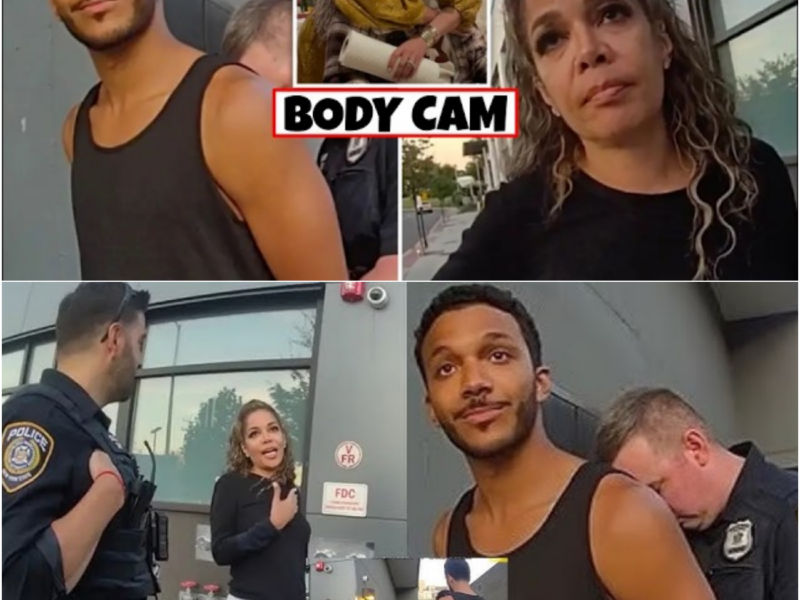
Newly Released Body Camera Footage Involving Sunny Hostin Sparks Heated Debate Over Her Interaction With Police
Body Camera Footage of Sunny Hostin’s Police Encounter Sparks a Wave of Online Debate
The “Privilege” Paradox: Inside the Viral BodyCam Confrontation of a High-Profile Star’s Son
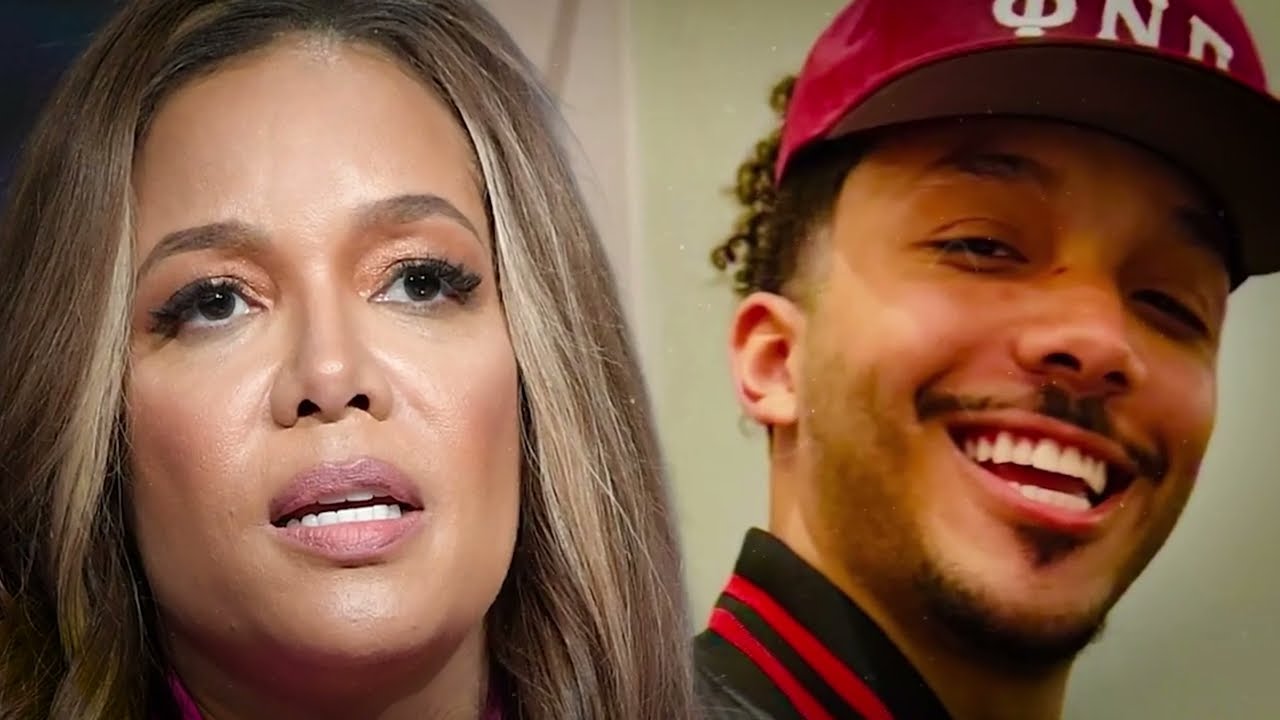
In the hyper-charged arena of modern American public discourse, few things spark as much immediate, polarized reaction as the intersection of celebrity, perceived entitlement, and law enforcement. The latest flashpoint arrived this week in the form of raw, unedited body-worn camera footage that captures a tense encounter between Metro-North Railroad police and the son of The View co-host Sunny Hostin. What began as a routine trespassing stop at a New Rochelle train station quickly devolved into a bizarre, high-stakes display of “do you know who I am” tactics, igniting a firestorm across the internet and questioning whether the rules of society apply equally to those in the upper echelons of media power.
The incident, which took place as Gabriel, Hostin’s 24-year-old son, was out for a run, saw him venturing onto active railroad tracks. To the officers on the scene, this wasn’t merely a minor infraction—it was a dangerous breach of safety protocols involving four live tracks and active third rails. For the police, whose primary directive is the preservation of human life, Gabriel’s presence was a liability that necessitated immediate detainment. Yet, for Gabriel and his mother, the situation was viewed through an entirely different lens: that of an “innocent mistake,” a misunderstanding that should, in their estimation, be brushed aside by authorities due to his pristine academic record and his mother’s stature.
The footage is striking, not just for the legal maneuvers on display, but for the stark clash of worldviews. As the officers explained the necessity of issuing an appearance ticket for criminal trespass—later reduced to a simple violation, akin to a parking ticket—the dialogue became a masterclass in modern privilege. Gabriel, clearly unnerved by the interaction, was quick to mention his mother’s legal background. When Sunny Hostin herself was brought onto the phone, the tone shifted from a compliance-based interaction to an impassioned plea, punctuated by repeated references to Gabriel’s Ivy League credentials and his lack of a criminal record.
It is here that the paradox of “privilege” becomes most visible. Hostin, a public figure who frequently champions themes of social justice and equality, found herself attempting to exert the very kind of influence that many of her contemporaries would decry. By leveraging her status and credentials to bypass a standard legal procedure, she inadvertently opened herself to a torrent of criticism. The question isn’t whether Gabriel deserved to go to jail—he didn’t, and the officers rightly treated it as a non-criminal violation—but why the mere suggestion of a minor fine and a court appearance was met with such aggressive resistance and name-dropping.

For the average American, a ticket for trespassing, however minor, is a fact of life—a consequence of a rule broken, however inadvertently. For the Hostin family, the footage suggests that such a consequence was fundamentally unacceptable. The officers on the scene remained remarkably professional, attempting to explain that their “hands were tied” by departmental policies and the documented nature of the violation. They weren’t seeking to punish a “good kid”; they were simply doing the job they are tasked with. Yet, the persistent questioning—”Is this necessary?” “Why would you put this on his record?”—revealed an inability to accept the impersonal nature of the law.
The viral reaction to this video stems from this exact tension. It forces viewers to ask themselves uncomfortable questions about their own expectations of justice. Does our pedigree shield us from the mundane inconveniences of the law? Does a “clean record” and a Harvard degree negate the requirement to adhere to safety regulations? The internet’s response, characterized by outrage and accusations of hypocrisy, is a direct reflection of this societal frustration. It highlights a growing skepticism toward the “justice for all” mantra when it seems so clearly applied to “justice for some.”
Looking forward, this incident is unlikely to fade quickly into obscurity. It serves as a potent case study for the way public figures navigate the digital age, where every interaction is potentially subject to the court of public opinion. The letter Hostin reportedly wrote to the District Attorney, requesting a dismissal of the case, is another layer to this saga. Whether the DA will acquiesce, potentially creating a “two-tier” justice system in the eyes of the public, or stand firm on the issuance of the violation, remains to be seen.
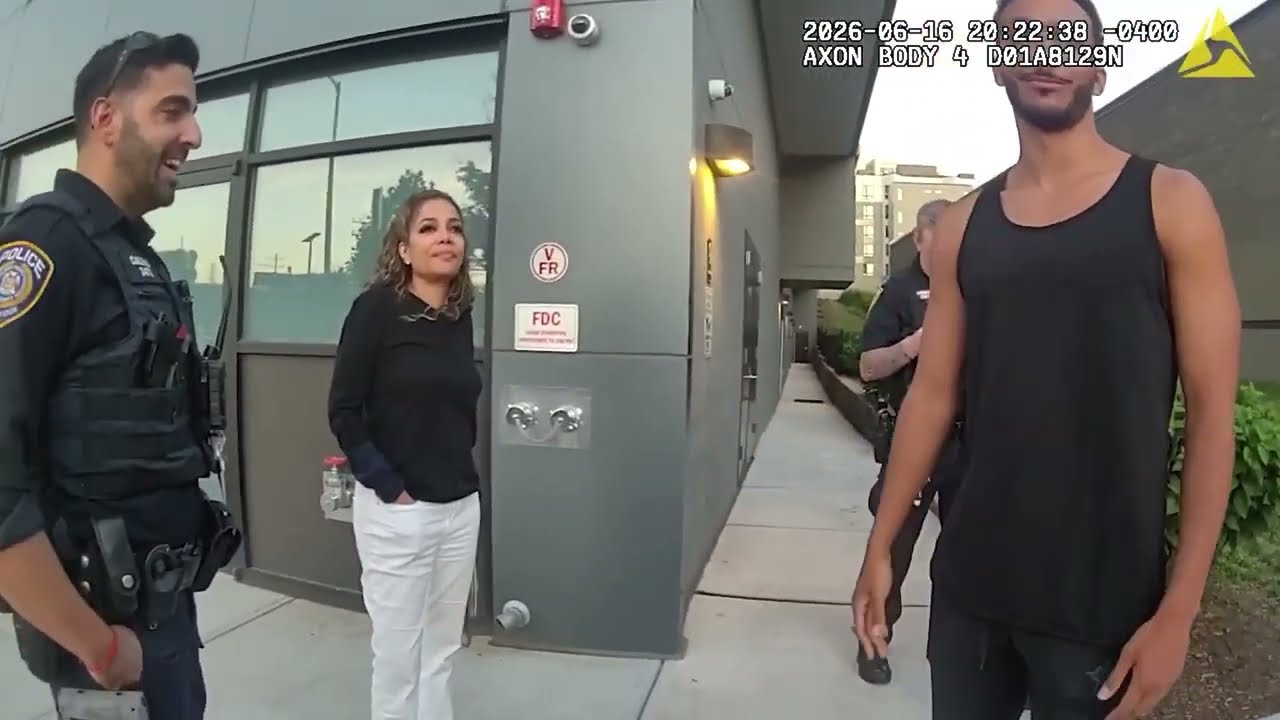
Furthermore, this situation prompts an investigation into the future of community-police relations. As bodycam footage becomes ubiquitous, the ability for both sides—the public and law enforcement—to curate their own narratives is diminished. The truth of what occurred, in all its mundane and messy detail, is laid bare. The irony of the situation is that while Hostin sought to use her status to protect her son from a minor fine, the resulting publicity has likely caused far more damage to their reputation than any $100 violation ever could.
As the legal proceedings continue, the broader cultural conversation remains stuck on the same note: the expectation of immunity. In a country that prides itself on the rule of law, the sight of a powerful, well-connected mother pleading for the “special” treatment of her son is, to many, a sobering confirmation of their worst fears about the elite. It isn’t about the trespass itself—it’s about the reaction to the consequences of that trespass.

Ultimately, the bodycam footage of the New Rochelle incident is a microcosm of a much larger struggle. It is a struggle for accountability, a test of our democratic ideals, and a revealing look at the human tendency to want the rules to apply to everyone except ourselves. Whether one views Gabriel as an innocent young man caught in a misunderstanding or a person of privilege demanding an exemption, one thing is clear: the cameras were rolling, and the world was watching. In the end, the most powerful takeaway might not be the legal outcome of the ticket, but the reminder that when the cameras come on, the status we work so hard to cultivate can vanish in the blink of an eye.