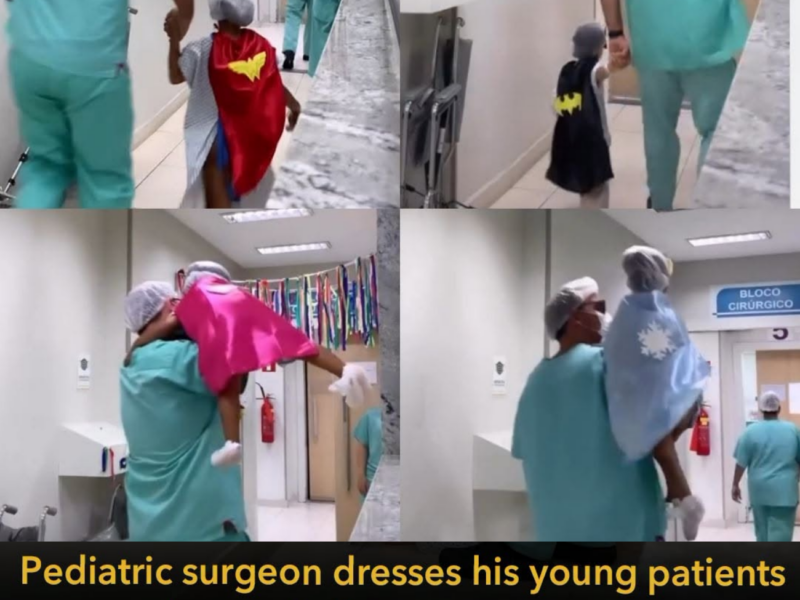
Pediatric Surgeon Turns Young Patients Into Superheroes Before Surgery—Their Brave Entrance Into the Operating Room Is Melting Hearts
A Surgeon’s Magical Routine Helps Children Face Surgery With Smiles Instead of Fear
The Surgeon Who Turned Fear Into Flight: How One Doctor’s Cape Changed the Way Children Enter the Operating Room
The moment before surgery is one of the hardest moments a child can experience.
For adults, an operating room may represent healing. A place filled with highly trained professionals, advanced technology, and the promise of making something better.
But for a small child, the picture can look completely different.
The lights are too bright.
The machines are unfamiliar.
The people around them are wearing masks.
The sounds are strange.
And then comes the moment many children fear most — the separation.
A parent’s hand lets go.
A familiar voice disappears behind a door.
A child is suddenly surrounded by strangers in a place they do not understand.
For many young patients, the walk toward the operating room is filled with tears, fear, and confusion.
But one pediatric surgeon in Brazil decided that this moment did not have to be frightening.
He believed that before children could face surgery, they first needed to feel powerful.
So he gave them something simple.
A cape.
Not a medical tool.
Not an expensive piece of technology.
Just a costume.
But that small piece of fabric transformed the way many children experienced one of the scariest moments of their lives.
Because when the doors opened and the hallway appeared in front of them, they were no longer just children walking toward surgery.
They were superheroes heading into battle.
Dr. Leandro Guimarães had seen many children enter operating rooms.
As a pediatric ear, nose, and throat surgeon, he was accustomed to treating young patients who needed procedures involving breathing, hearing, or other delicate areas.
He understood the medical side of surgery.
He understood the preparation.
The procedures.
The risks.
The recovery.
But early in his career, he discovered another challenge that had nothing to do with medicine.
Fear.
One experience stayed with him.
A very young child — a two-year-old girl — needed surgery.
Like many children her age, she did not understand why she had to leave her parents and enter a strange room filled with unfamiliar faces.
As the moment approached, she cried.
She was scared.
And Dr. Guimarães had to carry her into the operating room while she sobbed.
To many people, it may have seemed like a normal part of pediatric medicine.
Children cry.
Hospitals are intimidating.
Surgery is difficult.
But for the doctor holding that child, it became something much deeper.
He could not forget the expression on her face.
The fear.
The helplessness.
The way a place designed to help her felt like something terrifying.
That moment followed him after work.
He thought about it long after the surgery ended.
And eventually, he made himself a promise:
No child he treated should have to enter surgery feeling completely powerless.
The challenge was not the operation itself.
The challenge was the emotional journey before it.
Doctors spend years learning how to repair bodies.
But children do not experience hospitals the same way adults do.
Adults can understand the purpose of surgery.
A child may only understand that they are leaving their parent, entering a strange place, and being surrounded by people wearing masks.
A child does not see a surgeon.
They may see someone unfamiliar.
A child does not see medical equipment.
They may see frightening machines.
A child does not see a life-saving procedure.
They may simply see a moment when everything familiar disappears.
Dr. Guimarães realized that if he wanted children to feel safer, he had to change the story they were telling themselves.
Instead of:
“I am going somewhere scary.”
He wanted them to think:
“I am going on a mission.”
Instead of:
“I am losing control.”
He wanted them to feel:
“I have a special power.”
And that is where the superhero idea began.
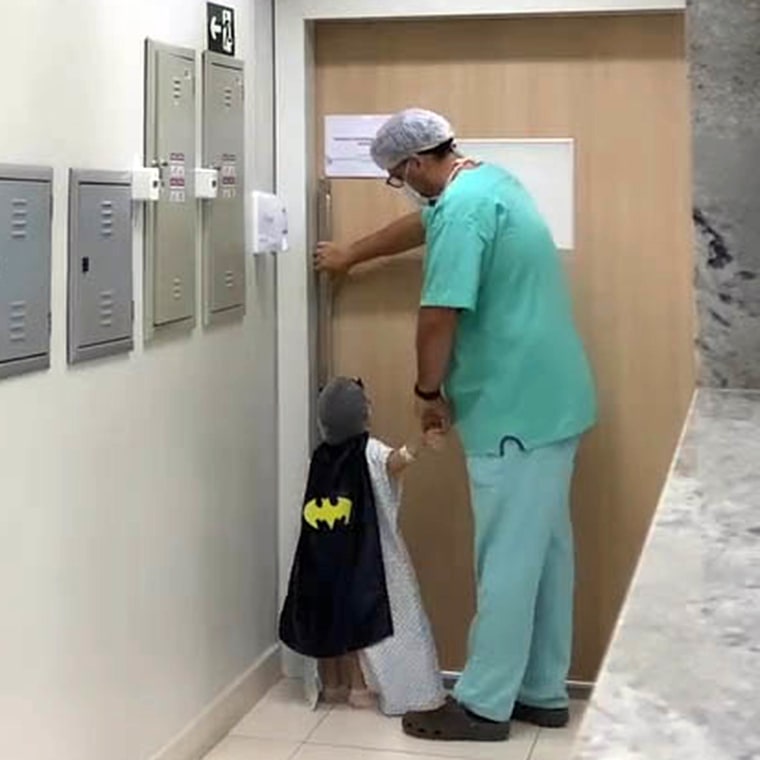
Before surgery, his young patients are given a choice.
They can pick a costume.
A cape.
A character.
A new identity for the moment.
Batman.
The Flash.
Their own superhero adventure.
The idea is simple: transform the hospital experience from something frightening into something imaginative.
The doctor does not explain surgery like a frightening event.
He presents it like a mission.
The child is not just going into an operating room.
The child is preparing for an adventure.
The procedure becomes a challenge they are brave enough to face.
And the hallway becomes the path toward victory.
Then comes the moment that captures everyone’s attention.
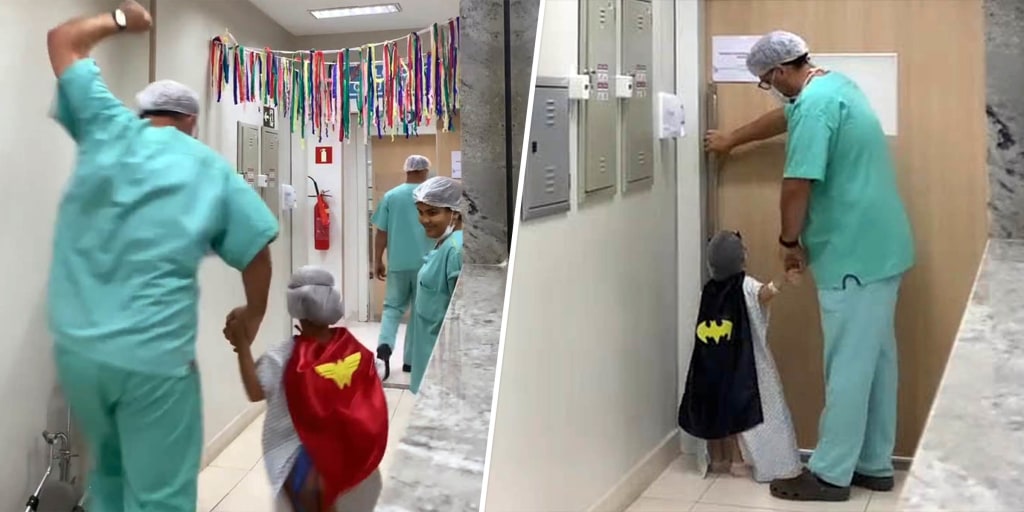
The child puts on the costume.
The cape falls behind them.
The doctor bends down and lifts them up.
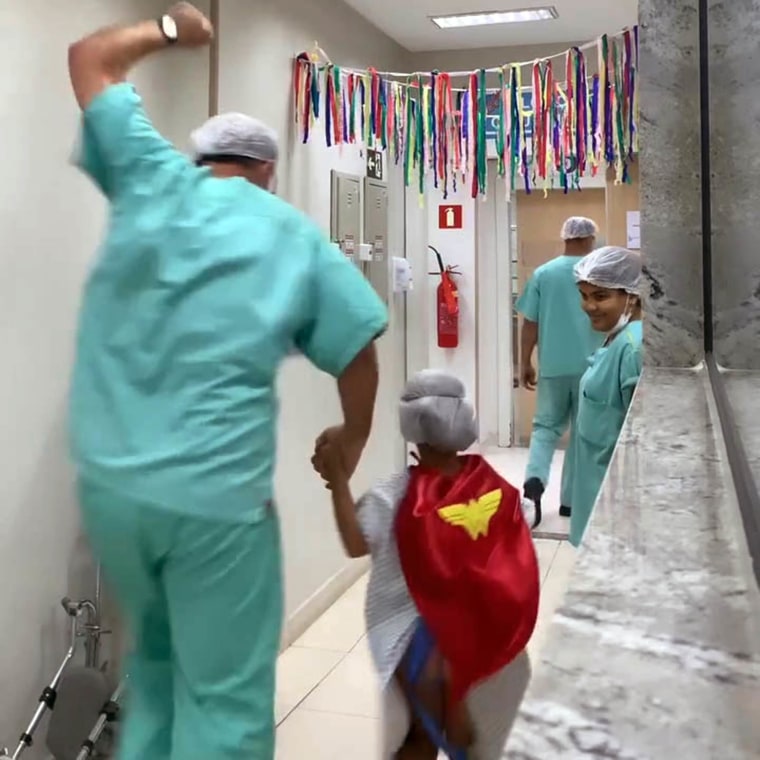
Instead of walking nervously toward surgery, the child “flies.”
Dr. Guimarães carries them through the hospital corridor with the cape moving behind them.
A moment that could have been filled with crying becomes filled with laughter.
A frightened child becomes excited.
A scary hallway becomes a superhero runway.
The transformation is not medical.
It is emotional.
The child’s situation has not changed.
The surgery is still happening.
The operating room is still ahead.
But the way the child feels has changed completely.
—
That small shift matters.
Fear is often about feeling powerless.
Children rarely get to choose what happens in a hospital.
Adults decide.
Doctors decide.
Parents decide.
The child must simply trust.
The superhero costume gives them something they desperately need in that moment:
Control.
They get to choose the costume.
They get to become someone strong.
They get to participate in the story.
They are no longer simply being taken somewhere.
They are choosing to go.
The idea did not appear randomly.
Dr. Guimarães had experience with something that many doctors do not: performing as a hospital clown during medical school.
That experience taught him an important lesson.
Medicine is not only about treatment.
It is also about connection.
A smile can lower fear.
A joke can create trust.
A playful moment can change the emotional atmosphere of a room.
For children especially, imagination is powerful.
A doctor wearing a serious expression may represent fear.
A doctor helping a child become a superhero represents friendship.
The costume became another form of communication.
A way of saying:
“You are safe.”
“You are not alone.”
“You can do this.”
The brilliance of the idea is partly its simplicity.
The costumes are inexpensive.
The transformation requires no advanced equipment.
No complicated technology.
No expensive program.
Just creativity and compassion.
And after the experience, the children do not lose the superhero identity when the surgery is finished.
Dr. Guimarães gives the costumes to their parents.
The cape becomes a reminder.
A physical symbol of a moment when the child overcame fear.
For some children, it becomes more than a costume.
It becomes proof.
Proof that they were brave.
Proof that they faced something difficult.
Proof that they were stronger than they thought.
The reaction from children reveals something powerful about the human mind.
Sometimes changing the environment is impossible.
But changing the way we experience that environment can change everything.
The hospital does not disappear.
The surgery does not disappear.
The fear does not magically vanish.
But the child enters the situation differently.
And that difference matters.
A frightened child becomes an active participant.
A patient becomes a hero.
A scary memory becomes a story they can tell.
—
Some children have reportedly enjoyed the experience so much that they later told their mothers they wanted to have surgery again.
To an adult, that sentence sounds surprising.
Why would anyone want another operation?
But that reaction shows how dramatically the emotional experience changed.
The child is not asking for pain.
The child is remembering confidence.
They are remembering the excitement of wearing a cape.
They are remembering being celebrated instead of frightened.
They are remembering that they were treated not only as a patient, but as a person.
—
Stories like Dr. Guimarães’ approach reveal a larger truth about pediatric medicine.
Children are not simply smaller versions of adults.
They experience pain differently.
They understand fear differently.
They communicate differently.
A successful pediatric doctor must treat more than the physical condition.
They must treat the emotional world of the child.
A five-year-old does not need a detailed explanation of surgical instruments.
They may need reassurance.
A smile.
A game.
A moment of imagination.
Something that helps them believe they can handle what comes next.
—
The image of a surgeon carrying a child in a superhero cape is powerful because it reverses expectations.
People imagine operating rooms as serious places.
And they are.
They require focus, precision, and responsibility.
But before the surgery begins, before the instruments are prepared, before the medical team starts their work, there is another battle happening.
The battle against fear.
And sometimes, the person fighting that battle is not the surgeon.
It is the child.
The child standing at the doorway.
The child holding onto courage.
The child deciding whether to cry or take another step.
—
The cape does not make the child fearless.
That is an important distinction.
Real bravery is not the absence of fear.
Real bravery is moving forward despite fear.
The children who wear these costumes are not pretending surgery is easy.
They are finding a way to face something difficult.
They are discovering that they can be afraid and still be strong.
That is a lesson many adults spend their entire lives learning.
—
The story of Dr. Guimarães also highlights the importance of empathy in medicine.
Modern healthcare often focuses on technology.
New machines.
New procedures.
New discoveries.
All of those things matter.
But sometimes, the most memorable moments come from something much smaller.
A conversation.
A gesture.
A costume.
A doctor choosing to see the world through a child’s eyes.
—
For parents, the moment before surgery can be painful as well.
They watch their child enter a room where they cannot follow.
They trust strangers with someone they love more than anything.
Even when surgery is routine, the emotions are real.
Parents worry.
Children worry.
The entire family feels the weight of the moment.
That is why small acts of kindness can have such a powerful impact.
When a parent sees their child laughing instead of crying, it changes the experience for everyone.
The child feels safer.
The parent feels relief.
The medical team begins their work with a calmer patient.
—
The superhero tradition created by Dr. Guimarães is a reminder that healing begins before the procedure.
It begins with trust.
It begins with comfort.
It begins with making someone feel seen.
A child may not remember every detail of their surgery years later.
They may not remember the medical explanation.
They may not remember the names of every doctor and nurse.
But they may remember the feeling.
They may remember that someone helped them feel brave.
They may remember the day they flew.
—
In a world where hospitals can feel cold and intimidating, the sight of a child in a cape creates a completely different image.
A small hero.
A caring doctor.
A hallway transformed.
A moment of fear replaced by imagination.
It is a reminder that compassion does not always require something complicated.
Sometimes it requires only the willingness to ask:
“What would make this easier for a child?”
Dr. Leandro Guimarães found his answer.
A cape.
A little imagination.
And the belief that every child deserves to enter a difficult moment feeling powerful.
—
Every day, children face challenges they never asked for.
Illness.
Procedures.
Hospital visits.
Uncertainty.
But sometimes, before they face those challenges, someone gives them a reason to stand taller.
Someone reminds them that courage already exists inside them.
Sometimes courage looks like a doctor.
Sometimes courage looks like a parent holding a hand.
And sometimes courage looks like a five-year-old wearing a borrowed cape, smiling as they are carried toward the operating room.
Because sometimes the bravest person in the room is not the person holding the instruments.
It is the child who puts on the costume, takes a deep breath, and decides to fly.