Prediabetes Doesn’t Have to Be Permanent—Here’s What Experts Say Can Help Reverse It
Prediabetes Can Often Be Reversed—Here’s What Experts Recommend to Help You Take Back Control
The Silent Emergency Running Through Your Veins

Imagine sitting in an emergency room, the sterile air thick with the scent of antiseptic, waiting for routine lab results that you assume will be as unremarkable as the last ten times. Then, the doctor walks in—not with a clean bill of health, but with a diagnosis that shatters your sense of security: Diabetes.
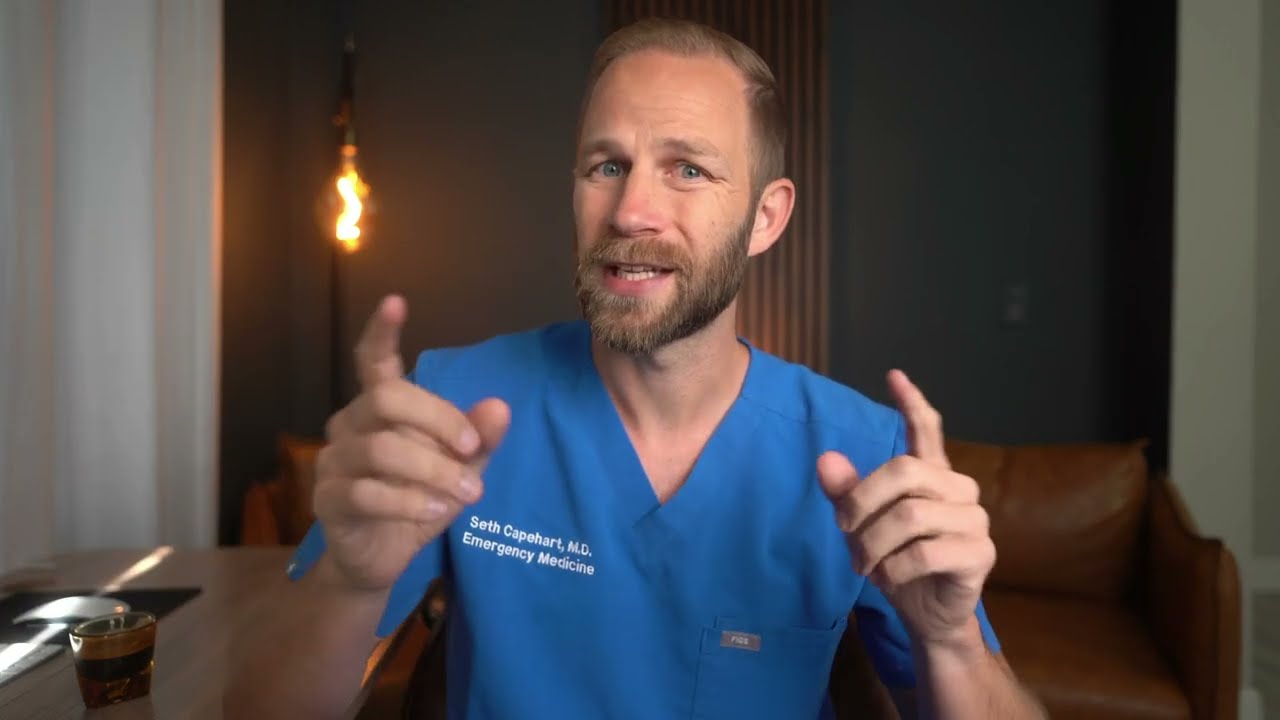
For a patient of Dr. Seth Capehart, an ER physician and former special ops specialist, this wasn’t just a diagnosis; it was a realization of years of suppressed fear. Years earlier, a doctor had warned her she was “pre-diabetic,” but that conversation ended there. She was sent home with a vague sense of dread, believing her condition was merely a “waiting room” before an inevitable health catastrophe. She didn’t know she could stop it. She didn’t know she could fix it.
This is the hidden tragedy of modern medicine. Nearly 115 million American adults—a staggering 42.6% of the population—are walking around with prediabetes. Yet, only one in ten of them actually know it. It is a slow, quiet, unseen emergency. As Dr. Capehart explains, high blood sugar isn’t just a number on a chart; it is a physical assault on your body. When blood glucose levels remain chronically elevated, those molecules act like microscopic shards of glass, scouring the linings of your blood vessels.
/assets/images/provider/photos/2762741.jpeg)
This process, known as glycation, triggers relentless inflammation, causing your arteries to stiffen and scar. It is the silent architect of blindness, kidney failure, nerve damage leading to amputations, and heart disease. Researchers are even beginning to label Alzheimer’s disease as “Type 3 Diabetes” due to the devastating impact of chronic insulin resistance on the brain. This is the reality sitting at the end of a road that begins with a simple, ignored warning.
The Myth of the One-Way Street
For too long, the medical establishment has treated prediabetes and Type 2 diabetes as progressive, chronic conditions—a one-way street toward inevitable decline. Patients are often told to manage the symptoms with medication, essentially applying a temporary band-aid to a gaping, systemic wound.
However, the science tells a different story. In the landmark Diabetes Prevention Program, researchers compared standard medication (metformin) against intensive lifestyle interventions. The results were not just significant; they were a wake-up call. Metformin reduced the progression to full diabetes by 31%, but intensive lifestyle changes—focused on modest weight reduction and 150 minutes of weekly activity—reduced that risk by 58%. For those over age 60, the lifestyle intervention was even more staggering, cutting the progression rate by 71%.
Furthermore, the “Direct Trial” proved that even for those with established Type 2 diabetes, remission is not just possible—it is documented. 46% of participants who committed to an aggressive lifestyle and weight loss program achieved complete diabetes remission within 12 months. They were not just “managing” their disease; they were reversing it.
The Roadmap to Reversal
So, if this is truly reversible, why are fewer than 0.5% of the 88 million Americans with prediabetes enrolled in a program designed to fix it? The information gap is not a small oversight; it is a massive systemic failure.
Reversing this process requires moving away from the “brute force” approach of the pancreas—which is constantly struggling to pump out enough insulin to overcome resistant cells—and instead addressing the underlying metabolic dysfunction.
Here is the science-backed protocol to take back control:
Fix the Food: The core principle is to stop the constant glucose flooding. Reduce processed carbohydrates and added sugars. These hit your bloodstream fast and hard, fueling the “sandpaper” effect in your vessels. Instead, pivot to a diet of real foods: proteins, healthy fats, and whole-food carbohydrate sources like vegetables, tubers, and fruits that digest slowly.
Lose Visceral Fat: The fat stored around your organs is metabolically active and directly drives insulin resistance. Losing just 5% to 7% of your body weight can be the difference between progression and remission.
Move Your Body: 150 minutes of moderate activity per week acts as a second, insulin-independent key to your cells, allowing them to pull glucose from the bloodstream efficiently. Walking after meals and resistance training are particularly potent tools.
Prioritize Sleep and Stress Management: Poor sleep and high cortisol from chronic stress directly worsen insulin resistance. You can eat perfectly, but if your body is in a constant state of “fight or flight,” your blood sugar will remain uncooperative.
Know Your Numbers: Do not guess. Get a fasting insulin, fasting glucose, and HbA1c test. Make the changes for 90 days, then retest. The results often speak for themselves within weeks.
This is not magic; it is biology. When you give your body the conditions it needs to heal, it can perform miraculous feats of recovery. You are not destined to walk the path of your ancestors’ failures. The, choice, the power, and the proof are in your hands.