She Waited 63 Years for the Husband She Lost in the Korean War—At 94, She Finally Brought Him Home
A Wife Never Gave Up Hope: After 63 Years, She Finally Received Her Husband’s Remains
She Waited 63 Years for Her Husband to Come Home — and When He Finally Did, It Was Not the Way She Imagined
In 1950, a young American wife watched her husband leave for war and believed, like so many others at the time, that waiting meant weeks or months—perhaps a year, at most—before life would return to something familiar.


She could not have known that her waiting would stretch across decades.
Or that it would outlast presidents, wars, technological revolutions, and the passing of nearly an entire lifetime.
Her name was Clara Gantt.
And she would spend 63 years waiting for a man who never came home alive.
The Day He Left
When U.S. Army Sgt. Joseph Gantt deployed to serve in the Korean War, he was already a man shaped by service. He had served in World War II before being called again to uniform in another conflict that many Americans at the time struggled to fully understand.
Korea was far away. The war was complex. The headlines were often confusing, filtered through newspapers and radio broadcasts that delivered fragments of distant battles to American homes.
For Clara Gantt, none of that mattered in the abstract way history books later describe.
What mattered was simple and immediate: her husband was leaving.
And like so many military spouses of the era, she did what countless women before her had done and countless would do after her—she waited, trusting that distance did not mean disappearance, and that duty would not erase love.
In 1950, waiting still felt temporary.
No one imagined it could become a lifetime.
The Disappearance Into War
The Korean War was brutal, fast-moving, and chaotic. Front lines shifted. Units became separated. Communication broke down in ways that left families at home with only partial information, often delayed by weeks or months.
At some point during the conflict, Joseph Gantt was captured.
He became a prisoner of war.
And then, for his wife, the official clarity ended.
What remained was uncertainty.
In wars of that era, information about prisoners was often incomplete or slow. Families were left in limbo, suspended between hope and dread, sometimes receiving contradictory reports or no information at all.
Clara was told the truth that many families were forced to accept in fragments: that her husband had been captured and later died in captivity.
Months after his capture, Joseph Gantt died as a prisoner of war.
But even then, something inside Clara refused to fully close the door on possibility.
Because official records can confirm death.
But they cannot always deliver closure.
The Long Silence After War
When wars end, they do not end equally for everyone.
For soldiers who return, there is reunion, adjustment, and the long process of rebuilding civilian life.

For families of the missing or the dead, there is something else entirely: a quiet aftermath where life continues, but the missing person remains emotionally present in a way that time does not erase.
Clara Gantt entered that second world.
She did not remarry.
She did not build a new life around replacing what was lost.
Instead, she lived in a form of suspended devotion—one defined not by public declaration, but by private continuity.
Years passed.
Then decades.
The world changed around her in ways that would have been unimaginable in 1950. Television became common. The Cold War rose and shifted global politics. The moon landing happened. Civil rights movements reshaped American society. Entire generations were born, grew up, and built lives of their own.
But through all of it, Clara remained anchored to a single unresolved story.
Her husband was gone.
But not, in her heart, fully returned.
A Kind of Waiting That Defies Time
There is a particular kind of waiting that does not behave like ordinary anticipation.
Most waiting has an endpoint: a bus arrives, a letter comes, a person returns.
But Clara’s waiting had no confirmed ending. It was not waiting for a delayed train. It was waiting for news that might never arrive, or might arrive too late to change anything.

In that space, hope becomes complicated.
It is no longer a simple expectation. It becomes a discipline. A habit of the heart.
For Clara, that discipline lasted not years, but generations.
Friends and neighbors aged. Life moved forward. But she did not remarry. She did not close the chapter on Joseph Gantt.
She kept it open.
And in doing so, she became part of a larger, quieter history of military families who live in the unresolved space between loss and uncertainty.
The Search for the Missing
Decades after the Korean War, efforts intensified to recover and identify the remains of American soldiers who had been lost or buried in unmarked graves across the Korean Peninsula.
This work is slow, technical, and painstaking. It involves archival research, excavation, forensic anthropology, and DNA identification. It is not dramatic in the way war itself is dramatic. It is methodical. Careful. Patient.
But for families, it represents something deeply emotional: the possibility of answers.
Not always the answers they hope for.
But answers nonetheless.
In Joseph Gantt’s case, the search eventually led to a breakthrough.
His remains were recovered and identified more than six decades after his death.
For the military, it was a success of forensic science and historical persistence.
For Clara, it meant something far more personal.
It meant the waiting was ending.

63 Years Later
When the news reached her, Clara Gantt was 94 years old.
She had lived through nearly a century of change. She had outlived wars, leaders, and entire eras. She had seen the world transform in ways no one in 1950 could have predicted.
And now, finally, she was told that her husband was coming home.
Not alive.
But found.
Identified.
Returned.
The language of military recovery is often formal: remains, identification, repatriation, honors. But behind that language are families who hear something simpler.
He is coming home.
The Return
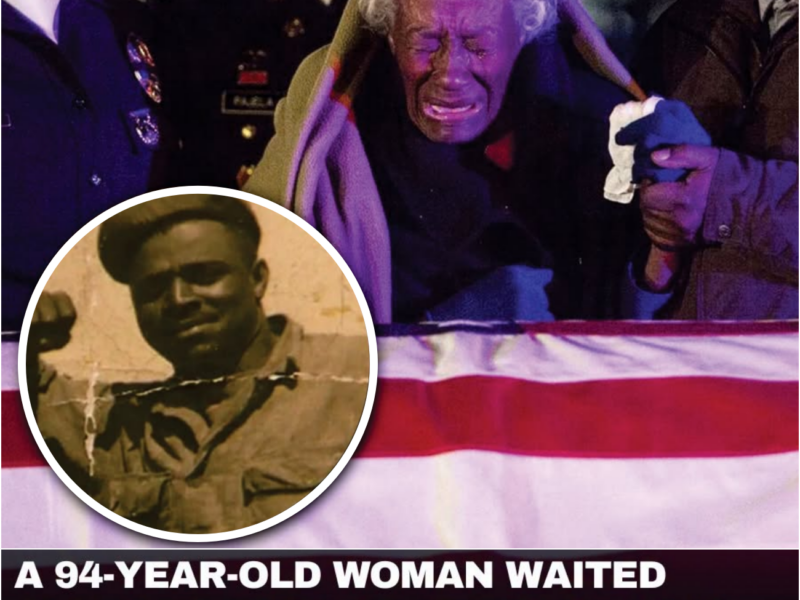
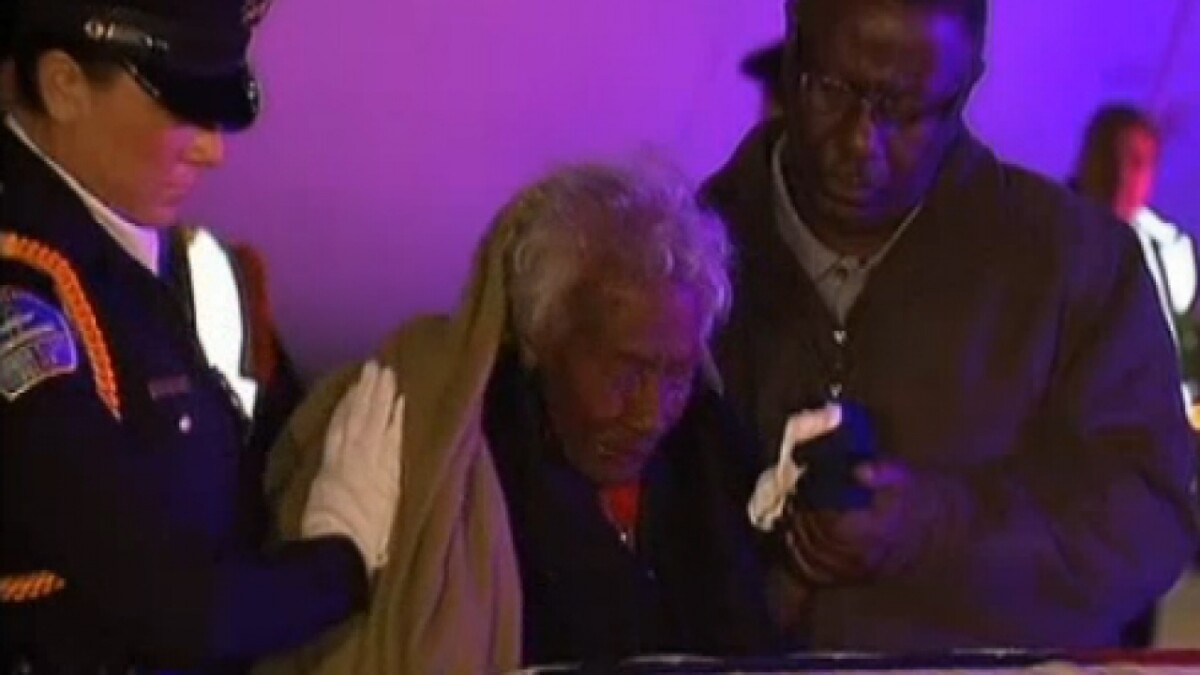
When Sgt. Joseph Gantt’s flag-draped casket arrived in the United States, it carried the weight of history with it.
But the most powerful moment was not in the ceremony itself.
It was in the presence of the woman who had waited.
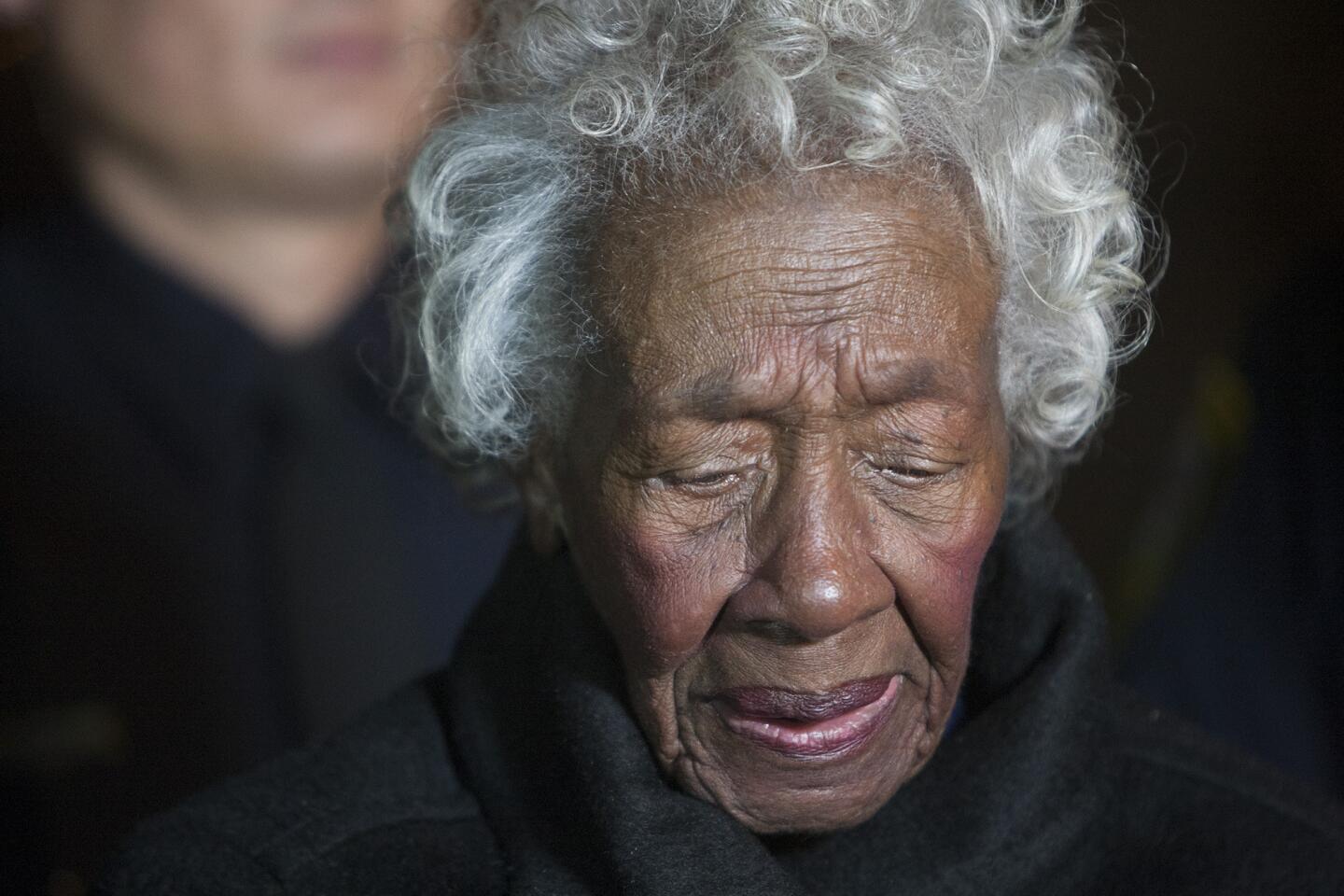
Clara sat quietly in her wheelchair.
Ninety-four years old.
A lifetime of waiting condensed into a single moment of arrival.
Around her, there were honors and rituals—flags, uniformed service members, the formal respect given to those who served and never returned in life. But for Clara, the moment was not ceremonial in the abstract sense.
It was personal.
It was the end of a story that had defined most of her life.
What Arrives After a Lifetime of Waiting
There is a strange emotional contradiction in moments like this.
 v
v
Because after decades of uncertainty, the arrival of remains does not feel like a beginning or a continuation.
It feels like both closure and reopening at the same time.
For Clara, the man she had loved had always been present in memory. In imagination. In the suspended possibility that one day he might be found.
Now that possibility had become reality—but in a form that was final.
He had not returned as she once imagined.
He did not walk through a door. He did not speak her name. He did not come back to the life they had once shared.
Instead, he came back wrapped in a flag, carried with honor, returned through the systems of military accounting and historical recovery.
And yet, for all of that, he came back.
Love and the Limits of Time
Stories like Clara and Joseph Gantt’s challenge simple ideas about love.
Popular culture often treats love as something that must be actively maintained through presence, communication, and shared daily life. And while that is true in many cases, stories like this suggest something else can also exist: a form of devotion that survives absence itself.
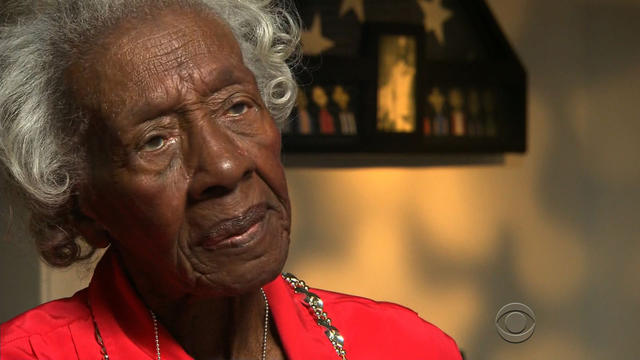
Clara did not build a new marriage.
She did not replace the life she lost.
She carried it forward.
Not as nostalgia.
But as identity.
For 63 years, her life contained a constant invisible companion: the memory of a husband who had never been fully accounted for in the world she continued to inhabit.
The Return That History Delayed
Joseph Gantt’s return was not delayed by choice. It was delayed by the nature of war, geography, and the limitations of mid-20th-century conflict recovery.
In the Korean War, thousands of American service members were killed or went missing in conditions that made immediate identification impossible. Mountains, shifting battle lines, and prisoner camps created circumstances where many remained unaccounted for long after the fighting ended.
For families, this meant decades of ambiguity.
For governments and scientists, it meant decades of recovery work.
For Clara, it meant a lifetime of waiting without knowing when—or if—it would end.
The Moment of Homecoming
When his casket arrived, there were no illusions left about what return meant.
But there was dignity.
There was recognition.
There was the quiet understanding that even after so many years, being brought home mattered.
Clara did not need speeches to understand that.
She had lived the absence long enough to understand what presence would now mean, even in its final form.
A Final Reunion Across Time
Some love stories are measured in years together.
Others are measured in years apart.
Clara and Joseph Gantt’s story is measured in both—and in the extraordinary imbalance between them.
A few years of marriage.
A lifetime of waiting.
And a final reunion that arrived not as continuation, but as return.
When the casket came home, it did not restore the past.
It acknowledged it.
It completed a circle that had remained open for more than half a century.
What Endures After the End
In the end, the story of Clara Gantt is not only about war, or loss, or even reunion.
It is about the persistence of attachment over time.
It is about a woman who refused to rewrite her life around absence, even when absence became permanent.
And it is about the strange way history sometimes resolves itself—not quickly, not cleanly, but eventually, in forms that are both devastating and necessary.
Clara waited 63 years.
Not because she knew what would happen.
But because she never fully accepted that she would not see him again in some form of return.
And in the final moment, he did return.
Not as she once imagined.
But as the world was finally able to bring him home.
A flag.
A casket.
A name restored to history.
And a wife who had never stopped waiting.
Some love stories do not end with death.
Some simply pause, endure, and wait for time itself to catch up.