Surgeon Accused of Removing the Wrong Organ During Operation, Police Say
Police Investigate Surgeon Accused of Removing the Wrong Organ During Surgery in Shocking Medical Case
‘Dangerous’ Surgeon Removed Wrong Organ During Surgery: Cops

The American healthcare system is built upon a foundational pact of absolute trust. When an individual walks through the sterile doors of a hospital, placing their physical body into the hands of a trained surgeon, they surrender their autonomy under the solemn promise that the practitioner possesses the competence, precision, and moral duty to preserve life above all else. Yet, every so often, an incident occurs that shatters this fragile illusion with such violent force that it exposes the terrifying vulnerabilities lurking within our medical institutions. This is the harrowing narrative of William Bryan, a 70-year-old Alabama resident whose life was abruptly and brutally extinguished not by an incurable disease or an unavoidable accident, but by a catastrophic surgical error so grotesque it defies comprehension: a surgeon allegedly mistook a massive, vital human liver for a spleen, cutting it out entirely and leaving a trail of fatal blood loss on the operating table.
The nightmare began in August 2024, when William Bryan and his wife, Beverly, a retired registered nurse, traveled to the Florida Panhandle to enjoy a peaceful getaway at their rental property in Okaloosa County. What was supposed to be a relaxing vacation quickly derailed when William began experiencing sudden discomfort and pain on the left side of his abdomen. Seeking medical evaluation, the couple turned to Ascension Sacred Heart Emerald Coast Hospital in Miramar Beach. Little did they know that this routine decision would mark the beginning of a downward spiral into a Kafkaesque bureaucratic and medical horror story. Upon admission, medical scans revealed that William’s spleen was enlarged, prompting recommendations for a laparoscopic splenectomy.
Initially, the family was reluctant to undergo surgery in Florida, expressing a strong desire to return home to Alabama where they could consult physicians they knew and trusted. However, according to legal representatives and state investigative records, pressure mounted quickly within the hospital walls. Dr. Thomas Shaknovsky, a general surgeon practicing at the facility, alongside hospital leadership, allegedly convinced the family that leaving the hospital or delaying the procedure posed an immediate, catastrophic risk to William’s life. Trusting the urgent warnings of the medical professionals, the family relented, consenting to the operation that was scheduled for the evening of August 21, 2024.
What transpired inside the operating room under the direction of Dr. Thomas Shaknovsky remains one of the most shocking cases of medical malpractice in recent American history. According to the surgical pathology report and subsequent criminal indictments, the procedure went catastrophically wrong from the very beginning. Instead of isolating and removing the spleen—a relatively small organ tucked high in the upper-left quadrant of the abdomen beneath the ribs—the surgeon mistakenly targeted the liver, a massive, thick organ dominating the upper-right portion of the abdominal cavity. In a fatal display of gross incompetence, the surgeon severed the major blood vessels supplying the liver, triggering a massive, uncontrollable hemorrhage. As William Bryan’s blood pressure plummeted and he slipped into cardiac arrest, the medical team fought desperately to save him, but the damage was irreversible. He bled out on the table and was pronounced dead.
The psychological devastation inflicted upon Beverly Bryan and her family was compounded immediately by deception. Following the procedure, Dr. Shaknovsky approached the grieving widow with an explanation that defied basic anatomical reality. He claimed that William’s “spleen” had been so severely diseased, inflamed, and enlarged—growing four times its normal size and migrating across the body—that it necessitated extreme surgical intervention and resulted in unavoidable bleeding. Trusting her husband’s doctor, Beverly accepted the explanation in the immediate haze of grief. However, the truth could not remain buried beneath fabricated operative notes. A subsequent hospital pathology review and an official medical examiner’s autopsy revealed the horrifying reality: William Bryan’s actual spleen was still entirely intact inside his body, sitting peacefully with a minor, non-fatal cyst, while his entire liver had been excised and discarded as the removed specimen.
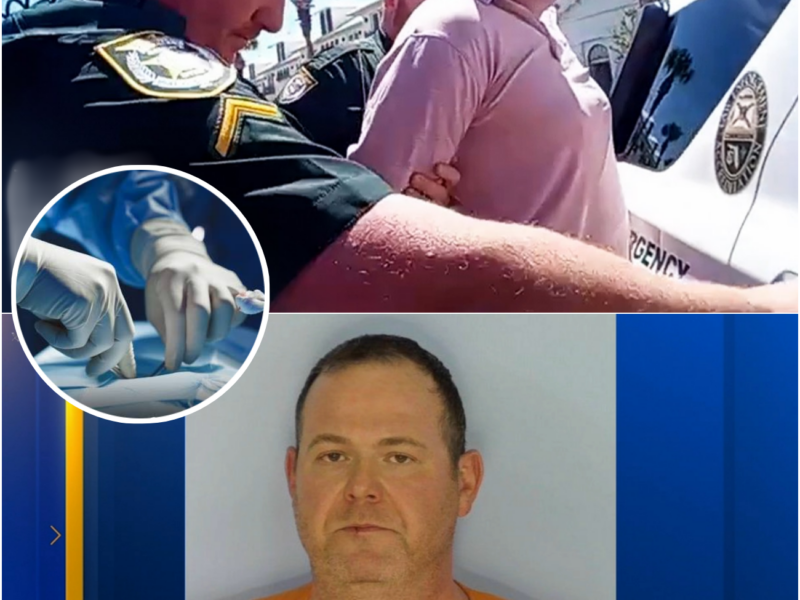
As news of the blunder leaked, public outrage erupted across the nation, putting intense pressure on local law enforcement and medical regulators. In September 2024, the Florida Department of Health, under Surgeon General Dr. Joseph Ladapo, issued an emergency order suspending Dr. Shaknovsky’s medical license, declaring that his continued practice constituted an “immediate, serious danger to the health, safety, or welfare of the citizens of the State of Florida.” Regulatory bodies in Alabama and New York swiftly followed suit, moving to revoke or suspend his credentials. Yet, for months, the family and the public demanded true legal accountability beyond administrative penalties. That accountability materialized when a grand jury indicted Dr. Thomas Shaknovsky on a charge of second-degree manslaughter, leading to his arrest and subsequent release on a $75,000 bond as the criminal justice system prepares for a landmark trial.
To fully understand the systemic rot exposed by this tragedy, one must examine the startling revelations that emerged during the subsequent investigations regarding Dr. Shaknovsky’s professional history. Legal representatives for the Bryan family uncovered evidence suggesting that this fatal error was not an isolated aberration, but part of a troubling pattern of dangerous surgical mistakes. In 2023, just a year prior to William Bryan’s death, Shaknovsky was allegedly involved in another major surgical blunder at the same Ascension Sacred Heart facility, where he mistakenly removed a portion of a patient’s pancreas instead of performing the intended adrenal gland resection. That prior incident was reportedly handled quietly, resulting in a confidential settlement while allowing the surgeon to retain his privileges and continue operating on unsuspecting patients.
This revelation opens a critical conversation regarding institutional liability and hospital oversight. How could a medical facility retain a surgeon with a documented history of severe, life-threatening anatomical errors? Legal and medical experts point to a dangerous corporate culture within hospital administration that often prioritizes institutional protection and revenue generation over patient safety and transparent peer review. When dangerous practitioners are shielded from public scrutiny through confidential settlements and internal cover-ups, unsuspecting patients become sitting ducks in a broken system. The Ascension health network stated that Shaknovsky was never a direct employee and had not practiced at their facilities since August 2024, yet questions persist regarding what hospital leadership knew and when they knew it.
To project the long-term impact of this case, one must examine future scenarios within the American legal and healthcare landscapes. The criminal prosecution of Dr. Thomas Shaknovsky for second-degree manslaughter represents a rare and aggressive application of criminal law to medical malpractice. Historically, substandard medical care resulting in death has been dealt with primarily through civil tort law—through multi-million-dollar lawsuits, financial settlements, and insurance payouts. Criminal charges against physicians are extraordinarily difficult to secure because prosecutors must prove a level of recklessness or culpable negligence that goes far beyond simple professional error or momentary lapse in judgment. Should this prosecution result in a conviction, it could establish a monumental legal precedent, signaling to medical professionals nationwide that gross anatomical negligence and botched operations resulting from extreme recklessness will no longer be insulated by medical boards and civil settlements alone, but will carry the very real threat of hard prison time.

Furthermore, future scenarios in hospital administration are likely to see sweeping institutional reforms driven by public fear and regulatory pressure. Hospitals across the United States are facing heightened demands to implement stringent, mandatory double-check protocols, advanced digital tracking systems, and mandatory peer-review reporting that prevents hospitals from quietly sweeping dangerous mistakes under the rug. The cost of failing to police medical staff is no longer just a civil liability payout covered by malpractice insurance; it is now measured in criminal indictments, ruined institutional reputations, and the potential loss of liberty for practitioners who fail in their sacred oath to do no harm.
For Beverly Bryan, no legal verdict, criminal conviction, or institutional reform can ever bring back her beloved Bill. In public statements, she has articulated the raw agony of losing her husband of many years to an error so senseless and brutal. Her courage in pushing for criminal charges has transformed her personal grief into a public crusade, serving as an urgent warning to prospective patients across the country to advocate fiercely for their own health and safety, question medical authorities, and demand absolute transparency when entering an operating room.
In conclusion, the case of Dr. Thomas Shaknovsky and the tragic death of William Bryan stands as a chilling monument to the dark side of modern medicine. It is a terrifying reminder that behind the pristine blue scrubs and reassuring smiles of hospital corridors lies human fallibility that, when coupled with institutional complacency, can turn a routine medical procedure into a fatal tragedy. As the criminal case moves forward through the courts of Florida, the nation watches with bated breath, demanding answers, accountability, and justice for a man whose life was abruptly stolen on an operating table by a surgeon who cut away the wrong organ.