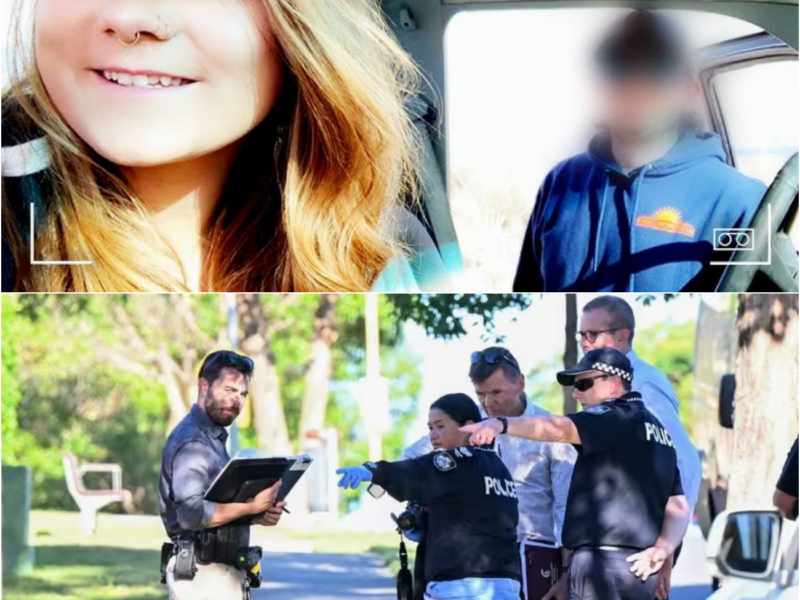
Teen’s Final Selfie Captured Moments Before a Tragic Crime Changed Everything
A Teen’s Innocent Selfie Became a Chilling Clue After a Tragic Murder—What Investigators Found Next Changed the Case Forever
The Final Selfie: The Betrayal of Britney Ulicki

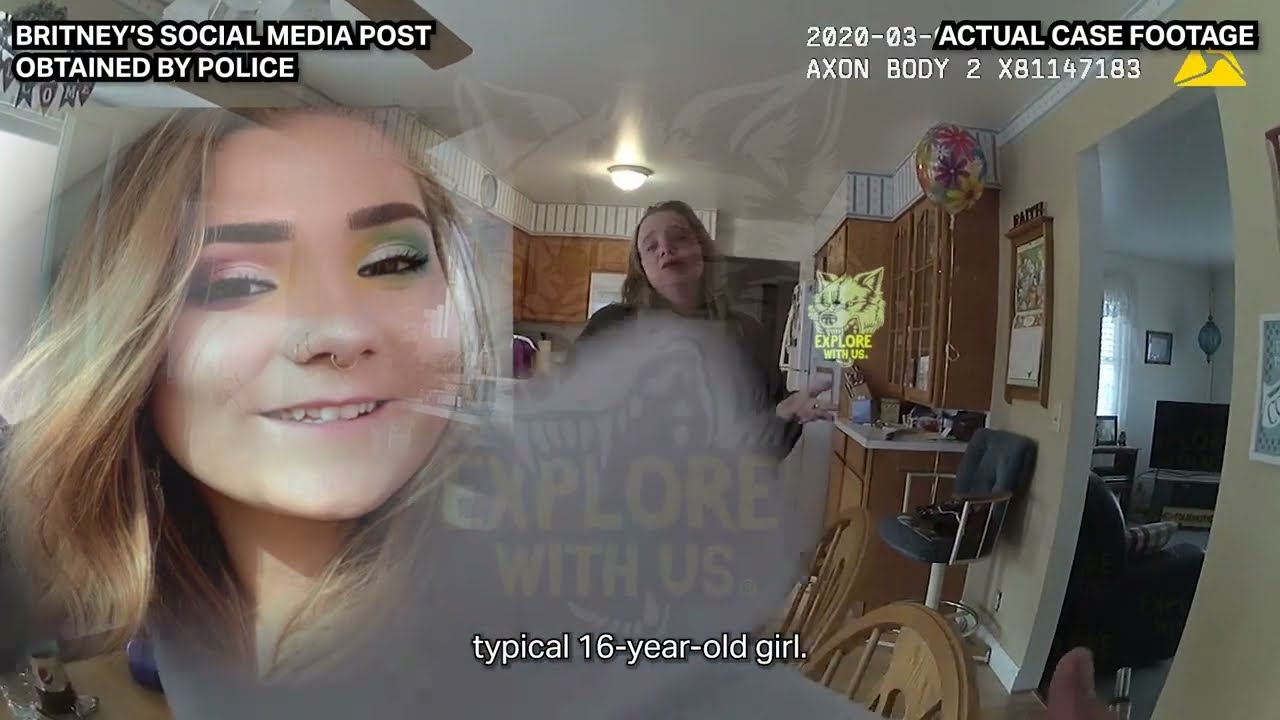
The afternoon of March 9, 2020, in Elko County, Nevada, began like any other for 16-year-old Britney Ulicki. She was a typical teenager, navigating the challenges of homeschooling and a world that often felt hostile, yet she remained hopeful and connected to her friends. Among those in her inner circle was 18-year-old Bryce Dicki, a young man who had been a fixture in her life for years—so much so that she affectionately referred to him as her “big brother.” Little did anyone know, this bond of trust was the very weapon that would lead to one of the most heartbreaking betrayals the community had ever seen.
The nightmare began when Britney did not return home. Her mother, Alicia, sensing immediate danger, reached out to the Sheriff’s Office. Her initial panic was met with confusing stories, chief among them the account provided by Bryce. He claimed to have picked Britney up, driven her around, and eventually dropped her off at a high school to meet a mysterious new friend who drove a dark, forest-green Ford pickup. For days, the image of that truck haunted the investigation. It was the perfect scapegoat, a phantom vehicle that allowed Bryce to maintain the facade of a concerned friend while participating in the search for the girl he had already murdered.
The discovery on March 11 was the moment the investigation shifted from a missing person case to a homicide. Volunteers searching a remote area known as Burner Basin spotted a blue tarp in the brush. Inside was the partially clothed body of a young female, identified days later as Britney. She had been stabbed in the neck and strangled. The scene was gruesome, a stark contrast to the innocent life she had lived.
Investigators moved with cold, methodical precision, collecting evidence that told a story Bryce couldn’t outrun. Forensic analysis of his DNA—found on chewing tobacco at the scene, on Britney’s neck, and inside a condom discarded nearby—directly contradicted his claims that he had dropped her off hours earlier. His timeline was crumbling, and his alibi was built on a foundation of shifting lies.
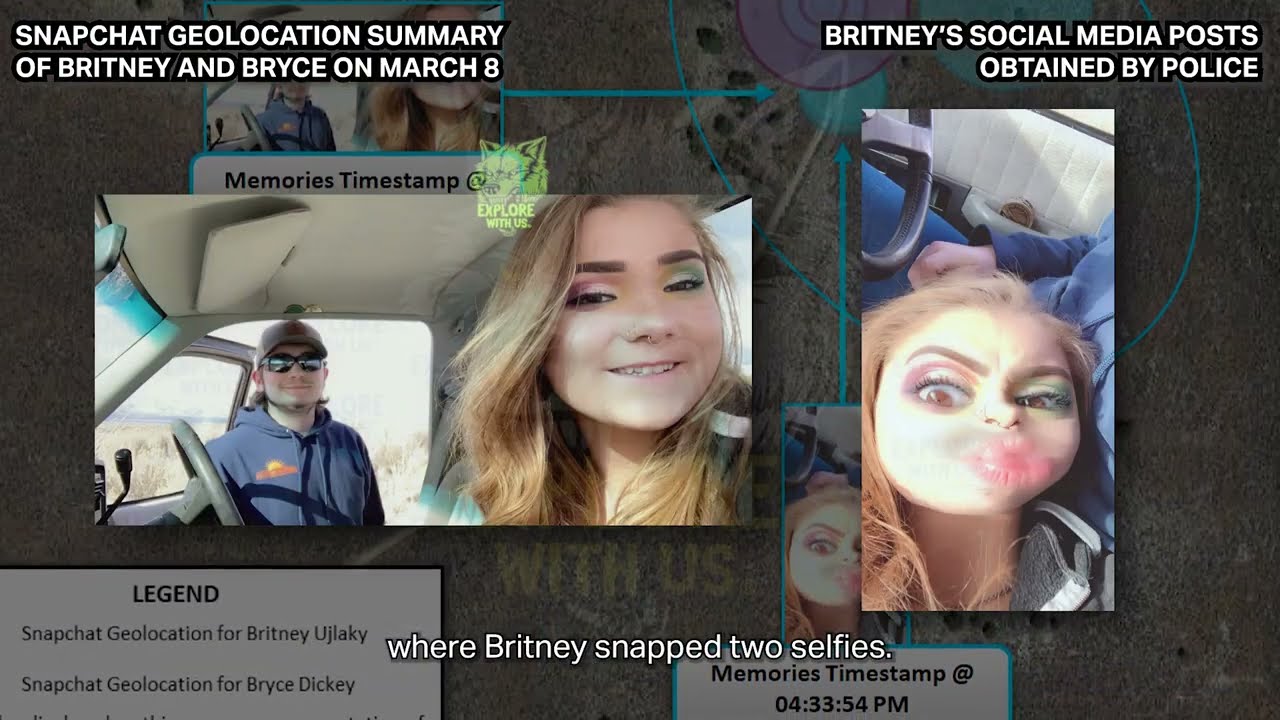
The true, horrifying narrative was revealed through the digital footprint left behind by the two teenagers. Snapchat geolocation data placed both Bryce and Britney at the basin around 3:22 p.m. It was there that Britney unknowingly took her final selfies—captures of a moment before the light in her life was extinguished. By 5:25 p.m., Bryce had left the area, returning home to weave his web of deception.
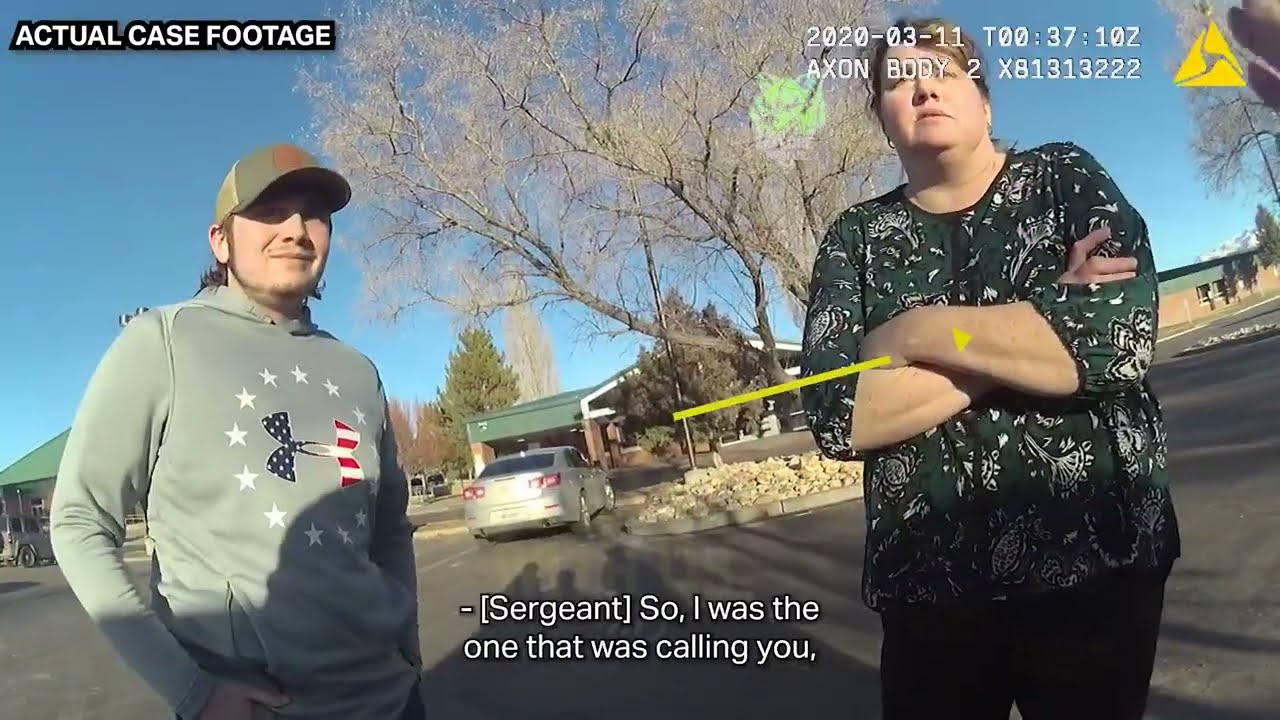
When confronted with the surveillance footage—which clearly showed he never went to the high school—and the crushing weight of the DNA evidence, Bryce’s story shattered. He attempted to deflect blame onto other teenagers, a desperate, final act of cowardice, but the evidence was insurmountable. The “big brother” who had been comforting the grieving mother was the predator who had shattered her world.
In a 2022 jury trial, Bryce Dicki was convicted of first-degree murder and sexual assault. The sentence was a heavy, necessary finality: life in prison with the possibility of parole after 46 years.
Britney Ulicki’s death left a hole in the fabric of Elko County, but her story serves as a tragic, vital lesson. In her mother’s words, the world owes Britney a debt of gratitude, for her life was lost to ensure that her killer would never again have the chance to harm another. The case of the “final selfie” remains a harrowing testament to the darkness that can hide behind a familiar face, a reminder that the most dangerous threats are often the ones we invite into our homes with open arms. While justice has been served, the tragedy of that day in the basin continues to resonate, forever marking the moment a community learned that trust is a fragile thing, and sometimes, the people we call family are the ones we should fear the most.