The Early Warning Signs of a Stroke You Should Never Ignore, According to Health Experts
A Stroke May Be Preceded by Early Warning Signs—Here’s What Health Experts Say You Should Never Ignore
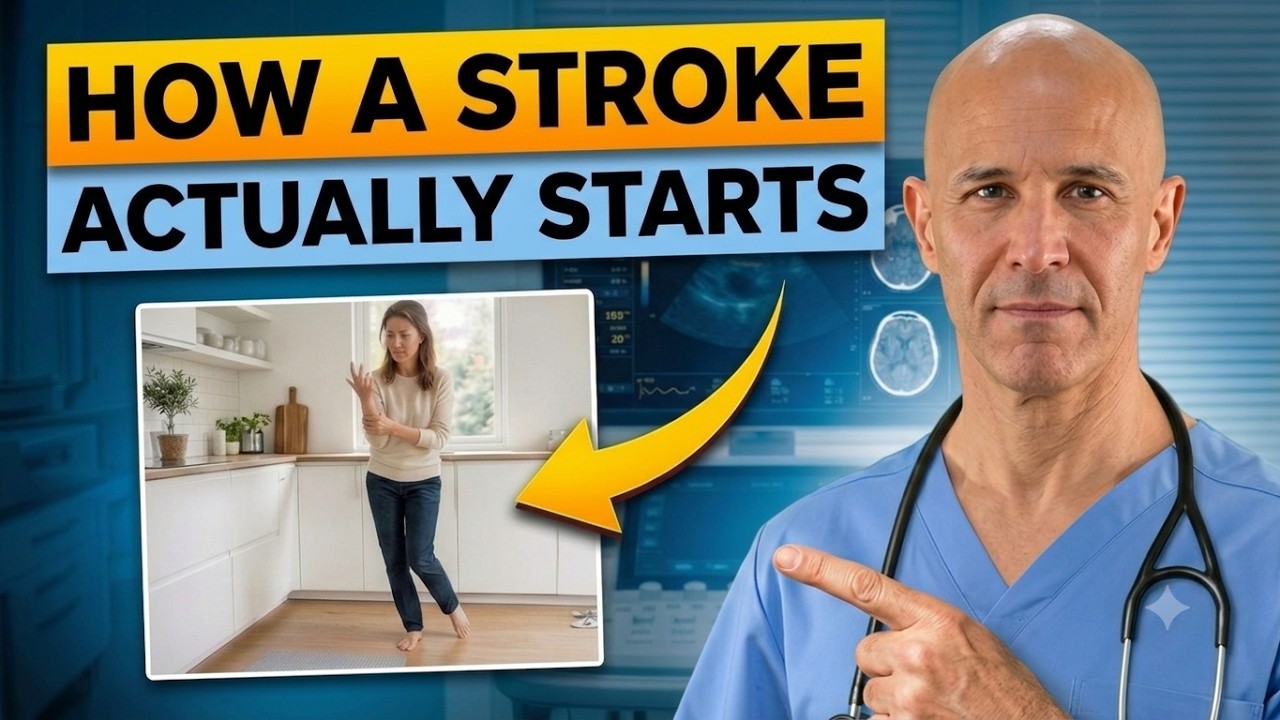
The Silent Countdown: What a Stroke Actually Looks Like the Day Before It Tears Your World Apart
Every human life is built upon a foundation of quiet assumptions. We assume that when we wake up in the morning, our legs will carry us to the kitchen. We assume that when we speak, the words forming in our minds will match the sounds leaving our lips. We assume that our bodies, which have served us faithfully through decades of joy, labor, triumph, and routine, are operating under a steady, reliable rhythm. But beneath the calm surface of everyday existence, the human circulatory system is a sprawling, fragile network of high-pressure pipelines.
When those pipes begin to fail, they rarely do so with a sudden, unannounced explosion. Instead, they leak. They drip. They send out faint, fleeting distress signals that most of us brush aside with a shrug, a laugh, or an aspirin.
In medical terminology, these preliminary whispers are often categorized as Transient Ischemic Attacks (TIAs), commonly known as mini-strokes. But calling them “mini” is perhaps the most dangerous linguistic error in modern medicine. It trivializes an event that acts as a full-dress rehearsal for catastrophe. According to data from premier neurological institutions and extensive clinical research, approximately one-third of all individuals who experience a TIA will eventually suffer a major stroke. More terrifying still is the compression of time: up to 10 percent of those who experience these warning signs will go on to have a full, devastating stroke within forty-eight hours.
Two days. That is the entire window of opportunity your body gives you to heed the warning before the pipe bursts completely. Yet, surveys and public health studies consistently reveal a shocking reality: less than half of older adults can accurately identify the early warning signs of a stroke. This profound gap in public awareness transforms manageable medical interventions into permanent disabilities, robbing thousands of Americans of their independence, their speech, and their lives every single year.
The Plumbing of the Mind: Understanding the Warning Window
To truly comprehend how a stroke develops, one must abandon the Hollywood myth that strokes always strike like lightning out of a clear blue sky, instantly paralyzing half the body with cinematic drama. While major strokes can certainly manifest violently, the biological mechanism behind them is usually progressive.
Think of your brain’s blood vessels like the complex plumbing in an aging Victorian house. Before a primary water pipe completely bursts and floods the kitchen, ruining hardwood floors and collapsing ceilings, there are invariably smaller signs. There is a slight drip beneath the sink. A strange shuddering sound when the valve opens. A tinge of rust in the morning water.
A stroke works precisely the same way. Before the major blockage or hemorrhage occurs, there are micro-interruptions—brief moments where blood flow to a localized region of the brain is choked off for two, five, or ten minutes. During this window, brain cells are starved of oxygen and glucose. They stop functioning properly, causing immediate physical or cognitive glitches. But then, spontaneously or through the body’s compensatory mechanisms, the blockage clears or a collateral blood vessel kicks in. Blood flow resumes. The symptoms vanish. You feel entirely normal.
It is this miraculous disappearance of symptoms that breeds catastrophic complacency. Your brain, eager to return to a state of comfort and eager to avoid panic, convinces you that it was nothing. “You just slept on your arm funny.” “You’re just getting older.” “It was just a dizzy spell from standing up too fast.”
The brain tells you a comforting lie, while the circulatory system has just shown you its hand. Recognizing that the going-away of symptoms is not good news—but rather a terrifying countdown timer—is the single most important mindset shift required to protect modern adults as they age.
The Six Silent Red Flags: What to Look For Before the Storm
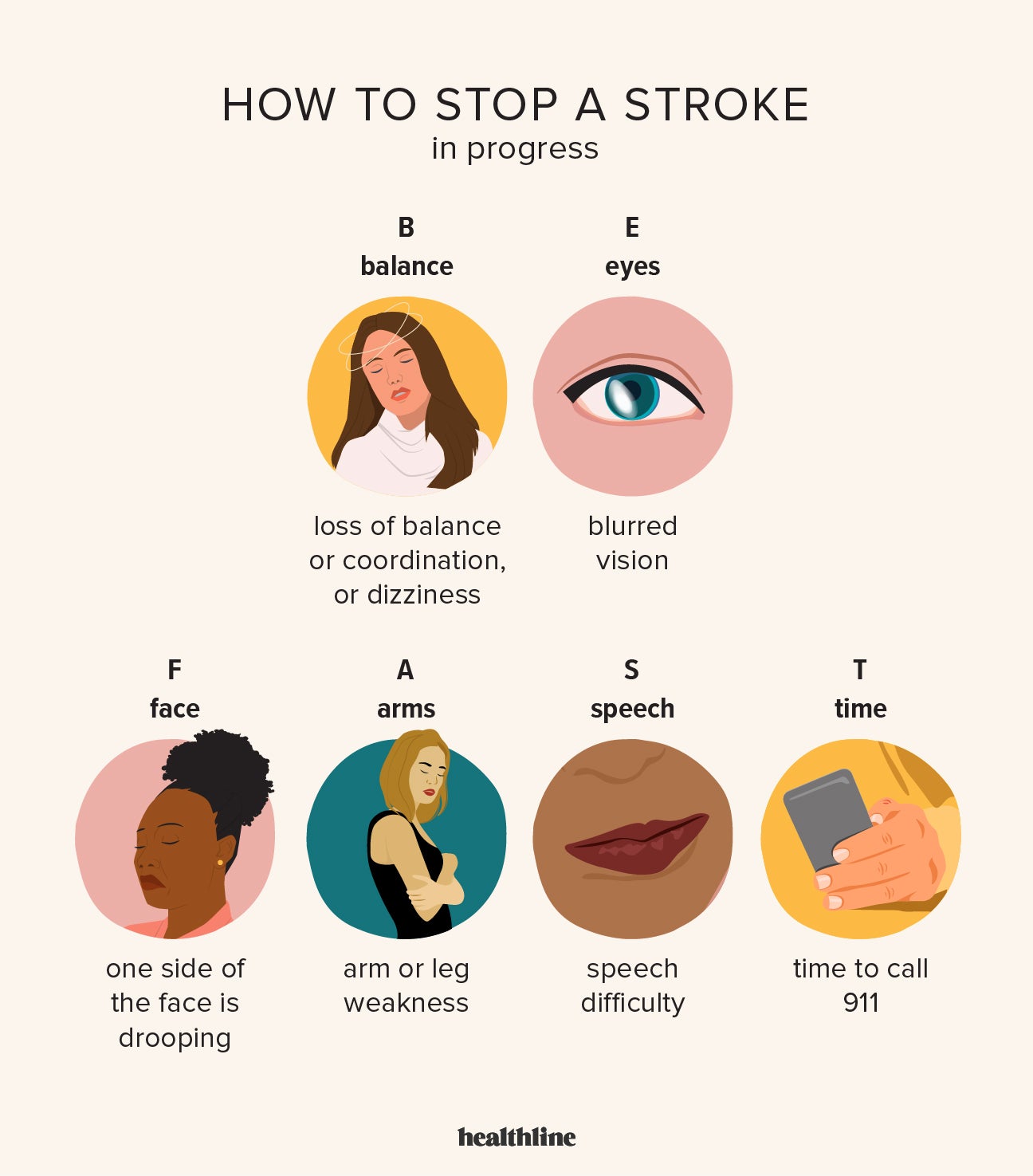
Medical professionals and stroke researchers have long utilized acronyms like FAST (Face, Arms, Speech, Time) to educate the public. However, the manifestation of a pre-stroke event can be far more nuanced, subtle, and varied than a textbook checklist implies. To catch the drip before the pipe bursts, one must understand the six distinct warning signs that can appear hours or even days before a major medical emergency.

1. The Subtle Face Drop
The first sign involves the intricate muscular control of the human face. We picture a dramatic, grotesque facial paralysis, but in the hours preceding a major event, it is often microscopic. It begins as a sudden, brief numbness or tingling near the corner of the mouth, or a slight asymmetry when attempting to smile.
The brain controls facial muscles like a puppeteer managing delicate strings. When blood flow falters on one side of the motor cortex, some of those strings go slack. Imagine a dimmer switch on a sophisticated lighting system: before a bulb burns out completely, it often flickers or dims on one side of the room. That flicker is data. If you or a loved one attempts to smile and notices even a momentary lag or drooping on one side, do not wait to see if it normalizes. Treat it as an emergency.
2. The Heavy, Lead-Like Arm
The second sign manifests in the upper extremities. It is characterized by sudden, inexplicable weakness, heaviness, or numbness in one arm. You might reach for your morning coffee cup and find that your limb feels unusually weighted down, as if it were constructed of wet sand.
Because each hemisphere of the brain controls the opposite side of the body, a blockage in the right hemisphere will typically manifest as weakness in the left arm. Nerve pathways run a long distance from the brain down to the fingertips; much like a long extension cord running across a yard, a minor voltage drop near the outlet results in a severe loss of power by the time the current reaches the far end. When one arm drifts downward during a simultaneous lift test, it is a glaring red flag that the neural highway is experiencing an obstruction.
3. Slurred Speech and Glitchy Broadcasts
The third sign strikes the most uniquely human faculty: language. Speech is one of the most computationally complex tasks the brain performs, requiring instantaneous synchronization between ideation, breath control, and muscular articulation of the tongue, lips, and palate.
During a pre-stroke warning, this live broadcast can glitch. A person might try to say a simple sentence, only for the words to come out slurred, jumbled, or entirely garbled for thirty seconds. They might laugh it off, calling it a “tongue-tied moment.” In reality, it resembles a radio losing its signal as a vehicle enters a tunnel—a brief, alarming burst of static before clarity returns. That static is a cry for help from the language centers of the brain.
4. The World Tilts Sideways: Sudden Imbalance
Sign number four is frequently misattributed to general clumsiness, inner ear issues, or the simple indignities of advanced age: sudden dizziness, loss of balance, or an inability to walk a straight line.
The brain houses a sophisticated, built-in balancing system—a biological carpenter’s level that relies on a steady, uninterrupted supply of blood to the cerebellum and brainstem. When that blood supply stutters, the internal level goes haywire. The individual feels as though they are standing on a violently rocking ship deck while everyone else stands on solid concrete. Recognizing this sudden, unprovoked vertigo as a neurological event rather than a passing inner-ear quirk can mean the difference between life and death.
5. Visual Blackouts and Curtains of Darkness
Vision is intensely personal and immediate, which makes sudden visual disturbances uniquely terrifying—and frequently misunderstood. This sign involves sudden blurriness, double vision, or a dark shadow descending like a window shade over part of the visual field, often in just one eye.
The signals from your eyes travel along specialized optic pathways to the occipital lobe at the back of the brain. If blood flow along that cable is interrupted, the image on your mental television screen blurs, splits, or goes dark entirely, even though the physical eyes are completely healthy. Many individuals make the fatal mistake of scheduling a routine eye exam for the following week, believing their glasses prescription has simply shifted, while their brain is actually sounding an alarm.
6. The Thunderclap Headache
The final sign is perhaps the most deceptive and frequently ignored: a sudden, severe headache that feels entirely unlike any headache previously experienced in a lifetime. Often referred to as a “thunderclap headache,” it strikes instantly, without the slow, rumbling buildup associated with tension, stress, or sinus pressure.
Most headaches are slow leaks in a tire; a thunderclap headache is an explosive blowout. It can signal bleeding within or around the brain or accompany widespread ischemia. Because millions of Americans live with chronic, ordinary headaches and have trained themselves to “push through” the pain, they apply yesterday’s normal to a today that is profoundly abnormal, reaching for an aspirin and a pillow when they should be dialing emergency services.
The Economic and Human Calculus of Delay
To fully grasp why recognizing these signs matters, one must examine the stark economics and human toll of delayed medical intervention. When a true ischemic stroke occurs, time is literally tissue. Every minute that passes without blood flow to the brain results in the death of millions of neurons and billions of synapses.
Modern medicine possesses miraculous interventions, such as thrombolytic drugs (clot-busting medications) like alteplase or tenecteplase, as well as mechanical thrombectomy—a minimally invasive surgical procedure where physicians physically thread a catheter through an artery to extract a clot from the brain. However, these treatments operate under strict time constraints. The window for maximum efficacy is measured in hours, sometimes minutes.
When a patient experiences a TIA (mini-stroke) and ignores it, they gamble with a loaded gun. If they suffer a full stroke 48 hours later because they failed to seek preventative medical evaluation during the TIA warning window, the financial and personal costs skyrocket.
Consider the macro-level calculus:
Acute Hospitalization Costs: The average cost of treating an acute ischemic stroke in the United States ranges from tens of thousands to over $100,000 for initial hospital stays alone, depending on surgical interventions and intensive care unit requirements.
Rehabilitation and Long-Term Care: Stroke is a leading cause of long-term disability. Inpatient rehabilitation facilities, outpatient physical therapy, occupational speech therapy, and home health care push lifetime costs well into the hundreds of thousands of dollars per patient.
Indirect Economic Losses: Beyond medical bills, there is the devastating loss of earning potential, the burden placed on family caregivers who must reduce their own work hours, and the priceless loss of human capital and familial presence.
Conversely, seeking immediate medical evaluation upon experiencing a TIA allows physicians to initiate preventative therapies—such as antiplatelet medications (aspirin, Plavix), anticoagulants, blood pressure management, and surgical evaluations for carotid artery stenosis—that drastically slash the probability of a subsequent major stroke. Preventing a stroke is exponentially cheaper, safer, and more humane than treating one after the damage is done.
Future Scenarios: The Cost of Complacency vs. The Power of Awareness
To project forward, let us examine two divergent futures for an aging population navigating cardiovascular and cerebrovascular health risks over the next decade.
Scenario A: The Path of Ignorance and Denial
In a society where public health education regarding mini-strokes remains stagnant, millions of seniors continue to treat transient neurological symptoms as minor inconveniences. A 68-year-old grandfather feels his hand go numb while gardening, shakes it out, and says nothing to his family. Forty-eight hours later, while driving or sitting alone, a major ischemic stroke hits without warning.
Because precious minutes are lost before discovery, emergency personnel arrive too late for optimal clot-busting windows. The patient survives, but is left with right-sided hemiplegia and severe aphasia—unable to speak, write, or walk independently. The family is thrust into crisis, navigating complex Medicaid spend-down procedures, institutional nursing home placements, and insurmountable medical debt. The emotional fabric of the family is permanently strained under the weight of preventable tragedy.
Scenario B: The Path of Proactive Awareness
In an enlightened society where families openly discuss the six warning signs of stroke, that same 68-year-old grandfather feels his hand go numb, pauses, and remembers what he read or heard. Instead of dismissing it, he turns to his spouse and says, “My hand just went numb for a minute, and my face feels a bit strange. Let’s call for help.”
Within twenty minutes, emergency medical services arrive, establishing the exact onset time. En route to the hospital, paramedics transmit vital diagnostic data, alerting the stroke team before arrival. Upon entry, physicians identify arterial narrowing or a transient clot and administer preventative stabilization or minor surgical intervention before the major stroke can materialize.
Two days later, instead of lying paralyzed in an intensive care unit, the grandfather is sitting in his living room, adhering to a revised blood pressure medication regimen and a heart-healthy diet, continuing to garden, play with his grandchildren, and live a full, independent life. The difference between these two scenarios is not luck; it is awareness.
Breaking the Generational Cycle of Silence
Why do people hide their symptoms? Why do intelligent, capable adults experience slurred speech, sudden dizziness, or visual blackouts and deliberately conceal them from their spouses, children, and doctors?
The answer lies in psychological vulnerability. As people age, there is a pervasive, quiet terror of losing autonomy. Many seniors fear that reporting a strange medical symptom will lead to a loss of their driver’s license, the surrender of their home, or being perceived as frail and burdensome by their adult children. They weaponize their own optimism, weaponizing the brain’s natural desire for comfort against their own physical survival.
Overcoming this requires a cultural shift within families and communities. Adult children must actively normalize conversations about neurological health with their aging parents. Spouses must establish a pact of radical transparency: If you notice something weird—even for thirty seconds—you tell me immediately, no embarrassment, no hesitation.
Health literacy must be treated not as a passive academic pursuit, but as an active form of self-defense. When older adults are armed with the knowledge that transient symptoms are not harmless quirks of aging, but rather flashing red warning lights from the central nervous system, their instinct shifts from hiding the symptom to reporting it.
Conclusion: Reclaiming Your Future
The human body is an astonishing machine, capable of remarkable endurance, adaptation, and resilience. It carries us through decades of triumphs and trials, communicating its distress signals in the only language it has: physical sensation.
When your circulatory system sends a warning—whether it is a fleeting facial droop, an uncooperative arm, a jumbled sentence, a sudden dizzy spell, a darkened field of vision, or a thunderclap headache—it is not conspiring against you. It is fighting for you. It is ringing the bell before the tower falls.
You were not meant to spend your later years walking on eggshells, living in fear of your own biology, or treating every tired afternoon as a hidden countdown clock. You were meant to keep gardening, keep walking your dog around the block, keep holding your grandchildren’s hands without a second thought, and keep laughing at the same old jokes across the dinner table.
Knowledge is the ultimate shield against fear. By recognizing that the going-away of symptoms is a trap, by committing the warning signs to memory, and by refusing to let pride or embarrassment override common sense, you take control of your destiny.
Do not wait for tomorrow. Do not wait until it is convenient. Guard your health, protect your independence, and listen closely when your body speaks. Because the minutes you save today belong entirely to the person you will be tomorrow—the one who gets to keep living, talking, and walking freely in a world full of promise.