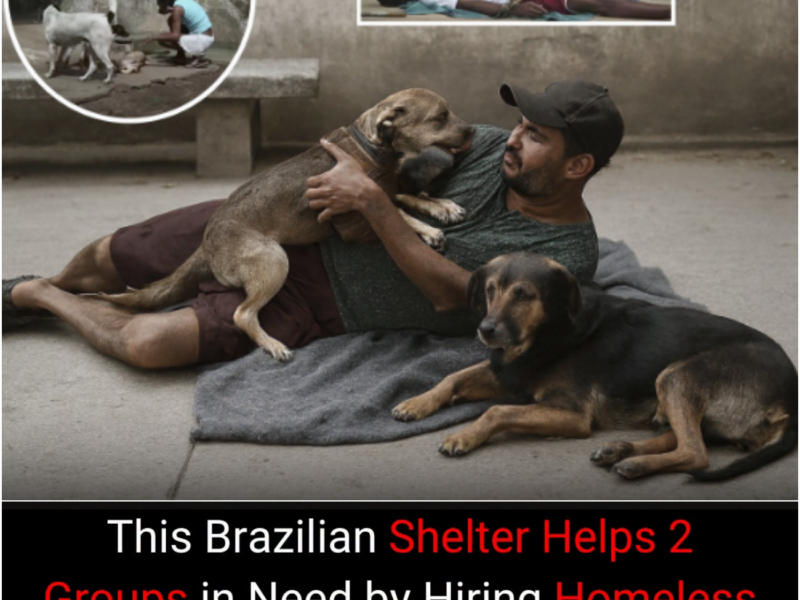
This Brazilian Shelter Is Helping Two Lives at Once—Hiring Homeless People to Care for Rescued Animals and Giving Both a Second Chance
A Brazilian Shelter Is Changing Lives by Hiring Homeless People to Care for Rescued Animals
The Dual Path to Redemption: Compassion as a Two-Way Street
In the heart of Rio de Janeiro, a city defined by its breathtaking contrasts and profound social divides, an experiment in human and animal welfare is quietly challenging our traditional understanding of charity. Founded by journalist Glenn Greenwald and the late city councilman David Miranda, this shelter operates on a deceptively simple premise: by pairing those who have been cast aside by society—the homeless—with those who have been abandoned by it—rescued animals—the shelter facilitates a mutual restoration of dignity.
This is not a story of a savior and a subject. It is a story of a partnership. It is a testament to the idea that healing is rarely a solo endeavor; often, the very thing we need to save ourselves is the opportunity to save someone else. To American readers, who are accustomed to institutionalized social services and animal rescue models that are often kept strictly separate, this Brazilian initiative offers a radical, transformative alternative: a model where compassion is pointed in two directions at once.
The Observation: The Invisible Bond
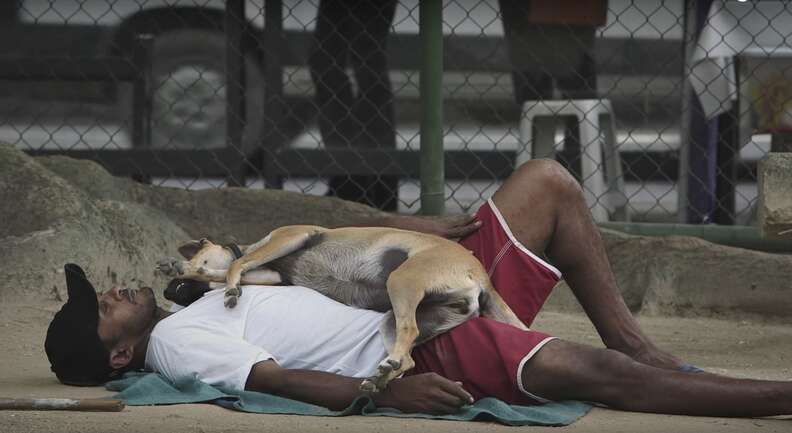
The genesis of this shelter lies in a simple, recurring observation: the sight of homeless individuals sharing their meager rations with their dogs. Despite having nothing, these individuals often prioritized the health and survival of their canine companions above their own.
In the United States, we often view the homeless population through a lens of policy, economic crisis, or mental health intervention. We focus on the “problem” of homelessness. What Greenwald and Miranda witnessed was not a problem; it was a profound, human-animal bond—an anchor of loyalty in a world that had otherwise rendered these individuals invisible. They saw that even in the deepest stages of deprivation, the human capacity for love remains intact. They realized that the bond between a homeless person and their dog is not just a relationship; it is a lifeline.
The Mutual Restoration: Hiring for Dignity
Traditional charity often focuses on the transactional—providing a meal, a bed, or a vaccination. The Rio shelter shifts this paradigm toward the relational. By hiring homeless individuals to serve as the primary caregivers for rescued animals, the shelter provides more than just a salary; it provides a role.
When a person who has been told by society that they are “unproductive” or “unwanted” is suddenly trusted with the life of a vulnerable creature, their self-perception begins to change. The animals require consistency, affection, and responsibility. In return, the animals provide unconditional acceptance—a quality that is often lacking in the lives of those on the street.
The story of Lucas, the shelter’s first hire, exemplifies this perfectly. A 20-year-old who was begging for help for a sick puppy found himself being asked to provide that help to others. The transformation was not just physical; it was social. By earning a wage, Lucas could secure an apartment. But more importantly, as he noted, he could “go places and be treated like a person.” The shelter gave him a resume, but it also gave him an identity.
Beyond the Transaction: The Psychology of Being Needed
Why is this model so effective? From a psychological perspective, humans have a fundamental need to feel necessary. When we strip away a person’s home, their job, and their social standing, we also strip away their sense of purpose. This loss of purpose is often more damaging than the lack of food or shelter.
The animals in the shelter are, in many ways, mirrors of the human workers. Many of the animals are traumatized, abandoned, and struggling to trust again. When a worker cares for an animal, they are not just performing a task; they are practicing self-compassion by proxy. As they nurse a dog back to health, they are essentially telling themselves that they, too, are capable of recovery.
This is the “Dual Path to Redemption.” It is a symbiotic relationship where both the human and the animal are working toward the same goal: safety, belonging, and a future. The dog teaches the human how to be present, and the human teaches the dog that the world can be a safe place.
The American Context: Lessons from Rio
For American readers, this story raises significant questions about our own social structures. We face a housing crisis and an animal overpopulation crisis that often seem intractable. We spend billions of dollars on shelters, bureaucracy, and enforcement. But do we focus enough on the human element—the need for purpose?
This model suggests that we might find more success if we integrated our social services with the profound, therapeutic potential of animal care. Imagine a system where homeless shelters were partnered with local animal rescue leagues, providing jobs to those who need them and fostering animals in environments that provide a sense of home to both parties.
This model removes the stigma of “dependency.” It creates a workplace that is rooted in love rather than profit. It recognizes that to solve the crisis of homelessness, we must do more than provide a roof; we must provide a reason to get up in the morning.
Compassion as a Two-Way Street
The Rio de Janeiro shelter is a reminder that compassion is not a finite resource. It does not run out because you share it. In fact, it tends to expand when it is directed outward. By hiring homeless workers, the shelter proves that “helping” is not a top-down movement; it is a circular one.
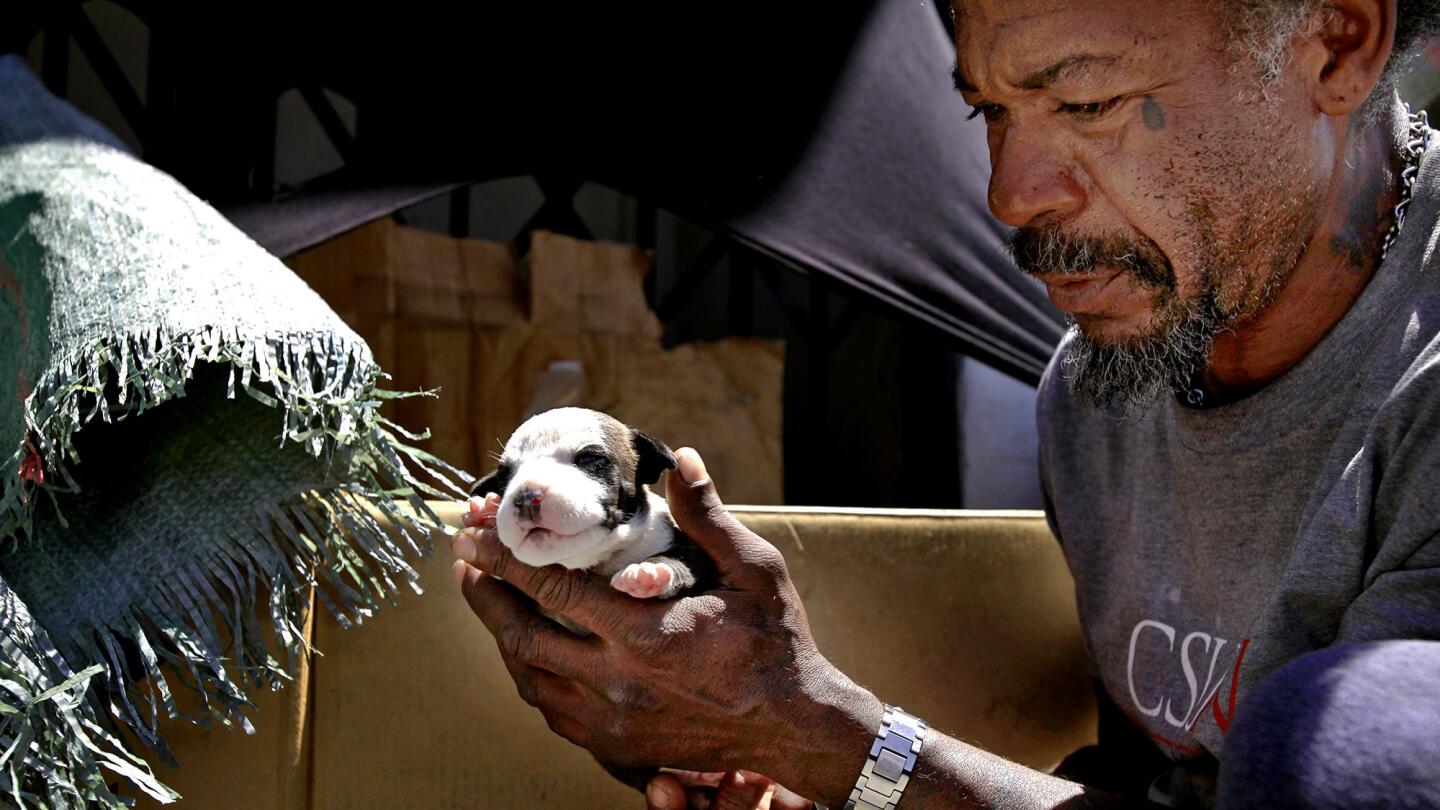
When we empower someone else, we are simultaneously empowering ourselves. When we provide dignity to the vulnerable, we are reinforcing our own humanity. The shelter does not just “save” animals; it saves the human capacity to connect, to work, and to feel needed.
Conclusion: A Blueprint for Healing
The legacy of Glenn Greenwald and David Miranda’s initiative is the proof that even in the most overlooked corners of the world, there are solutions that are both humble and revolutionary. It is a story about looking at the world, seeing the broken parts, and realizing that if you put them together in the right way, they might just heal one another.
To the American reader, the story of Lucas and the animals of Rio serves as a call to action. It is a reminder that everyone deserves a place where they are treated like a person. It is a reminder that the bonds we form—with people, with animals, and with our community—are the bedrock of a stable life.
Compassion is a two-way street. When we give, we receive. When we mend the broken, we find ourselves whole. In the quiet halls of a Brazilian animal shelter, a profound truth has been discovered: the best way to rebuild a life is to help someone else rebuild theirs. It is a simple, powerful, and universal idea, and it may be the most effective medicine for a fractured world.