
Trump’s Ballroom Plan Faces Scrutiny as Report Exposes Massive $50 Billion Cost
Trump’s Ballroom Plan Faces Scrutiny as Report Exposes Massive $50 Billion Cost
The $50 Billion “Pay-to-Play” Scandal: The True Cost of the Trump Ballroom

The heart of American democracy, the White House, is currently the site of a project that has fundamentally altered the physical and ethical landscape of the nation’s capital. The demolition of the historic East Wing and the destruction of the iconic Rose Garden were merely the opening chapters of a saga now described by watchdogs as a massive, orchestrated “pay-to-play” scheme. While President Donald Trump has consistently framed the construction of his multi-million-dollar “State Ballroom” as a charitable “gift to the United States,” a bombshell new report from the non-profit organization Public Citizen has peeled back the curtain on the project’s true financial reality. It is not merely a construction project; it is, critics argue, a $50 billion engine of influence peddling that has redirected massive amounts of taxpayer funding into the pockets of the very corporations financing the President’s vanity.
A Staggering Price Tag for “Public” Service
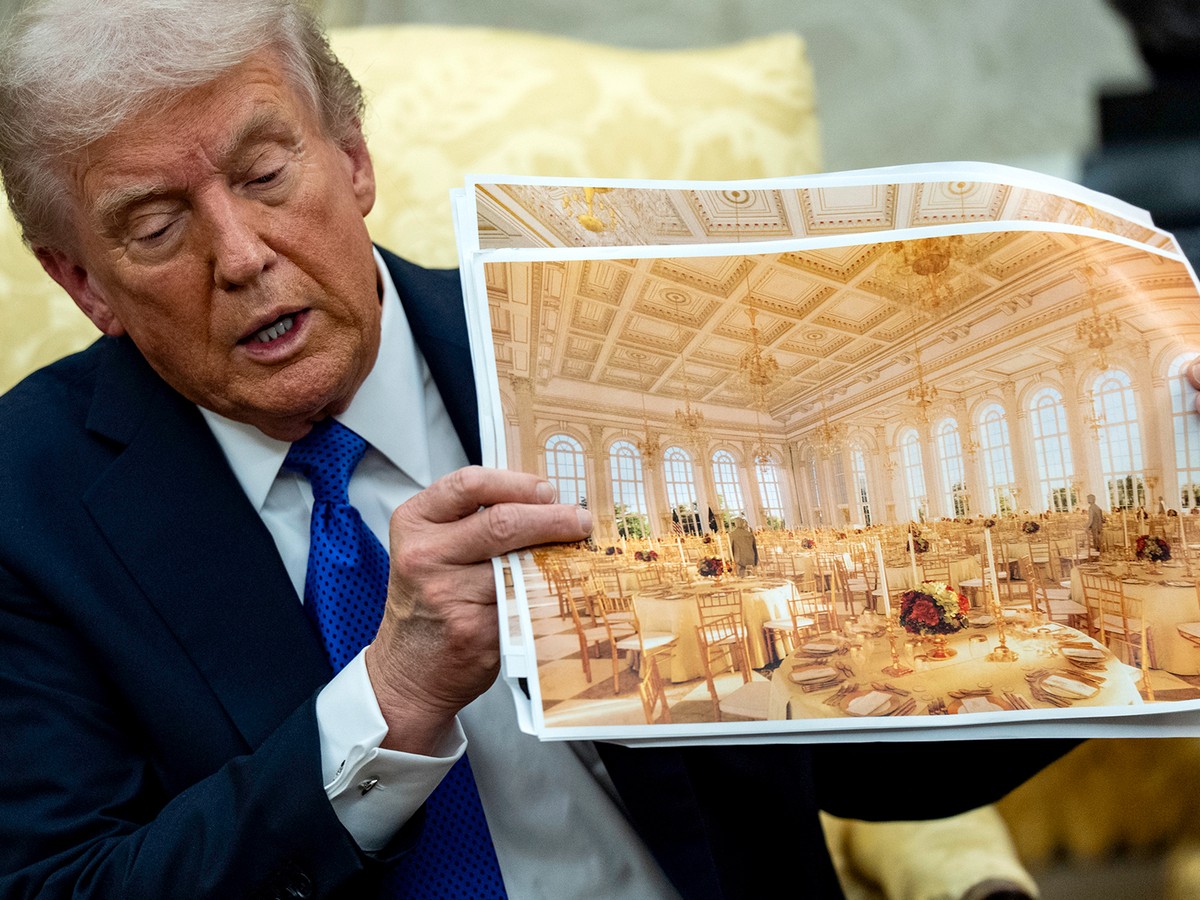
The narrative provided by the White House has always been simple: private donors are footing the bill for a structure designed to host state dinners and events, costing taxpayers nothing. However, the Public Citizen report, titled Ballroom Billions, exposes a darker reality. Of the identified corporate donors who contributed to the $400 million project, more than half have seen their fortunes surge through new or significantly increased federal government contracts in the six months following their donations.
The math is as jarring as the optics. Lockheed Martin, a titan of the military-industrial complex, pledged $10 million to the ballroom project. In return, the report indicates the company secured a staggering $43.8 billion in new or expanded government funding shortly thereafter. This is not an isolated incident; it is a pattern of behavior that suggests the ballroom has become a gilded toll booth for those seeking to do business with the federal government. Booz Allen Hamilton and Palantir, among others, have also seen billions of dollars in public contracts flowing their way after “gifting” millions to the construction of the ballroom.
The Erosion of Ethical Standards

The implications of this report extend far beyond the construction site on Pennsylvania Avenue. If government contracts are being awarded to corporations based on their financial support of a president’s personal project, the foundational promise of impartial governance is effectively nullified.
“Millions to fund Trump’s bizarre fever dreams are nothing compared to the billions they’re getting back in contracts and favorable government enforcement decisions,” says Jon Golinger of Public Citizen. This “pay-to-play” dynamic creates a feedback loop where corporations buy political influence, and that influence is then used to secure public money. When nearly 60% of the identified corporate donors to the project are currently facing federal enforcement actions or have had those actions suspended under the current administration, the appearance of corruption becomes a defining feature of the project rather than a secondary concern.
Future Scenarios: The Cost of Complacency

What does this mean for the future of the United States? If this project establishes a precedent, we are looking at a fundamental shift in how the White House operates. Future administrations may feel empowered to leverage the prestige and authority of the executive office to solicit “private” funding for vanity projects in exchange for federal regulatory relief or lucrative government contracts.
If the current trend continues, we could see a total decoupling of government spending from public need. Instead of tax dollars being allocated based on infrastructure, healthcare, or education, they will increasingly be funneled to the “inner circle” of donors. By 2028, the year the ballroom is slated for completion, the cumulative effect of these contract reallocations could reach into the hundreds of billions, fundamentally altering the federal budget and deepening the inequality between well-connected corporations and the average American taxpayer.
The ballroom is not just a building; it is a monument to a new era of transactional politics. As the construction continues, the question for the American public is whether this “gift” is a price they are willing to pay for a government that no longer answers to the people, but to the highest bidder.