U.S.-UK Tensions Flare After Henry Nowak Case Sparks Sharp Criticism
Henry Nowak Murder Ignites International Debate as U.S. Voices Concerns Over UK Policies
The Death of Dignity: How the Brutal Murder of Henry Nowak Exposed a Nation in Crisis

The bodycam footage is, quite simply, the stuff of nightmares. It captures the final, agonizing moments of 18-year-old Henry Nowak, a young man who was not merely murdered by a stranger but was effectively betrayed by the very authority figures sworn to protect him. As Henry lay dying on a cold Southampton street, his life leaking out of five stab wounds, he did not find solace or medical aid. Instead, he found himself being interrogated, accused of a crime he did not commit, and finally, cruelly handcuffed by police officers who were more concerned with the false allegations of his killer than the desperate pleas of a dying boy.
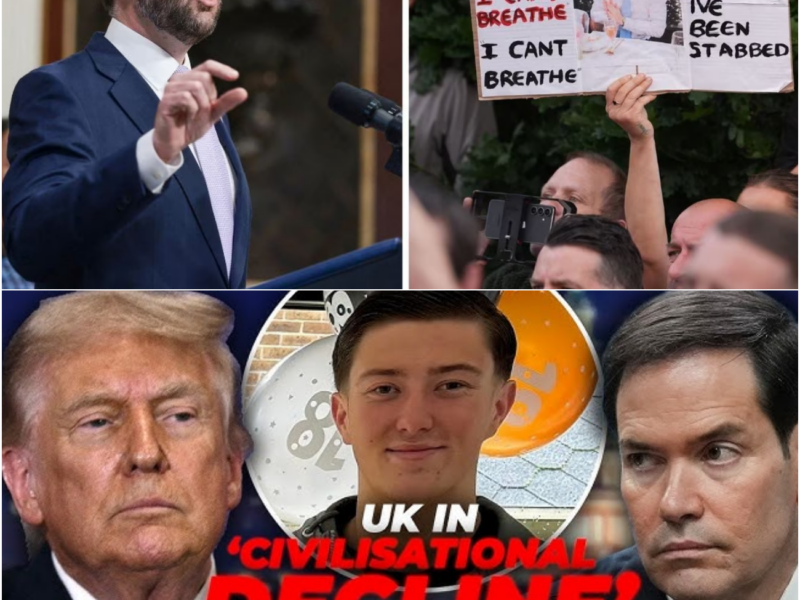
“I can’t breathe,” Henry gasped, his voice weakening as the world turned gray. “I’ve been stabbed.”
The response from the officer, captured with chilling clarity on the recording, was a dismissal that would haunt the British legal system for years to come: “I don’t think you have, mate.” Those seven words, uttered while a young man’s heart was failing, have become the rallying cry for a nation in the grip of a profound identity crisis. The murder of Henry Nowak has ceased to be a mere criminal case; it has become a lightning rod, igniting a ferocious international debate over the integrity of modern policing and the perceived “civilizational decline” of Western society.
The Anatomy of an Ideological Disaster

The tragedy began on December 3, 2025, when Henry, a student with a bright future in finance, crossed paths with 23-year-old Vickrum Digwa. The ensuing attack was swift and lethal. However, what followed was a masterclass in deception. Digwa’s family, arriving at the scene, immediately weaponized the concept of racial grievance, falsely claiming that Henry had launched a racist attack and knocked off Digwa’s turban.
For the officers on the scene, the accusation was a pre-programmed trigger. Because the climate of modern policing is heavily influenced by “ideological conditioning”—a framework where historical grievances often take precedence over immediate, objective evidence—the police did not see a victim in need of a life-saving intervention. They saw a “suspect” to be managed.
The consequences were catastrophic. While Henry was being cuffed and arrested in his final moments of consciousness, his murderer was essentially treated with a level of caution and deference that stood in stark contrast to the handling of the victim. This is the heart of the “two-tier policing” accusation that has rocked the United Kingdom: the belief that identity politics have so thoroughly permeated the law enforcement establishment that a suspect’s background can dictate the level of empathy they receive, often at the expense of the victim’s basic human rights.
The International Fallout: A Diplomatic Firestorm
The ripples of this case have traveled far beyond the borders of Southampton, reaching the highest levels of the United States government. In an unprecedented move, the US State Department officially branded the event as a “glaring symptom of civilizational decline.” Vice President JD Vance amplified this sentiment, explicitly linking the murder to the failure of Western elites to address the consequences of mass migration and the “politics of self-hatred.”

For the administration of Prime Minister Keir Starmer, these interventions were seen as an existential threat to British sovereignty. Downing Street has scrambled to push back, labeling the comments from Washington as “interference in our democracy” and an attempt to “stir up division on our streets.” Yet, the genie is out of the bottle. Figures like Elon Musk have used their platforms to project the footage of Henry’s death to millions, fueling a narrative that the British state has abandoned its own people in favor of a radical, multiculturalist agenda that prioritizes political optics over public safety.
Future Scenarios: The Erosion of the Social Contract
If the current trajectory of “two-tier” skepticism continues, we are looking at a permanent rupture in the relationship between the public and the police. When a significant portion of the population stops believing that the law is applied equitably, the social contract effectively dissolves.
Systemic De-policing: We may see a “Ferguson Effect” on a national scale, where officers, fearing the social and political repercussions of aggressive intervention in racially charged situations, become increasingly passive, leading to a spike in violent crime.
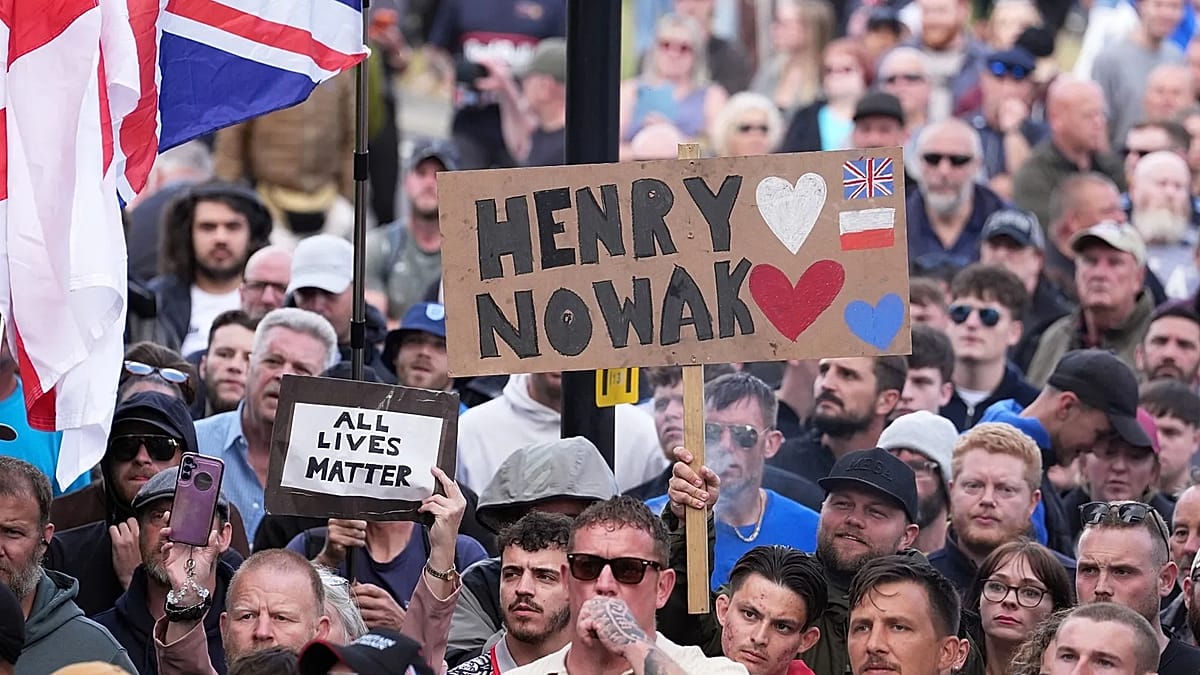
Institutional Paralysis: The Independent Office for Police Conduct (IOPC) is currently investigating the Southampton incident. If the findings reveal that officers were indeed paralyzed by their own internal training to avoid being perceived as “biased,” the resulting policy shifts will likely create massive institutional friction, causing a morale crisis within police forces.
The Rise of Populist Oversight: The intensity of the reaction suggests that future elections will be increasingly fought on the battleground of policing and “cultural preservation.” We can expect a surge in political candidates who explicitly campaign on rolling back “woke” diversity and inclusion policies within the civil service and law enforcement.
A Nation Searching for its Reflection

The death of Henry Nowak is a tragedy that serves as a mirror. For the British government, it is a call to restore the foundational principle of equality before the law. For the international observers, it is a warning of what happens when a society loses its ability to distinguish between identity-based narratives and the cold, hard reality of violent crime.
The question that remains is whether this case will serve as a catalyst for genuine reform or simply as fuel for further polarization. Henry Nowak’s family has pleaded for his death not to be used to sow hatred, yet the political machine is already churning, turning his final, lonely moments into the defining political conflict of our time. As the investigation continues, the world watches to see if the UK can reclaim its reputation for fair, objective justice—or if the “civilizational decline” diagnosed by its allies is already well underway.