Janis Joplin Paid for Her Own Funeral Party — The Invitations Read Drinks Are On Pearl
On October 26th, 1970, 300 people received an invitation to a party. The party would have an open bar. It would have the Grateful Dead. It would have Big Brother and the Holding Company. It would go from 8:30 at night until 6:30 in the morning. And it was being thrown by a woman who had been dead for 3 weeks. She paid for all of it herself.
She chose the venue. She set the budget. She left the instructions and the invitations. The invitations had four words on them that I’ll tell you at the end because once you know what they said, you’ll understand everything about who Janis Joplin really was. This is the story of the party Janis Joplin threw for her own death, not a funeral.
She specifically did not want a funeral. This was something else, something she planned in detail months in advance while she was still alive, still recording, still at the height of everything. To understand why a 27-year-old woman planned her own posthumous party and why it became one of the most talked about send-offs in the history of music, you have to understand where the idea came from.
And the idea came from a funeral she attended in 1967, a funeral that changed her mind about what death could look like. In 1967, a member of the Hells Angels named Chocolate George was killed in a motorcycle accident in San Francisco. He was a familiar figure in the Haight-Ashbury world, the specific overlap of bikers and hippies that existed in San Francisco in that brief moment.
When he died, the community did not gather to mourn in the traditional way. They threw a party in Golden Gate Park. There was beer. There were hundreds of people. And there was music. The Grateful Dead played and Big Brother and the Holding Company played, which means Janis Joplin was there.
She described it later. She said, “We got lots of beer and the angels got the dead and us. It was just a beautiful thing. All the hippies and angels were just stoned out of their heads. You couldn’t imagine a better funeral. It was the greatest party in the world. You couldn’t imagine a better funeral.” Something landed in her that day.
The idea that a death didn’t have to be only grief, that a send-off could be a celebration, that the last thing you give the people you love could be a good time instead of a sad one. She decided at some point after that that when she died, she wanted that. Most people who have that thought never act on it.
Janis Joplin put it in her will. Here is the part that stops people when they first hear it. Janis Joplin was not old. She was not sick. When she signed the will that contained these instructions, she was 27 years old and at the absolute peak of her career. She was recording the album that would become Pearl, the best work of her life.
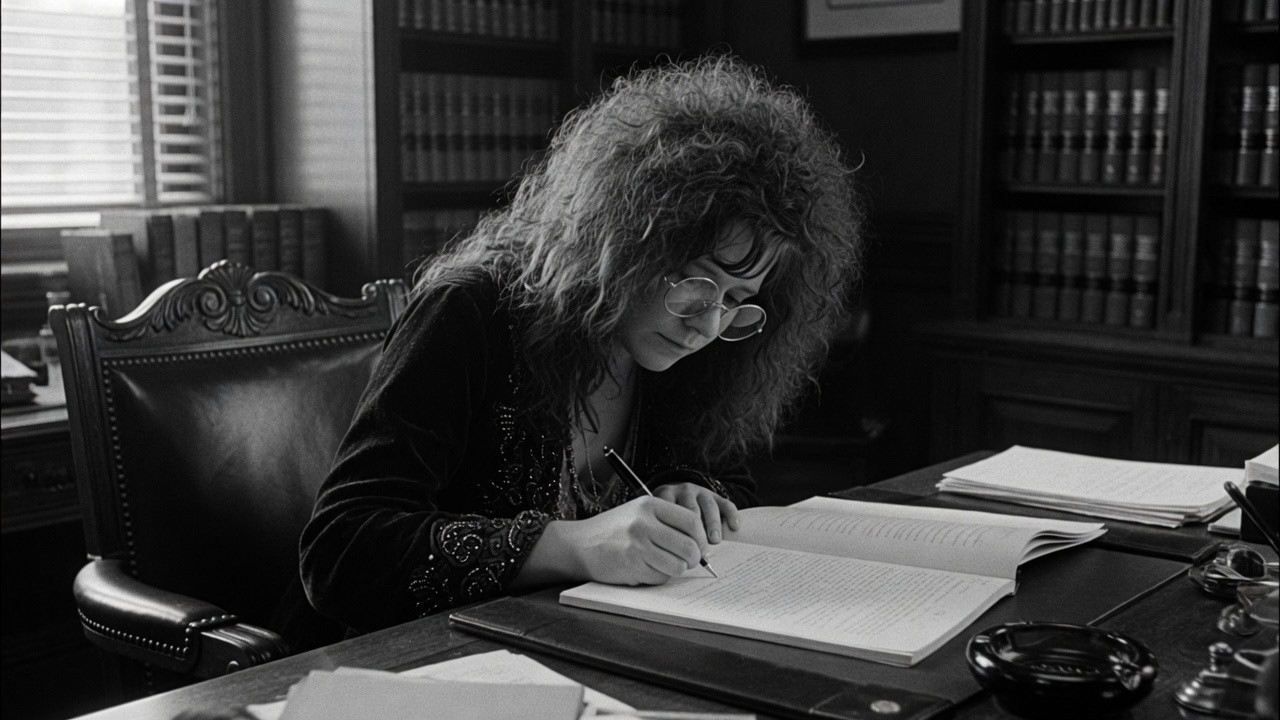
And in the middle of all of that, she made a specific, practical, legal arrangement. She set aside $2,500 so that in her words, “My friends can have a ball after I’m gone.” $2,500 in 1970 was a significant amount of money, the equivalent of roughly $20,000 today. She wrote it into a legal document.
She specified that it was for a party. She wanted her friends to have a ball after she was gone. Think about what it means to write that sentence while you are healthy and successful and 27. It means some part of her knew, or it means she was simply the kind of person who thought about the people she loved even in the context of her own death. Maybe both.
With Janis, it was usually both. Now, I need to tell you about the last few days because they make everything else almost unbearable. On October 1st, 1970, 3 days before she died, Janis Joplin was in the recording studio doing two things. The first, she recorded Mercedes Benz a cappella, one take.
The last song she would ever fully record. The second thing she did that day almost nobody knows about. She recorded a birthday greeting for John Lennon. Lennon’s 30th birthday was coming up on October 9th. Janis knew him and so she recorded a personalized birthday message, a little song, a warm greeting, the specific gift of her voice given to a friend.
She mailed it and then 3 days later she died. The tape arrived at John Lennon’s home in New York after her death. He played it and heard her voice, alive, warm, singing happy birthday to him, knowing she was already gone. Lennon talked about it for years afterward. The birthday greeting from a dead friend that arrived in the mail.
That was October 1st. The will was already signed. The party was already planned. 3 days before the end, she was recording gifts for the people she loved. She was always always thinking about the send-off. I want to ask you something before we get to the party itself because I’m genuinely curious what you think.
Was this morbid? Or was it the most generous thing a person could do to make sure that when you’re gone, the people who loved you have a reason to come together and a reason to celebrate instead of only mourn. Tell me in the comments. I read them and on a story like this one, I think the answer says something about how each of us thinks about our own goodbyes.
Because what happened at that party, the way grief and joy fought each other all night, is exactly the question she left behind. October 26th, 1970, 3 weeks after she died. The venue was the Lion Share, a nightclub in San Anselmo, California in Marin County. It was a place that mattered to her. She had played there. It had hosted Van Morrison, Country Joe and the Fish.
Randy Newman had played his very first concert on that stage. It was the right place, a working music venue, not a funeral home. A stage, not a grave. 300 people came. Her sister Laura, her road manager John Byrne Cooke, the members of Big Brother and the Holding Company, her first band, the members of Full Tilt Boogie, her last band, most of the Cosmic Blues Band, friends from San Francisco, friends from the road, the famous and the behind-the-scenes all in one room.
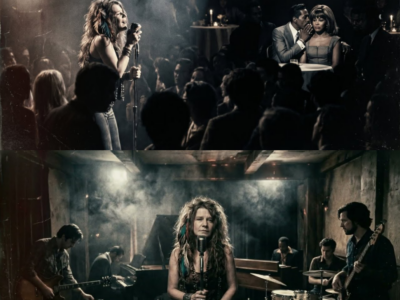
The party started at 8:30 at night. Big Brother and the Holding Company played, the band she had become famous with, the band she had left, the band that loved her anyway. Members of the Grateful Dead joined in, members of Jefferson Airplane, members of Quicksilver Messenger Service. The specific San Francisco music community that had made her gathered to send her off.
The music, by all accounts, was extraordinary. John Byrne Cooke wrote that the wake was attended by her old San Francisco friends, by new friends from the tours, by all the members of Big Brother and Full Tilt Boogie, and most of Cosmic Blues. Everyone she had made music with in one room, playing for her, and it went all night from 8:30 in the evening until 6:30 the next morning, 10 hours.
The tab for food and drinks came to about $1,600. Her budget had been $2,500. She had even left a cushion. She thought of everything. And then there’s the detail that makes the whole thing feel exactly like a Janis Joplin party. At some point during the night, brownies were passed around. The brownies were laced with hashish and according to her sister Laura’s account, many of the guests eating them did not know.
300 people at an all-night party for Janis Joplin, some of them unknowingly eating hash brownies. The music going until dawn, the Grateful Dead and Big Brother on stage. If you had to design a party that captured everything she was, the wildness, the gen- -erosity, the chaos, the refusal to do anything the normal way, you could not do better than the one she designed for herself.
She wasn’t there and somehow it was completely, perfectly her, which brings us back to the invitations. The four words I promised to tell you. When the 300 guests received their invitation to this party, this strange, impossible, generous party thrown by a woman who was already gone, the card read, “The drinks are on Pearl.” Pearl.
That was her nickname, the name her closest friends called her. The name she gave the album she was recording when she died, the album that would come out three months later and go to number one. Pearl was the part of her that was warm and funny and generous, not Janis Joplin the icon, the voice, the tragedy. Pearl, the friend, the one who wanted everyone to have a good time.
The drinks are on Pearl. Even gone, she was buying. Even gone, she was taking care of the room. Even gone, she was the host. That was the last joke and the last gift, both at once. The specific Janis Joplin combination. But I told you that grief and joy fought each other all night, and they did, because here is the thing that the legend usually leaves out.
The party was not in the end only a celebration. Her sister Laura Joplin was there. And years later in her biography of her sister, she wrote about what it was actually like to be in that room. She wrote, “I sat amid people trying to force themselves to be jovial, but they naturally turned to quiet conversations about who was doing what, trying to force themselves to be jovial.
That is the truth underneath the legend. 300 people had been handed an instruction by someone they loved, ‘Have a ball after I’m gone.’ And they tried. They genuinely tried because she had asked them to, because the drinks were on pearl, because she had wanted this, but you cannot fully command joy. You can pay for the venue and book the band and stock the bar and write the funny words on the invitation.
You can plan every detail. You cannot make the grief go away. The people in that room had lost her. The music was sensational and the brownies were going around and the bar was open and underneath all of it they kept turning to each other and talking quietly about who was gone and what it meant. She gave them a party.
They came, they tried, they loved her and they could not pretend she wasn’t missing from the one party she had most carefully planned. Janis Joplin was cremated. Her ashes were scattered from a plane over the Pacific Ocean and along Stinson Beach in Marin County, not far from the club where her party was held. She left specific instructions for that, too. No grave, no marker.
The ocean and the California coast she had made her home, but the party is what stays with me because it tells you something that the tragic version of her story always misses. The version where she’s only the doomed icon, the 27-year-old casualty, the cautionary tale. That version forgets that she sat down while she was alive and healthy and successful and thought, “When I’m gone, I want my friends to have a ball.
” And she made sure they could. She paid for it. She planned it. She left them a gift to open after she was gone. The drinks are on Pearl. That was who she actually was. Not just the voice that stopped the world. The friend who wanted the room taken care of even from beyond it.
If this is the kind of story you didn’t know about Janis Joplin, the human being underneath the legend, then subscribe because that’s the only thing this channel does. We find the moments the documentaries skip, the real ones, the ones that tell you who these people actually were. And let me know in the comments if you could leave one instruction for the people you love the way she did, what would it be? She left four words. The drinks are on Pearl.
Rest easy, Pearl. The party was beautiful. Even the sad parts. Especially the sad parts.