Catherine Dolgorukova: The Most Hated Woman in Russia D
Sar Alexander II’s family endured his death with dignity. The same can’t be said for his much younger wife, Catherine Dolgurakova. When it came time to say goodbye, her reaction was truly bizarre. Urged to become the new mistress of Sar Alexander II, Katherine Dolureova got a lot more than she signed up for when they ultimately married, especially considering their significant age gap.
Although she was completely devoted to him, every day she spent with his family was a nightmare, and they never stopped harassing her, even long after she’d cut ties with them. Though Catherine and her family suffered poverty from early in her life, they actually had a deep connection to the Russian monarchy.
Through her father’s side, Catherine was a direct descendant of Nikita Romanovich, who was not only a highranking noble in the early Sardom of Russia, but also brother-in-law to the first Sar, Ivan the Terrible. Receiving a visit from one of the royals in 1859, the 10-year-old Catherine met the man who would become her husband, Alexander II, the 41-year-old emperor of Russia.
Although her father hadn’t been able to provide much for his family, their situation became even worse when he died when Catherine was about 17. Still hoping to give her two daughters a good life, Catherine’s mother sent her and her sister Maria to the Small Institute of Noble Maidens. This kind of higher education didn’t come cheap, so Catherine’s mother pulled every string she could.
Reaching out to the court minister for help, he persuaded the emperor to pay the tuition of both Catherine and Maria along with their four brothers. Catherine hadn’t seen Alexander since their first meeting, but shortly after she began her studies at the Small Institute, he decided to make an official visit to the school.
The two of them became acquainted once again, and he immediately singled her out, going on walks with her and inviting her to go on carriage rides. The 17-year-old Catherine couldn’t have been more excited that the emperor was showing an interest in her, and Alexander knew it. Although he was married to Empress Maria and 30 years older than her, he saw no issue with trying to court Catherine.
Since his wife was struggling with tuberculosis, he took advantage of her circumstances and assigned Catherine as one of her ladies in waiting. While she accepted the position, Catherine had reservations about becoming closer to Alexander, but only because she didn’t want to be just another one of his mistresses.
Working as the Empress’s Lady in waiting, Catherine had maintained her more reserved stance. But something happened that she didn’t expect. Having lost his eldest son about a year prior, Alexander was still deep in the throws of grief by the summer of 1866. All for Catherine to witness. Feeling great pity for him, she ultimately accepted his offer to become his mistress.
She was still honest about how she didn’t want to be just another mistress, but Alexander had all the right answers. According to her own writings, she felt more at ease once he promised he would marry her as soon as it became possible. Despite meeting up frequently, Catherine and Alexander still wrote countless letters to each other every day, especially after she became pregnant with his child.
This put their relationship into a new perspective for Catherine, and she wrote to him asking if he would finally devote himself to her. Alexander and Catherine weren’t coming forward publicly, but gossip meant that many of his family members and courtiers caught wind of the relationship, and they weren’t happy.
Although Alexander was the one who essentially prayed on Catherine first, the rest of the Imperial family believed she was manipulating him to become the new empress. Going into 1876, Catherine was expecting her third child with Alexander and had been growing angrier that the previous births had to happen in secrecy.
So, as she went into labor in February that year, she demanded that Alexander allow her to give birth at his home, the Winter Palace. Their newborn son, Boris, would only live for a few weeks. Alexander, concerned for his new family’s safety, would eventually bring Catherine and their four children into the Winter Palace and give them a place to live on the third floor.
He hoped that having Catherine close to him would keep her from harm. But on March 1st, 1880, assassins planted a bomb in the palace’s dining room. Climbing the stairs to the rooms of Catherine and her children, Alexander expected the worst. Catherine had heard the noise and was shaken, but she and the children were unharmed.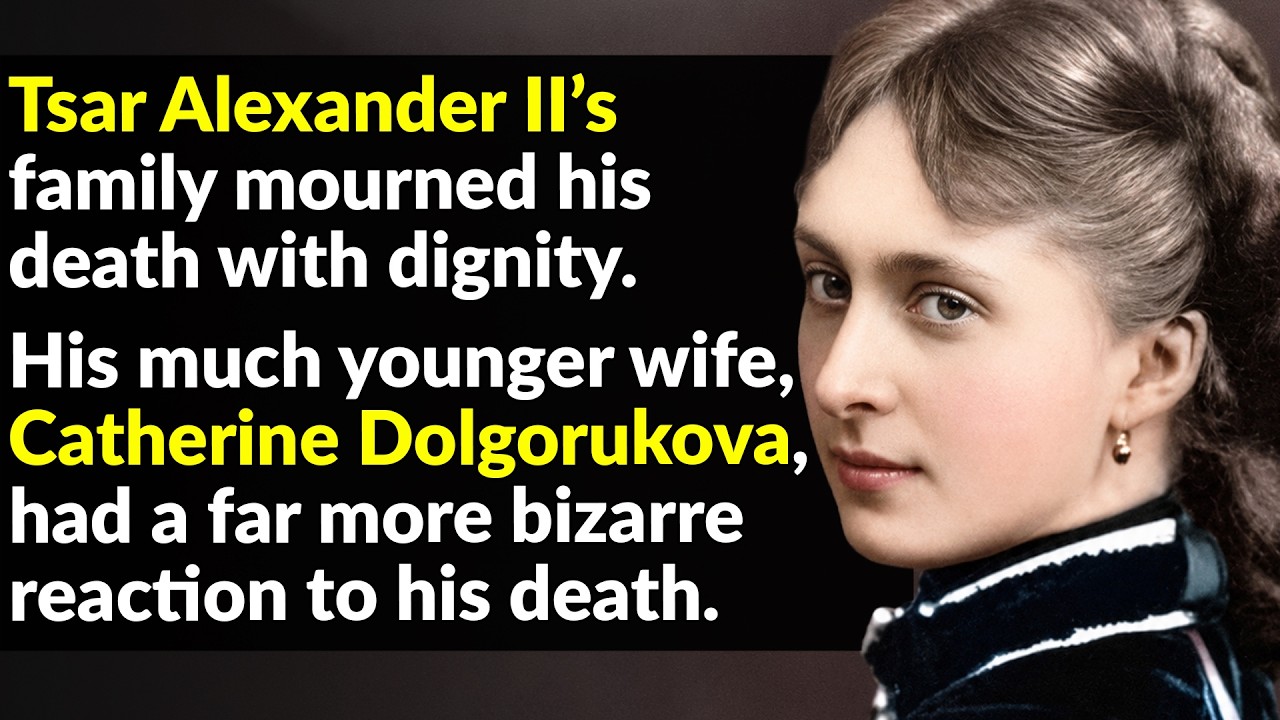
Alexander was reassured that his mistress was safe, but he’d also shown his hand. Elsewhere in the palace, on a different floor, was Empress Maria, who lay bedridden with tuberculosis. Alexander had provided Catherine with a home and as much safety as he had to offer. But knowing how likely it was that he would meet an untimely end, he also wanted to make sure she and their children would want for nothing.
He created an account at the state bank for them containing 3.3 million gold rubles. Although Empress Maria was often in and out of consciousness due to her illness, she wasn’t completely ignorant of her husband’s infidelity. Knowing she was nearing the end of her life, she asked Alexander to bring his children to her room so she could meet them.
The empress died in June 1880. But rather than grieving for the loss of his wife and mother of his children, Alexander married Catherine the following month. He swore to Catherine that he would crown her empress before the year was out. But this vow came with complications. As their marriage was morganatic, meaning they were from different social classes.
The best he could do was to grant her the title of most serene princess Yuri of Skaya. While this legitimized their children as royalty, it still didn’t give them any claim to the throne. Alexander had already felt his family’s disdain toward Catherine. But now that they were married, this anger intensified.
His older children couldn’t get past how quickly he had replaced their mother. In fact, his favorite child, Grand Duchess Maria, wrote a letter to Alexander in which she prayed that she and her siblings would one day be able to forgive him. To Catherine, it seemed like everyone aside from her husband was against her. But that wasn’t completely true.
As it turns out, Grand Duke Mikuel Nikolivich, Alexander’s youngest brother, was one of the few people to lay no blame on Catherine and express how sorry he felt that the rest of his family was so cruel to her. The Imperial family was still under the impression that Catherine had manipulated Alexander for her own gain, especially since they’d married so quickly after Maria’s death.
Alexander explained that the only reason he didn’t wait longer was that he knew Catherine wouldn’t get any inheritance if he was assassinated before they married. While Alexander’s family clearly disliked Catherine, she also represented a major risk to their dynasty, especially to his other children. The concerns that Catherine would become empress weren’t unreasonable, and this implied her children would replace the legitimate heirs Alexander already had.
Both Catherine and Alexander faced daily insults and cold shoulders. Catherine loved her children and remained devoted to Alexander, so she did her best to carve out a happy life as the emperor’s wife. But this was easier said than done. Between the hostility from her in-laws and the mounting paranoia that assassins were lurking in the shadows, it was hard to ever be at peace in the winter palace.
Throughout all this turmoil, both Catherine and Alexander still tried to live their lives. And in the emperor’s case, that meant taking his weekly trip to the Mkyovski Manz on March 13th, 1881. This was to oversee the Russian army’s roll call. And to maintain at least a semblance of protection, he used a closed bulletproof carriage for the journey.
He’d only grown more fearful of his untimely demise. But now it was Catherine’s turn to worry. By this point, Alexander had taken plenty of precautions to ensure the safety of himself and his family. But when it came to this weekly visit, he wasn’t the anxious one. According to Catherine, she’d seen a vision that this trip would lead to his doom.
She tried to convince him to stay home, but the emperor wasn’t having it. Alexander would soon discover just how right she was, but it would be too late. After Catherine bade him a nervous farewell, Alexander headed to the Mkyovski Manz, where the public lined the streets to watch him go past. As he slowly made his way through, a young man belonging to the Narodnia Volia movement rushed the carriage.
In his arms was a white package containing a powerful explosive. Fortunately for Alexander, his safeguards had paid off, even though the explosion rocked the carriage. The vehicle’s bulletproof exterior stopped the blast from doing much else. Out on the street, one of his csix lost his life and multiple people had sustained injuries, including the driver.
But Alexander was fine. Believing the incident was over, he opened the door of his carriage and stepped out. But he’d overlooked one possibility. His attacker wasn’t working alone. A second assassin emerged with another explosive. And as the package landed at Alexander’s feet, he’d only a moment to realize that he should have listened to Catherine.
The package exploded, and as the smoke cleared, Alexander’s entourage discovered him on the ground, still alive, but practically missing his legs. Not willing to risk a third attack and hoping to get him back in time to at least say goodbye to Catherine before he died, his men carried him into another carriage and hurried back to the palace.
His family and courters filed into his room to see him one last time until at last Catherine burst through the door, crying his name in horror and throwing herself across his body. She and the rest of the Imperial family stayed with Alexander as he slowly faded, her dressing gown now stained with his blood from their final embrace.
Eventually, at about 300 p.m., he took his final breaths. Catherine couldn’t handle her emotions and immediately fainted before being carried away by staff. The Imperial family’s hostility towards Catherine continued even after Alexander’s death. And as they carried out his funeral procession through the streets of St.
Petersburg, she was nowhere to be found. During the service, the family wouldn’t allow her or her children any closer than the church’s doorway, so she had to attend a completely separate one. Without Alexander to protect Catherine and their children, his own family immediately conspired to push her out of their lives.
But she wouldn’t leave without a fight. Hoping to live comfortably with her children for the rest of her life, Catherine eventually agreed to stay away from the Winter Palace and all other imperial residences, but only in exchange for a pension of 3.4 million rubles. Now she had to live the rest of her life without Alexander.
But this was when she truly thrived. Although the imperial family thought she’d won by pushing her out, Catherine found a new home in France as soon as she could. She went from being surrounded by people who hated her to becoming one of Paris’s most prominent and beloved hostesses among the elite. The Imperial family’s wish had come true and Catherine was gone.
But it seems that still wasn’t enough for them. still eyeing Catherine with contempt and suspicion, the family even sent spies to Paris to report back on everything she was getting up to. Although Catherine was happy to have nothing more to do with Russia, her son George tried to join the Imperial Russian Navy without success.
In a letter to Catherine from Grand Duke Alexi Alexandrovich, son of Alexander and Empress Marie, he informed her of George’s failure, describing in detail just how horribly his half-brother had performed. For 41 years, Catherine Dolurova enjoyed her life outside the political chaos of the Russian imperial family, all the while living off of her pension.
When that ran out, she sold the houses she owned in Paris and Beeritz. Right when she was finally reaching the end of her vast fortune, she died on February 15th, 1922. Thanks for watching History Expose. If you love uncovering the best stories in history, hit like and subscribe to keep exploring with us.
If you enjoyed this video, check out the others on screen for more amazing history content.