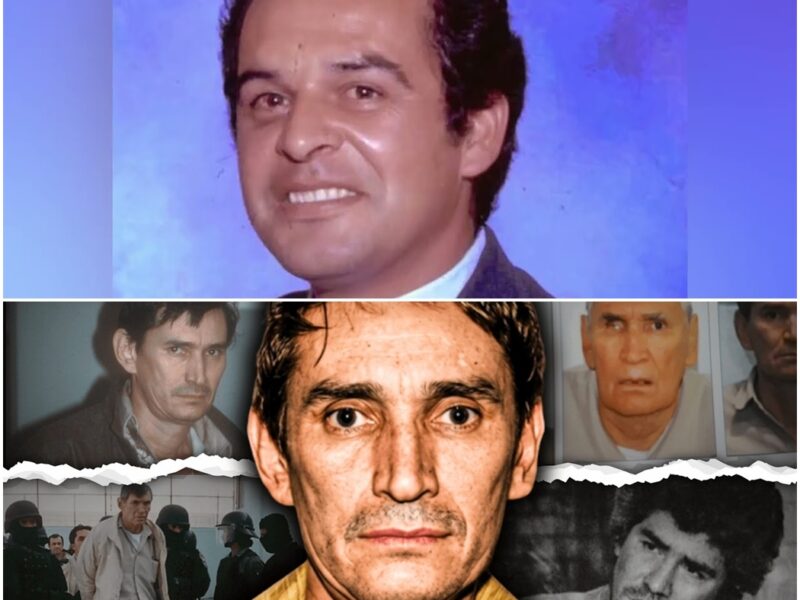
El Padrino: The Godfather Who Created El Chapo & An Empire That K*lled 120,000 People D
April 8th, 1989, Guadalajara, Mexico. It’s a quiet morning in the Colonia Cosmos neighborhood. A man is at home with his family. His daughter is there. His son is there. The house smells like breakfast. Then the door comes down. No warrant, no warning. Men pour through the entrance and he is dragged out in under 60 seconds.
By the time his children understand what is happening, four of his ribs are already broken. A plastic bag is forced over his head. He is suffocated until he stops struggling. Then they beat him some more. His name is Miguel Anel Felix Gallardo. He is 43 years old. He is a former police officer, a godfather, a churchgoing man who wrote letters to the Pope.
He is also the most powerful drug trafficker in the history of Mexico. Every major cartel operating today, the Sinaloa, the Tijuana, the Huarez, the Gulf, every corridor, every smuggling route, every plaza that has produced over 120,000 deaths since 2006 traces back to decisions this one man made. He didn’t build his empire with massacres.
He built it with access with compadras with the phone numbers of governors, generals, and intelligence chiefs who needed him as much as he needed them. And when the Americans finally came for him, they discovered something that has never been fully resolved. That their own government may have been in the room when his most famous victim was tortured to death.
This is the story of El Padrino, the Godfather, the man who built every cartel. And in a courtroom in Brooklyn right now in 2025, the tapes that may finally answer the question are being opened for the very first time. January 8th, 1946, a ranch on the outskirts of Kulyakan Sinaloa. This is where Miguel Anel Felix Gallardo begins.
Not in a prison cell, not in a cartel meeting, on a ranch, in the dirt in one of the poorest states in Mexico. His parents were farmers. His father exported legumes to the United States. There was nothing about his childhood that pointed toward what was coming. He was not a dropout. He finished high school. He studied business in college.
Then he joined the Mexican Federal Judicial Police, the Federalis. He was by every official measure a law man. But Sinaloa in the 1960s had a specific education that no university could provide. Everyone knew everyone. The drug trade and the government were not two separate worlds.
They were the same world, wearing different clothes on different days. And a young man who paid attention could learn which clothes belong to whom. Felix Gallardo paid attention. In 1965, he was 19 years old when he was assigned as personal bodyguard to the most powerful man in the state, Leopoldo Sanchez Celis, governor of Sinaloa.
For 3 years from 65 to 68, Felix Gallardo lived inside the orbit of state power. He drove the governor’s car. He stood outside the governor’s meetings. He watched how influence moved, who called whom, who owed what, who could make a problem disappear with a single phone call.
He didn’t just work for the governor. He became part of his family. In Mexican culture, there is a bond older and deeper than friendship. It is called compadraso, mutual godparenthood. When you stand as godfather at another man’s wedding or when you ask another man to stand as godfather at yours, you are not exchanging a favor.
You are creating an obligation that lasts a lifetime. You are becoming family by choice, which in many ways is stronger than family by blood. Governor Sanchez Salis stood as godfather at Failix Gallardo’s wedding to Maria Elvira Murio and Felix Gallardo in return stood as godfather at the wedding of the governor’s son Rodulfo.
Two ceremonies, two lifelong debts running in both directions. This is the foundation on which everything else was built. Not cocaine, not marijuana, not murder. Compadraso. From the governor’s circle, Felix Gallardo began to understand what he was actually selling. It wasn’t drugs, not yet.
It was access, protection, the ability to pick up a phone and make a call that no policeman, no prosecutor, no federal agent could intercept. The governor reportedly acted as an intermediary between Felix Gallardo and other governors across Mexico, facilitating drug corridor passage through state after state. The political network wasn’t a favor from a friend.
It was infrastructure. It was the highway system of the cartel before the cartel existed. And when the first governor was no longer enough, there was a second. United States officials later documented that Felis Gallardo spent time as a house guest at the home of a second governor, Antonio Toedo Cororo.
When investigators asked Toed Coro about his relationship with the man who would become Mexico’s most wanted drug lord, the governor said he was, and these are his actual words, unaware of any outstanding arrest warrants against him. unaware that was the answer. That was always the answer.
And when Felix Gallato was finally arrested in 1989, within days under pressure from the media, several senior police commanders were arrested and 90 officers deserted their post overnight. Not one politician was ever charged. Not one governor was ever indicted. Not one official ever faced a single consequence.
They were unaware. So ask yourself the question this story was always building toward when every cop is on the payroll. When every governor is in the family when the intelligence service is trained by the same foreign government that is also watching your operation from the other side.
At what point are you not a criminal operating inside a system? And at what point are you the system? 1975 the Mexican military moves into Sinaloa. They call it Operation Condor. Helicopters, soldiers, herbicide sprayed across the mountains. The stated mission, eradicate the drug trade at its roots, burn the fields, arrest the growers, scatter the networks that had been supplying marijuana and heroin to the United States for a generation.
It worked. And in working, it created something far worse. The traffickers didn’t disappear. They relocated. They packed up their operations, their money, their connections, and they moved south to Guadalajara, a sprawling modern city in Haliscoco, far from the military’s reach, full of politicians and businessmen and the kind of anonymity that a growing criminal organization desperately needs.
Felix Gallardo moved with them. By 1980, he had done what no one had done before. He unified them. Together with Raphael Caro Quantero and Ernesto Fonika Caro, known as Donetto, Felix Gallardo founded what the DEA would eventually name the Guadalajara Cartel. But from the beginning, it was less a cartel and more a system, a federation.
Every major trafficking operation in Mexico folded under one roof. One set of rules, one man coordinating the protection from above. That protection came from the DFS, the Durion Federal Siguridad, Mexico’s Federal Intelligence Agency. The DFS was on paper the Mexican equivalent of the CIA. In practice, it was the cartel’s security force in government uniforms.
Its chief, Miguel Nazar Haro, was simultaneously a key CIA asset. The same agency watching Mexico for the Americans was watching over the cartel for Felix Gallardo. That is not a coincidence. That is architecture. Then came the Colombians. In the early 1980s, US law enforcement began squeezing the Florida corridor, the primary route through which Colombian cocaine entered the United States.
The Medí cartel, the Ki cartel, they needed a new path. Felix Gallardo already had the infrastructure, the border contacts, the corrupted officials. He had built the highway. They needed to use it. The deal he struck changed the economics of drug trafficking permanently. The Guadalajara cartel would not accept cash payment for moving Colombian cocaine.
They took product. 50% of every shipment they transported. Every kilo that crossed the border, half of it belonged to them. What began as a marijuana operation became almost overnight a cocaine distribution empire. Estimates put the annual revenue at $5 billion in the 1980s. Five billion dollars a year moving through a country whose government was either on the payroll or looking the other way.
And beneath all of it, hidden in the desert of Chihuahua, was the proof of just how large this had become. Rancho Boufo. 2,500 acres of marijuana plantation, invisible to every official whose job it was to find it. state-of-the-art irrigation, barracks, a mess hall, warehouses for processing and storage. At peak harvest, 7,000 workers cultivated the fields, brought to the site blindfolded so that not one of them could ever tell anyone where it was.
Annual production, $8 billion, protected by the DFS, known to local police, state officials, and the military. Every relevant authority informed and silent. Let that land for a second. 7,000 people. Every one of them knew where they were. Not one of the officials whose job it was to stop this said a word.
The DEA couldn’t touch it. They weren’t even supposed to be looking. But one agent was looking anyway. His name was Enrique Camarena. He didn’t find Rancho Boufo through an informant tip or a surveillance operation. He found it the way an accountant finds fraud by noticing something wrong with the numbers. Marijuana prices across the United States were unnaturally stable, too stable, the signature of a monopoly.
He followed trucks carrying blindfolded workers through the Chihuahuan countryside. He disguised himself as a farm hand and worked the fields. He went around the DFS, around the corrupt federalis, around every layer of protection that Felix Gallardo has spent a decade constructing. One man working alone, getting close.
The man who built all of this didn’t look like a cartel boss. He attended society parties. Governors came to his events. His phone book read like a government directory. And the intelligence agency meant to be monitoring the drug trade was at that same moment running cover for the men he was paying.
That collision course had a name. Kiki Kamarena. November 1984. Chihuahua, Mexico. 450 Mexican soldiers dropped from helicopters into the Chihuahuan desert. They have been given coordinates. They have been told what to expect. They were not told it would look like this. Rancho Boufo, 2500 acres of marijuana are ready for harvest.
7,000 workers in the fields. The fire they set that night burned so large the smoke could be felt a 100 miles away. 5,000 metric tons destroyed. A third of America’s entire marijuana supply gone in a single operation. $8 billion in production reduced to ash. Kiki Kamarena had been the one to find it.
He had delayed his own return home to the United States to see this through. He wanted to be there when it burned. He had no idea what finding it would cost him. February 7th, 1985. 12:45 in the afternoon, Guadalajara. Enrique Kamarana is 37 years old. He has a wife named Mika, three sons. He is walking out of the United States consulate to meet his wife for lunch.
It is an ordinary Friday. Five men intercept him on the street. They are Haliscoco State Police officers on the cartel payroll. They force him into a vehicle in broad daylight in front of witnesses in front of the consulate itself. According to testimony later given by a former cartel operative, the tip that Kamarena was about to exit that door came from an employee working inside the consulate.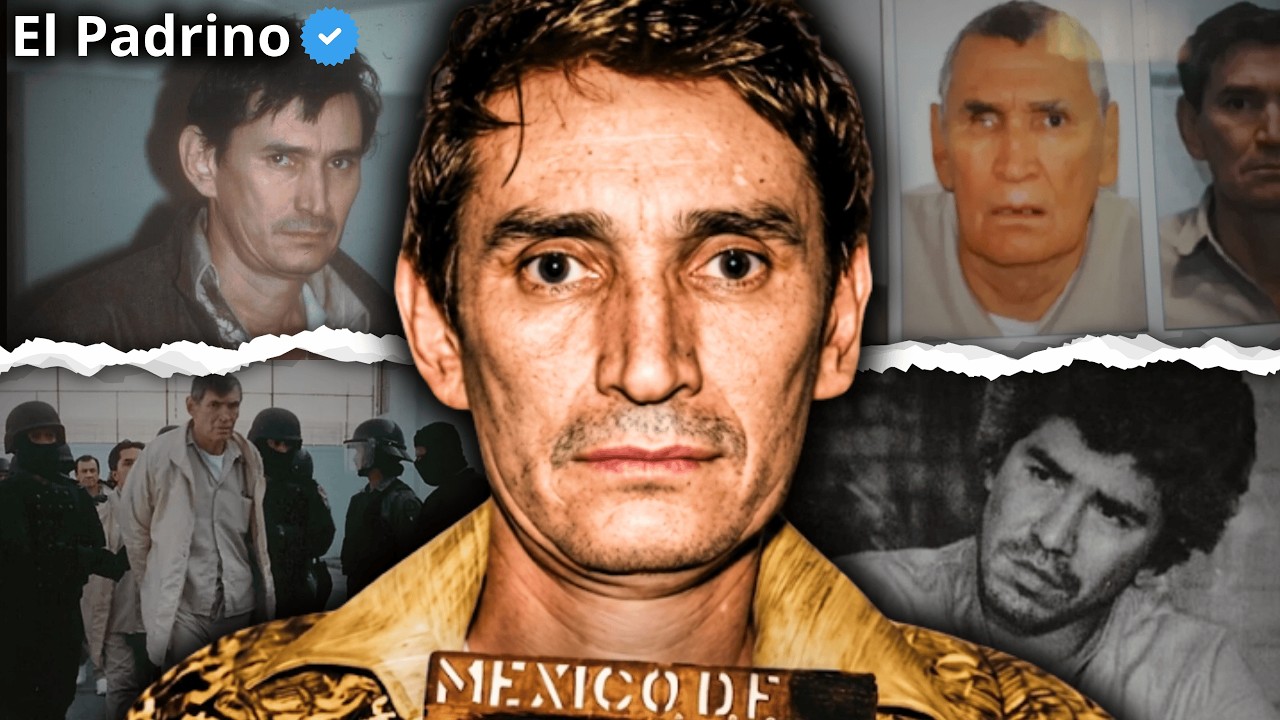
He never makes it to lunch. His wife waits at the restaurant alone. His pilot, Alfredo Zavala Avalar, is taken the same afternoon. They are driven to a house at 881 Lope Deega in the Hardin Delbosque neighborhood. The house belongs to Raphael Caro Quantero. What happens inside over the next 48 hours is documented in court records, autopsy results, and audio recordings that the United States government has kept sealed for 40 years.
The autopsy results documented catastrophic injuries, skull, jaw, windpipe, and ribs. A hole had been drilled through his skull. Toxicology showed repeated injections of adrenaline. Court records indicate the interrogation continued for two days. He is murdered on February 9th. His body and his pilots are found on March 5th wrapped in plastic and a shallow hole in rural Misho Akan, 60 mi from where they were taken.
The DEA would later state that no single event in their history had a more significant impact than the murder of Kiki Kamarina. Now, the part that has never been fully resolved. A former Haliscoco State Police officer interviewed decades later estimated that between 40 and 60 people were present in and around that house.
Government officials, politicians, DFS agents, narcos, he called them the cream of the crop. The interrogators, he said, were not only asking about the cartel, they were asking Kamarena which Mexican officials the DEA had identified. Someone needed to know how deep the exposure went. Three named credible former American intelligence officials have since gone on record with the same allegation separately independently over years.
Phil Jordan, former head of the DEA’s El Paso Intelligence Center, the largest drug intelligence operation in the United States, said it plainly, “We are not saying the CIA murdered Kiki Kamarina, but the relationship between the Godfathers of Mexico and the CIA that included drug trafficking contributed to his death.
” Hector Bareilles, the DEA’s own lead investigator on the Camarina case for 5 years, went further. Camarana had discovered the CIA was running drugs through Mexico to fund the Nicaraguan Contra rebels. He was killed, Bareelles concluded, because he was about to expose it.
The specific operative named as present in the torture room is Felix Ismael Rodriguez, known by his alias Max Gomez or Elgato, a CubanAmerican CIA operative, the same man who presided over the execution of Cheay Gavara in Bolivia in 1967. He has denied being in Mexico. The CIA has called the entire allegation ridiculous.
The torture sessions were recorded on audio, five tapes. The DEA’s lead investigator says he received three from the CIA. Two were never handed over. No one has officially explained where they are or what is on them. In July 2025, the Department of Justice began releasing those recordings to Carl Quantero’s defense team in New York.
The DOJ called them highly sensitive. What voices are on them and whose has not yet been confirmed. Felix Gallardo ordered the murder. The room was full, but who else was in it? April 8th, 1989. The door comes down. No warrant, no warning. In his own words, given decades later in his first and only interview, I was with my family.
There was my daughter, my son. I was beaten and pulled out in less than a minute and I suffered four broken ribs. I asked what was their motive and all I got was more torture. I received a plastic bag over my head to suffocate me. He was 43 years old, the most protected man in Mexico and the protection was gone.
That is the thing about a system built entirely on loyalty purchased with money. The moment you become more liability than asset, the purchase is cancelled. Felix Gallardo had held off arrest for four years after Kamarina’s murder. Four years while the DEA hunted while Washington pressured while his partners Carol Quantero and Donto sat in Mexican prison cells.
Four years of political cover of governors and commanders running interference. Then the cover ran out. Within days of his arrest, the rot surfaced in full. Several senior police commanders were detained. 90 officers deserted their post overnight rather than face what was coming.
The newspapers ran the names, the connections, the payments. Everything that everyone had spent years calling rumor was suddenly documented and on the record. Not one politician was charged. Not one governor was indicted. the same man who had spent nights as a house guest in a governor’s residence. That governor told investigators he was unaware of any outstanding warrants.
Unaware as always, his trial became the longest in Mexican legal history. It ran for more than 28 years. In 2017, a retrial finally convicted him of Camarina’s murder and handed down 37 additional years. The charges covered everything. Stockpiling weapons, bribery, drug trafficking, money laundering, multiple murders.
The man who had built a $5 billion a year empire from a governor’s bodyguard position was now looking at the rest of his life in a cell. But here is what the DEA did not anticipate. He was not finished. From inside prison, Felix Gallardo instructed his lawyer to convene a meeting. Not a legal meeting, a business meeting.
Mexico’s top traffickers, the men who ran his plazas, his corridors, his operations across the country, were called to a house in the resort city of Akapuko. El Padrino behind bars was dividing his estate. The Tihijuana corridor went to his nephews, the Ariano Felix brothers. They became the Tijuana cartel.
Suodad Huarez went to the Curio Fuentes family, headed by Amado Curio Fuentes, who would later be known as the Lord of the Skies. The Sonora corridor went to Miguel Caro Quintterero. The Pacific coast, the most lucrative stretch of territory on the map, went to two men whose names were not yet known outside of Sinaloa.
Wain Guzman Loera, Ismael Sambada Garcia, El Chapo, and El Maju. They became the Sinaloa cartel. The Gulf corridor already controlled by Juan Garcia Abbergo was left undisturbed. One meeting, five cartels born from a single decision made by a man who could not leave his cell. This was not chaos. This was deliberate.
By fragmenting the federation into independent organizations, Failis Gallardo made the entire structure harder to dismantle. You could no longer arrest one man and collapse the trade. you would now need to fight five separate wars simultaneously across five separate territories against five separate chains of command.
He was in the end a businessman and his final business decision was his most consequential. There is one more detail that belongs in this act, one that history has largely moved past without pausing. After Felix Gallardo’s imprisonment, his godson, Rodo Sanchez Darti, the son of the governor who had given him everything.
The young man at whose wedding he had stood as Pedrino, was kidnapped and tortured. His body and a friends were found on November 22nd at an amphitheater in a cadipek. The governor himself, Leopoldo Sanchez Chelis, died in Quavaka that same year, 1989. The man who built the empire and the man who gave him the keys to build it, both gone within months of each other.
The cartels they left behind, are still running. The Mexican drug war that grew from that Aapulco meeting has killed more than 120,000 people since 2006. Every corridor, every plaza, every mass grave trace back to one meeting, one man, one inheritance divided. August 2021, Pente Grande State Prison, Haliscoco.
A man is wheeled in from the medical ward. His left arm is in a cast from a recent fall. He has lost vision in one eye. He is deaf in his left ear. The journalist conducting the interview cannot simply ask him questions. She has to write them on a poster board and hold it up for him to read. This is the first interview Miguel Anel Felix Gallardo has granted in 32 years of incarceration.
He says, “I have half my body paralyzed. He is 75 years old. He was once the most powerful man in Mexico. His phone calls moved governments. His signature created cartels. His name spoken in the wrong room ended careers and lives with equal efficiency. Now they have to write the question large enough for him to see. His sill measures 240x 440 cm, 8 ft x 14 ft. He is not permitted to leave it.
Not for recreation, not for exercise, not for anything. The man who once commanded $5 billion a year in annual revenue lives in a space smaller than a parking spot and has for decades. When asked about Kiki Kamarina, his words are precise and unchanged from the version he wrote in his prison diary years earlier.
In the interview, I am not aware why they have linked me to that crime. I never met that man. I am not into weapons. I am deeply sorry because I know he was a good man. In the diary, I was taken to the DEA. I greeted them and they wanted to talk. I only answered that I had no involvement in the Camarina case and I said, “You said a mad man would do it and I am not mad.
I am deeply sorry for the loss of your agent.” the same words written years apart as if rehearsed as if he knew from the beginning that this was the line he would hold until the end. That diary, it is worth pausing on. In 2008, investigative journalist Diego Enrique Osorno found a way to reach Felix Gallardo through an unusual intermediary, his 13-year-old son.
The boy carried messages. The man inside wrote back, “35 pages handwritten in failing vision on whatever scraps of material could be found inside a maximum security cell, smuggled out page by page through a child who did not yet fully understand what his father had built. The pages were published in the Mexican magazine Gate Partardo under the headline Diaries of the Boss of Bosses.
He wrote openly about trafficking cocaine, marijuana, and heroin. He referred to himself without apology as one of the old capos, but he also wrote this, and it is worth reading slowly. Violence can be fought with jobs. We must remember that in the mountains of Mexico, the people are forgotten.
There are no medical clinics, roads, or security, only repression. the architect of the modern Mexican drug trade, writing from his cell about poverty and government failure. Whether that is genuine reflection or convenient reframing is a question only he can answer and he is not answering it.
There is one more detail, one that does not appear in DEA files or court records or congressional testimony. It comes from Osorno’s reporting and it reframes everything that came before it. For the first 16 years of his imprisonment, Felix Gallardo wrote regular handwritten letters to Pope John Paul II.
Not once, regularly, year after year, both Pope John Paul II and later Pope Benedict I 16th acknowledged the letters and responded to his correspondence. The most powerful drug lord in the history of Mexico, the man who built El Chapo’s empire, who ordered the murder that changed the DEA forever, who divided a nation’s criminal geography from a prison cell, was writing to the Vatican, and the Vatican was writing back.
Make of that what you will in his 2021 interview. Near the end, he was asked what he had lost. his answer. I lost more than half of my family while I have been in jail. A daughter, my parents, my mother died without her furniture being returned to her, her furniture. I am not thinking of freedom. I think of my grandchildren.
The torture tapes from 1985 are in a courtroom in Brooklyn right now. Carol Quantero is in American custody wearing Kiki Camarina’s own handcuffs placed on him by the dead agent’s son, now a judge in San Diego. What is on those tapes and whose voice is on them remains unanswered. Felix Gallardo is 80 years old.
He cannot leave his cell. The cartels he created have killed more than 120,000 people since 2006. every plaza, every corridor, every mass grave. I’ve covered a lot of stories. I don’t usually have a lot to say about the people at the center of them, but I’ll say this. There’s something about a man sitting in a cell writing letters to the pope for 16 years and the pope writing back that I can’t fully explain and I can’t fully dismiss.
I don’t know what that means about him. I don’t think anyone does. What I do know is that the people who died because of what he built didn’t get to write letters to anyone. He is still alive. The truth may not outlive him.