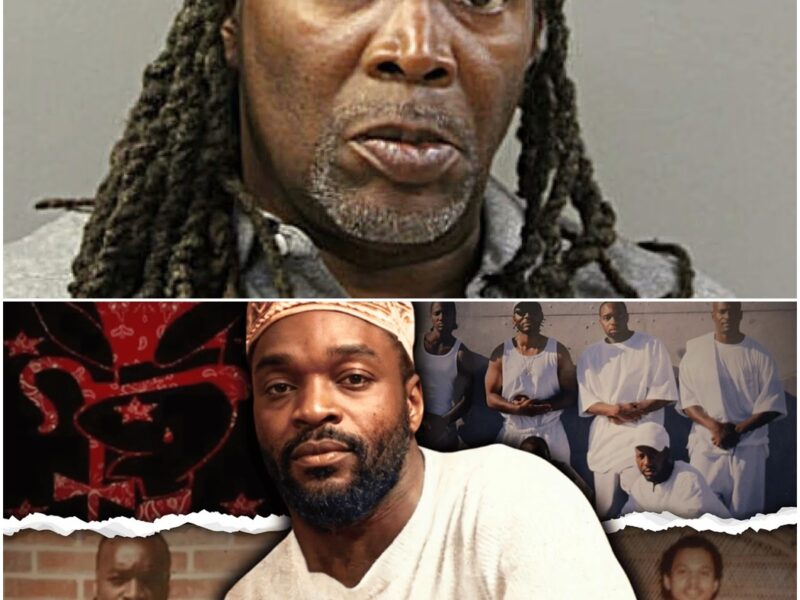
Hi Neef: The King of Undertaker Vice Lords Who Built an Empire From a Dead Man’s Corner D
Congress in Cicero, west side Chicago, right where the Eisenhower cuts through like a scar, there’s a funeral home on that corner. Fountain Jordan Shepard, been there for decades, still standing. In February 2025, the same year Eddie Richardson walked out of federal prison. A fire tore through it in the middle of the night. electrical accidental.
The building took the smoke damage and kept going. Directly across the street, an empty lot. Concrete and weeds where a building used to stand. The Courtway building gone now. No marker, no sign. Nothing to tell you what happened there. Here’s what happened there. 1972, Austin, Chicago, a neighborhood in the middle of a racial earthquake.
White families leaving, black families moving in, and the city drawn invisible lines around everything. Which parks you could use, which pools you could swim in, which streets you could walk down without somebody making it a problem. Columbus Park had a pool. Black kids from the neighborhood couldn’t use it without a fight.
That’s not an exaggeration. That’s just what it was. Into that environment, a 17-year-old named Eddie Richardson already been around, already been in the Black Souls, a gang out of West Garfield Park. The same black souls that had beef with the Cicero Vice Lords. The same Cicero vice lords he was now standing with in the Courtway building at Congress and Cicero organizing something new.
He came from the enemy’s gang and they made him the leader. That tells you something about Eddie Richardson. Before a single drug deal was ever made, there were eight of them originally. Eight boys from the Courtway building. And the way Clifton McFer, one of those eight, the original prince, tells it, they weren’t trying to become a drug organization.
They were trying to survive a neighborhood being picked apart from every direction. McFaller said it plainly. Back then, their fight wasn’t with each other. It was with the forces coming in from Cicero and Oak Park trying to extort the community. They followed the principles of the Nation of Islam.
The worst thing that could happen, he said, was a fist fight. Then there was the police. McFer described officers who would arrest them and drive them into rival gang territory. Drop them off. Roll the window down and shout Undertaker. Make it known. Make it dangerous. Then drive away. You had to fight your way home. Eight boys, a funeral home across the street, and the decision to name themselves after it, after death itself.
They threw rocks through its windows and stared at the dead. That was the initiation. That was the beginning. His name was Eddie Richardson. They called him High Ne. He would go on to build one of the most documented drug operations in the history of Chicago’s west side. He would go to the Supreme Court of the United States.
And in 2025, nearly 30 years after a federal judge sentenced him to life, he walked out of prison. But we’re getting ahead of ourselves. This is how it started. Eight boys, one corner, one slogan that said everything about where they thought this was going. Undertaker, meet your maker. 21 defendants.
That’s how many people a federal grand jury indicted in 1994. 21. And every single one of them traced back to one man, one corner, one organization that had spent a decade quietly becoming something the West Side had never seen before. Not a gang, a structure. Eddie Richardson didn’t recruit soldiers. He built generations. Five generations.
Each one a group of members roughly the same age who came in together came up together. Every generation had its own king and its own prince. And above all of them, Richardson, king of all the undertakers, five-star universal elite within the vice lord nation, the man who decided who led and who didn’t.
Nobody got a title Richardson didn’t authorize. The product was brown heroin out of the Courtway building. 1984, 25 bags, $25 each, packaged into frames. Workers got paid $100 per frame sold. Richardson and Tate kept the rest. One witness estimated they were moving a full frame every 3 to four days. Another, Michael Sergeant, who ran a white heroin spot, testified Richardson supplied him $40,000 to $60,000 worth of product three times a week.
West Morland put the daily take at 20,000 to $30,000 at peak. June 1985, Chicago police search one of the packaging locations. They find a kilogram of heroin, the full packaging operation laid out in front of them. Everything needed to cut, prepare, and bag product to scale. And Carmen Tate Redmond, the co-founder, the man with no official rank for whom every undertaker looked up to, tells the officers to let everyone else go, says the heroin is his.
Says he bagged it himself because he didn’t trust his workers. Sit with that for a second. In the middle of a police raid, Tate’s biggest concern was quality control. That’s not panic. That’s not desperation. That’s someone who runs an operation and understands exactly how it’s supposed to function. And the enforcement just is structured.
You broke the rules. You got a violation. Sometimes that meant you were cut off. No more work, no more money. Other times it escalated. Bricks, bottles, axe handles. Sometimes worse, a stabbing, a shooting. It all depended on what you did. By 1990, the Undertakers had moved over 100 kg of white heroin from one building on one corner in one neighborhood on Chicago’s west side.
At some point, the money has to go somewhere. That’s the problem with running an operation that pulls 20,000 to $30,000 a day. Cash doesn’t disappear. It accumulates. It sits in rooms. It gets heavy and eventually it needs to look like it came from somewhere legitimate or somebody with a badge and a calculator starts asking questions.
Richardson and Tate’s answer to that problem was real estate. Balling Brook, Illinois, a suburb. The kind of address that doesn’t say Westside Chicago. Doesn’t say Courtway building. Doesn’t say heroin packaged in mixing bowls. It says something else entirely. They also bought property in other exclusive areas, multiple vehicles, the kind of purchases that announced you are doing well without explaining why.
The IRS noticed by the time the federal indictment came down in 1994, four separate agencies had been working this case. The US Attorney’s Office, the Drug Enforcement Administration, the Bureau of Alcohol, Tobacco, and Firearms, and the Internal Revenue Service. Four agencies, one organization running out of one neighborhood on Cicero Avenue.
Tate caught a separate charge entirely. Conspiracy to defraud the United States. Not just the drugs, the money, the concealment, a standalone federal crime stacked on top of everything else. Meanwhile, the operation kept expanding. November 1990, the undertakers moved into crack.
The beef stand at Glattis and Cicero became the new front. Andre Cal testified that he and Tate were converting powder cocaine into crack at scale, two to three times a week for 10 straight months. Run that math. That is over 25 kg of crack out of one beef stand blocks away from the Courtway building where the heroin was still running. And the rule never changed.
You did not sell drugs in Undertaker territory without Richardson and Tate’s permission. That was law, not written down, not voted on, just understood by everyone who wanted to keep operating and keep breathing. I’ve read a lot of federal indictments doing this kind of work.
Most organizations get careless with the money at some point. Richardson and Tate didn’t. They still got caught because when something gets that big, that structured, it doesn’t stay hidden. At a certain point, it casts a shadow the whole city can see. 1989, Eddie Richardson is running one of the most profitable drug operations on Chicago’s west side.
20,000 to $30,000 a day. Heroin out of the Courtway building. Cracks still more than a year away. Four corner hustlers are enemies. The mafia insane vice lords don’t exist yet. Then Troy Martin makes his move. Martin had been in state prison since 1976, locked up for murder, 13 years inside. And in that time, he had been building something.
influence, alliances, a new ideology for the insane vice lord nation. And in 1989, from inside a prison cell, he declared that all insane affiliated vice lord factions would now absorb into one body, his body, the mafia. Insane vice lords. What happened next is one of the most remarkable things I’ve come across researching Chicago gang history.
The demonstration worked almost everywhere. Overnight, emissaries from the mafias moved through neighborhoods like they owned them because suddenly they did. One man known only as nose walked into a project building and flipped an entire Imperial insane vicord faction in a single night. One conversation done.
Soldiers followed, section leaders followed, whole factions folded. Almost everyone said yes to Troy Martin. Eddie Richardson said no. Richardson refused the mafia demonstration. The Undertakers didn’t just declined to merge. They separated further from the insane concepts entirely.
Dropped the insane affiliation. Became simply the Undertaker vice lords. Their own thing fully independent. That decision had consequences. The war with the mafia insanes began. And in a move that would have seemed unthinkable just years earlier, the undertakers allied with the four corner hustlers, their former enemies.
Because the enemy of your enemy is your only option sometimes. Richardson is on the outside, free, making serious money, running a structured, multi-generational organization that federal prosecutors would later describe as a monopoly on the Cicero Avenue drug trade. And a man in prison with no product, no street presence, no operation almost took it all from him by just declaring it so.
Richardson healed, but the clock was already running. Within five years, the federal government would be outside his door. The Undertaker Vice Lords didn’t get taken down because somebody talked. The investigation that eventually brought them down started because an ATF agent was looking for something else entirely.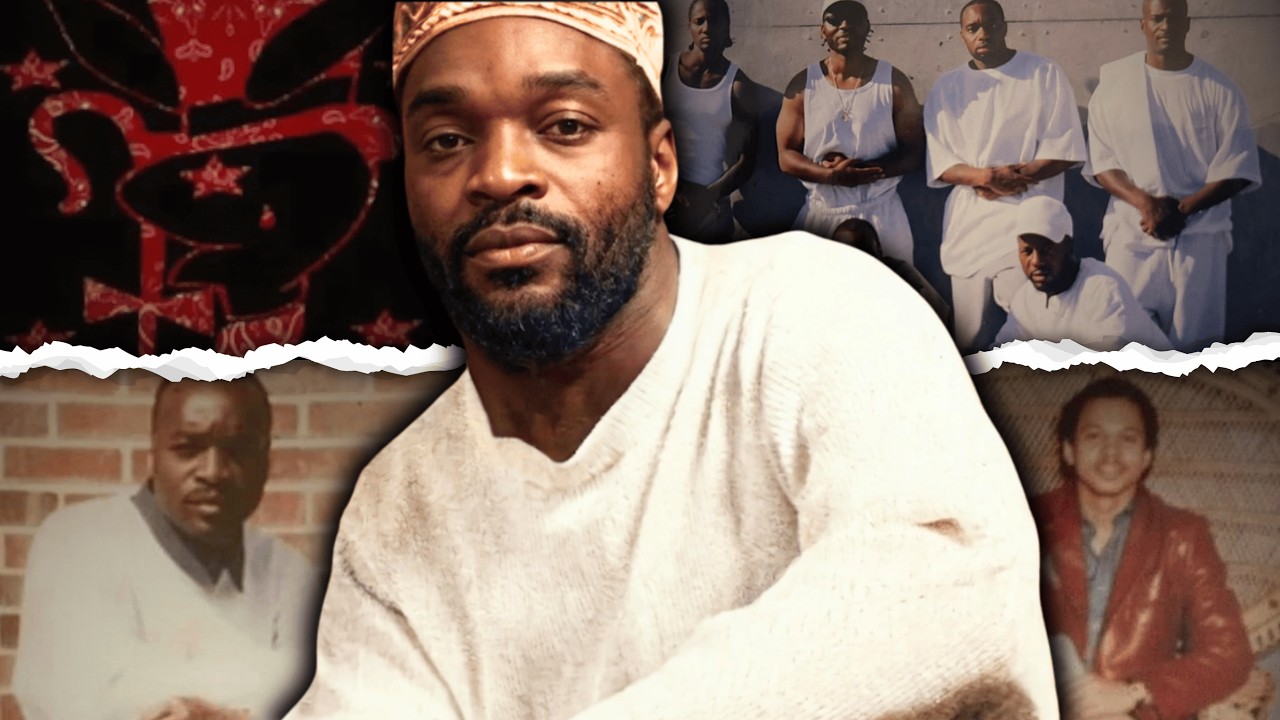
1988, special agent John Rotuno opens an undercover investigation into an illegal gun trade on Chicago’s west side. Guns, that’s the target. He works it for 2 years and then in August 1990, he closes that investigation and pivots. Starts looking at narcotics, street gangs, the corner of Glattis and Cicero specifically.
By November 1990, Rotano is buying crack directly from the Undertaker’s beef stand, not through a middleman. Personally, undercover, the operation that Richardson and Tate had been running in plain sight, confident in their structure was now being documented from the inside by a federal agent with a wire.
But the move that actually broke the case open wasn’t Rotunnel buying crack. It was a supply problem the Undertakers created for themselves. The gang needed marijuana, couldn’t source enough internally. A confidential informant passed that information to law enforcement and Rotunnel saw the opening. He and his partner, special agent Kimberly Morton, built a cover, West Coast marijuana dealers.
They started meeting with Joseph West Morland. Smoke, king of the fourth generation, built the relationship, did smaller deals, established trust, then arranged a big exchange. On the day of the swap, Rotono handed West Morland three pounds of marijuana and two guns. They talked briefly about the quality, about the weapons.
Standard conversation between people who think they’re both criminals. Then West Morland’s partner handed over 11 bags of crack cocaine. Moments later, the signal went out. Backup units moved in. West Morland and his partner were arrested on the spot. No chase, no shootout, midtransaction. Done. March 24th, 1994.
The federal grand jury returns a three-count indictment. 21 defendants. The entire leadership structure of the Undertaker vice lords named and charged. 20 of them were in custody before the indictment was even made public. One was still out. West Morland, Smoke, the fourth generation king, the same man the ATF had already caught mid-transaction in the undercover sting, now facing an entirely new set of conspiracy charges on top of everything else.
Assistant US attorney Bob Rivkin stood in front of reporters and said it plainly, “There’s a squad of agents trying to track him down right now. They already had his name. They already had his number. The machine had already stopped. Richardson just didn’t know it yet. March 29th, 1995. Federal Courthouse Chicago.
Judge James F. Holderman presiding. Eight defendants at the table. the United States government on one side and on the other the remnants of an organization that had moved over 100 kg of heroin and 25 kg of crack out of two locations on Cicero Avenue. The trial ran 56 days, March to May, nearly 2 months.
And somewhere in the middle of it, the government’s case nearly collapsed. Here’s what happened. The prosecution walked in with a theory. Simple, clean, aggressive. If you were a member of the Undertaker Vice Lords, you were a member of the drug conspiracy. Membership equals guilt. Gang card equals criminal liability. Judge Holderman looked at that theory and told them it wasn’t going to work.
So, the government pivoted mid-trial. With the jury sitting there, they abandoned the membership theory entirely and replaced it with something more specific. The permission theory. The argument that no one sold drugs and undertake a territory without Richardson and Tate’s personal approval.
That the territory itself was controlled. That operating inside it meant you had consented to be part of their enterprise. Defense attorneys called it an illegal switch, a different case than the one their clients had prepared to fight. And they weren’t entirely wrong. It was a different theory. But the Seventh Circuit reviewing the case later pointed to language that had been in the indictment from day one.
The sale of user quantities of cocaine, cocaine base, and heroin in Undertaker territory was subject to the approval of defendants Eddie Richardson and Carmen Tate. The permission theory wasn’t new. It had been there the whole time. The government just finally leaned on it fully. The jury deliberated.
Eight defendants were convicted on all charges. Three walked out of that courtroom free. Three, despite cooperating witnesses who had worked inside the operation, despite undercover recordings, despite two months of testimony, three people could not be connected to Richardson’s organization beyond reasonable doubt.
That’s not a legal technicality. In my read, that’s the architecture of the Undertaker vice lords doing exactly what it was designed to do. Keep the top insulated from the bottom. Keep the connections deniable. keep the king’s hands clean enough that even a federal jury couldn’t reach him directly. It worked for everyone except Richardson himself.
Sentencing ran a full year, August 1995 to August 1996. Richardson life. Tate life. Cetric Curry life. Nate Hall life. Martell Lee and Stanley West Mullen 324 months each. Rodney Palmer 292 months. Leno Smith 194 months. The seventh circuit judge who wrote the opinion about those sentences added a line I haven’t forgotten.
He noted the numbers, 194 months at the low end, and said they vividly show how much society’s attitudes about drugs have changed since Alice’s time. Alice’s restaurant, Arlo Guthrie, a joke buried inside one of the heaviest sentencing records I’ve ever read. Eddie Richardson went to the Supreme Court of the United States.
Here’s the legal question he raised, and stay with me because this matters beyond Chicago. The charge against Richardson included something called a continuing criminal enterprise. A CCE, federal prosecutors used it specifically against drug kingpins, people who run ongoing narcotics operations with five or more people under them.
It can carry life imprisonment. It is designed for exactly the kind of organization Richardson built. The question was about the jury. At trial, Judge Holderman instructed jurors that they needed to unanimously agree Richardson committed at least three federal drug violations as part of a continuing series.
But they did not need to agree on which three. Different jurors could point to different acts. As long as 12 people agreed some three violations happened, that was enough. Richardson’s attorneys argued that wasn’t good enough. That the Constitution required the jury to unanimously agree on the specific violations.
Not just that some series existed, but which acts made up that series. The Seventh Circuit said the instruction was fine. Richardson kept pushing. June 1st, 1999, the Supreme Court ruled in his favor. Justice Brier writing the majority opinion. The court held that jurors in a CCE case must unanimously agree not just that a continuing series of violations occurred, but on each specific individual violation that makes up that series. Every act agreed upon by all 12.
Richardson versus United States 526US813. That is a citation that appears in federal drug prosecutions to this day. Law students read it. Prosecutors build around it. Defense attorneys cite it. Now, here is the part that lands like a closed door. The Supreme Court’s ruling vacated count two, the CCE charge.
But count one, conspiracy to distribute narcotics, was untouched. The life sentence attached to count one, remained exactly where it was. He won at the highest court in the country. Changed the law, made it harder for the federal government to prosecute drug kingpins going forward.
His name is in the books permanently. And he went back to his cell. Not a single day of his sentence changed. Here is what happened to the Undertaker vice lords after the sentences came down. Nothing dramatic, no final battle, no successor who rebuilt the empire. The organization just contracted quietly, member by member, year by year.
Some caught their own charges. Some flipped to the mafia insane vice lords. The same faction Richardson had gone to war with rather than join. The irony of that doesn’t need commentary. What’s left is mostly confined to the blocks where it started. Cicero and Congress. The graveyard.
That’s still what they call it. Named for the funeral home that gave eight teenagers an initiation ritual in 1972. They remain present in Rockford and Maywood. But the monopoly, the structured generational multi-product operation that four federal agencies spent years dismantling, that’s gone now. Carmen Tate Redmond, the co-founder, the man who told Chicago police in 1985 to release everyone in the room because the heroin was his, bagged personally because he didn’t trust his workers.
That man received a life sentence in 1995. And on February 5th, 2024, 29 years later, a case filed as United States versus Carmen Tate number 231399 was decided by the 7th Circuit Court of Appeals. 29 years in and he is still fighting. The case number is real. The date is confirmed.
The co- king of the Undertaker Vice Lords has not stopped. Meanwhile, on the same streets where all of this started, Clifton McFaller is driving. Boonie, the original prince, one of the eight, 37 years in state prison for firstdegree murder, came out with $20 and a bus ticket, fell briefly into heroin addiction, the same product his organization had built an empire around.
Went through rehab and went back to Austin. Now he works for build, drives through the neighborhood, talks to the young ones. He said it himself. He believes it’s his punishment to go back and save as many as he can. He called it a good punishment. At some point walking those streets, he ran into another original undertaker, one of the eight.
They embraced, showed each other pictures of their grandchildren, and talked about the gang’s leader. Back then he was still in prison. Richardson is not in a federal facility anymore. According to the Federal Bureau of Prisons inmate locator, register number 02575-4 24. Eddie Richardson, age 70, was released from federal custody on July 16th, 2025 after nearly 30 years inside.
A life sentence that apparently wasn’t life. No press conference, no announcement, no one waiting with cameras. He just walked out. Three men, same corner, same 1972. Boon came back and chose to spend whatever time he had left trying to undo it. Tate is still in a federal courtroom fighting. Richardson just got out.
Quiet, unannounced, no headline. The graveyard still carries its name. The funeral home took a fire this year and kept going. Some things don’t die easy. Meet your maker.