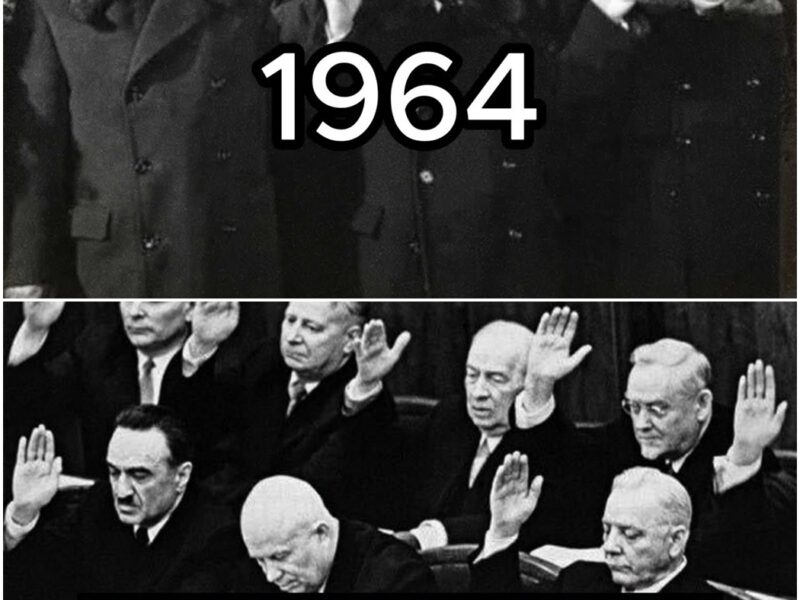
How The Politburo Overthrew Nikita Khrushchev in 48 hours D
Moscow, October the 12th, 1964. Nikita Krushchev was at a resort on the Black Sea when the call came. He was vacationing at Pitsunda on the eastern shore of the Black Sea in Soviet Georgia. the specific kind of vacation that the general secretary of the Communist Party of the Soviet Union took, which is to say a vacation that was not entirely separate from work, that involved briefings and papers and the continued management of state affairs from a location that was not Moscow, but that was connected to Moscow by the telephone lines and the staff that followed him wherever he went. He was 69 years old. He had been the effective leader of the Soviet Union since 1953. had weathered the Anti-Party group challenge in 1957, had given the secret speech, had navigated the Cuban missile crisis, had argued with Eisenhower and Kennedy and Mao, and had taken his shoe off at the United Nations and banged it
on the desk or near the desk, depending on which account you believe. And he had been doing all of this for more than a decade from the position of the man who had inherited Stalin’s machine and who had tried to run something different in it. The call was from Leonid Brev. Brev told him there was an important precidium meeting scheduled that his presence was required that the meeting would take place the following day October 13th in Moscow.
Krushchev asked what the meeting was about. Brezenev said it was about agricultural policy. Agricultural policy. The general secretary of the Communist Party was being recalled from his vacation on the Black Sea in October for a meeting about agricultural policy. Prush had been in Soviet politics long enough to know that a recall from vacation for a precidium meeting about agricultural policy was not about agricultural policy.
He knew this and he knew that he knew this and the knowing produced in the specific way that knowledge produces things in a man who has spent his life inside a system organized around the management and suppression of accurate information. A quality of assessment that the accounts of the period suggest was somewhere between suspicion and certainty.
He called Anastas Mikcoyen. Mikcoyen was one of the most experienced survivors in the Soviet leadership. a man who had been inside the senior levels of Soviet politics since before Stalin. Who had navigated the Stalin period and the transition after Stalin’s death and who had maintained his position through the specific combination of political skill and tactical flexibility and the particular quality of a man who knows when to push and when to wait and who has been making those calculations for so long that making them has become the primary activity of his existence. McCoyen told him not to worry. McCoyen said the meeting was a formality or something close to a formality and that whatever was being discussed would be discussed and managed in the normal way and that Kruchv should come back to Moscow and attend the meeting. Kruch did not entirely believe Mikcoyen. But what
were his options? He could refuse to come back. He could demand more information. He could make calls. The phones at Pitsunda connected to Moscow. His staff was with him. The machinery of the general secretary’s office was available to him. He could attempt to establish what was happening before returning to a meeting that might be about agricultural policy or might be about something else entirely.
He chose to return. The choice to return is the first of the decisions that this account needs to examine because the choice to return is itself evidence of something about the nature of the system that Krushchev had built and the nature of the position he was in. A man who believed he was walking into a trap and who walked into it anyway is a man who has assessed his options and found that the options outside the trap were not obviously better than the options inside it. Or he is a man who has spent so long inside the system that the systems logic has become his logic. And the systems logic says that a general secretary who refuses to attend a precidium meeting is a general secretary who has already lost something that the attendance, however dangerous, still preserves. He flew to Moscow on the morning of October 13th, 1964. He landed. He was taken to the Kremlin. He was shown into the meeting
room where the precidium was assembled and waiting and the assembled and waiting precidium told him across approximately 3 hours everything they had decided to tell him. What they told him was that he was finished. Not immediately, not in those words. The precidium meeting of October 13 was conducted in the specific language of Soviet institutional communication, which expresses things without always saying them directly, which performs the forms of deliberation and collective decision-making around conclusions that have already been reached, which uses the vocabulary of party procedure to accomplish what is in essence a political execution. But the substance was clear, and the substance was that the men who had served under him and beside him, and who had collectively organized themselves in the weeks and months before October 12 and 13, into a coalition sufficient to remove him, had done what they had done, and it was done. He was removed from office. The
central committee meeting the following day ratified the removal. Leonard Brenv became the general secretary of the Communist Party. Alex A. Kosigin became the chairman of the council of ministers. Krushchev became a pensioner. He had been in power for 11 years. He was removed in 48 hours.
The 48 hours are the visible surface of a process that had been building for months, possibly for years. and that the 48 hours completed with a speed and an efficiency that the men who conducted the removal had specifically designed for the specific purpose of preventing Krushchev from organizing a defense. The speed was the instrument.
The speed was what the anti-huchev coalition had understood was necessary because a Kruchchev who had time was a Kruchchev who could call the people who were loyal to him and organize the resistance that the coalition needed to prevent. This is the story of those 48 hours and of the months that produced them and of the man who was removed and the men who removed him and of what the removal tells us about the nature of Soviet power in 1964 and about the specific vulnerability of a man who had tried to change a system from inside it without changing it enough. To understand October 1964, you have to understand what Krushchev was and what he had done and what he had not done and what the combination of those things had produced in the men who served with him and who eventually served against him. Nikita Sergey Krushchev was born in 1894 in the
village of Kalanovka in western Russia. the son of a minor who became a metal worker who joined the Bolevik party and survived the revolution and the civil war and the Stalin years through the specific combination of genuine political talent and the specific flexibility of a man who understood that survival in the Stalinist system required the constant adjustment of one’s position to the requirements of the man at the center.
He was not a straightforward man. The image of Kruchev that history most readily produces. The volable shoe banging cornobsessed peasant who blundered through Soviet and international affairs with a combination of energy and imprecision is an image that contains elements of truth and elements of retrospective construction by people who needed him to be simpler than he was.
He was not simple. He was a man of genuine political intelligence who had survived two decades of Stalin and who had been present at the machinery of the terror and who had understood somewhere in the process of the surviving that the terror was a problem not only a moral problem though it was that but a practical problem a systemic problem a problem that was preventing the Soviet Union from becoming the thing that he believed the Soviet Union could become the secret speech of February 1956 the 4-hour address to the closed session of the 20th Party Congress in which Khrushchev read out in specific and accumulating detail the crimes of Joseph Stalin was the most dramatic single act of dstalinization in Soviet history and one of the most remarkable political performances of the 20th century. a man who had served Stalin, who had signed
execution lists and administered the terror in Ukraine, and who was therefore in no position to claim clean hands, standing before the party he led, and describing from the inside what the party had permitted and what the party had done. The speech changed things. It changed the atmosphere of the Soviet Union in ways that were immediately visible.
in the release of prisoners from the camps, in the rehabilitation of some of the victims of the purges, in the partial opening of intellectual and cultural life that the Krushchevor produced, and that gave Soviet artists and writers a degree of freedom to operate that Stalin had not permitted. It changed the Soviet Union’s relationship with the rest of the world.
The speech was leaked to the west almost immediately through Polish intelligence channels and its content when published provided the most comprehensive official documentation of Stalinist criminality that the world had received. It also made enemies not immediately, not in the straightforward way that a dramatic political act makes enemies.
the men who were in the hall when the speech was read, the party officials and the senior figures who had also served Stalin and who had also signed the lists and administered the terror heard the speech and understood that what was being named was something they had participated in, and that the naming produced implications for them, that the naming of Stalin’s crimes could not entirely contain once named.
The speech was about Stalin, but the men who had served Stalin were sitting in the hall. They said nothing at the time. They said nothing for months. Some of them said things carefully and indirectly for years. And some of them eventually organized. In the autumn of 1964, the 48 hours that ended Kruev’s rule. The connection between the secret speech and the 1964 coup is not simple or direct.
The men who removed Krushchev did not remove him because he had given the secret speech. They removed him for a combination of reasons that the accounts of the period document with various emphases and that the historical analysis has been assessing ever since. But the secret speech is in the background of all of it.
As the act that had changed the rules of Soviet politics, that had demonstrated that a general secretary was not above criticism, that had established the possibility that the person at the top could be held accountable for their choices, and that had therefore inadvertently provided the theoretical basis for what was done to the man who had given it.
He had established the principle that the leader could be removed. he was removed by the principal. The immediate causes of the removal were multiple and are worth naming separately because each of them contributed a specific constituency to the coalition that eventually organized against him. The first was the agricultural policy.
Krushchev had an obsession with corn, with maize, with the specific crop that he had seen producing extraordinary yields in the American agricultural system, and that he believed could transform Soviet agricultural production if it was adopted at scale. He had visited the United States in 1959, had met with farmer Roswell Ghast in Iowa, had been photographed in cornfields, and had returned to the Soviet Union, convinced that the Soviet agricultural crisis could be solved by the systematic adoption of maze as the primary crop across the Soviet Union’s diverse agricultural regions. He mandated it. The specific mechanism was the mechanism that the Soviet agricultural system used to mandate things. The quotota system, the planning targets, the party directives that went from Moscow to the provinces and that required local party officials to plant what Moscow had decided should be
planted regardless of whether what Moscow had decided was appropriate for the specific soil and climate conditions of the regions planting it. Corn is not a versatile crop. It requires specific temperature ranges and specific moisture conditions and a specific growing season length that the agricultural regions of the Soviet Union did not uniformly possess.
The corn mandate was applied to regions that could grow corn and regions that could not and the regions that could not planted corn and the corn did not grow as planned and the yields were not the yields that the American fields had produced because the Soviet conditions were not the American conditions.
The agricultural results of the corn campaign were in significant portions of the Soviet Union bad. The party officials who had been required to plant corn in climates unsuited to corn were men who had watched the yields decline and who had been blamed in the specific way that the Soviet system blamed local officials for the failures of central policy for results they had been powerless to prevent.
They were not by 1964 men who were enthusiastic about Khrushchev. The second was the virgin lands campaign. Krushchev had proposed in 1954 the cultivation of vast areas of previously uncultivated land in Kazakhstan and western Siberia. The virgin and fow lands that had not been farmed and that he believed could be converted into major grain producing areas.
The campaign was conducted with the specific Soviet combination of genuine logistical achievement and planning inadequacy. Thousands of young volunteers were sent to the new lands. New collective farms were established. Machinery was deployed at scale and the initial harvests in the mid 1950s were genuinely significant and provided a real contribution to Soviet grain production.
Then the climate asserted itself. The virgin lands were in zones of variable rainfall subject to drought cycles that the planning had not adequately incorporated and the yields declined in dry years in the way that yields in marginal agricultural zones always decline in dry years when the planning has been organized around the good years rather than the full range.
The 1963 harvest was catastrophic. so bad that the Soviet Union was forced to purchase grain from the United States and Canada. The specific humiliation of a system that had been proclaiming its agricultural superiority, having to buy food from the countries it was claiming to be surpassing.
The grain purchase was completed in 1963. The men in the precidium noted it. The agricultural failure was not Kruev’s only problem, but it was a concrete, measurable, publicly visible problem. visible in the sense that the empty bread shelves in Soviet cities in 1963 were visible to the people who stood in front of them.
The third cause was the diplomatic humiliation of Cuba. The Cuban missile crisis of October 1962 had ended with the withdrawal of Soviet missiles from Cuba in exchange for American commitments that included the secret promise to remove Jupiter missiles from Turkey. From the American perspective, the crisis had been a close-run thing in which the correct decisions had been made and the outcome, while alarming, had been managed.
From the Soviet military’s perspective, the crisis had ended with Soviet missiles leaving Cuba under American pressure with a visible, documentable, internationally observed withdrawal that looked from the perspective of the Soviet military establishment like a defeat. The Soviet military did not experience it as anything other than a defeat.
The men who had organized the deployment, who had positioned the missiles and the ships and the military personnel in Cuba, had watched the withdrawal and had concluded that Kruev’s management of the crisis had been the management of a man who had overextended and then retreated, who had put the missiles in Cuba in a way that had been detected and had then removed them in a way that had been demanded.
Marshall Rodon Malininovowski, the Minister of Defense, was present at the precidium meeting of October 13th, 1964. He was one of the men who spoke against Krushchev. His presence was not incidental. The military’s grievances about Cuba were among the grievances that the coalition had collected.
The fourth cause was the administrative style. Krushchev governed in the assessments of virtually everyone who worked with him with a combination of energy and impulsiveness and the specific quality of a man who trusted his own judgment so completely that the judgment of the people around him was in practice less relevant to the decisions than the system of collective decision-making was supposed to require.
He reorganized the party and the state apparatus repeatedly dividing and recombining, creating new agencies and abolishing old ones, restructuring the relationship between the central and regional party organizations in ways that produced confusion and resentment among the officials whose careers were organized around the structures he was rearranging.
the 1962 division of the party apparatus into industrial and agricultural sections into two parallel hierarchies, one responsible for industry and one for agriculture where previously there had been one unified hierarchy was particularly resented. It doubled the administrative burden, created jurisdictional confusion, and required the party officials who were implementing it to restructure their organizations and their careers around a division that many of them believed was wrong and that had been imposed without adequate consultation. The party officials who were restructuring their organizations and their careers were the party officials who would ultimately vote to remove him. They had specific, concrete, organizationally grounded reasons for the vote that were separate from the larger political and ideological grievances. Their careers had been disrupted. Their institutions had been reorganized. They had been
moved around by a man who moved people around frequently and who seemed to believe that the moving was itself evidence of energy and dynamism. The fifth cause was the personal style. Krushchev was by the accounts of almost everyone who worked with him difficult. Not in the ordinary difficult ways of demanding leaders, not primarily through coldness or distance, or the managed remoteness of a man who uses inaccessibility as a form of power.
He was difficult through the opposite quality. Through the excessive accessibility, the volability, the relentless energy, the speeches that went on too long, and the meetings that went on too long, and the visits to collective farms and factories that were conducted with a thoroughess that consumed the time and attention of everyone involved.
He was also by the mid 1960s increasingly unpredictable in the specific way that aging men who have been in power for too long and who have surrounded themselves with people who tell them what they want to hear are unpredictable. The decisions were less consistent. The reasoning was less transparent.
the specific quality of a man who has been the center of a system for so long that the system has accommodated itself entirely to his preferences and that has therefore lost the capacity to push back on those preferences in the way that a system needs to push back to function well. This quality was visible to the men who were working with him and was producing in the men who were working with him the specific frustration of people who are required to implement decisions they believe are wrong and who have no mechanism for preventing the wrong decisions except the removal of the man who is making them. The coalition that organized the removal was not assembled overnight. It had been building across 1964 and the building required the specific skill of men who understood that organizing against the general secretary of the Communist Party of the Soviet Union was an act that had historically produced the execution of the organizers rather than the removal of the target and who were therefore
organizing with extreme care and with the specific attention to secrecy that the specific risk required. The key figure in the organization was Leonid Brev. Brev was 57 years old in 1964. He was the chairman of the precidium of the Supreme Soviet in the formal structure of the Soviet state, the head of state.
Though the real power was in the party position that Krushchev held. He had been close to Krushchev had been one of the men who had supported Krushchev in the 1957 anti-party group crisis. had been positioned by Kruchchoff in senior party positions, had been the visible beneficiary of Kruch’s patronage in ways that made the role he was now playing the specific form of betrayal that the Soviet political tradition had been producing for decades. He was careful.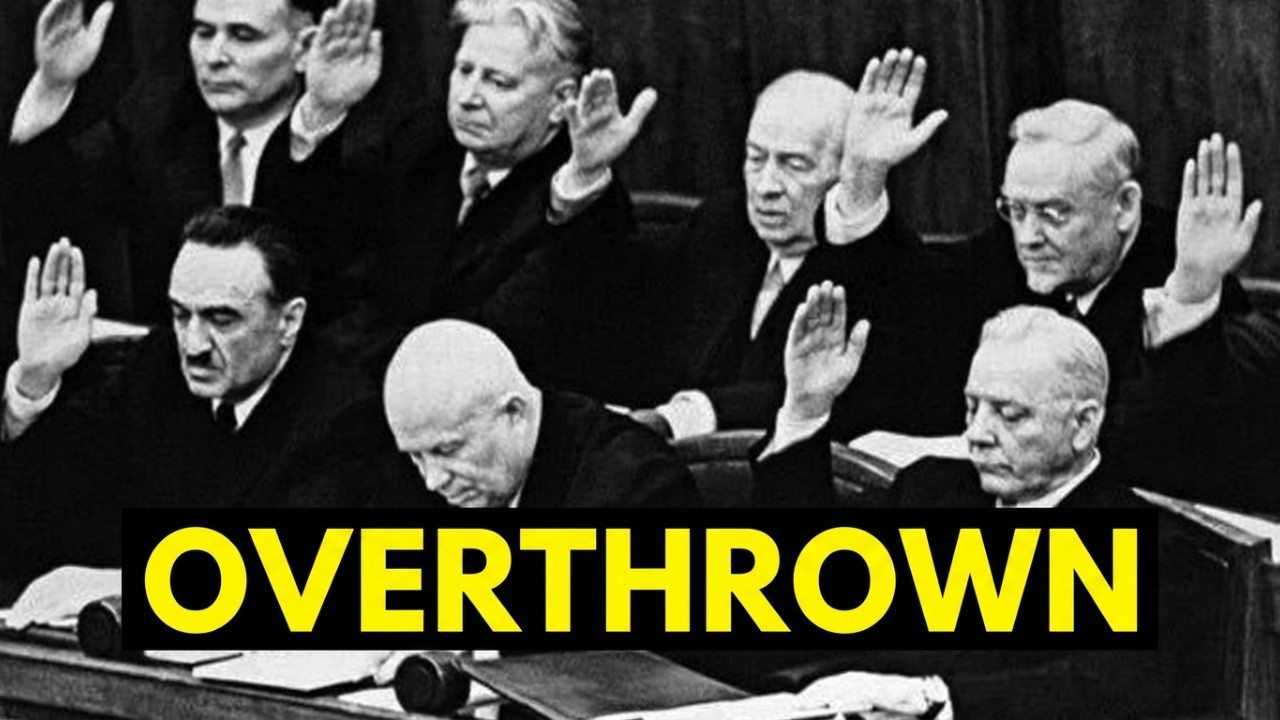
The accounts of the organizing period describe a man who was methodical about the building of the coalition, who was specific about what each person who joined the coalition was being asked to commit to, who managed the information about who was in and who was not in with the specific care of a man who understood that a single leak to Kruev supporters would end the operation before it could be completed.
Mikail Suslav was central. He was the party’s chief ideologist, a severe and doctrinary figure who had been in the senior party leadership since the Stalin years, and who had developed over the course of Kruchev’s rule a comprehensive set of objections to Krushchev’s policies and his style that he had expressed privately and indirectly, and that he was now prepared to express in the specific context of the precidium meeting. Alexander Shellapin was there.
He had been the head of the KGB from 1958 to 1961 and had moved into the party apparatus, retaining significant connections in the security services that were relevant to the operations management of information and the specific question of what Kruch’s KGB supporters might do if they became aware of what was being organized.
The KGB question was not trivial. Vladimir Seichassny was the head of the KGB in 1964. A man who was personally close to Shellipin, his predecessor, and who was by the accounts of the period, part of the coalition rather than opposed to it. The KGB’s alignment with the coup rather than against it was one of the structural features of the 48 hours that distinguished it from earlier attempts against senior Soviet leaders that had failed partly because the security services had been loyal to the target.
The preparation included the specific management of Kruchv’s schedule and the schedule of the precidium members. The autumn 1964 period was chosen because Kruchchev was out of Moscow at Pitsunda on the Black Sea and because the central committee plenum that would be required to ratify the procedium’s decision was scheduled for the following week, providing a natural occasion around which the removal could be organized without raising the suspicion that a specially convened meeting might have raised. The preparation also included in the weeks before October the systematic collection of the grievances that the coalition intended to present at the October 13 meeting. This is one of the specific features of the 1964 operation that distinguished it from a simple palace coup. The coalition was preparing a case. Not in the legal sense, not in the sense of charges that required evidence in the way that a court
requires evidence, but in the sense of a political argument, a document of failures and errors and misjudgments that the precidium would present to Krushchev as the basis for the decision that the precidium had already made. The preparation of the case was assigned in significant part to Suzlov.
He was to be the primary speaker at the October 13 meeting. The man who would read out the indictment, if indictment is the right word for a political document that does not charge a crime, but enumerates failures before the assembled precidium. The specific content of the case that Suzlov prepared has been reconstructed from the accounts of the participants and from the party documents that have been made available from the Soviet archive.
It covered in various degrees of detail the agricultural failures including the corn campaign and the virgin lands and the 1963 grain import, the Cuban missile crisis and the diplomatic consequences of the withdrawal, the administrative reorganizations and their effects on the party apparatus, the foreign policy generally, including the deterioration of the relationship with China that had produced the SOS Soviet split and that had weakened the Soviet position.
in the international communist movement. The cult of personality that was developing around Khrushchev, a specific irony given that it was Khrushchev who had delivered the speech condemning Stalin’s cult of personality 8 years earlier. And the personal style, the impulsiveness, the unilateralism, the specific qualities of a man who had been governing in a way that the precidium had tolerated for years and was no longer prepared to tolerate.
The irony of the cult of personality charge deserves specific attention because it illuminates the specific way in which the tools of political critique are repurposed by the people who are using them against the person who first deployed them. The language of anti-cult, the framework of collective leadership as the antidote to the one-man rule that the secret speech had condemned.
This language and this framework had been Kruchevs. He had established it as the standard against which Soviet leadership should be measured. The coalition was now applying the standard to him. He had armed them with the standard when he gave the speech. He did not know on the morning of October 13 exactly what was waiting for him or he knew something was waiting and did not know the specific shape of it.
The accounts of the flight from Pitsunda to Moscow describe a man who was not performing the specific quality of confident calm that a man who had no reason for concern would perform, who was quieter than his normal, more subdued, more attentive to the men around him in the way that a man is attentive to the men around him when he suspects that some of them are not what they have been performing.
He arrived at the Kremlin. He was taken to the meeting room. The precidium was there. the full precidium. All of the senior figures, which was itself a signal, because full presidium meetings were not the ordinary format, and the full assembly communicated something about the gravity of what was being conducted.
Susaf opened. He had the document. He read he read for approximately two hours with interruptions from other precidium members who added their own contributions, their own specific objections, their own particular cataloging of the failures and the errors and the misjudgments that the document contained.
The reading was not a performance of spontaneous anger or improvised objection. It had the quality of a prepared case being presented, the systematic enumeration of an argument that had been constructed over weeks and was now being delivered. Krushchev responded, “The accounts of his response describe a man who was not broken by what he was hearing, who was not the defeated figure that the mythology of coups sometimes produces, the leader who collapses in the face of the organized opposition.” He argued. He challenged specific points. He contested the characterization of the agricultural policy and the foreign policy and the administrative decisions. He was by the accounts of people who were present still himself. Still the valuable, energetic, combative man who had been the center of Soviet political life for 11 years. But the argument was not the kind of argument that changed outcomes.
The precidium had already decided. The document was not an opening position in a negotiation. It was a verdict being read out before a man who had not yet been told it was a verdict. And the verdict was that he was finished. And the reading of the document was the specific form that the Soviet political tradition had developed for the delivery of verdicts to people who had not requested them. He asked for a vote.
The vote was held. The vote was unanimous or nearly unanimous. McCoyen abstained or voted against a removal or expressed reservations. The accounts differ on the exact nature of his descent, but the accounts agree that he was not fully aligned with the coalition, that he was the one member of the precidium who had told Khrushchev not to worry, and who apparently had not been fully informed of the depth of the coalition’s commitment or the completeness of the preparation. McCoy’s partial descent did not change the result. The result was the result. Krushchev spoke after the vote. The accounts of what he said at this point are among the most humanly significant elements of the historical record of October 13. Because this is the moment when the political figure and the human being most fully converge. When the man who has been performing the role of general secretary for 11 years
has been told that the performance is over and must say something in the silence that follows that information. He said by the accounts I am glad that the party has matured enough to be able to remove the first secretary through a vote of the central committee rather than through other means.
other means the specific phrase the means that Stalin had used the means that Barrier had feared the means that Khrushchev himself had used in 1953 to manage barrier’s removal he was acknowledging in the specific language available to a man who had spent his entire adult life inside the Soviet political system that what had just happened was a form of progress that the system had evolved enough to remove him through procedure rather than through violence.
He was right about this. The removal was brutal in the political sense, but it was not the lethal removal that Soviet politics had historically produced. He would be a pensioner. He would be alive. He would receive a state pension and a dacer, and the specific managed diminishment of a man whose career was over, but whose continued existence the system no longer regarded as a threat that required the permanent solution.
The central committee plenum met on October 14th, 1964. It met and it was told what the precidium had decided and it ratified the decision in the specific way that the central committee ratified precidium decisions in the Soviet system, not as a rubber stamp exactly, but as the larger institutional acknowledgement that the decision had been made by the people authorized to make it and that the larger party body endorsed it.
Brev was named general secretary. Kosigan was named chairman of the council of ministers. The announcements were made. The brief official statement was issued. The statement said that Kushchov had been relieved of his duties due to his advancing age and deteriorating health. He was 69 years old and was not by available evidence in poor health in any specific sense.
But advancing age and deteriorating health was the language that the Soviet system used when it removed a leader who had not died and had not been tried and for whom no other explanation was available or desired. He lived. He was watched. He was followed by the KGB men assigned to observe him, whose presence was both a security measure and a form of the specific management that the Soviet system applied to people who knew too much and who had been removed from the position in which they had known it.
He was given the DACA and the pension and the car and the specific package of provisions that the system extended to retired senior figures and he was not given a public voice and he was not invited to party events or state occasions and his name was not in the newspapers in any connection that acknowledged his continued existence.
He had been the center of the Soviet Union’s public life for 11 years. He was removed from it in 48 hours and then was for the purposes of the Soviet public record effectively gone. He dictated memoirs. He dictated them on tape into a recorder across the years of his retirement and the tapes were smuggled out of the Soviet Union and published in the West.
first in 1970, the first volume, then subsequently over the sustained objections of the Soviet government, which denied that the memoirs were authentic and which was lying about the denial, which the people who had smuggled the tapes out understood, and which the people who published the memoirs understood, and which eventually became undeniable when Kruev’s son Sergey, who had been involved in their production, confirmed them.
The memoirs are one of the most significant documents of the period. Not because they are comprehensive, or because they are free of the specific self-justifications that a man producing his own account of his own career inevitably produces, but because they provide the interior account of the Soviet system from the perspective of the man who had been most completely inside it, who had known Stalin, had served Stalin, had given the speech about Stalin, had tried to build something different from what Stalin had built, and had been removed from the building by the machine that Stalin’s building had produced. produced. The machine had produced him and the machine had removed him. The machine was in October 1964 in the process of producing Brev who would run it for 18 years in the specific way that Brev ran things. Not with Kushchov’s impulsiveness and energy and the specific quality of a man trying to change the machine, but with
the patient, conservative, stability seeking management style of a man who had watched what trying to change the machine had produced and who had decided that not trying to change the machine was the preferable approach. Kushchev died in September 1971 of a heart attack at a dacer outside Moscow.
He was 77 years old. He had been in retirement for 7 years. The Soviet state gave him a small funeral. He was not buried in the Kremlin Wall, which is where senior Soviet figures of his generation were buried. Because the Soviet state had decided that the specific honor of burial in the Kremlin Wall was not appropriate for a man who had been removed from power and whose removal the state still had not formally explained in terms more specific.
then advancing age and deteriorating health. He was buried in the Novo Devichi cemetery in Moscow in a grave that received in the years after the Soviet Union’s collapse significant attention that became a site that people visited to which they brought flowers at which they stood for a moment in the specific recognition that a grave produces when the person in it was someone who did a significant thing.
What Krushch did was give the speech. whatever else he did, the porn, the virgin lands, the Cuban missile crisis, the administrative reorganizations, the style and the energy and the impulsiveness and the shoe. Whatever the accumulated case that Suzlo read out on October 13th, 1964 contained, what he did that mattered most was give the speech.
The speech had named the crime. The naming of the crime was the most significant act of Soviet politics between Stalin’s assumption of total power in the late 1920s and the Soviet Union’s eventual dissolution in 1991. Not because the naming immediately changed the reality. The camps did not close overnight.
The surveillance did not end. The apparatus of the Soviet state continued to function in the ways it had been built to function. But because the naming established that the reality could be named, that the man at the center of the system could stand in front of the systems senior figures and say, “This is what was done.
This is what it was. This is what we were inside.” The naming made the future different from what it would have been without the naming. It made the Thor possible. It made the rehabilitation of some of the victims possible. It made the specific atmosphere of the Kruev years imperfect, contradictory, often brutal in ways that the Thor’s mythology glossed over, but different in kind from what Stalin had produced possible, and it made the 1964 removal possible because the 1964 removal used the language that the speech had established. The coalition that removed him used the framework of collective leadership and anti-cult that he had used to remove Stalin’s legacy from its position of sacred authority. He had made the tool and they had used it. He was removed by the tool he made. This is not a tragedy in the clean sense. That tragedy requires a protagonist who did
not deserve the ending. Krushchev had participated in the terror. He had signed the lists in Ukraine. He had known what was happening and had been part of what was happening and had survived it and had then from the position of the survivor delivered the speech that named it. The speech was an act of genuine historical significance and it was also an act of a man who was partly implicated in what he was naming and the partial implication is part of the record and does not disappear because the speech was significant. What the 48 hours of October 1964 produced was the confirmation of the speech’s central insight that the Soviet system was capable of removing its leader through a political process rather than through violence. The insight was Krushchev’s. The confirmation was provided by his removal. He had established the principle. He was removed by the principal. The 48 hours were not a coup in the sense that the
word coup usually carries, not a seizure of power through force, not a midnight arrest, not the kind of removal that the Soviet system had historically produced. They were a political operation conducted through the institutional mechanisms of the party, through the precidium vote and the central committee ratification and the official announcement and the pension and the daer.
They were conducted by men who had been trained in those mechanisms by the system Kruchev had helped to build and had partially reformed. Men who had learned from watching Krushchev navigate the 1957 anti-party group crisis how such operations were conducted and how they could succeed or fail. men who had applied those lessons with the specific patience and the specific care of people who understand that the thing they are doing can only be done once and that if it fails it will not be tried again.
It did not fail. The plane from Pitsunda landed. The meeting happened. The vote was unanimous or nearly unanimous. The central committee ratified. Brev became the general secretary. Krushchev became a pensioner with a datcher and a KGB escort and seven years of retirement in which to dictate the memoirs that would eventually be smuggled out and published and that would eventually be confirmed as authentic by his son.
The Soviet Union continued. It continued for 27 more years, managed by men who had learned their management style partly from watching what Krushchov’s style had produced and who had decided that stability was the primary value and that stability meant not changing things and that not changing things meant not giving speeches that named what the system was.
They did not give such speeches. The Soviet Union did not collapse because they stopped giving the speeches. The Soviet Union collapsed for the specific reasons that the Soviet Union collapsed. the economic stagnation, the arms race, the Afghan war, the specific inability of a planned economy to produce the consumer goods that the Soviet population increasingly wanted and that the command economy increasingly failed to supply.
The leadership crisis that the gerontocracy produced, the specific moment when Gorbachev arrived and decided that the system needed to be changed and began to change it in ways that the system could not contain. But the silence, the 18 years of Brev and the brief gray periods of Andropov and Chernenko, and the specific quality of a leadership that had decided that the Krushchev lesson was do not make the speeches was part of the collapse.
The silence was what the 48 hours of October 1964 had produced. Krushchev was in the dacer. He dictated the memoirs. He said in one of the passages that has been quoted most often when I think about what happened I feel good. The party had matured enough to remove me through a vote. He felt good about the vote that removed him.
Or he said he felt good about the vote that removed him which is a different thing and which is the specific quality of a man producing the record that he wanted to produce in the years of his retirement. in the full knowledge that the record was being produced under conditions that the system he had built was watching. The dacer had microphones.
The car had microphones. The pension was the pension of a man who was being managed rather than ignored. Who was alive because the system had decided that keeping him alive was preferable to the alternative and who was being watched because the system had decided that watching him was preferable to the alternative. He died in 1971.
The tapes were already out of the country. The memoirs are in the record. Brezenev died in 1984 and Dropov died in 1985. Gorbachev came in 1985. The Soviet Union ended in 1991. The 48 hours of October 1964 are in the record as the specific moment when the Soviet system demonstrated the specific capability that Kruch’s speech had established as the standard, the capability to remove a leader through a political process rather than through a firing squad.
The demonstration cost everything he had spent his life building toward. It confirmed everything he had spent his life arguing was possible. Both of those things are true. The record holds them both. The plane from Pitsunda landed at Banukovo airport on the morning of October 13th, 1964. He walked into the Kremlin.
The door closed. The vote was taken. He was gone. The light went out. The Soviet Union continued for 27 more years without him. Then it too was gone. The dacer at Pitsunda is still there on the Black Sea. The phone call that brought him back is in the archive. The vote is in the archive. The memoirs are in print.
The grave at Nova Devichi receives visitors. This is what the 48 hours produced. This is what they meant.