Panzerfaust 250: Nazi German’s BEST Anti-tank Weapon and the “Father” of Soviet RPG-2 War&History D
The panser fast was a revolutionary idea in its brutal simplicity. A disposable launch tube firing a large shaped charge warhead capable of penetrating heavy armor at short range. Unlike the reusable and more complex punter shrek, which resembled the American bazooka, the punter fa was cheap, compact, and required minimal training.
Beginning with the early Panser FA 30 and continuing through the 60 and 100 models, the design philosophy remained consistent. Oversized hollow charge warhead, simple ignition system, disposable launch tube, low velocity, and short range. The large warhead provided impressive armor penetration for the time.
Against Soviet T34s or even heavy tanks, a wellplaced heat could be devastating. If you are interested in how German puner companies actually fought in World War II, I’ve put together a free ebook based on manuals and battlefield reports. You will find the link in the description. But there were limitations.
Low muzzle velocity, short effective range, and single use design. By 1945, the battlefield had changed. Urban fighting required improved accuracy and penetration. So the German army needed more performance without sacrificing simplicity. Thus emerged the punter fast 150. It was not merely an incremental improvement.
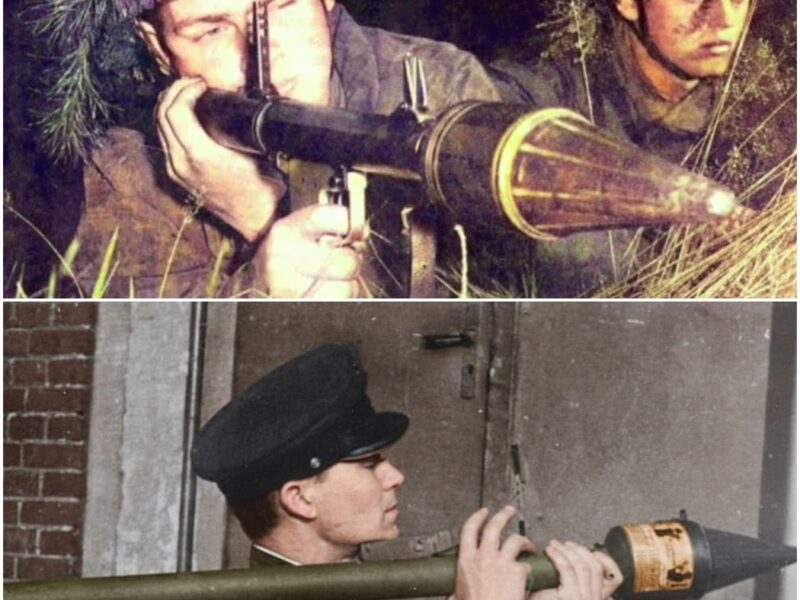
It was a substantial redesign. The most visible change was the new pointed warhead. Earlier Panserfast models featured a large 149 mm diameter warhead. The Panser Fast 150 reduced this to 105 mm but reshaped it into a more aerodynamically efficient pointed profile. The improved shaped charge geometry and internal configuration actually increased armor penetration despite the smaller diameter.
Production of the Panserf 150 began in February of 1945. By this stage of the war, Allied bombing had crippled infrastructure. Raw materials were scarce, transportation networks were disrupted, and skilled labor was limited. Despite these conditions, approximately 100,000 panser fast 150 units were produced between February and May of 1945.
That number is remarkable given the circumstances. Yet there is a striking fact. None were issued to field units beyond limited troop trials. If you enjoy this video, don’t just watch history, engage with it. Check out my World War II word search books on Amazon. Each volume focuses on a specific battle, tank, unit, or commander.
This one covers the panser campfen 8 mouse. Train your knowledge and stay sharp. You will find all my books in the description below. Even more intriguing, no known examples of the panser 150 survive the war. Unlike earlier models which are preserved in museums and private collections, the 150 has effectively vanished.
Its existence is documented in records and photographs, but no confirmed surviving specimen is known. If the panser faust 150 was the final operational variant, the panser faust 250 was the conceptual endpoint. It was intended to replace the heavier and much more complex panther shrek in German service.
Its design incorporated several forwardlooking features. reloadable launch tube, pistol grip, improved ergonomics, and an enhanced range and performance. This was no longer a purely disposable weapon. It was a transition toward a reusable infantry carried anti-tank launcher, lighter than the Panser Shrek, but more flexible than the early Panser Fast models.
Serial production was scheduled to begin in September of 1945, but the war ended in May. The Panser Fast 250 never left the drawing board. It is a little known fact, however, that the Panser Fast 250 was a kind of a bridge between World War II and the Cold War. It is widely regarded as the conceptual father of the Soviet RPG2.
Before we continue, this channel exists because it stays independent. If you believe serious military history should stay that way, consider channel membership. Link below. After the war, Soviet engineers had access to extensive German weapon research. They studied German anti-tank systems carefully, including the late war panser fast developments.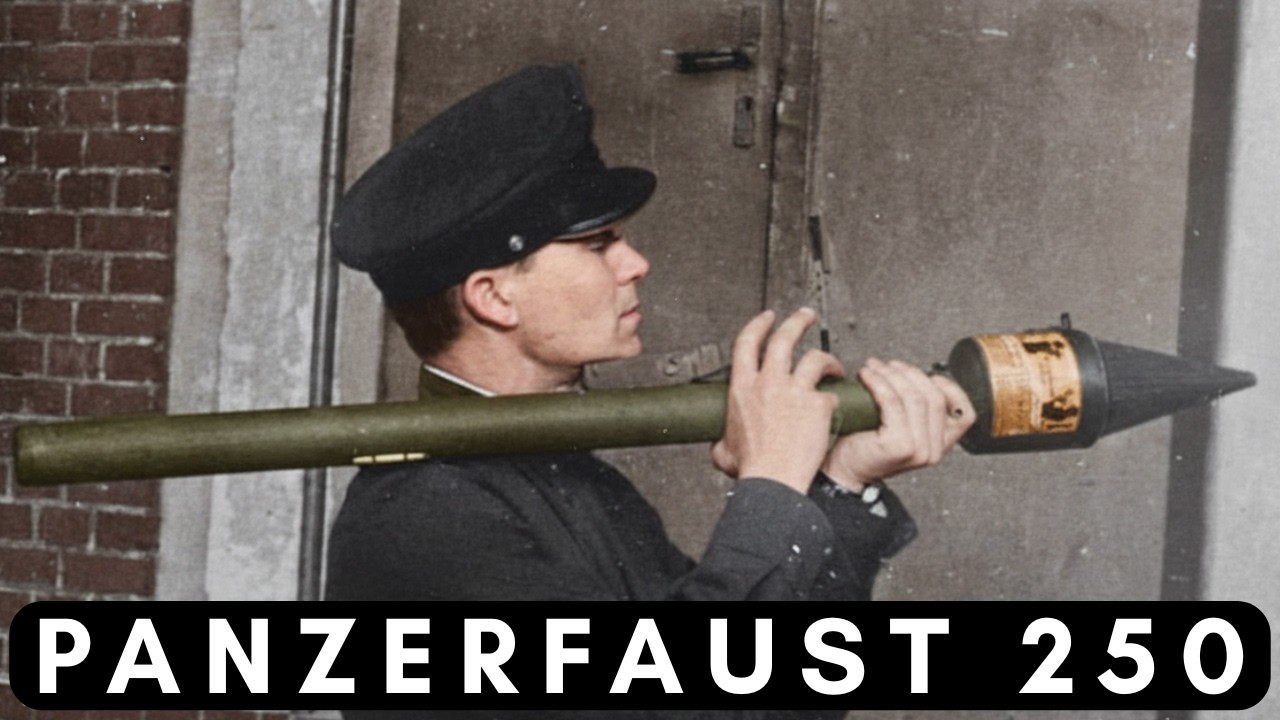
The result was the RPG2. It featured a reloadable launch tube, large shaped charge warhead, simple ignition system, minimal moving parts, and low production cost. These principles closely mirror the panser fast 250 concept. While the RPG2 was not a direct copy, the lineage is clear in design philosophy.
Keep it simple, keep it light, make it mass producible. The RPG2 entered Soviet service in 1949 and so widespread global use. It became a defining weapon of postwar conflicts from Asia to Africa to the Middle East. In that sense, the Panser Fast 250 did not die in 1945. It was reborn under a red star.
The shift from disposable panel fast models to a reloadable concept reflects a deeper evolution in infantry doctrine. Disposable launchers are ideal for emergency mobilization, low training requirements, rapid mass production, and urban defense. Reloadable systems are better for professional armies, sustained operations, logistical efficiency, and standardized training.
Germany’s late war situation favored disposable weapons, but military planners clearly recognized the long-term advantages of reloadable systems. The panser f 250 was Germany’s attempt to merge both words. The obscurity of the panser fast 150 and 250 stems from timing. They were developed too late to see widespread combat and in facilities soon captured or destroyed.
The panser f 150 would leave almost no physical trace. The 250 never produced survives only in design documentation. There is an irony in that story. Nazi Germany invested enormous effort in revolutionary wonder weapons during the war’s final phase. Many of these projects were impractical, overengineered, and strategically irrelevant.
The Panser Fast 150 and 250 were different. They were practical, cost effective, and tactically sound. And yet, they never arrived to German troops. Their true impact was felt in Korea, Vietnam, Afghanistan, and countless cold war proxy conflicts where RPG type weapons became vital. But the DNA of those weapons traces back to a collapsing German industry in early 1945.
Sometimes the most important weapons are not the ones that win wars. They are the ones that shape the wars to come. I hope you enjoy this episode. If you want to support my channel, check out the PayPal donation link in the description or consider becoming a member.
To make sure you don’t miss my future work, subscribe to my channel and press the bell notification button. Thank you for watching and see you in the next video.