The ‘Ancient’ American Truck That Cargo Drivers Turned Into A Weapon And Earned Medals Of Honor D
1950, a factory floor in Lansing, Michigan. A truck rolls off the assembly line. Six wheels, a flat steel cargo bed, a canvas roof over a cab that offers the driver no more comfort than a park bench. No air conditioning, no power steering, no electronics of any kind. The engine, a big inline six mounted under a squared-off hood, announces itself with a rising mechanical groan that sounds less like a vehicle and more like something suffering.
It weighs nearly 7 tons empty. It tops out at 56 miles per hour. Its cab shakes at highway speed. It offers the driver exactly two luxuries, a seat and a steering wheel, and the seat is not padded. It looked obsolete before it left the factory. It looked like a machine the army had built because it could not think of anything better.
It looked, in the words of soldiers who had spent years riding in it, like punishment. It would go on to serve in Korea, Vietnam, the Gulf War, Bosnia, Iraq, and Afghanistan. It would be operated by the armies of more than 80 nations. It would carry three generations of American soldiers into three separate wars.
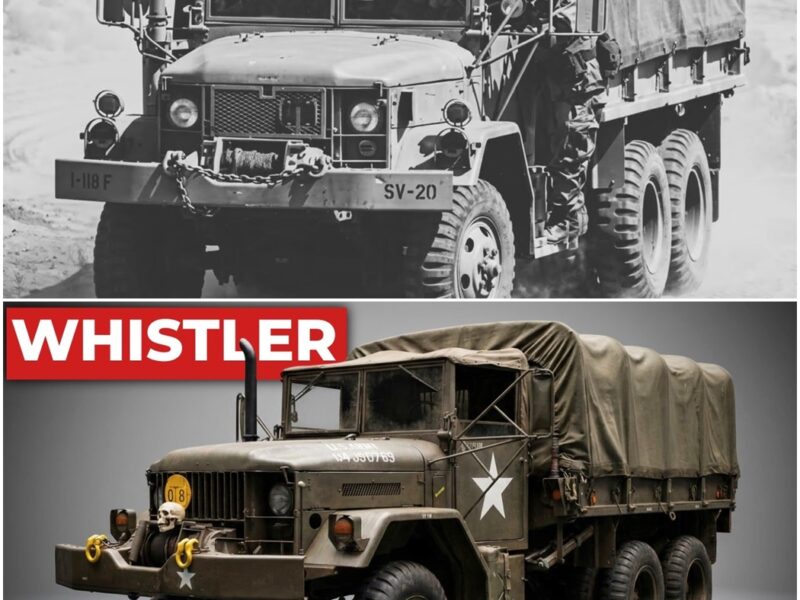
It would still be rolling on military logistics routes more than 50 years after the first one left that factory floor in Lansing. Its designation was the M35 2 and 1/2 ton 6×6 cargo truck, and soldiers called it the deuce and a half. It was the most important American military vehicle of the 20th century that almost no one has heard of.
To understand why the M35 existed, you need to understand the wreckage the United States Army was sorting through in 1945. The war in Europe ended with American supply lines running on an improvised collection of trucks, the Harvester M56, the Studebaker US6. Vehicles designed by different manufacturers to different specifications with different electrical systems, different generators, and different spare parts.
Keeping them all moving had required an industrial supply chain of almost comic complexity. The solution the Ordnance Department devised in the late 1940s was deceptively simple. One truck, one chassis, one engine family, one parts inventory covering every variant from basic cargo hauler to fuel tanker to maintenance shop on wheels.
The competition came down to two manufacturers. General Motors defended its wartime legacy with a sophisticated entry featuring an automatic transmission. REO Motor Car Company of Lansing, Michigan submitted something simpler and more rugged, a manual gearbox, a straightforward inline six, and a chassis that a reasonably skilled mechanic could diagnose with a hammer and a flashlight. REO 1.
The army standardized the design across all US services. General Motors production ended in 1955. The deuce was born. The vehicle that rolled out of Lansing carried an engine of 331 cubic inches. In the original gasoline configuration, it produced 127 horsepower. That sounds modest, and it was, but the engineering story of the M35 is really the story of what happened to that engine.
In 1964, when the army introduced the Continental LDT 465 turbocharged multifuel inline six. Multifuel. The word sounds routine. In practice, it was extraordinary. The 465 would run on diesel. It would run on jet fuel. It would run on kerosene. It would run on home heating oil. It would run on a mixture of three parts diesel to one part gasoline.
If a driver poured a quart of motor oil into the tank first to protect the injection pump. Soldiers discovered that this list was essentially the start of a longer conversation. The engine did not particularly care. It ran. The turbocharger added another dimension. It produced a distinctive rising scream when the engine came under load.
A sound so recognizable that soldiers who served alongside the truck never forgot it. The turbocharged M35A2, the variant most American soldiers from the 1960s through the 1990s actually remember, announced its presence before it arrived and long after it left. Troops called it the whistler. The chassis itself was a 6×6.
All six wheels driven. two independent rear axles gave it the traction to cross terrain that would stop a conventional truck cold. A two-speed transfer case combined with five forward gears in the manual transmission gave the driver 10 effective gear combinations. Payload was rated at 5,000 lb cross-country and 10,000 lb on improved roads.
Every driver in the history of the truck loaded it to twice that without complaint from the chassis. The cargo bed was 12 ft long and 8 ft wide. Removable bows and a canvas cover, the truck could carry 25 fully equipped infantry soldiers or 10,000 lb of artillery shells or a complete field kitchen.
There were more than 20 official variants built on the same chassis. Dump trucks, water tankers, fuel tankers, maintenance shop vans, missile carriers, wreckers, and crane trucks. One chassis, everything the army needed to keep itself alive in the field. Before we get into where this truck actually fought and what it cost the men who drove it, if you are finding this deep dive into American military history worth your time, hit subscribe.
It costs nothing and it helps the channel grow. The M35 arrived in service during the Korean War and its legacy there is more about what came next than what happened then. The army had hundreds of thousands of wartime trucks sitting in depots across Europe and the Pacific and those older vehicles did most of the Korean War’s hauling, but the conflict transformed what had been a modest production contract into a mass manufacturing program.
By the time the armistice was signed in 1953, the deuce was in full production and moving into frontline service with every branch of the US military. Vietnam made it famous. By 1965, the M35 was the standard medium logistics truck of the US Army Transportation Corps deploying to South Vietnam. The mission was to move supplies from the coastal ports of Qui Nhon and Cam Ranh Bay to inland bases at Pleiku, Bong Son, An Khe, and Buon Ma Thuot, sometimes covering 200 mi of mountain road per convoy run. Convoys of 100 trucks or more carrying ammunition, jet fuel, food, and medical supplies ran these routes every day of the war. The principal unit was the 8th Transportation Group out of Qui Nhon with the 27th, 124th, and 523rd Transportation Battalions doing most of the daily hauling. The road they feared most was Route 19, a two-lane mountain highway running from the coast through An Khe Pass and the Mang Yang Pass into
the Central Highlands. The French had named one stretch Ambush Alley. The name required no translation. On September 2nd, 1967, a 39-truck convoy returning empty from Pleiku was ambushed in a 700-m kill zone west of An Khe. The escort consisted of two light utility vehicles. A rocket destroyed the lead vehicle in the first seconds.
The convoy was raked with automatic weapons fire, rocket-propelled grenades, recoilless rifle rounds, and command-detonated mines. Seven drivers were killed, 17 were wounded, and 30 trucks were destroyed or damaged. The Army’s response changed the war at ground level. Drivers and mechanics of the transportation companies, without authorization from anyone began stripping cargo trucks and welding armor plate to the cargo beds.
They mounted .50-caliber M2 Browning machine guns on pintle rings, twin M60 general-purpose machine guns on pedestal mounts, and in some cases four-barreled M55 quad mount systems capable of firing 2,000 rounds per minute. They painted the trucks flat black and gave them names: Eve of Destruction, Brutus, King Cobra, The Untouchable, Pure Hell, Ace of Spades, Pandemonium.
By 1968, there were roughly three to four hundred of these improvised war machines running convoy escort on every major supply route in Vietnam. No Army regulation authorized them. No supply chain stocked parts for them. No official doctrine described how to use them.
Drivers and gunners invented the doctrine themselves, one ambush at a time. The men who crewed them paid a price. On August 25th, 1968, Sergeant William W. Seay of the 62nd Transportation Company was driving in an 81 truck convoy from Long Binh to Tan An Combat Base when a reinforced North Vietnamese Army battalion ambushed the column near the village of Ap Nhi, firing from the Ben Cui rubber plantation.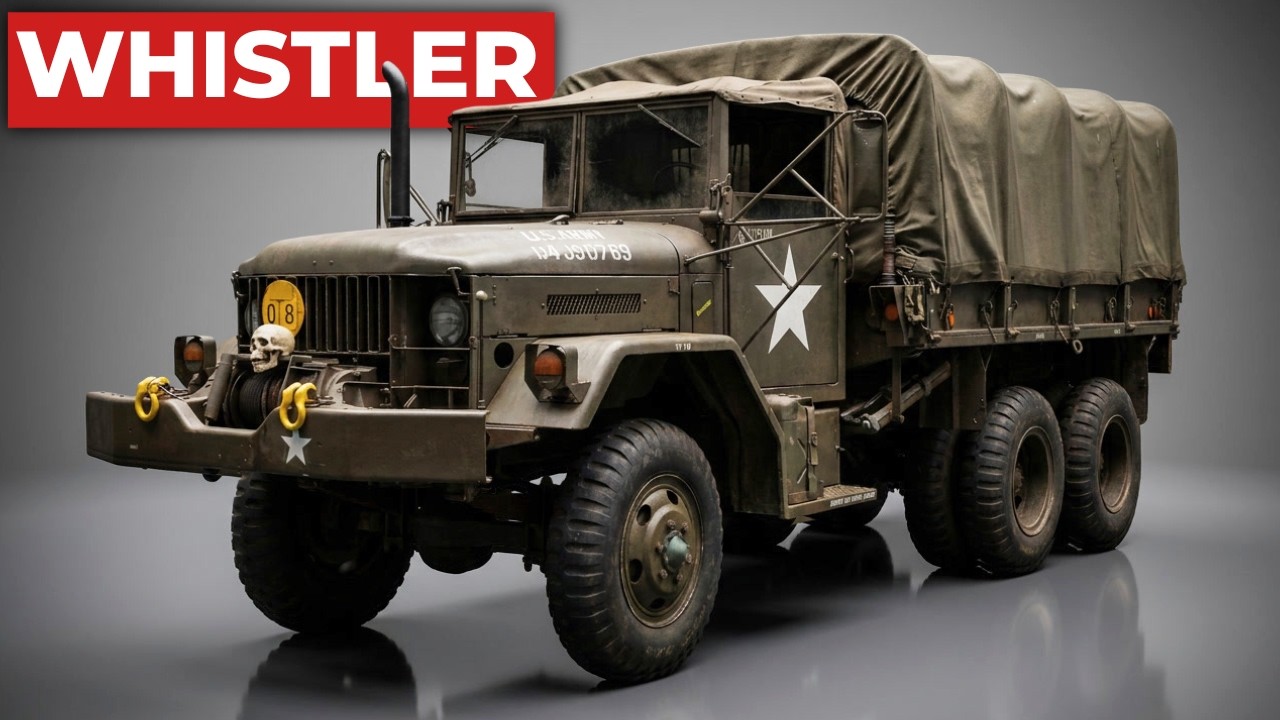
Two fuel tankers at the front and two ammunition trailers at the rear were set ablaze simultaneously, trapping the center of the convoy with no exits and no room to maneuver. Seay was 19 years old and 60 days from rotating home. He had rotation orders in his pocket. He dismounted anyway. He fought for 9 hours alongside Specialist Fourth Class David Sellman from behind a trailer loaded with artillery powder charges.
He killed two enemy soldiers and a sniper at 75 m. He threw two enemy grenades back at their owners before they detonated. He was shot through the right wrist and kept fighting one-handed. He killed three more soldiers who had penetrated his position before a sniper’s round ended the fight.
Seven drivers were killed that day. 10 were wounded. Two were captured. William Seay received the Medal of Honor posthumously on April 7th, 1970. He was one of four Transportation Corps soldiers in the entire history of the United States Army to receive that decoration. The Navy named a prepositioning ship after him. On February 23rd, 1971, Specialist Fourth Class Larry G.
Doll was a machine gunner on the gun truck Brutus when his section drove into a North Vietnamese ambush on An Khe Pass to relieve a burning fuel convoy. An enemy grenade landed in the gun box. Doll yelled a warning and threw himself onto it. He was 21 years old. Vice President Gerald Ford presented the Medal of Honor to his family on August 8th, 1974, hours before Ford assumed the presidency following Nixon’s resignation.
The Navy named a ship after him as well. These were not combat soldiers. They were truck drivers. The Army sent them to war in cargo trucks and they fought as though they had been born to it. The M35 deployed to the Gulf War in 1990 and 1991 in National Guard, Marine Corps, and Navy Seabee construction units across Saudi Arabia and Kuwait, it drove through the desert alongside the tanks of the 7th Corps.
It served under NATO colors in Bosnia beginning in December 1995. It hauled ammunition and supplies through the early years of Operation Iraqi Freedom and Operation Enduring Freedom. The United States military transferred roughly 400 M35 trucks to the Afghan National Army because the truck’s mechanical simplicity, tolerance for poor fuel, and manual transmission made it better suited to Afghan field conditions than anything more modern.
Those trucks were still rolling when Kabul fell in August 2021. The Soviets had their own answer to the deuce. The ZIL 157 entered service in 1958 as the standard Soviet 6×6 medium truck. It produced 109 horsepower from a gasoline-only inline-six, about 25% less than the M35A2 turbocharged multifuel.
It was produced in extraordinary numbers, nearly 800,000 units, and its centralized tire pressure system gave it genuine advantages in soft soil, but it ran only on gasoline, consumed fuel at a rate that strained Soviet logistics in extended operations, and offered no multifuel flexibility whatsoever.
The ZIL 131, introduced in 1967, improved the picture. 150 horsepower, roughly comparable payload, better cold weather performance. Soviet automotive historians have noted that the ZIL 131’s chassis showed evidence of influence from captured American M34 and M35 trucks examined after Korea and Vietnam. If accurate, the deuce helped father its own rival.
The M35A2 was officially replaced in US service by the family of medium tactical vehicles, specifically the M1078 light medium tactical vehicle, a 4×4 cab-over design derived from an Austrian truck. The The vehicle was quieter, faster, more fuel-efficient, and offered superior driver comfort. It also carried electronic engine controls and sensor architecture that in field conditions could fail in ways no mechanic with a hammer and a flashlight could repair at the roadside.
A government audit in the 1990s concluded that rebuilt M35A2 trucks still met 95% of Family of Medium Tactical Vehicle Performance Requirements at 60% of the cost. That audit is why the M35A3 rebuild program continued until 1999. Thousands of M35s survive in civilian hands. Surplus trucks sell on military auction platforms for $3,000 to $25,000 depending on condition.
They serve with wildland firefighting agencies across the American West. They work as expedition vehicles, rural fire tenders, and overland camper platforms for a community of owners who value the truck’s mechanical honesty above everything else. More than 80 nations have operated the M35. Over 20 are still using it today.
Return to Lansing, Michigan, 1950. A truck rolls off the assembly line. It is slow. It is loud. The cab shakes. There is no padding on the seat. The engine, when it is working hard, sounds close to suffering. It had no night vision, no air conditioning, no electronics, no blast-resistant floor, no armor on the doors, nothing between the driver and the ambush around the next bend on Route 19 except steel plate and the gun truck two positions ahead.
And those only because the men who drove the cargo trucks and built the gun trucks themselves. Without orders, without a budget, without any official acknowledgement that the mission they were running every day was as dangerous as any infantry patrol in the country. And yet it worked. In the mountain passes above An Khe and the rubber plantations near Tay Ninh, in the oil fields of Kuwait and the supply routes of Kandahar, on convoys no one outside the Transportation Corps remembers, and in ambushes that earned medals no one outside those units knows exist. It worked because it was simple, because it was honest, because it never asked for more than fuel and basic maintenance, and because the men who drove it gave it everything else it needed. That is not luck. That is 50 years of showing up.