The ‘Bendy’ British Marine Vehicle IEDs Broke In Helmand, Now Hunting Russians In Ukraine D
2005 Boington Tank Museum Dorset. Royal Marines line up in front of a vehicle that looks like someone welded two armored boxes together with a hinge. The front cab drives, the rear cab follows, twisting independently across uneven ground like a mechanical caterpillar. Officers from the Army’s armored corps watch the demonstration and struggle to take it seriously.
One reportedly calls it a glorified snow taxi. Within 18 months, this vehicle will be the most important piece of equipment in Helmond Province. Within three years, it will have killed British Marines through its own vulnerability, triggered a 150 million pound emergency replacement program, and forced the Ministry of Defense to confront a question it had been avoiding.
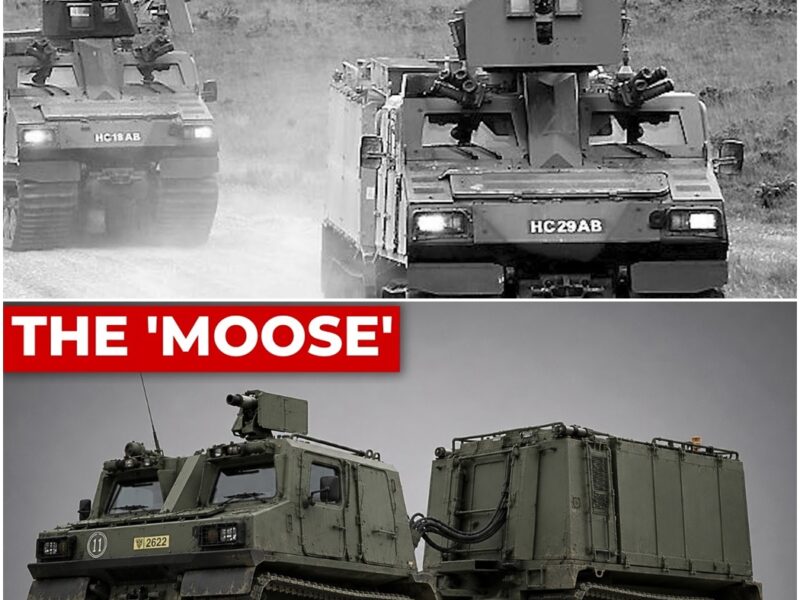
What happens when you send an Arctic machine to war in a desert? The vehicle was the BVS10 Viking. The Royal Marines called it the first armored fighting vehicle issued to the core in over 50 years. It could swim rivers, cross snow that would swallow a main battle tank, and carry a full section of Marines across terrain no wheeled vehicle could reach.
It was also flatbottomed, lightly armored, and completely unprepared for what was buried under the roads of southern Afghanistan. By 2006, British forces in Helman province had a mobility crisis. The Taliban had learned that the paved road between Lashkagar and Sangin was the only route British convoys could reliably travel.
They buried AEDs along it, inside it, and beside it. Side roads dissolved into irrigation ditches and soft sand that wheeled vehicles could not cross. The standard British Army fleet of warrior infantry fighting vehicles and Saxon armored personnel carriers could not operate outside the green zone without bogging down or throwing tracks in the fine Afghan silt.
The Royal Marines needed something that could leave the road entirely. Something that could cross the Helman River, push through flooded poppy fields, navigate irrigation canals, and still carry eight combat loaded marines with a heavy machine gun on top. The answer was already in their inventory.
Originally bought for an entirely different war, the Viking had entered service in May 2005. Designed for one specific mission, NATO’s northern flank, the fjords, snowfields, and frozen marshland of Arctic Norway, where Royal Marines had trained every winter since 1969. The vehicle’s entire engineering philosophy prioritized soft ground mobility above all else.
Its weight distributed across four wide rubber tracks gave it ground pressure roughly equal to a human standing on one foot. It could swim at 5 kmh using only its rotating tracks. It operated in temperatures from -46 to + 46°. None of those specifications mentioned mine protection. The flat steel belly that let the Viking float across Norwegian lakes transferred blast energy straight up through the floor when it sat above a 20 kg command wire IED.
A V-shaped hull deflects that energy outward. A flat plate channels it directly into the crew compartment. The Royal Marines knew this. The manufacturer knew this. They sent the Viking to Hellmand anyway because nothing else in the British infantry could do what it did. The Viking story begins not in Britain but in northern Sweden.
In 1974, the company Hegllands of Ernshvik began designing an articulated tracked carrier for the Swedish armed forces. The concept was radical for its era. Two separate cabins connected by a hydraulic steering joint, both driven by a single engine through a transfer case, each riding on a pair of wide rubber tracks.
This layout solved a problem that had defeated conventional armored vehicles in Scandinavian winter warfare for decades. A single heavy hull concentrates its weight on two tracks and sinks into deep snow. Two lighter hulls connected by a flexible joint distribute the same weight across four tracks and drape over uneven terrain like a chain.
The result was the Ban Van 206, which entered Swedish service in 1980. Over 11,000 were produced for more than 40 nations, making it one of the most successful military utility vehicles ever built. The Royal Marines adopted it in the 1980s for their NATO Arctic commitment in Northern Norway. But the ban van 206 was unarmored.
A fiberglass and steel shell over a Ford petrol engine. It could carry troops through snow. It could not protect them from anything. By the late 1990s, the Marines wanted a successor with real armor, modern communications, and enough power to carry the additional weight without losing soft ground performance.
Heglands, now owned by BAE Systems, partnered with the UK Ministry of Defense under the All-Terrain Vehicle Protected Program. According to Major Jez Herma of the Royal Marines, who led the trials program, the first prototype arrived in June 2001. A pre-production vehicle was in Oman for desert trials by September of that year with parallel winter testing inside the Arctic Circle.
The vehicle that emerged weighed 14 tons in combat configuration. The front cab carried a driver plus three Marines. The rear cab held 8 to 10 fully equipped troops. A Cumins 5.9 L inline 6turbo diesel produced 250 brake horsepower, more than double the bandwagon it replaced.
Driving through an Allison six-speed automatic gearbox, top road speed reached 65 km/h. Range was 300 km. 620 mm wide tracks manufactured by Susi International kept ground pressure at a level where the 14 ton vehicle could float across terrain that stopped a 30 ton warrior. Baseline armor met Stanag 4569 level two, stopping 7.
62 millimeter armorpiercing rounds and artillery fragments. Bolt-on applique packages raise protection to level four against 14.5 mm heavy machine gun rounds. The standard weapon fit was a 12.7 mm Browning heavy machine gun or a 7.62 mm generalpurpose machine gun on a roof ring mount plus smoke grenade launchers on the front glacis.
The steering mechanism was the engineering heart. Hydraulic rams twisted the front and rear hulls relative to each other around the central joint. This gave a turning circle of 14 m and the ability to articulate over obstacles that would ground any conventional hull. It also produced the distinctive bending motion that journalists would later call the bendy bus look.
Though Royal Marines themselves simply called it the Viking, the UK initially ordered 108 vehicles in troop carrying, command, and repair variants. Follow- on urgent orders pushed the total to approximately 166 by 2009. Before the first Helman deployment, 33 Vikings received slat armor cages to defeat rocket propelled grenades, electronic countermeasure jammers to disrupt radiocontrolled IEDs and protected weapons mounts.
After the first fatal IED strike in February 2008, belly armor kits were flown to the retrofitted to every Viking in Helmond. In September 2009, the Ministry of Defense ordered 24 redesigned M2 vehicles for 24 million pounds, incorporating a V-shaped underbody while retaining full amphibious capability. These were necessary improvements.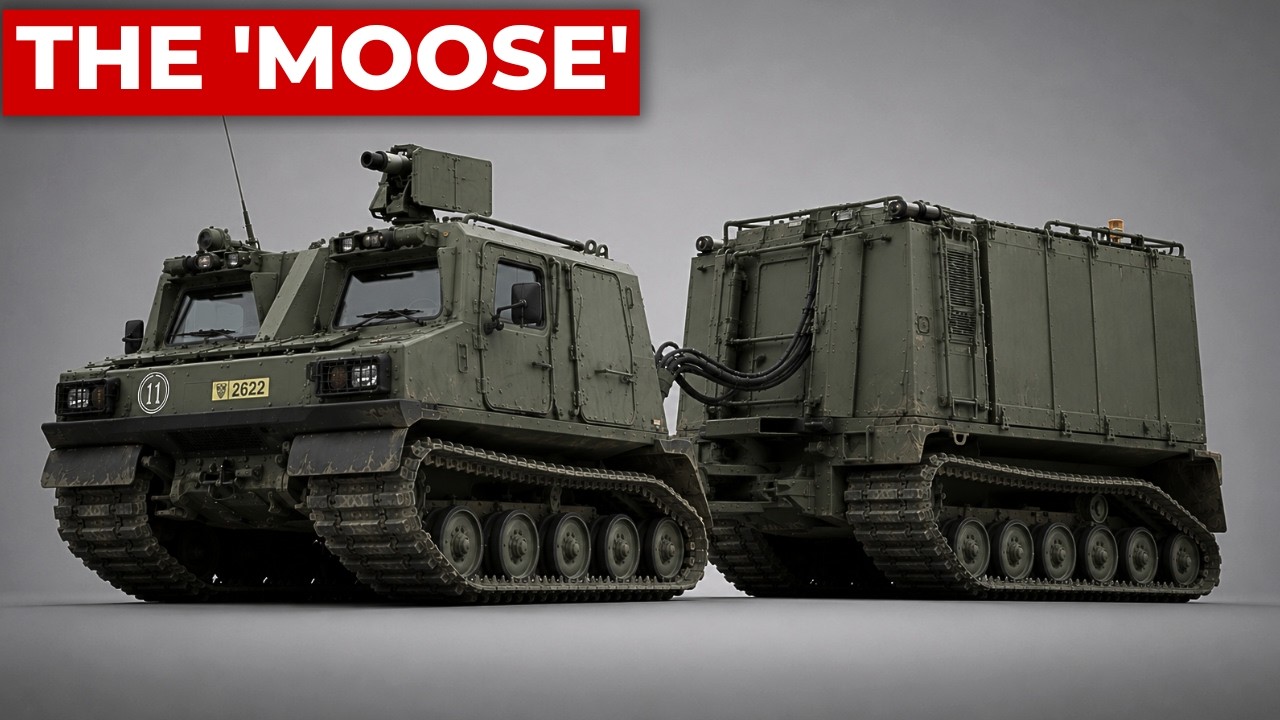
They were not enough. Now, before we see what happened when the Viking met the Taliban, if you are finding this interesting, a like on this video helps more than you would think. The algorithm notices. Back to Helmond. The Vikings combat debut came on October 31st, 2006. Operation Zena, 33 Vikings of the Royal Marines Armored Support Company drove for 10 hours from Kandahar Airfield through Kandahar city and into Helman Province.
Three Commando Brigade was taking over from 16 air assault brigade and the Viking instantly became the most requested vehicle in theater. Its mobility justified every design decision. According to Major Jez Stemp, officer commanding the armored support company, the Taliban tended to mine known routes, but the Vikings could maneuver around them and go off road where nothing else could follow.
On November 1st, 2007, a 40 commando troop pushed Vikings across the Helmond River north of Sangan to create a bridge head using the amphibious capability exactly as the designers intended. In August 2008, roughly 50 Vikings escorted the 100 vehicle convoy carrying the Kajaki Dam turbine through hostile territory.
In December 2008, Vikings supported Operation Sara, an 18-day clearance of Nadi Ali that Marines described as fighting through conditions resembling the SO. Then the IEDs caught up. Corporal Damian Mulvahill of 40 Commando was killed on February 20th, 2008 near Sangin. According to MOD fatality records, his death triggered the urgent belly armor retrofit across the fleet.
Trooper Robert Pearson of the Queen’s Royal Lances died on April 21st driving a Viking on a resupply convoy. Marine Dale Gostic of three troop armored support company was killed on May 25th when his Viking struck a large IED at the Helmond River crossing. Marine Ben Dunning in the same vehicle lost both legs.
Corporal Robert Daring, a Viking mechanic from Commando Logistic Regiment, was killed on December 21st when a secondary daisy chain IED detonated as he approached a disabled vehicle. Marine Jason Mackey of the Armored Support Group, died on May 14th, 2009. Lance Corporal Robert Richards, also of the Armored Support Group, was mortally wounded on May 22nd.
By June 2009, the armored support group returned to the United Kingdom at 20% below the Manning level it had deployed with. In December 2008, the Ministry of Defense bypassed BAE Systems and signed a 150 million pound contract with Singapore Technologies Kinetics for over 100 Bronco articulated carriers designated Warthog in British service.
The Warthog weighed 18 to 20 tons, carried a 350 horsepower engine, and had a veh designed from the start to defeat large buried charges. According to UK land power analyst Nicholas Drummond, the full fleet of 115 warthogs survived approximately 30 direct IED strikes in Afghanistan with no crew fatalities. The Warthog entered frontline service in mid 2010.
Purpose-built mine resistant vehicles like the Mastiff offered vehlection and roughly double the survivability of a conventional armored vehicle against underbelly charges. But MRAPs weighed 15 to 25 tons on wheels and could not move 100 meters through Norwegian snow. The Vikings fatal weakness was inseparable from its founding purpose.
The flat hull that killed Marines in Helmond was the same flat hull that let the vehicle swim across fjords in Norway. You could not fix one without destroying the other. The Warthog was retired in October 2015 when Camp Bastion closed. The Viking outlived it. On December 11th, 2023, Defense Secretary Grant Shaps announced the donation of 20 BVS10 Vikings to Ukraine, bundled with 23 raiding craft and two former Royal Navy mine hunters.
The vehicles were older Mark 1’s freed up by the UK’s order of 60 new generation replacements. The Netherlands followed in August 2024 with 28 additional BVS10s from its own fleet. Ukrainian Marines, primarily the 38th Separate Marine Brigade, deployed the Vikings across the Kersonen Front and the Nepro Delta.
According to Defense Express reporting from late 2025, crews valued the amphibious capability and soft ground mobility for medical evacuation, troop movement, and resupply through the seasonal mud. The same reporting noted that light armor remained a vulnerability against artillery and first-person view drones, which is why the Viking serve as transport through impossible terrain rather than assault vehicles in direct combat.
In Ukraine, the Viking was doing exactly what it was designed to do, moving through ground that stopped everything else. This time, nobody expected it to survive buried charges on a paved road. The Vikings career is a case study in the distance between a tool’s purpose and the demands placed upon it. Designed for the high north, sent to Helmond, built to swim, asked to survive mines.
When it failed at the task it was never meant to perform, the Ministry of Defense spent 150 million on a replacement that lasted 5 years. The Viking came home and returned to its founding mission. A 37 million pound regeneration rebuilt 99 vehicles to mark 2 standard between 2012 and 2016 with V-shaped underbodies fitted across the fleet.
In December 2022, the UK signed a joint framework with Sweden and Germany covering over 430 new generation vehicles with the British 60 carrying an inservice date beyond 2058. Today, the Royal Marines operate Vikings from Camp Viking near Tonsu, Norway, training alongside NATO allies every winter. The United States Army has ordered 163 of the unarmed Beaywolf variant for its 11th Airborne Division in Alaska.
India signed a licensed production agreement in November 2025. Germany plans up to 640 vehicles by 2031. According to Brigadier Mark Tottton of the Royal Marines, the December 2022 contract represented a clear statement of the UK’s commitment to the High North. No other Western nation has a vehicle that does what the Viking does.
Not the Americans with their aging AAV7 Amtrak. Not the Germans with their older Banvane 206s fleet. Not the Russians who feel nothing in this class. 2005 Boington, a vehicle that looked like two armored boxes welded together with a hinge. officers who thought it was a snow taxi. 2008 Helmond.
That same vehicle crossing the Helmond River under fire, escorting the Kayyaki turban convoy, supporting the clearance of Nadi Ali through kneedeep mud and losing six named Marines to the IEDs buried beneath the one thing it could not avoid, the road. 2025, Northern Norway. That same vehicle rebuilt with a V-shaped hull, launching from a landing craft into Arctic surf, carrying the future commando force back to the mission it was built for.
And somewhere along the Nippro, an older model of the same vehicle carries Ukrainian marines through Martian mud that Russian armor cannot cross. The Viking was never meant to be invincible. It was meant to go where nothing else could go. That is what British military specification demanded. And after 20 years, two wars, and one painful lesson in the difference between mobility and survivability, that is exactly what it still