The ‘Copied’ Chinese Armoured Carrier That Now Outsells Every Western Wheeled Vehicle Across Africa D
1979, a design bureau on the outskirts of Beijing, China. A group of engineers from Norinco’s Vehicle Research Institute spreads photographs across a workbench. The photographs show a French armored personnel carrier, the Renault VAB, documented at a Paris defense exhibition. Six wheels, boxy welded hull, a rear ramp for infantry.
The engineers study it for a long time, then they begin to draw. What emerges over the next several years looks, to a casual observer, almost identical to what they were studying. Six wheels, blunt nose, sloping glacis, a rear troop ramp. Western analysts will spend decades calling it a copy, a clone, a straight imitation of French engineering.
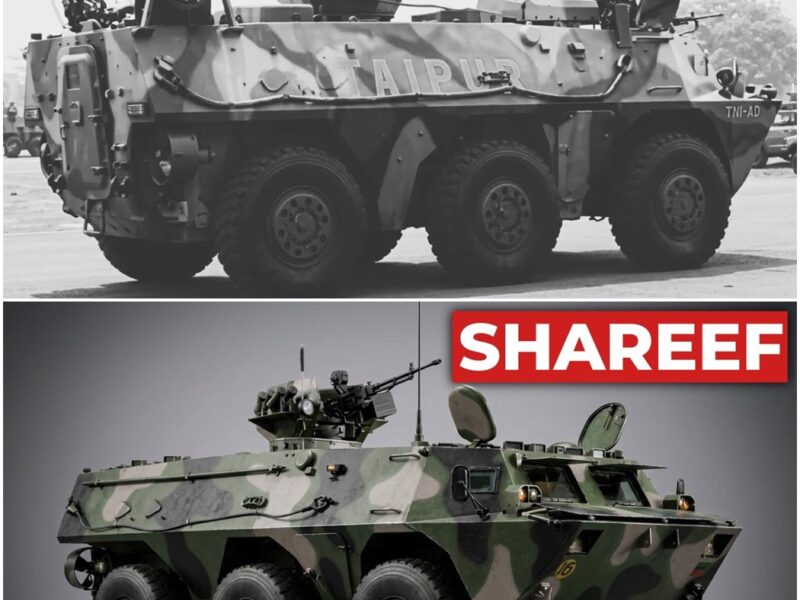
They are wrong about almost every part of that claim. The chassis is a licensed Mercedes-Benz truck frame built in Chongqing. The engine is a Deutz diesel from West Germany. The cannon is descended from a Soviet anti-aircraft gun. The internal layout is entirely different from the VAB’s. The only thing genuinely French about it is the silhouette, and even that similarity may have been coincidence as much as calculation.
It will enter service with the People’s Liberation Army in 1995. It will be exported to more than 15 nations across Africa and Asia. It will carry infantry in Sri Lanka’s jungle war, move armored columns into Somalia, fight Boko Haram across the Sahel, and deploy to the forests of the Eastern Congo.
Equipped with radar-guided surface-to-air missiles that will be fired at United Nations surveillance aircraft. Its designation was WZ551, and it became the most commercially successful wheeled armored vehicle China has ever built. To understand why the WZ551 existed, you need to understand the problem the PLA faced in 1979.
China’s ground forces were enormous in number and catastrophically slow in practice. The army fielded over 3 million soldiers and thousands of tanks, but almost everything in its inventory was tracked, heavy, and designed for attritional warfare along the Soviet border in Manchuria.
The invasion of Vietnam in February 1979 exposed the structural failure with brutal clarity. PLA units advancing into Vietnamese territory were outpaced by their own logistics. Infantry had no armored carriers to move them under fire. The army that outnumbered every force in Asia could not exploit its own breakthroughs fast enough to matter.
The PLA’s leadership issued a requirement for a wheeled armored personnel carrier the same year. Not tracked, not heavy, something that could travel on roads without destroying them. Cover long distances on a single fuel load and carry an infantry section in reasonable protection across terrain that varied from the deserts of Xinjiang to the highlands of Tibet.
Norinco’s Vehicle Research Institute won the design competition in 1981 with a prototype built on a foundation that was, in every mechanical sense, German. The chassis came from the Tiema XC2030, a 6×6 truck manufactured in Chongqing under license from Mercedes-Benz of West Germany.
The engine was a Deutz BF8L413F, an air-cooled eight-cylinder diesel producing 320 horsepower. Air-cooled engines carry a specific advantage in military use. They require no water, no radiator, no coolant lines that rupture under fire, and no freeze risk at altitude. In the thin air of western China, that distinction was not theoretical, it was essential.
The hull was welded steel, angled at the front to deflect incoming fire. In combat configuration, the vehicle weighed 15.3 tons, carried a crew of three and nine passengers, and could reach 85 km/h on paved roads. The range on a single fill was approximately 600 km, enough to cross an entire Chinese province without stopping.
Two rear-mounted propellers made it fully amphibious, capable of crossing rivers at 8 km/h without any preparation by the crew. Run-flat tires allowed continued movement for 100 km after puncture by small arms fire. The armament on the baseline infantry fighting vehicle version was the ZPT90, a 25-mm autocannon capable of engaging light vehicles, prepared positions, and low-flying aircraft.
Later variants would mount a stabilized 30-mm cannon with thermal sighting, antitank guided missiles on a launch rail, and in the most advanced configuration, eight surface-to-air missiles above a rotating launcher integrated with a phased array radar. The development was not clean. The first production variant, formally designated the Type 90, entered limited PLA service in 1990, but was underpowered and handled poorly in mountainous terrain.
Fewer than 100 were built before Norinco’s engineers redesigned the engine installation, rebalanced the axles, and produced the improved variant known as the Type 92. It was design certified in June 1994 after 30,000 km of road and cross-country testing, and accepted into full PLA service in 1995. There was briefly a moment when the gun on every one of these vehicles could have been entirely different.
In October 1988, Norinco signed a formal agreement with the French arms manufacturer GIAT to install a French 25-mm cannon on the WZ551, complete with a stabilized mount, night vision optics, and a modern fire control computer. A prototype was built. The cannon was airlifted to China to meet the schedule.
The resulting vehicle was designated NGV-1, and it worked. Then the Tiananmen Square crackdown of June 1989 ended the program in a matter of weeks. The European Union adopted an arms embargo against China at the Madrid Council on 26 June 1989. The NGV-1 was canceled. The French technology it had briefly touched was gone.
Norinco reverted to the ZPT90, a cannon ultimately descended from a Chinese copy of a Soviet anti-aircraft gun. It did not stop them. Now, before we get into where the WZ551 actually fought, and how a vehicle dismissed for decades as a Chinese imitation ended up reshaping arms markets across an entire continent.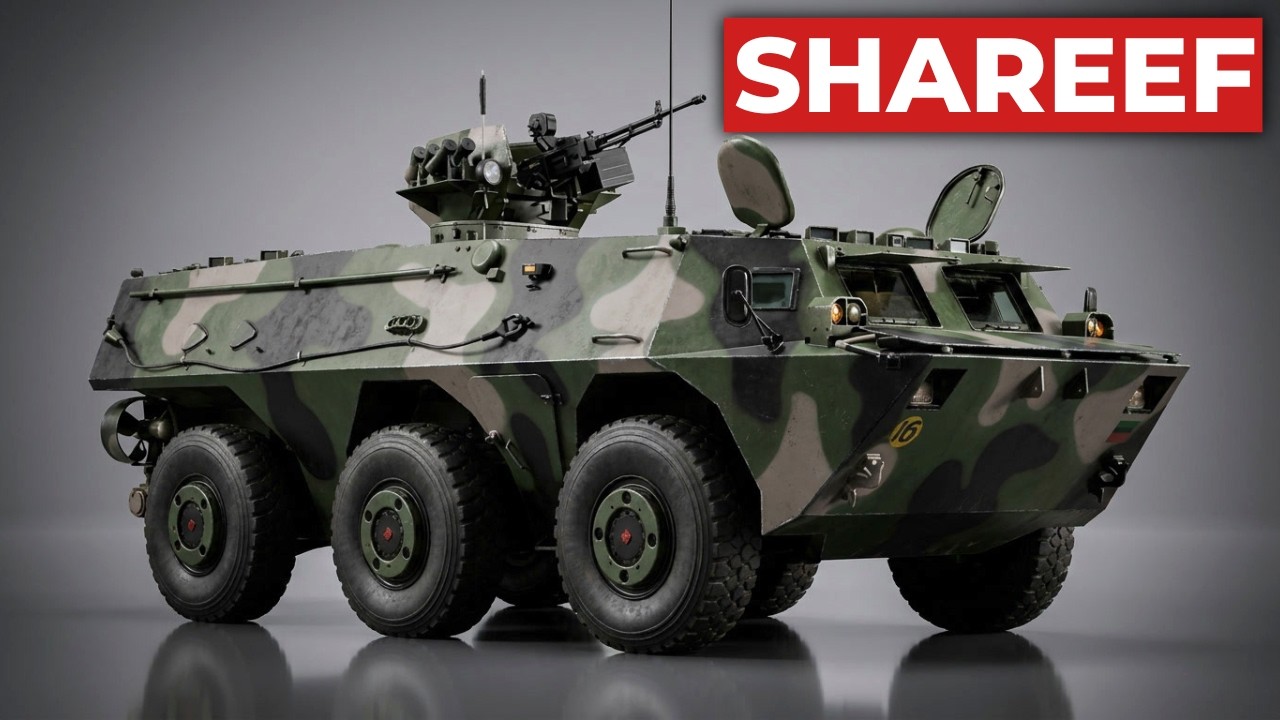
If you are finding this deep dive useful, hit subscribe. It takes 1 second and it helps this channel keep making content like this. The first serious combat test came not in Africa, but on an island 12,000 km from Beijing. Sri Lanka had been receiving Chinese armored vehicles since 1991. By 2008, the Sri Lanka armored core fielded 190 WZ551 family vehicles in its mechanized infantry regiment, more than any other single platform in the army’s inventory.
These were not peacekeeping transports. The Sri Lanka army used them in direct armored assaults against Liberation Tigers of Tamil Eelam defensive lines in the north of the island during Eelam War IV, the final and decisive campaign that ended the conflict in May 2009. Operating in jungle terrain and flooded paddy fields that immobilized many wheeled vehicles, the WZ551’s combination of road speed, amphibious crossing capability, and 25-mm firepower proved functional enough to sustain the army’s advance through 3 years of high-intensity conventional fighting. Sri Lanka won that war. The WZ551 was part of the machinery that won it. The combat record in South Asia opened doors in Africa that no amount of marketing could have opened alone. Sudan became the first African state to operate the type at meaningful scale. The Sudanese Military Industry Corporation began building the vehicle under license in Khartoum around 2006 under the designation Sharif 2. Versions of it saw service in internal operations
in Blue Nile and South Kordofan in 2016, where Sudanese government forces used them in combined arms sweeps against the Sudan People’s Liberation Movement North. Kenya followed with a procurement of 32 vehicles delivered in 2007. Those vehicles crossed the Somali border in October 2011 during Operation Linda Nchi, and they operated under the African Union Mission in Somalia through the capture of Kismayo in September 2012, Cameroon took delivery of 18 fire support variants mounting a 105 mm rifled cannon on the same hull. By 2014, those vehicles were deployed against Boko Haram in the Lake Chad basin under Operation Alpha. The pattern was the same in every capital. A Chinese defense attaché arrived with a price. The price was somewhere between $500,000 and $650,000 per vehicle based on documented purchases in South America and West Africa. No end-use certification. No human rights monitoring agreement. No multi-year offset requirement. Financing available through a Chinese
state bank, sometimes structured against commodity exports. Delivery within 18 months. No Western manufacturer could match any part of that offer. Niger received only two of the type, which made what happened at Bosso on the 3rd of June 2016 especially visible. Boko Haram overran the Nigerian forward operating base in the Diffa region that morning.
The United States State Department confirmed the toll the following day. 30 Nigerian and two Nigerian soldiers killed, 67 wounded. When Boko Haram released propaganda footage of captured equipment, one of Niger’s two WZ551 vehicles appeared in frame, destroyed. It was the first confirmed combat loss of the type to a non-state armed group in Africa, and analysts at IHS Jane’s Defence Weekly identified it from the footage within days.
But the moment that most clearly revealed what this platform had become came in February 2024 in the forests of Eastern Democratic Republic of Congo. Rwanda has been operating WZ551 family vehicles for over a decade. Among the variants it received was the Yitian, a short-range air defense configuration that mounts eight TY-90 surface-to-air missiles on a rotating launcher above the six-wheel chassis controlled by a phased-array radar integrated into the hull.
The Yitian was designed to protect armored columns from helicopter gunship and drone attack. In early 2024, United Nations peacekeeping forces in North Kivu province were using Falco surveillance drones to monitor movement in Rutshuru territory, an area held by M23 rebels, and according to multiple UN investigations, supported by Rwandan Defense Force units operating inside Congolese territory.
Around the 7th of February 2024, a UN internal document dated the 12th of February, seen by the AFP news agency, recorded that a suspected Rwandan Defense Force vehicle fired a surface-to-air missile at a UN Falco drone approximately 70 km north of Goma. The drone was not destroyed. French military intelligence reportedly confirmed the vehicle identification.
The platform was a WZ551 configured as a Yitian air defense system. It was the first confirmed combat use of the Chinese Yitian missile system in Africa. A vehicle originally designed to move PLA infantry across Chinese provincial highways had become an air defense platform confronting Western-supplied surveillance technology in an active interstate conflict.
On paper, the French Renault VAB looks like the superior vehicle in every category that matters. It entered service in 1976. 5,000 or more have been built across four-wheel and six-wheel configurations. It has accumulated combat experience in Lebanon, Chad, the Ivory Coast, Afghanistan, and Mali across five decades of real wars.
The modern VAB Mark 3 is a more refined, better integrated, and more thoroughly proven platform than the WZ551 in almost every technical dimension. In practice, none of that matters to a Ministry of Defense in sub-Saharan Africa working with a defense procurement budget measured in tens of millions of dollars.
The modern VAB in its current Mark 3 and Lakota configurations cost roughly what a Stryker costs. The Stryker sale to Bulgaria notified to the United States Congress in September 2023 priced 183 vehicles at $1.5 billion equating to roughly $8.2 million per hull before training and sustainment. No African army has that budget.
No African army can meet the export certification requirements that accompany an American or French military transfer. The German Boxer is more expensive still and is available only to NATO allies and close partners. Russia’s BTR-80 and BTR-82 were the closest genuine competitors on price. Before 2022, Russia competed seriously for the African wheeled armored carrier market and won significant contracts.
Since February 2022, Russian logistics, spare parts networks, and diplomatic attention have been redirected toward Ukraine at scale. China has moved into the resulting gap with speed and discipline. According to SIPRI data on international arms transfers, China accounted for 18% of all major arms deliveries to Africa in the period 2020 to 2024, second only to Russia at 21% and ahead of the United States at 16%.
The WZ551’s deeper legacy is not its own export success. It is what it made possible. The engineering lessons absorbed from six-wheel chassis dynamics, the Deutz engine installation, the modular turret ring, and 15 years of operational feedback from a dozen armies fed directly into the development of the ZBL-09, the 8×8 wheeled infantry fighting vehicle revealed at China’s 60th anniversary parade in 2009.
That platform is now in PLA service in numbers exceeding 6,000 hulls and has been exported to Thailand, Venezuela, and Argentina. The WZ551 was the proof that China could build a wheeled armored vehicle family from scratch and sell it to the world. Everything that followed was built on that proof.
Total production of the WZ551 family is estimated between 2,000 and 3,000 vehicles for the PLA with approximately 200 more exported across 15 to 18 countries. It remains in active production for the export market and for domestic specialist variants, including the PLL 05, a 120 mm gun mortar on the same hull.
1979, a workbench outside Beijing, engineers studying photographs of a vehicle they were never licensed to replicate. The WZ551 that eventually emerged was underpowered in its first version, stripped of the best gun it could have had by a European arms embargo, triggered not by Chinese decision, but by a political crisis. And dismissed for three decades as a second-rate imitation of French engineering.
It was none of those things. It reached Sri Lanka’s jungle battlefields. It functioned. It reached the Sahel with Cameroonian armored battalions. It functioned. It carried Kenyan columns into Somalia and held the line in Mogadishu’s suburbs. It functioned. It appeared in the forests of eastern Congo mounted with radar-guided missiles and fired them at United Nations aircraft.
More than 15 nations now operate it. Sudan manufactured it under license. Rwanda deployed it as an air defense system in an active war. Boko Haram destroyed one and released the footage as propaganda, which confirmed only that the vehicle was worth capturing in the first place.
No western wheeled armored carrier has matched its penetration of the African market across the last 20 years, not the VAB, not the Boxer, not the Stryker. China did not win that market by building a better vehicle. It won by building a vehicle that was good enough and offering it at a price that made every alternative impossible to justify. That is not imitation.
That is strategy.