The ‘Defenceless’ British Vehicle That Made Nine Nations’ Special Forces Abandon Their Land Rovers D
2001, a gated compound at Dunkeswell Aerodrome, a former Royal Navy air station buried deep in the Devon countryside. A machine rolls out of a low industrial building on six oversized wheels, its tubular steel frame exposed to the open air, its engine mounted low between the axles, its cab offering no doors, no roof, and no armor plating of any kind.
Two weapon mounts sit empty on the frame. A ring mount dominates the rear. The vehicle looks like an engineering prototype that escaped the workshop before anyone had time to finish it. It looks naked. It looked vulnerable. It looked like six wheels and a prayer. Within five years, this machine would become the most closely guarded mobility platform in British special operations.
It would deploy to Afghanistan, Iraq, Syria, and at least four countries across sub-Saharan Africa. It would equip the special forces of nine nations, carry Brimstone anti-armor missiles, shoot down Russian drones over Ukraine, and remain in continuous front-line production for more than two decades. Over 1,000 would be built.
Its designation was the Supacat HMT Extenda, and it was the vehicle that gave Britain’s special forces the ability to disappear into enemy territory and fight their way back out. To understand why this machine existed, you need to understand the problem United Kingdom special forces faced in the late 1990s.
For three decades, the SAS and the Special Boat Service had relied on modified Land Rover Defender 110s, known internally as Desert Patrol Vehicles. Before that came the legendary Series 2A109s painted in desert pink, the vehicles the regiment called Pink Panthers. These machines had served with distinction from Oman to the First Gulf War, but by the mid-1990s, their limitations were becoming dangerous.
Their payload was desperately limited. Their suspension could not absorb the punishment of high-speed desert crossings at night under blackout conditions. Their range, even with auxiliary fuel tanks welded to every available surface, fell short of the distances modern deep penetration missions demanded.
And critically, they could not carry the weight of electronic countermeasures, communications equipment, and heavy weapon systems that 21st century special operations required. The SAS needed a vehicle that could carry more, travel further, hit harder, and survive terrain that would destroy a Land Rover. Nothing in the British military inventory came close.
The answer came from an unlikely source. Supacat was a small engineering firm founded in 1981 by Nick Jones and David Clayton at Dunkeswell Aerodrome in Devon. Jones had begun his career as an apprentice at FJ Edwards in Chard, Somerset, and had already built a reputation for unconventional all-terrain vehicles, including the 6×6 all-terrain mobility platform adopted by British airborne forces in 1982.
But the HMT was something entirely different. Jones and his team, led by racing car designer Val Dare Bryan, designed the vehicle from a clean sheet of paper using principles borrowed directly from motorsport. The chassis was a tubular steel space frame. The engine, a Cummins 6.
7 L 6-cylinder diesel producing 180 horsepower and 700 Newton meters of torque, sat low and centrally between the axles to keep the center of gravity as close to the ground as physically possible. The transmission was a five-speed automatic with selectable two-wheel, four-wheel, and six-wheel drive, plus high and low range. That meant a crew could choose exactly how much traction they needed for the terrain in front of them, from tarmac highway to loose Saharan sand, without stopping the vehicle.
But the true innovation was the suspension. Val Dare Bryan designed and patented variable ride height air system that allowed the crew to adjust ground clearance from 180 mm, low enough to kneel behind cover or fit inside a C-130 Hercules transport aircraft, to 485 mm, high enough to cross obstacles that would stop a conventional military truck.
Each wheel had independent travel. The vehicle could absorb punishment at high speed across broken ground that would rip the axles from a Land Rover. The result was a machine that weighed 6,600 kg with fuel and could carry 3,900 kg of payload on top of that, more than double what a Land Rover could manage. Its road range reached 700 km on a 200 L fuel tank. The later Extender Mk.
II pushed that to 1,000 km with a 230 L tank. Top speed was 120 km/h. It could ford 1 m of water without preparation, climb a 60% gradient, and hold a 35° side slope without rolling. It could carry a crew of four, a .50 caliber heavy machine gun, a 40-mm automatic grenade launcher, a general-purpose machine gun, smoke grenade launchers, Javelin anti-tank missiles, and enough ammunition, water, fuel, and rations to sustain a fighting patrol for days without resupply.
And it could do all of this without a single panel of conventional armor. Now, before we get into where this vehicle actually fought and what it did in combat, if you are enjoying this deep dive into British special forces engineering, hit subscribe. It takes a second, costs nothing, and helps this channel bring you more stories like this one.
The first 65 HMT 400s were delivered to United Kingdom special forces under a program code-named Menacity, entering service in 2003 and 2004. The SAS Mobility Troop and the Special Boat Service were the first operators. The vehicle’s combat debut in their hands remains classified. What is known is that by 2007, the Ministry of Defense had placed urgent operational requirements for hundreds more. The 4×4 variant became the Jackal.
The 6×6 became the Coyote. The Jackal made its operational debut in Afghanistan on April 8th, 2008, deployed with 16 Air Assault Brigade and 3 Commando Brigade Royal Marines in Helmand Province. The logic was immediate and brutal. British forces needed a vehicle that could patrol the open desert flanks of the green zone, where the terrain was too rough for armored Land Rovers and too exposed for foot patrols, but where Taliban fighters moved freely between strong the Jackal gave small teams the firepower of a light armored vehicle and the mobility of a racing truck. Patrols pushed into ground that had been considered impossible, crossing wadis, rock fields, and soft sand at speeds that left Taliban spotters unable to call in ambushes before the vehicles had already moved through. The open-top design, which critics had called reckless, gave commanders 360° observation and allowed gunners to engage targets in any direction without the delays imposed by turret rotation or vision slit limitations. In the flat, featureless terrain south of Lashkar
Gah, that visibility was the difference between detecting a threat at 800 m and driving into one at 50. The cost of that openness was paid in blood. By August 2009, 13 British soldiers had been killed while operating in Jackals, most by improvised explosive devices. Some in the media called the vehicle a death trap.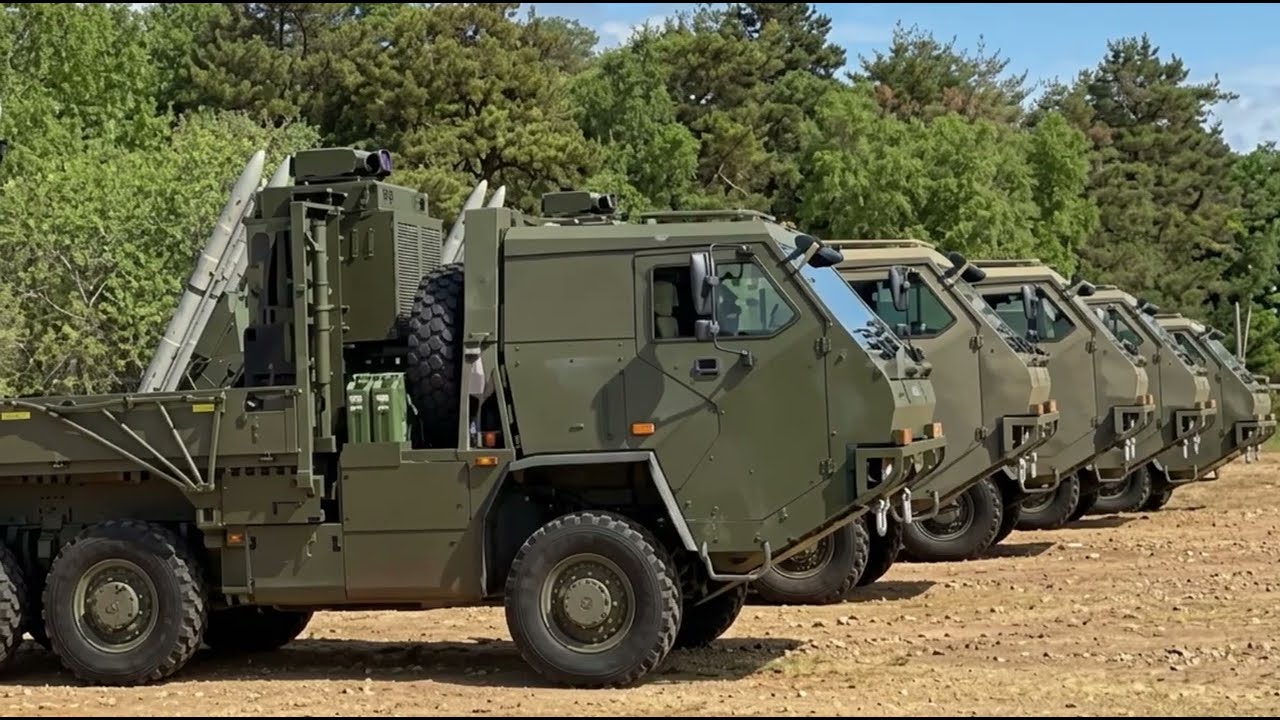
The accusation missed the doctrinal point entirely. The HMT was never designed to absorb blasts. It was designed to avoid them. Its speed and cross-country mobility meant that patrols using the vehicle properly could bypass the IED belts that channeled conventional armored vehicles into killing zones.
Where Jackals hit mines, it was often because commanders had been forced to use them on roads they were never meant to travel. In September 2009, a Royal Marine survived a direct mine blast under a Jackal. The blast attenuating seats and Jankel armor kit absorbed energy that would have killed the crew of a lighter vehicle. The vehicle proved itself again in September 2012 during the Taliban assault on Camp Bastion in Helmand.
Insurgents breached the perimeter and attacked aircraft on the flight line with rocket-propelled grenades and automatic weapons. Sergeant Roy Geddes of the Royal Air Force Regiment commanding a Jackal came under direct RPG fire. His vehicle was struck. Geddes rallied his crew, returned fire, and organized the defense of his section of the base under sustained attack.
He was awarded the Military Cross. Beyond Afghanistan, the HMT platform spread across the globe. The United States bought 47 vehicles for Delta forces as early as 2004, designating them the Marauder. Denmark purchased 15 Extenders for the Jaeger Corps. Norway signed a 23 million pound contract for 24 Extender Mark IIs for the Forsvarets Special Commando, with the first production vehicle handed over at Supacat’s Devon facility on May 30th, 2018.
Australia bought 31 vehicles for the SAS Regiment named Nyeri, honoring Warrant Officer Class II David Nyeri of the Australian SAS, killed in a training accident in Kuwait in 2005. Australia later ordered 89 more for Second Commando Regiment. New Zealand acquired Extenders for the NZSAS, and in October 2025, the Czech Republic signed for 18 vehicles for the 601st Special Forces Group.
The platform found its way to Ukraine. Australia donated 14 retired Extender Mark IIs in 2023, and by March 2024, the vehicles had appeared in Ukrainian service. But the HMT’s most remarkable Ukrainian chapter belonged to a variant called Raven. Developed in just 3 months in 2022 by MBDA, Supacat, and the RAF Air and Space Warfare Centre, Raven mounted two AIM-132 ASRAAM air-to-air missiles on launch rails salvaged from retired Tornado and Jaguar jets, all bolted to an HMT 600 chassis.
According to Colonel Ollie Todd of Task Force Kindred, 13 Raven systems were deployed to Ukraine with approximately 400 ASRAAM missiles, achieving a 70% engagement success rate against Russian drones and cruise missiles. A vehicle designed for desert patrol was now shooting down aircraft.
On paper, the American GMV 1.1, the General Dynamics Flyer 72, looked like the stronger competitor. It was lighter at roughly 3,300 kg. It was narrower at 72 in. Specifically designed so that two vehicles could fit inside a single CH47 Chinook. The United States Special Operations Command bought up to 1,300 of them, but the flyer sacrificed payload and range for that compactness.
Its carrying capacity was roughly 2,500 kg, a full 1,400 kg less than the HMT 600. Its range was shorter. Its suspension was competent but could not match the Supercat’s patented variable height system. The American vehicle was built for rapid insertion. The British vehicle was built for sustained independent operations deep behind enemy lines.
One was a sprinter, the other was a marathon runner carrying a machine gun. The Extender’s most ingenious feature was its convertibility. A crew could remove or add the third axle in approximately 2 hours, switching the vehicle between a 4×4 configuration weighing 9,000 kg and a 6×6 configuration weighing 12,000 kg.
In 4×4 mode, it was compact enough for internal helicopter transport. In 6×6 mode, it became the mothership of a fighting column carrying spare ammunition, fuel drums, water, and rations for an entire patrol. No other special forces vehicle in the world offered that flexibility from a single platform.
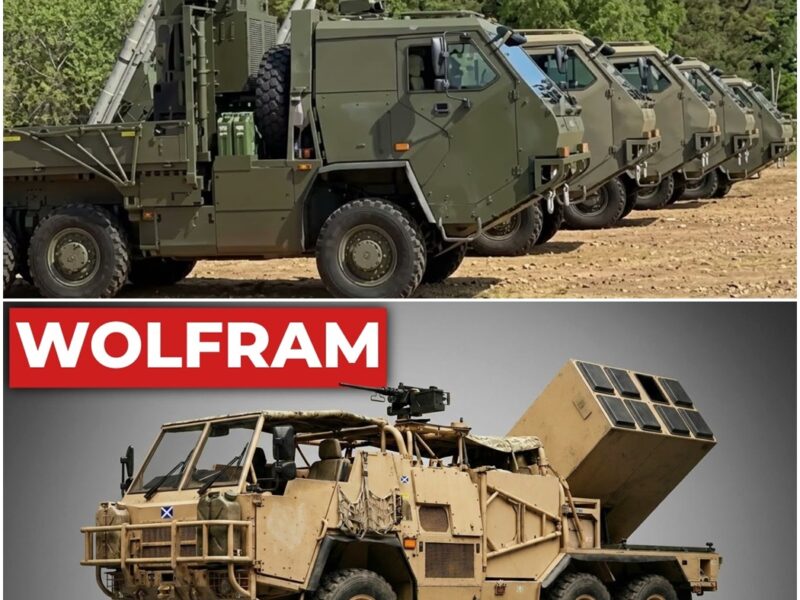
The HMT’s most ambitious evolution remains unfulfilled. Wolfram, a joint concept between MBDA and Supercat, mounts an eight-cell Brimstone anti-armor missile launcher on the HMT 600 chassis. Brimstone is a fire and forget missile with a dual-mode radar and laser seeker that has achieved a 98% success rate across more than 300 combat engagements.
But, as of mid-2026, Wolfram remains an industry-funded demonstrator. No production contract has been signed. The British Army’s requirement for light forces overwatch under the Battle Group Organic Anti-Armour program remains unfunded. A vehicle that could give a four-man crew the ability to destroy a column of main battle tanks from over 10 km away exists only as a prototype on a show floor in Devon, 2001, Dunkeswell Aerodrome.
A machine with six wheels, no roof, and no armor rolls out of a workshop in the Devon countryside. It is too heavy for some helicopters. It offers no protection against rifle fire. It cannot swim across rivers. It has no active protection system, no radar warning receiver, and no air conditioning. Its crew sit in the open air exposed to blast, shrapnel, weather, and dust. And yet it worked.
It worked in the deserts of Helmand. It worked mountains of Norway. It worked in the jungles of sub-Saharan Africa and the flat frozen mud of Eastern Ukraine. It worked because the engineers at Supacat understood what the SAS had known since 1941. That for special forces, the ability to go where no one expects, carry everything you need, and leave before anyone knows you were there is worth more than any amount of steel plating. Nine nations trusted it.
Over 1,000 were built. The vehicle is still in production, still in combat, and still evolving. That is not luck. That is British special forces engineering. Built in Devon and proven everywhere it mattered.