The ‘Exposed’ British Patrol Vehicle That Survived Every Ambush And Kept Hunting Taliban D
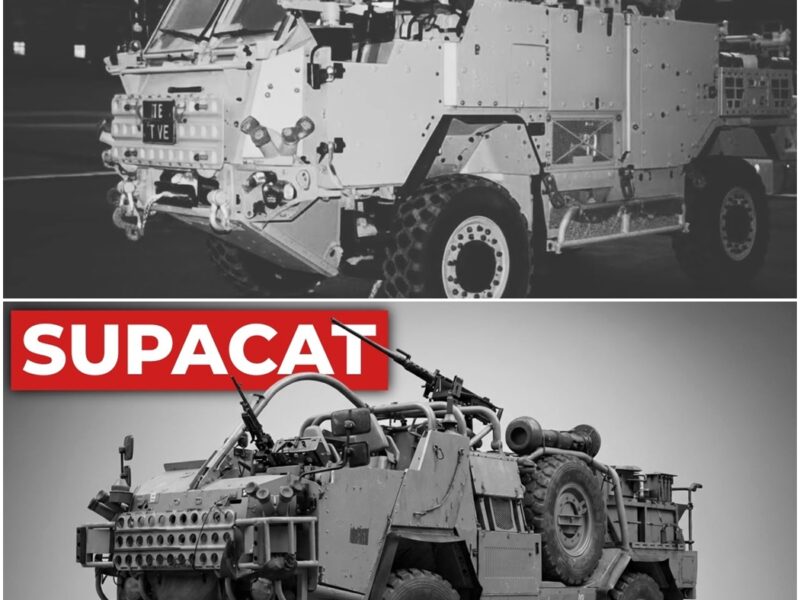
April 8th, 2008. A sun-scorched airfield in Helmand province, southern Afghanistan. A strange new vehicle rolls down the ramp of a British transport aircraft and onto the desert floor. Four wheels, an open cab, no roof, no armored cupola, just a steel ring mount carrying a 12.
7 mm heavy machine gun, and three men sitting entirely exposed to the sun, the wind, and every rifle line in the valley. It looks wrong. Royal Marines watching from the tarmac see what could pass for a desert racing buggy painted in sand camouflage. There is no overhead protection at all, no door plating, no blast hull of the kind the Americans were bolting onto every vehicle in Iraq.
In a theater defined by buried pressure plates and roadside bombs, the British Army had just delivered a patrol vehicle with the roof cut off. And yet, over the next 14 years, this machine would patrol the most heavily mined ground on Earth, survive ambush after ambush across Helmand, cross 1,500 km of the Sahel on deep reconnaissance, deploy to NATO’s eastern frontier against Russia, fight in Ukrainian hands on the steps of Eastern Europe, and equip every light cavalry regiment in the British Army. Its designation was the Supacat Jackal 2, known by the military code MWMIK, and it became the most controversial British patrol vehicle of the entire Afghanistan War. To understand why the Jackal 2 existed, you need to understand the problem Britain faced in 2007. In southern Iraq and Helmand province, British patrols were dying in a vehicle called the Snatch Land Rover. It been designed for Northern Ireland street patrols in the 1980s. Against Taliban pressure plate bombs buried in dirt roads, it offered almost nothing. The
press called it the mobile coffin. The soldiers called it worse. The British Army needed a patrol vehicle that could do something radically different. Not survive the bomb, but avoid it entirely. That meant leaving the roads. That meant driving off into the wadis in the open desert where no patrol vehicle before had been able to follow.
That meant mobility over armor, speed over steel, reach over roof protection. The answer came from a small engineering firm in Devon. Supacat, based at Dunkeswell Aerodrome near Honiton, had spent almost a decade developing a vehicle called the High Mobility Transporter, the HMT 400. Since 2003, British special forces had been using it on operations they did not talk about, replacing the old SAS Pinkie Land Rovers that had served since the Gulf War. It was already combat proven.
It simply was not yet in wide service. On September 5th, 2007, the Ministry of Defense signed a 30 million-pound urgent operational requirement for 130 vehicles. The Jackal 1 was born. It reached Helmand within months, and within a year, combat feedback from the Royal Marines and 16 Air Assault Brigade drove a second generation.
In April 2009, a 140 million-pound contract was signed with Supacat and Babcock Marine at Devonport to deliver the Jackal 2. The changes were direct answers to what Helmand had exposed. The heavy weapon ring mount was moved forward and raised, giving the top gunner a full 360° arc of fire.
A fourth crew seat was added for an embedded interpreter or infantryman. Energy-attenuating mine blast seats were installed to absorb the vertical shock of a buried charge. The engine was upgraded to a Cummins ISBe 6.7 L turbo diesel producing 185 horsepower, but the heart of the vehicle was the suspension. Each wheel rode on two hydropneumatic shock absorbers backed by external Fox Racing bypass dampers.
The crew could select four ride heights. 180 mm for air portable transport inside a Chinook helicopter, 280 mm for road driving, 380 mm for off-road work, and 530 mm for maximum obstacle clearance. Lowered onto its bump stops, it became a stable firing platform. Raised on full extension, it cleared ground no other patrol vehicle could touch.
Top road speed was 130 km/h, or 80 mph. Operational range was 800 km on internal fuel. The armament was a 12.7 mm L111A1 heavy machine gun or 40 mm grenade machine gun on the roof ring, plus a 7.62 mm general-purpose machine gun at the commander’s position. It was not built to fight armor. It was built to outrun it.
Now, before we get into where the Jackal 2 actually fought, if you are enjoying this deep dive into British military engineering, hit subscribe. It takes a second, costs nothing, and helps the channel grow. The Jackal entered combat with 16 Air Assault Brigade and then 3 Commando Brigade in Helmand during Operation Herrick 8 in the spring of 2008.
Early reactions from the men who crewed it were unambiguous. Royal Marine officers called it a dune buggy that could go anywhere. Brigadier Buster Howes of the Royal Marines described it simply as a complete revelation. Its defining campaign came in July 2009. Operation Panchai Palang, known in English as Operation Panther’s Claw, was a 3,000-strong British offensive aimed at breaking Taliban control of the Babaji Triangle before the Afghan elections.
At the center of it was the Light Dragoons Battle Group under Lieutenant Colonel Gus Fair, Distinguished Service Order. Between July 4th and July 14th, Light Dragoons squadrons swept through Spin Masjed and Babaji in Jackal 2s, raiding compounds, engaging insurgent firing points, and dominating ground that had previously been closed to British patrols.
The following February, the Household Cavalry’s A Squadron drove Jackals into the Bowland Desert alongside Danish Leopard tanks conducting shaping operations for Operation Moshtarak, the main coalition assault on Marjah. But the single most dramatic Jackal engagement of the war came on the night of September 14th, 2012, at Camp Bastion.
15 Taliban fighters wearing American uniforms breached the camp’s outer wire, destroyed six United States Marine Corps Harrier jump jets on the flight line, and began pushing deep into the base. The quick reaction force that rolled out to stop them was a 12-man unit in Jackal vehicles commanded by Sergeant Roy Geddes of the RAF Regiment.
A rocket-propelled grenade slammed into his vehicle. Every man aboard was wounded. Geddes himself took a round through the knee. He did not pull back. He rallied his crew, continued commanding the counterattack through the night, and fought on until first light broke over the Helmand desert.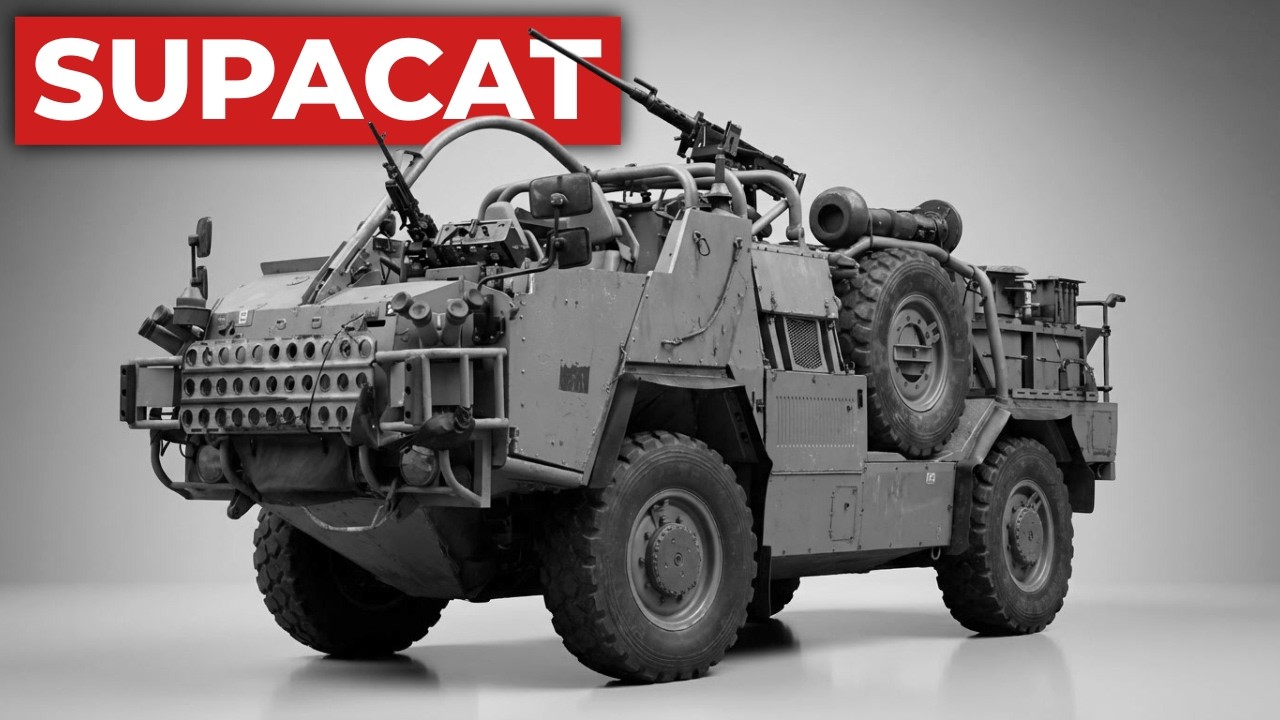
On March 22nd, 2013, he was awarded the Military Cross. Corporal Kurt Lee, fighting alongside him, was mentioned in dispatches. The cost across Helmand was real, and it must be named. The first Jackal fatality was Trooper James Munday of the Household Cavalry Regiment, killed on October 15th, 2008, aged 21, by a roadside explosion north of Forward Operating Base Delhi.
Prince William, who had served in Munday’s squadron, paid public tribute. In November 2008, Royal Marines Neil Dunstan and Robert McKibbon died near Gamsar when their Jackal detonated a 25 kg pressure plate bomb. In March 2009, Corporals Graeme Stiff and Dean John of the Royal Electrical and Mechanical Engineers died west of Gamsar.
In May, Rifleman Adrian Sheldon of 2 Rifles was killed near Sangin. In July, during Panther’s Claw itself, Bombardier Craig Hopson of 40 Regiment Royal Artillery was killed reconnoitering polling stations in Babaji. Days later, Corporal Kevin Mulligan, Lance Corporal Dale Hopkins, and Private Kyle Adams of 1 PARA and the Special Forces Support Group were killed in a combined bomb and small arms ambush north of Lashkar Gah while training Afghan security forces.
By August 2009, media tallies counted 13 British soldiers killed inside Jackals. The Independent newspaper ran a headline calling it a death trap. The Sunday Times called it flawed. Inquests returned unlawful killing verdicts. But Armed Forces Minister Bob Ainsworth told the House of Commons that the open cab was doctrinal.
The Jackal survivability came from not being where the bomb was. Mobility over protection, reach over roof. The Ministry of Defense responded with the Jackal 2A variant of 2010. The aluminum cab was replaced with steel. Integrated blast protection replaced bolt-on armor, and modular armor installation kit was standardized across the fleet.
After Afghanistan, the Jackal fought again. From 2020 to 2022, the Light Dragoons and the 1st The Queen’s Dragoon Guards deployed Jackal 2A and Coyote 6×6 vehicles to Mali as the long-range reconnaissance group under Operation Newcombe. They conducted deep penetration patrols of up to 1,500 km into the Sahel, the first time British cavalry had come under enemy fire since Afghanistan.
A Queen’s Dragoon Guards soldier was mentioned in dispatches. Four Jackal 2s were also loaned to the Estonian Defense Forces Special Operations Force for the same theater. And from 2016 onward, Jackals of the Light Dragoons and Royal Scots Dragoon Guards have rotated through NATO’s enhanced forward presence in Poland and the Baltic, patrolling the Suwalki Gap against Russian probing.
On paper, the American alternative looked superior. The Oshkosh MATV and the Navistar MaxxPro were the giants of the mine resistant ambush protected family, some of them weighing more than 20 tons, engineered to survive a buried charge through sheer hull mass and armor thickness.
At 6 and 1/2 tons combat weight, the Jackal was less than a third of their size. On a straight armor comparison, it lost. In practice, the two vehicles were solving different problems. The big American mine resistant trucks were built to survive the road. The Jackal was built to leave it. Where the Americans churned down metalled highways that Taliban bomb teams had been watching for weeks, Jackal patrols disappeared into the open desert, following routes no enemy could predict or precede.
Survivability came from unpredictability, not from armor. The closest foreign analog by size was the Australian Thales Hawkei, around 7 tons, which first entered Australian service in 2020. But the Hawkei used a fully enclosed armored cab, reflecting the opposite doctrinal choice. Protection first, accepting reduced situational awareness.
The German and Dutch Fennek was different again, low profile with a mast-mounted optical sensor suite, designed for silent observation rather than fire support. Inside the British inventory, the Jackal sat alongside the Foxhound, the Husky, the Mastiff, and the Wolfhound. Each did a different job.
The Foxhound, not the Jackal, was the true replacement for the Snatch Land Rover. Most public criticism of the Jackal rested on a category error that conflated two separate tactical missions. In December 2013, the Ministry of Defense confirmed the Jackal was transitioning from urgent operational requirement into the core British Army fleet.
441 vehicles of all Jackal variants were being retained. Under the Army 2020 structure, the Jackal became the defining vehicle of the light cavalry role, equipping the Light Dragoons, the Royal Scots Dragoon Guards, and the 1st Queen’s Dragoon Guards, along with their Yeomanry Reserve partners. Then came Ukraine. Babcock International’s own contract announcements confirm that a number of British Jackals were donated to Ukrainian forces after February 2022, part of the wider gifting program.
Exact numbers remain undisclosed. On February 23, 2023, the British government awarded Babcock and Supercat a 90 million pound contract for 70 new Jackal 3 vehicles with an option for up to 240 more. The first 70 units were completed in August 2025. A further 53 Jackal 3E variants were ordered in September 2024.
Preserved Jackals now sit at the Tank Museum in Bovington, appearing in the Battle Group Afghanistan exhibition alongside the Viking, the armored reconnaissance tracks, and the Panther. April 8, 2008, a desert airfield in Helmand, a strange vehicle with no roof rolling down a ramp, four wheels, an open cab, a single heavy machine gun standing above the heads of three exposed men.
It was under armored against a modern mine resistant truck. It had no overhead protection. Its open design cost the lives of British soldiers. It was criticized by the press, questioned by coroners, and condemned by the families who lost the men it carried. And yet it worked. It worked in the wadis of Helmand where no armored vehicle could follow.
It worked through Operation Panther’s Claw. It worked at Camp Bastion when Sergeant Roy Geddes fought through the night with a bullet in his knee. It worked in the Sahel 1,500 km from the nearest friendly base. It worked in Estonian hands, in Ukrainian hands, and on NATO’s eastern frontier. The engineering philosophy behind it was brutally simple.
Do not survive the bomb. Never be where the bomb is. That is not luck. That is British doctrine, written in Devon steel and Helmand dust.