The ‘Forgotten’ American Armoured Car That Fought Every Cold War Without A Single Honour D
March, 1963. A factory floor in Warren, Michigan. A squat, boat-hulled vehicle rolls out under the fluorescent lights. Four wheels, steel hull, a turret mounting twin machine guns. It looks compact, almost modest. Nothing about it suggests ambition. Nothing about it looks like a gamble. It was both.
The company that built it, Cadillac Gage, received not a single dollar from the United States government to design it. No military requirement drove its creation. No Pentagon contract funded its steel. The engineers built it on their own initiative, using their own money, aimed at a market that did not yet know it wanted them.
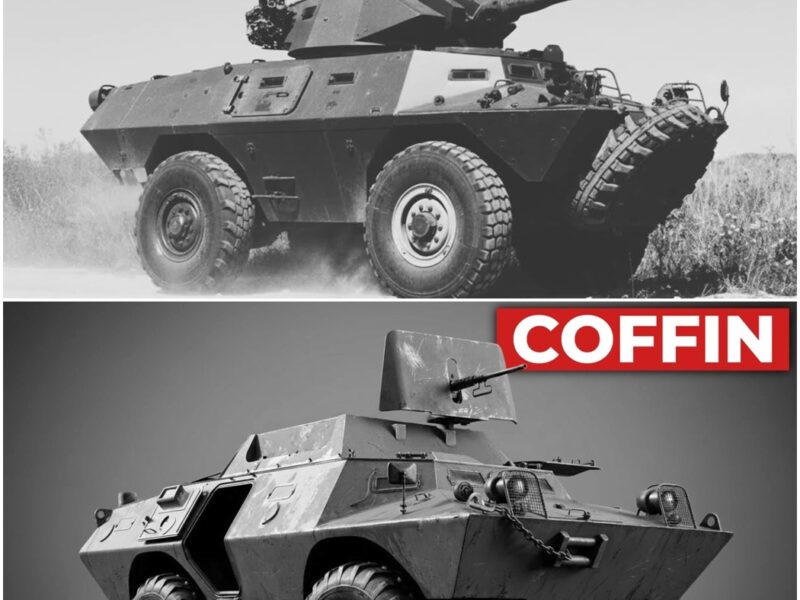
When the United States Army was shown the vehicle, they were unimpressed. When it arrived in Vietnam, some crews called it a coffin on wheels. It would go on to serve more than 35 nations across six continents. It would fight in Southeast Asia, the Gulf, the jungles of the Philippines, and the deserts of Arabia.
It would survive one dictatorship’s collapse, then be captured by the army that came to replace it. Its direct descendant would finally vindicate the concept in Iraq and Afghanistan, decades after the army had written off the original as surplus and sent surviving examples to be used as range targets.
Its name was the Cadillac Gage Commando, and it was the armored car America built for everyone except itself. To understand why the Commando existed, you need to understand what the 1960s actually demanded. Around 1960, dozens of nations were emerging from colonial rule with no military infrastructure and no budget for expensive European hardware.
They needed armored vehicles that were affordable, simple to maintain, and built from parts they could already source through American military assistance programs. The Soviet alternatives came with political conditions attached. The European alternatives came with price tags that closed the conversation.
Cadillac Gage was a subsidiary of Ex-Cell-O Corporation, a Michigan industrial conglomerate. It manufactured defense products, including its own high-hardness armor steel, branded Cataloy, and modular weapon systems. The company’s engineers built the Commando entirely on private funding, using a deliberate philosophy.
Put the same Chrysler V8 engine inside it that powered the M113 armored personnel carrier. Use axles derived from the American 2 and 1/2 ton military truck, already warehoused across half the world. Well, the Cataloy hull is a monocoque, so the armor itself served as the structure with no separate frame required.
Any army that already ran American pattern military trucks could maintain this vehicle without a single new spare part added to their supply chain. A patent was filed in 1962. The first prototype was complete by March 1963. Full production of the V-100 began in January 1964 at a base price of $24,500. The specifications tell the story of a machine designed for adaptability.
The V-100 weighed 7,371 kg fully loaded. Its Cataloy armor, ranging from 6.4 to 9.53 mm of angled steel, stopped 7.62 mm ball ammunition from all directions. Optional applique armor upgraded frontal protection to defeat .50 caliber ball rounds. 80 gallons of fuel gave a road range of approximately 640 km.
Top speed reached 100 km/h. The vehicle was fully amphibious without preparation, propelled by wheel rotation through water at 5 km/h. Run-flat tires allowed 56 km of continued movement after puncture. What made the Commando genuinely unusual was its modular armament architecture. The turret could accept twin 7.
62 mm machine guns, a .50 caliber M2HB heavy machine gun combined with a secondary light machine gun, a 20 mm auto cannon, or a 90 mm gun capable of engaging armored vehicles. TOW anti-tank missiles, an 81 mm mortar, and a 76 mm tank gun using the complete turret of the British Scorpion were all available configurations.
The United States Air Force variant deleted the turret entirely and fitted an open-topped parapet where crews could mount whatever combination of weapons the mission required. One hull, unlimited configurations. That was the pitch, and the pitch was real. Before we get into where this vehicle actually fought, if you are finding value in this content, hit subscribe.
It costs nothing, and it helps the channel grow. Vietnam was where the Commando earned its reputation and its nickname simultaneously. The Army of the Republic of Vietnam, the ARVN, received the first XM706 models from 1963, making South Vietnam the vehicle’s first operational customer. United States Army military police units specifically requested V-100s for convoy escort, but were initially denied and forced to borrow vehicles from the South Vietnamese.
That changed in July 1967 when V-100s finally joined the 720th and 504th military police battalions of the 18th Military Police Brigade, whose men had previously escorted convoys through ambush country in open gun jeeps. Company B of the 504th, the Road Runners, operated on Highway 19 between Qui Nhơn and Pleiku, the same road where the French had lost an entire column in 1954.
Their experience with the V-100 was not uniformly positive. Crews reported chronic malfunctions with the twin machine guns and persistent trouble with the engine starter in the field. Some sections stopped using the vehicles on that route entirely by mid-1968. Company C, operating from An Khê on the same highway, had better results, including an engagement where the hull protected an entire crew from a mine detonation that would have killed every man in an unarmed vehicle.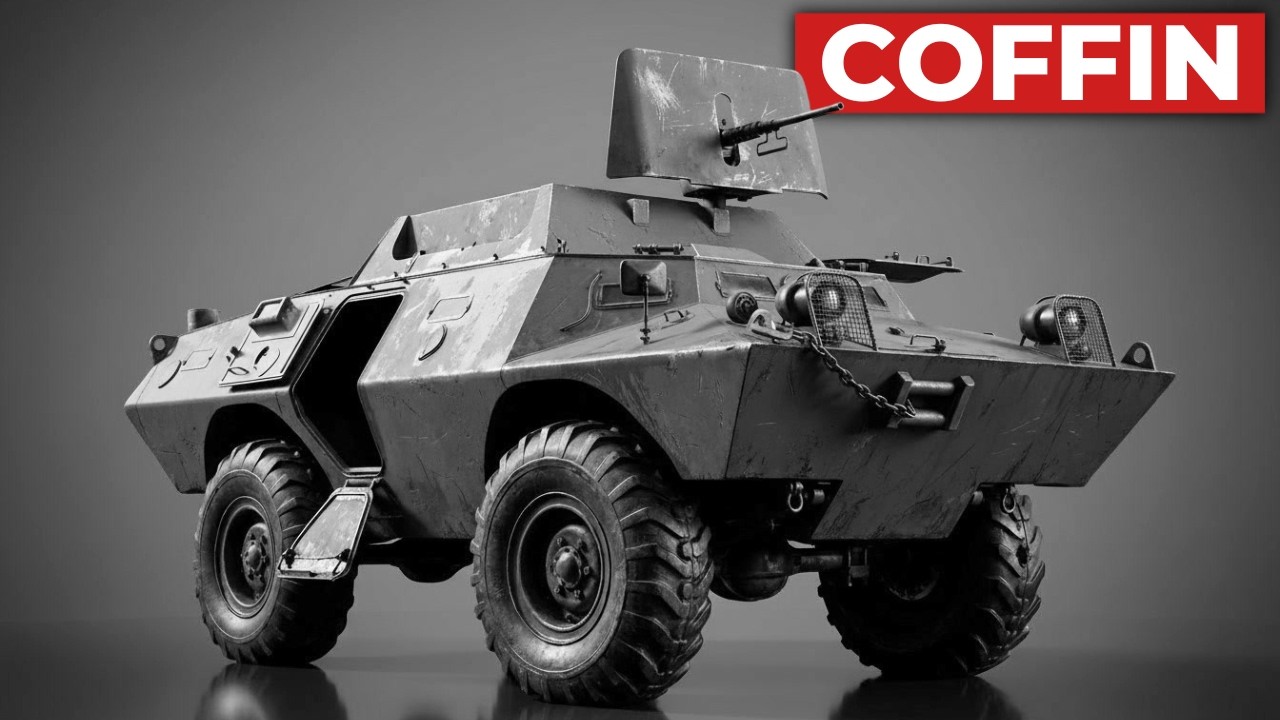
The vehicle’s reputation in American service was, at best, complicated. The Tet Offensive of January 31st, 1968 changed everything. At Tan Son Nhut Air Base, seven Viet Cong and North Vietnamese Army battalions, approximately 1,500 fighters, struck the perimeter held by the 377th Security Police Squadron. Five security policemen at Bunker 051, Sergeants Louis Harold Fisher, William Seay, Charles Hebron, Roger Mills, and 21-year-old Alonzo Coggins, the sole survivor of the five, held their position against repeated assault. All five received the Silver Star. 962 enemy bodies were counted inside and immediately outside the perimeter. At Biên Hòa Air Base, Captain Reginald Mazy Jr., operations officer of the 3rd Security Police Squadron, drove through enemy fire to organize the defense against the 274th Viet Cong Regiment. Wounded, he continued directing forces until killed by a rocket-propelled
grenade at approximately 0430 hours. Captain Mazy received the Air Force Cross posthumously, the first ever awarded to a non-aviator in the history of the United States Air Force. The V-100 was not yet at those bases when Tet struck. That absence was the lesson. When delays in M113 armored personnel carrier deliveries left air installations without mobile armored defense, planners accepted 60 XM706E2 Commandos as an emergency substitute.
The open-topped parapet variant, typically armed with a .50 caliber heavy machine gun and a 40 mm grenade launcher, became the mobile backbone of USAF base defense at Tan Son Nhut, Biên Hòa, Cam Ranh Bay, Da Nang, and six other major installations through the remainder of the war. When Saigon fell on April 30th, 1975, surviving V-100s were captured by North Vietnamese forces, rearmed with Soviet weapons, and pressed into service by the army that had fought against the nation that designed them. Some remain nominally operational in Vietnam today. The Commando’s most significant post-Vietnam combat came during the Gulf War. On January 29th, 1991, Iraqi forces seized the Saudi border town of Khafji. The Saudi Arabian National Guard’s 2nd Brigade, equipped with V-150 Commandos armed with .50 caliber machine guns and 90 mm cannon, led the counterattack. The 7th Battalion launched the first assault on January 30th, but was repulsed. A second assault on January 31st pushed
into the streets, where three V-150s were destroyed at close range by rocket-propelled grenades. The 5th Mechanized Battalion simultaneously engaged an Iraqi armored column north of the town, destroying approximately 13 armored vehicles and taking 116 prisoners. Khafji was recaptured on February 1st. 10 V-150s were lost.
18 Saudi personnel were killed. The battle proved both what the vehicle could do and exactly how it could be killed. In the Philippines, V-150s saw perhaps the most sustained modern combat of any Commando variant. During the Battle of Marawi in 2017, a five-month siege against Islamic State-affiliated militants, crews improvised additional protection from wooden planks and sandbags before each push into the streets.
Earlier operations in Zamboanga in 2013 and decades of counterinsurgency in Mindanao had placed the same vehicles in the same kind of close urban fighting. Indonesia’s fleet fought through East Timor during Operation Seroja, through the Aceh conflict, and deployed to Papua to secure a major mining complex.
Rebel fighters in East Timor called the vehicles mobile setan, devil cars. On paper, the Commando’s rivals each held a decisive advantage in one dimension. The Soviet BRDM-2 was produced in enormous quantities, and its 14.5 mm gun could penetrate armor the Commando’s standard weapons could not touch.
But the BRDM-2 carried zero passengers. It was a pure reconnaissance platform with no transport capability and a fraction of the Commando’s armament options. The French Panhard AML-90 could penetrate 320 mm of armor and genuinely threatened main battle tanks, but it could not swim rivers, could not carry troops, and required armies to purchase a separate personnel carrier.
The Commando performed both roles from one hull, maintained from one parts catalog. The definitive American rejection came in September 1982 when Cadillac Gage submitted both a stretched V-150 and the 6×6 LEV-300 for the United States Marine Corps light armored vehicle competition, a potential order of over 2,300 vehicles.
General Motors of Canada won with a license-built Swiss 8×8 design. The vehicle became the LAV-25. Cadillac Gage protested. The protest failed. The army then used surviving V-100s as gunnery range targets, and the last XM706E2 vehicles at Nellis Air Force Base spent their final years painted to resemble Soviet missile launchers for training exercises.
The armored car that had defended a dozen air bases in combat ended its American career as a prop. Returned to Warren, Michigan, March 1963. A vehicle no government asked for, built from truck parts, dismissed by the army, rejected in open competition by the Marine Corps, and called a coffin on wheels by some of the men who drove it on the worst roads in Vietnam.
It served more than 35 nations. It crossed rivers without preparation. It absorbed mine blasts. It fought in Southeast Asia, the Gulf, Africa, Central America, and island jungles decades after the Cold War ended. It was underpowered against guided missiles. It had no night vision. In Khafji, rocket-propelled grenades killed it in the streets.
These are not small limitations. And yet in 1999, Textron Marine and Land Systems, the corporate successor to Cadillac Gage, delivered the M1117 Guardian armored security vehicle to the United States Army. 3,369 of them served in Iraq and Afghanistan in the same convoy escort and base defense role the V-100 had performed in Vietnam.
In 2015, the company formally revived the name, rebranding the entire line as the Commando family of vehicles. Variants are currently being delivered to Ukraine. The army that discarded the Commando eventually built more than 3,000 of its grandchild. The nations that bought the original are still fielding it in modified form, still taking it into combat, still naming it and armoring it with whatever comes to hand. That is not obsolescence.
That is engineering that outlived the institution that invented it. 35 nations proved it. Some are still proving it now.