The ‘Forgotten’ German Carrier That Sold To Every Continent Without Ever Fighting A Famous Battle D
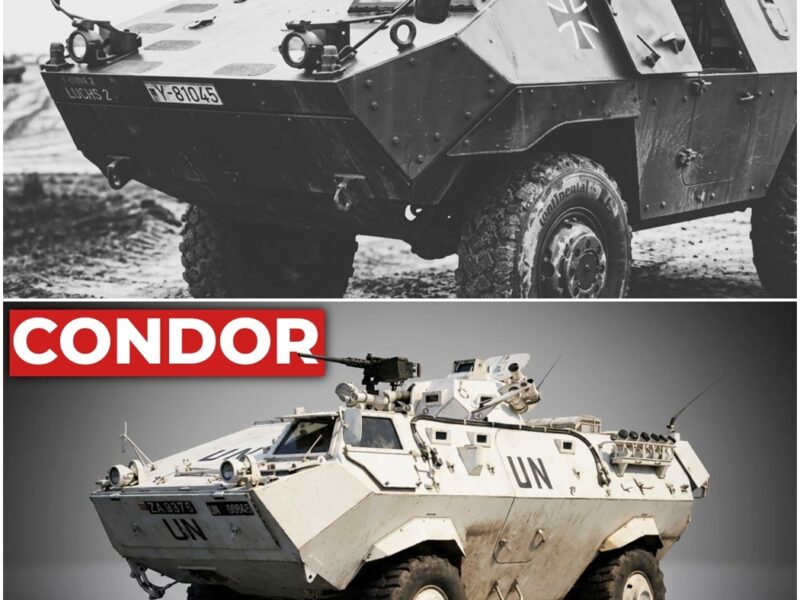
1978, a production hall in Kassel, West Germany. In the shadow of the factory that built Tiger tanks 30 years before, a steel hull is wheeled onto the floor, four large commercial truck wheels, a boxy angular body with flat vertical sides, a flat roof, and a rear door that opens like a delivery van.
No sloped armor, no dramatic silhouette, no visual menace of any kind. From a distance, it looks like an oversized bread van that someone has welded steel plates onto. The engineers inside call it the Condor. Nobody outside of the building is paying attention. The West German army has not ordered it.
No NATO ally has expressed interest. There is no government contract, no military requirement, no general waiting by a telephone. The Condor is a private venture, funded entirely by its manufacturer, designed from the first day of development for export, and at this moment in 1978, it has no customers at all. And yet, this machine will go on to serve on four continents.
It will be purchased by nations as different as Malaysia, Uruguay, Turkey, Portugal, Argentina, Kuwait, and Thailand. It will accumulate nearly half a century of continuous operational service. It will be present at one of the most desperate rescue operations in modern military history, the one that became a Hollywood film, and it will receive almost none of the credit.
Over 400 of them are still in active service today. Its designation was the Thyssen-Henschel Condor. It is the most successful armored personnel carrier the world has never heard of. To understand why the Condor existed, you need to understand the problem the export arms market presented in the late 1970s.
West Germany’s own military was building the most capable armored force in Western Europe. The Marder 1 infantry fighting vehicle had entered service in 1971. The 6×6 Transportpanzer 1 wheeled carrier followed in 1979. Both were expensive, sophisticated, and designed for a single purpose, stopping a Soviet armored thrust through the Fulda Gap.
Neither was remotely suited to the needs of smaller nations. Dozens of countries needed something completely different, not a vehicle for fighting Soviet tank divisions, a vehicle for moving soldiers through jungles, across monsoon mud, along coastal roads, and into United Nations peacekeeping zones.
A vehicle whose mechanics could fix it with parts from the nearest commercial truck depot, a vehicle light enough to load aboard a transport aircraft. Thyssen Henschel, the armored vehicle division of the old Henschel industrial dynasty, whose castle works had been building engines and armored fighting vehicle since before the first World War, had already tried to fill this gap with an earlier design.
The UR-416 was an armored body bolted onto a Mercedes-Benz Unimog 4×4 truck chassis. Introduced in 1969, it had sold modestly to police forces and smaller militaries through the 1970s. By 1978, it was running out of road. Its engine produced only 120 horsepower. It carried fewer than 10 soldiers.
It could not cross water under its own power. The hull was too small for modern squad sizes. The Condor was the answer. The central design decision was the same as the UR-416, and it remained the right one. Keep the Unimog chassis. The Mercedes-Benz Unimog 4×4 was one of the most mechanically dependable light truck platforms on Earth.
Daimler Benz maintained approximately 4,700 service stations across 170 countries. An army operating a Condor in the jungles of Southeast Asia or the deserts of the Middle East could source a replacement engine, axle, or gearbox through the nearest commercial Mercedes-Benz dealer. No other armored personnel carrier on the market offered that.
It was the single most important design choice in the vehicle’s entire history, and it explains almost everything that followed. Around the commercial chassis, Henschel built a new and substantially larger all-welded steel hull. It was designed to stop 7.62 mm armor-piercing rounds, 5.56 mm ball ammunition, fragmentation, and anti-personnel mines, not heavy infantry fighting vehicle protection.
Adequate protection against the small arms threats that account for the overwhelming majority of casualties in counter-insurgency operations and peacekeeping environments. The engine was a Daimler-Benz OM 352A, a six-cylinder supercharged water-cooled diesel producing 168 horsepower at 2,800 revolutions per minute.
That gave a combat loaded Condor weighing 12.4 tons a road speed of 100 km/h and a range of 900 km on 280 L of standard commercial diesel. Portal axles and coil spring suspension gave high ground clearance for rough terrain. A stern propeller made the vehicle fully amphibious at 10 km/h with a folding trim vane at the front.
The entire assembly was short enough and light enough to be loaded aboard a C-130 Hercules or C-160 Transall transport aircraft. Two crew sat forward, 12 fully equipped soldiers sat in the rear. Armament options range from a pintle mounted 7.62 mm machine gun up to a powered one-man turret mounting a 20-mm auto cannon with a coaxial machine gun.
Anti-tank guided missile configurations were also available. The result was not glamorous. It was practical. In the export arms market of the 1980s, practical was exactly what buyers needed. Before we get into where the Condor actually fought and the night it saved an entire American special operations force without anyone knowing what it was, hit subscribe if you’re new to this channel.
It takes 1 second, costs nothing, and it keeps this channel going. The first and largest order arrived in late 1981, Malaysia. 459 vehicles, the single biggest order the Condor program would ever receive with all deliveries completed by March 1984. The Royal Armoured Corps equipped all four of its active regiments with the new carrier.
It replaced the aging American-built V-150 Commando. In the dense jungle of northern peninsula Malaysia, the Condor entered operational service during the final years of the second Malayan Emergency, the long counter-insurgency campaign against the remnants of the Malayan Communist Party, wet ground, tight tracks, close canopy.
The Unimog portal axles handled the terrain better than the unit’s previous vehicles. Malaysian Army technicians noted the mechanical reliability. The commercial parts network proved exactly as practical as Henschel had promised. But, the jungle was not where the Condor would face its defining test.
October 3, 1993, Mogadishu, Somalia. A United Nations peacekeeping operation called UNOSOM II had been attempting to stabilize a city that was collapsing into faction warfare. That afternoon, American special operations forces from Task Force Ranger launched a daylight raid into the Bakara Market District to capture Senior Lieutenants of the warlord Mohamed Farrah Aidid.
Two MH-60 Black Hawk helicopters were shot down over the city. Dozens of American soldiers were trapped in the streets overnight, surrounded by thousands of armed militia fighters. The American Quick Reaction Force could not break through to them alone. At 23:24 hours on October 3, a United Nations relief column of roughly 100 vehicles departed the Pakistani compound at Mogadishu’s new port.
At the front of that column, and carrying American infantrymen in their rear compartments, were 24 Condor armored personnel carriers of the 19th Royal Malay Regiment, led by then Colonel Abdul Latif Ahmad. Pakistani M48 tanks rolled alongside them. American Humvees and 5-ton trucks followed behind. The column took a wrong turn onto National Street.
The lead Condors were immediately struck by RPG rounds and concentrated machine gun fire from multiple directions. Lance Corporal Mat Aznan Awang, 33 years old, from the village of Kampung Parit Panjang in Kedah, was driving the lead vehicle. An RPG round penetrated the bullet-resistant front windscreen. He was killed instantly.
Several soldiers around him were wounded. The column pushed forward anyway. Four Condors were knocked out during the fighting and abandoned in the streets. American AC-130 Spectre gunships later destroyed the abandoned hulks to prevent the militia from capturing and using them. The surviving vehicles reached the crash sites at 01:55 hours on October 4, 1993.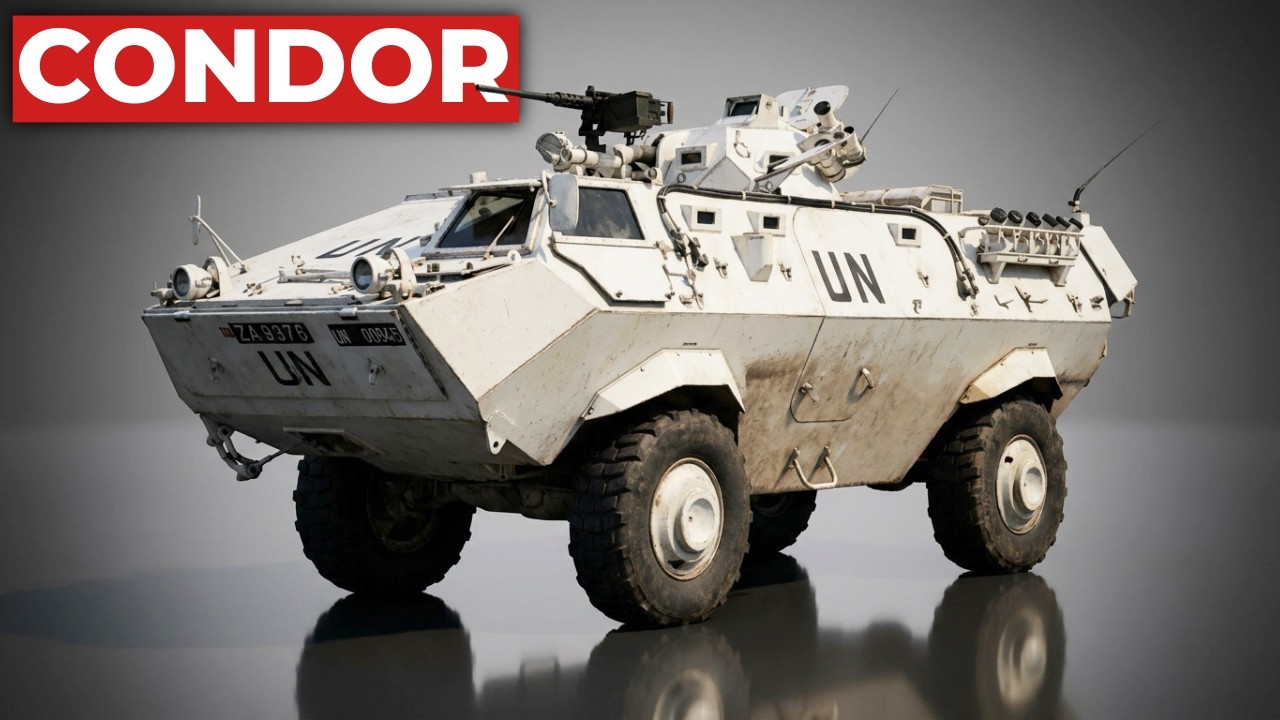
The trapped American soldiers were loaded aboard and extracted to safety. One Malaysian soldier dead, nine wounded. Every trapped American recovered alive. The 2001 Ridley Scott film Black Hawk Down did not show the rescue with Malaysian Condors. The production could not obtain actual Condors for filming.
They used French-built VAB armored vehicles in their place. For over two decades, most of the world watched a French vehicle perform the rescue that a German-built one had actually carried out. Malaysian veterans have noted this substitution consistently and without restraint ever since.
Lance Corporal Mat Aznan Awang was promoted posthumously to Corporal and awarded the Seri Pahlawan Gagah Perkasa, Malaysia’s highest gallantry decoration. His daughter later joined the same 19th Royal Malay Regiment in which he served and died. Mogadishu clarified what the Condor could not do. Its armor stopped rifle bullets. It did not stop shaped charges.
The RPG round that killed Mat Aznan Awang penetrated a windscreen designed to resist assault rifle fire, not warheads. After the Somalia deployment, the Malaysian army also banned the use of rear pintle machine guns on Condors following the deaths of soldiers exposed in rear hatches during vehicle rollovers earlier in the mission.
Two operational lessons, both paid for in blood, both recorded permanently in doctrine. The Condors kept serving from 1993 through 1998. Malaysian Condors rotated through the former Yugoslavia under UNPROFOR and then under IFOR and SFOR, monitoring ceasefire lines and supervising weapons disarmament in the Bosnian mountains.
The steep roads, deep mud, and tight mountain passes placed real strain on the 4×4 drivetrain. The Malaysian army identified the vehicle’s terrain limitations clearly and formally. They would not forget the lesson. In February 2013, Condors led the armored ground assault during Operation Daulat, the Malaysian Army’s response to an armed incursion by followers of a self-styled Sultan of Sulu who had seized villages near Lahad Datu in Sabah.
Combined with air strikes from Royal Malaysian Air Force jets and artillery support, the column cleared the occupied villages against lightly armed irregular fighters. The Condor performed precisely as designed. Between 2007 and April 2024, Malaysian Condors of Malbatt 850 served with UNIFIL in Lebanon as the backbone of the quick reaction force.
20 vehicles replaced in April 2024 by 20 Turkish-built Ada Yalcin 4×4 armored vehicles under a contract worth 190 million ringgit, approximately 42 million dollars. The Condors that had held that line for 17 years were retired. In eastern Congo, Uruguayan Condors, locally designated UR-425, have been deployed under the United Nations peacekeeping mission MONUSCO since 2001.
In January 2025, during the M23 rebel assault on the city of Goma, Uruguayan Condors were on the ground. The fourth Uruguay battalion sheltered an estimated 1,200 Congolese soldiers and over 1,000 civilians at their position. One Uruguayan soldier, Rodolfo Alvarez of the fourth Uruguay battalion, was killed in the fighting.
Four others were wounded. A vehicle designed in 1978 was still being shot at in 2025. On paper, the French VAB looked superior. Heavier at 13.8 tons, available in 4×4 and 6×6 configurations, over 5,000 sold in 30 different versions to more than 50 nations since 1976. In pure sales volume, the VAB out sold the Condor by roughly 8 to 1.
In practice, the Condor offered something the VAB could not replicate in the markets that mattered most to its customers. Commercial parts accessibility. Any army operating a Condor had access to the global Mercedes-Benz Unimog service network covering over 4,700 stations in 170 countries.
That network kept the Malaysian fleet of over 400 vehicles operational for four decades at a fraction of the logistical cost that comparable specialist military vehicles would have demanded. It is the reason the Condor is still in frontline service today. Compared with the American M113 tracked carrier, the Condor was faster on paved roads, quieter during long road marches, and demanded none of the tracked vehicle maintenance expertise that has quietly constrained the M113’s operational footprint outside high capability armies. Against the British FV432, the same comparisons applied. Heavier protection on both tracked vehicles, but proportionally heavier logistical burdens. Germany’s own Transportpanzer 1, the vehicle the Bundeswehr chose instead of the Condor, was a far more capable machine. 320 horsepower, full nuclear, biological, and chemical protection as standard. 12 distinct operational variants, but at roughly twice the acquisition cost and twice the maintenance burden, it belonged to a
completely different market. The Condor found its customers in the space between. Nations that needed armored mobility rather than armored combat power. Nations whose maintenance infrastructure ran through commercial garages, not specialist military depots. Total production reached 624 Condor 1 vehicles by January 1, 2003, according to Forecast International.
Across all variants, including the updated Condor 2 built on the newer Mercedes-Benz Unimog U5000 chassis with a 218 horsepower engine, total production reached approximately 785 vehicles. Kuwait’s National Guard received eight Condor 2 vehicles beginning in 2004, fitted with a front-mounted dozer blade for obstacle clearance.
Every single Condor ever built was an export sale. Not one wore a German military marking. 1978, Kassel, West Germany. A boxy steel hull on four commercial truck wheels. No customer, no budget, no famous name. It was underpowered against shape charges. Its armor stopped rifle fire and nothing heavier.
Its 4×4 drivetrain had genuine limits in deep mud and mountain terrain. It carried no thermal sights, no advanced fire control systems, and no ballistic protection above a well-defined threshold that combat proved to be insufficient in urban ambushes. And yet, in the jungles of Malaysia, it outlasted its designed service life by three decades.
In the streets of Mogadishu, it drove into an ambush and brought American soldiers home. In the mountains of Bosnia, it held ceasefire lines that kept a fractured country from sliding back into open war. In the forests of Sabah, it led an armored assault that ended an armed occupation. In eastern Congo, it is still there today.
In 2025, doing the unglamorous, uncelebrated work of peacekeeping in one of the most violent corners of the world. Its advantage was never armor. It was never firepower. It was a Mercedes-Benz diesel engine, a Unimog portal axle, and a global commercial supply chain that kept it running long after every contemporary rival had returned to the depot for the last time. Seven nations bought it.
Four continents operated it. One Hollywood film replaced it with a French vehicle and gave the credit to someone else. And the man who died at its wheel, driving into the worst street battle of the 1990s, received a decoration that most of the world has still never heard of. That is not obscurity.
That is what armored mobility looks like when nobody’s watching.