The ‘Forgotten’ Spanish APC That Rescued Soldiers At Najaf In Three Wars D
1972, the ENASA engineering plant on Avenida de Aragón in the industrial east of Madrid. A six-wheeled vehicle rolls out of the production hall for the first time. It is not large. It is not fearsome. It carries a machine gun that a soldier must stand upright and exposed to fire.
Its hull is aluminum, pressed and welded by the same workforce that built Pegaso commercial lorries. Its belly is flat. Nobody has reinforced it against buried explosives, because nobody in the Spanish army of 1972 is imagining that this vehicle will ever drive over buried explosives. It looks like a bus that lost an argument with an armored car. It weighs 14 tons.
It carries 10 soldiers. It can cruise at 103 kilometers per hour on a Spanish motorway. It can, in theory, float. Nobody outside Spain knows it exists. Nobody outside the army’s planning committees expects them to care. This vehicle would go on to fight in three foreign wars on two continents, in campaigns that the overwhelming majority of the Spanish public never asked for and never wanted.
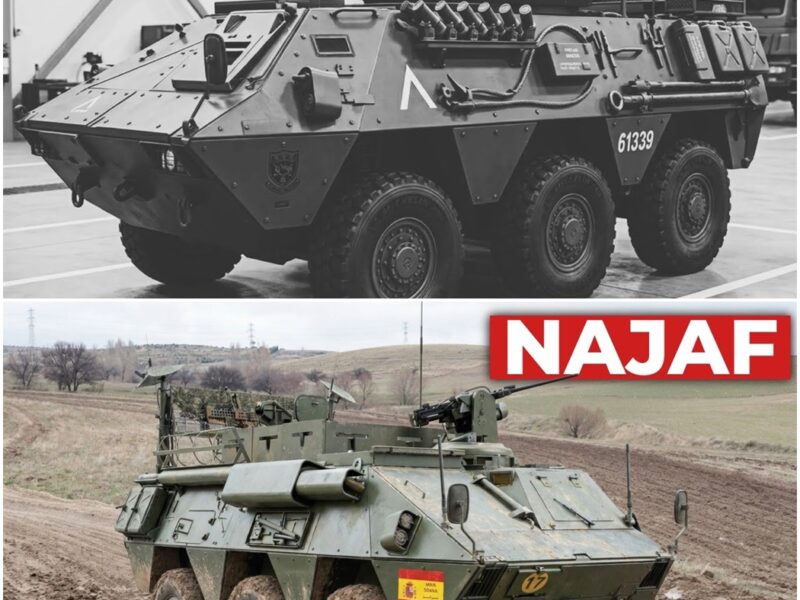
It would rescue besieged soldiers under fire in Iraq. It would patrol the ruins of a shattered Bosnian city for 18 consecutive years. It would absorb the early brutal lessons of the IED era on the mountain roads of western Afghanistan. Often at the cost of the soldiers inside it. Its designation was the Pegaso 3560 BMR-600, and it was the most extensively deployed armored vehicle in the modern history of the Spanish expeditionary army.
To understand why the BMR-600 existed at all, you need to understand the problem Spain faced in 1972. The Spanish army was equipped almost entirely with American hardware supplied under the 1953 Madrid Defense Agreements. M47 and M48 tanks, M113 tracked personnel carriers, and half-tracks that had been obsolete since the last months of World War II.
Spain had no tradition of indigenous armored vehicle design. What it did have was ENASA, the state-owned truck and bus manufacturer that produced every major Pegaso commercial vehicle in the country, with factories in Madrid and Valladolid, and an engineering division that had grown steadily through the previous decade.
In June of that year, the army’s general staff convened a joint working group drawn from senior officers and Enasa engineers. The requirement they issued was precise. A nationally manufactured six-wheeled armored personnel carrier capable of carrying an infantry platoon, moving fast on Spanish roads, crossing rivers under its own power, and serving as the foundation for an entire family of specialized variants.
Tracked vehicles were ruled out from the beginning. They were expensive to maintain. They destroyed road surfaces. They needed tank transporters for long approach marches. Wheels were the answer. The working group’s first attempt, the Pegaso 3500 prototype, was completed in 1973. During water trials, it sank. Engineers recovered it from the river bottom, and it sits today preserved at a military base near Zaragoza, a monument to the difficulty of getting these things right the first time.
The lessons were absorbed. A redesigned prototype emerged in 1977, lower, more manageable, considerably less inclined to go to the riverbed. Three variants were constructed and evaluated simultaneously. One mounted a machine gun. One carried a French 20-mm autocannon in a closed turret. One was fitted with an antitank missile launcher.
On May 27, 1978, King Juan Carlos I inspected all three at the Zarzuela Palace in Madrid. Production was approved within weeks. By 1979, the first serial BMR-600s were leaving the Valladolid assembly line. The vehicle the army received was, by the standards of its era, a credible design. The hull was welded aluminum alloy, the same material used in the American M113.
Frontal protection across a 60-degree arc could stop a 12.7-mm armor-piercing round. The sides would stop standard rifle fire and shell splinters. The belly was rated to absorb approximately 3 kg of explosive, roughly equivalent to a light anti-personnel mine. The upgraded BMR-1 variant received a Scania diesel engine producing 310 horsepower driving all six wheels through a six-speed automatic gearbox.
Road range reached 1,000 km. Amphibious propulsion came from wheel rotation alone, supplemented by an optional hydrojet kit that was rarely fitted in practice. 10 fully equipped soldiers rode in the rear compartment. The crew consisted of a driver and a gunner. The primary weapon was a 12.
7 mm Browning heavy gun in a manually operated cupola with 600 rounds carried to fire it. The gunner sat exposed from the waist up. That detail would matter in time. Over 700 BMRs were built for Spain. 14 variants were developed from armored ambulances and mortar carriers to combat engineer vehicles with bulldozer blades.
Egypt ordered 250. Saudi Arabia ordered 140 and built several hundred more under license. Peru received 25 including four fitted with French 90 mm main guns in proper fire support turrets. Austria licensed a derivative through Steyr-Daimler-Puch that eventually produced the Pandur family which armed Austria, Belgium, Portugal, the Czech Republic, and Slovakia before the BMR had fired a single shot in anger.
It had quietly become one of the more successful European armored vehicle exports of its generation. Now, before we get into where this vehicle actually fought, if you are finding this deep dive into Spanish military history worth your time, hit subscribe. It costs nothing. It takes 1 second and it tells the channel to keep going.
1992, Mostar, Bosnia and Herzegovina. The city was coming apart. Artillery was destroying its bridges, its market squares, its residential streets. The United Nations was attempting to insert a peacekeeping force between sides that had no intention of stopping. Spain had joined NATO a decade earlier. NATO’s commitments were now calling in their debt.
The first Spanish battalion arrived in November of that year. It had been assembled from 61 separate units across the entire Spanish army and trained on the BMR family at speed because most of the soldiers assigned had never crewed one before. Colonel Zorzo, who led the preparation, recalled later that working around the clock they made it happen.
What followed was the longest continuous foreign deployment in the recorded history of the Spanish Armed Forces. 18 years across four successive international mandates, the Spanish battalion stayed in Mostar. BMRs ran convoys through rubble-strewn streets, evacuated civilians from contested neighborhoods, and held checkpoints between factions that had been killing each other since 1992.
In 1995, the city renamed its central square the Plaza de España in their honor. The cost was 22 Spanish soldiers killed over those 18 years along with one interpreter. The first was Lieutenant Arturo Muñoz Castellanos, struck by a mortar round in 1993 while delivering blood plasma to a hospital.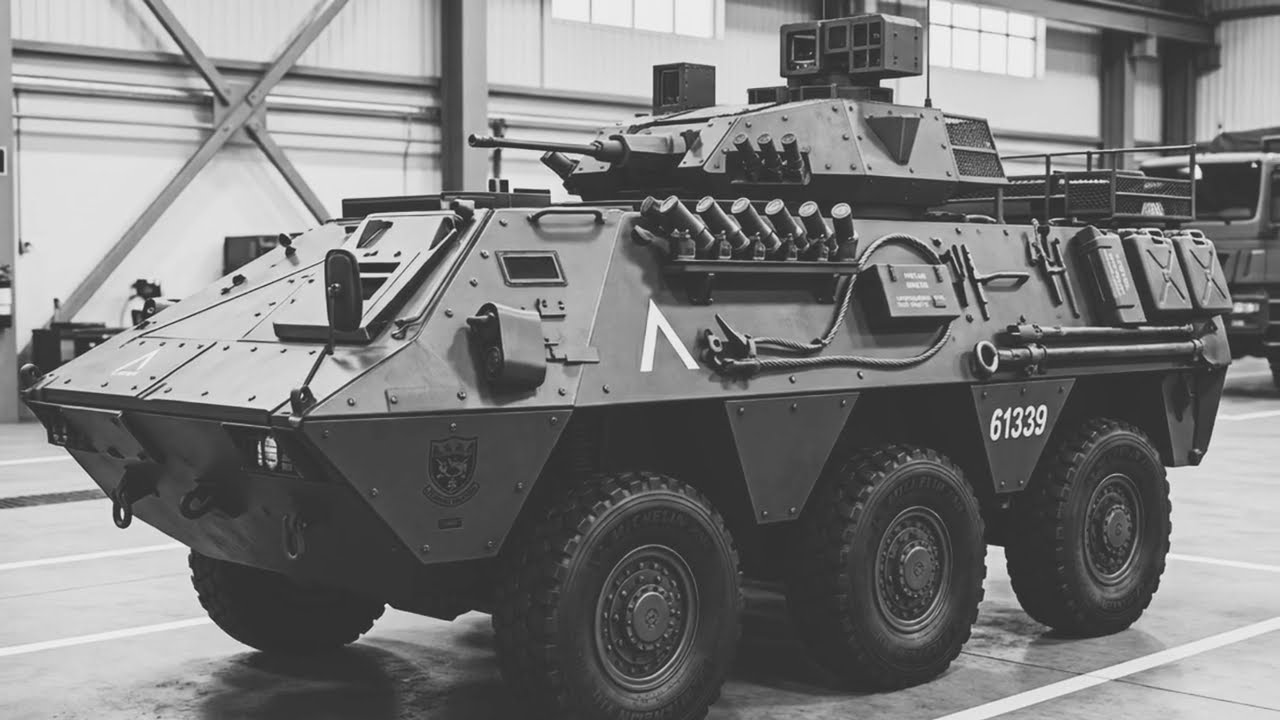
The vehicles were damaged by small arms and mines across those years. The armor held often enough, it did not always hold. Spain completed its final withdrawal from Bosnia on October 18th, 2010. 2003, Diwaniya province, south-central Iraq. Three months after the American invasion, Prime Minister José María Aznar committed 1,200 Spanish troops to the coalition under the name Plus Ultra Brigade, borrowing Spain’s national motto. The political context was severe.
90% of Spaniards opposed the war. On February 15th, 2003, more than 1 million people had marched in Madrid against the intervention. It was at that moment the largest mass demonstration in the country’s modern history. The brigade arrived in August commanded by General Alfredo Cardona. Its primary armored assets were 15 BMR and VEC vehicles.
For a brigade-sized force operating inside a country dissolving into insurgency, this was a very thin armored fist. By April of 2004, Muqtada al-Sadr’s Mahdi Army had launched its uprising across the south. On April 4 of that year, hundreds of fighters attacked the Salvadoran defended forward base at Najaf and besieged a mixed detachment at the old city prison.
The Salvadorans were holding, barely. Then, Colonel Alberto Asarta Cuevas assembled a relief column, four BMR-600s and two VECM-1s, loaded with legionnaires and infantrymen of the Saboya Infantry Regiment number six. They drove into hostile fire. They reached the prison. A second column under Captain Guisado made a return run through renewed resistance.
Fighting through two Iraqi armed trucks on the approach road, the base held across six hours of assault when the Spanish soldiers finally reached the besieged Salvadorans. Asarta later recorded in published testimony, “The men embraced their rescuers in tears.” One Salvadoran and one American were killed in the fighting that day.
No Spaniards died in the column. Six crosses of Military Merit with red distinctive were awarded to the crews. Sergeant Vergara, commanding one of the VEC scouts, was decorated individually. A painting of the rescue hangs in Spanish military institutions today. 12 days later, on March 11th, 2004, 192 commuters died in the Madrid train bombings carried out by jihadists who cited Spain’s presence in Iraq.
Three days after that, the incoming government of José Luis Rodríguez Zapatero ordered full withdrawal. By April 27, the last Spanish soldiers had crossed into Kuwait. All 15 BMRs came home. Not one had been destroyed in combat. 2005, Badghis Province, western Afghanistan. The terrain was different. The enemy was different.
The BMR was the same vehicle it had always been. In Afghanistan’s mountain passes and river valleys, the improvised explosive device had evolved far beyond what any 1970s engineering committee in Madrid had contemplated. Directional charges built from repurposed artillery shells, shaped charge devices engineered to penetrate armored hulls from below.
Multi-kilogram buried bombs that turned flat-bottomed vehicles into coffins. The BMR’s belly was rated to absorb 3 kg. The devices waiting in the Badghis road surface were many times that weight. Spanish troops began calling the BMR a rolling coffin. The phrase appeared in defense journalism without challenge or correction.
In 2009, a BMR struck by an IED in Badghis killed two Spanish soldiers. The incident forced a political decision that should have been made earlier. From 2010 onwards, Spain announced formally that its troops in Afghanistan would operate only in RG-31 Nyala armored vehicles and LINCE protected trucks.
The last BMRs were withdrawn from the theater that same year. By the time they left, the vehicle’s limitations had been written in full and paid for in blood. On paper, the BMR’s contemporaries made it look modest. The French VAB, which lost the 1978 Spanish trials to the BMR, was broadly comparable in armor and payload.
And France operated it in similar campaigns with similar results. The American Stryker, which entered service in 2002, weighed 16 and 1/2 tons, carried modular ceramic add-on armor, and had been designed from the outset with the full lessons of the Balkans absorbed into its hull geometry. The Italian Freccia, which reached Italian service in 2009, weighed 26 tons and mounted a 25-mm cannon in a proper two-man turret.
By the standards of those vehicles, the BMR-600 was a 1970s design trying to survive a 21st century war. And yet it had done things none of those vehicles had. It had maintained an unbroken Spanish presence in Mostar for 18 years. A record no comparable wheeled carrier from any other NATO nation matched in a single deployment.
It had carried soldiers through hostile fire to a surrounded garrison in Najaf and brought them out alive in an action that Spanish commanders still describe as the defining engagement of their post-war military history. It had moved an entire brigade into and out of Iraq without losing a single vehicle to enemy fire.
Its replacement, the VCR 8×8 Dragon, entered service in January 2026 when the first 40 vehicles were delivered to the Spanish Legion at Almeria. A contract worth 2.1 billion euros will eventually see 348 Dragons replace the remaining BMRs and wheeled cavalry scout still in service. The new vehicle weighs 30 tons, mounts a 30-mm remote weapon station, and meets the blast protection standards that the soldiers in Badghis needed and never had. 1972, Avenida de Aragon, Madrid.
A flat-bottomed aluminum hulled six-wheeled vehicle leaves the factory floor for the first time. It was underpowered for mountain terrain. Its gunner was exposed from the waist up. Its belly was not designed to survive the weapons it would eventually be asked to face. Its amphibious prototype had sunk on its first water trial.
It carried a machine gun in a cupola whose design dated to the 1940s, and it was never given a remote weapon station in four and a half decades of service. And yet it served in the shelled streets of Mostar year after year when no other NATO ally was willing to stay. In the dust of Diwaniya and the alleys of Najaf when 1,200 Spanish soldiers held a sector that the country’s own voters did not want them in.
In the passes of Badghis until the IED finally made its limitations undeniable. 47 years of frontline service, three wars, seven nations operating the same basic hull. And in Yemen today, Saudi Arabian BMRs are still on active operations. Captured examples photographed in Houthi hands, the vehicle’s story still unfinished.
The machine no one outside Spain expected to matter became the machine that took Spain to war for the first time in the modern era. That is not the result of luck. That is what happens when engineers build something honest, and history makes demands that no committee anticipated.