The ‘Obsolete’ British Truck That Was Held Northern Ireland For Thirty Years D
1969, a scrapyard in the English Midlands. Men in coveralls drag a rust-streaked snouted truck onto a low loader and chain it down. The bonnet is a steel wedge. The wheels look too small for the weight. The doors hang on hinges that have not turned in 9 years. Across Britain, more like it are being pulled from civilian collectors, from auction houses, even from buyers abroad.
The Ministry of Defense is buying back its own scrap. It looked obsolete. It was obsolete. The army had written it off in 1960. But 3 weeks earlier, on August 14th, 1969, British troops had marched into Belfast and Derry. The vehicle they actually wanted was already deployed elsewhere.
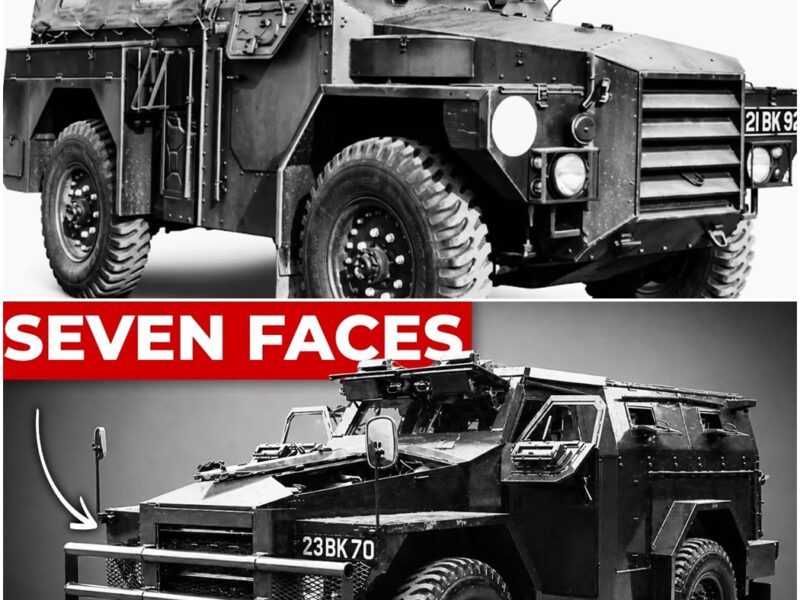
The vehicle they could politically afford to be photographed with was not. So, the British government bought back this. The strange snouted four-wheeled lump that nobody had wanted. Over the next 30 years, it would serve in Belfast, Derry, Crossmaglen, and South Armagh. Seven different specialist conversions would emerge from one unloved chassis.
And on July 31, 1972, on a Sunday afternoon in the Bogside, this truck would lead the largest British military operation since Suez. Smashing barricades the Centurion bulldozers had been told to leave for it. Soldiers called it the pig. And it was the British Army’s most reluctant survivor.
In 1952, in an office at the Fighting Vehicle Research and Development Establishment in Chertsey, Surrey, an engineer signed off a quiet contract that no public review board scrutinized. Joseph Sankey and Sons of Telford would build an armored derivative of an unloved Rootes Group truck called the FV1600 series.
Originally ordered to replace aging wartime 1500 weights, the contract specified a small batch. Nobody at the establishment expected the vehicle to outlast the decade. The base truck was a compromise. A 1-ton 4×4 with a Rolls-Royce B60 Mark 5A inline six petrol engine. 4.25 L of displacement, 120 horsepower, top speed of 40 mph and not a foot more because the gearing had been chosen for hauling, not running.
Range of 250 miles on 30 imperial gallons. Built at Rootes Coventry and Kent Works between 1952 and 1955, 3,700 trucks rolled off the lines in 5 years. The armored variant began trials in June 1956. 17 prototypes went to Malaya and Cyprus by year’s end. Its designation was the FV1611. Truck 1-ton 4×4 armored.
And it was the British Army’s first attempt to give a colonial constabulary something tougher than a Bedford and lighter than a Saracen. The dimensions were modest. 4.93 m long, 2.04 wide, 2.12 tall. Welded steel armor ranged from 6 to 12.5 mm, enough to defeat pistol rounds and shell splinters at close range, but not a rifle bullet at any range that mattered.
It carried two crew and up to eight troops on opposing benches. Pintle mounts could take an L4 Bren or a Browning M1919. But most rolled out with empty mounts and rifles inside. Production began in earnest in September 1959. By August 1960, the Sankey Works at Hadley Castle in Telford and the Royal Ordnance Factory at Nottingham had built about 1,700 pigs at a unit cost of £6,000.
It saw colonial service, Cyprus during the EOKA emergency, Aden during the long withdrawal. On June 19, 1967, in Crater, the old walled quarter of Aden, an officer named Lieutenant John Davis of the Royal Northumberland Fusiliers drove a pig into a burning district where Arab police had mutinied.
22 British soldiers died around him in the ambushes that day. According to crew accounts, the paint inside the cabin began to flake from the heat. He brought his men out alive. By 1968, most of the pigs had been sold off. The career was finished. It would not stay finished. The first reports from Belfast in August 1969 reached Whitehall within hours.
And the Ministry of Defense discovered, to its embarrassment, that the only armored vehicle it could politically deploy on a British street was already in scrap dealers’ yards. What the Royal Army Ordnance Corps would do to one of these vehicles in a quiet Belfast yard in 1974 has been written out of every published account of bomb disposal in Northern Ireland.
But first, if you are enjoying this, hit subscribe. It takes a second and helps the channel grow. Now, the seven monsters. By July 1970, the first reactivated pigs had reached Northern Ireland with the 2nd Battalion, the Queen’s Regiment. Within months, the 1st Battalion, the Parachute Regiment was operating them in Derry.
Restoration researcher Clive Elliott traced one preserved hull through six different storage depots between 1962 and 1970 before its return to service. The army had quietly bought the same vehicle twice. The Provisional IRA learned fast. Petrol bombs gave way to nail bombs, then sniper fire. Then in 1972, RPG-7 rocket-propelled grenades smuggled through Libya.
The original armor was no longer enough. Between September 1972 and July 1973, 42 and July 1973, 487 pigs were rotated back to Telford and to the British Army’s Marchington Workshops for a program called Bracelet. Technicians bolted on 1,200 kg of additional steel, anti-spall lining inside the hull, blast plates under the floor, thickened roofs, armored glass vision blocks, heavy front-mounted barricade pushers the soldiers nicknamed Paddy’s Pushers.
Combat weight rose to 6.5 tons and as much as 7.5 in fully kitted form. The chassis had been designed for 1 ton. It now carried five. Then came the conversions, seven of them, depending on who counted. The Kremlin Pig wore an external steel wire mesh cage fitted from the mid-1970s onward, designed to detonate RPG-shaped charges in the air before they touched the main armor.
By 1986, every pig at Fort White Rock in West Belfast wore the cage as standard. The Flying Pig carried two large fold-out side wings of fiberglass over a tubular frame with sliding viewports. The wings were locked open by hand, sealing off a street and sheltering dismounting troops from petrol bombs. The Squirt Pig mounted a forward-firing water cannon beside the driver, often loaded with purple dye to mark rioters for arrest the following morning.
According to the National Army Museum in London, only 32 squirts were ever built. The Holy Pig carried a rooftop Perspex pulpit, named for its resemblance to Pope John Paul II’s Popemobile, giving the commander a 360° view of a hostile crowd. The Foaming Pig, fielded by 321 EOD Squadron of the Royal Army Ordnance Corps from 1973, carried an Angus high-expansion foam generator intended to dampen car bomb blast waves.
Academic accounts at Queen’s University Belfast listed among the spectacular failures of British EOD, used once or twice in Belfast before the wheelbarrow robot finally solved the problem properly. The Felix Pig carried bomb disposal kit, X-ray gear, and on some examples, a roof-mounted 40-mm disruptor launcher.
The seventh was no pig at all. It was a cousin, the FV1620 Hornet, fitted with a hydraulic launcher and two Malkara wire-guided anti-tank missiles, each weighing 200 lb, carrying the largest HESH warhead ever fitted to an ATGM. 330 Hornets served with a British parachute squadron, Royal Armored Corps. 355 went to Australia, 200 to Rhodesia, 50 to Kenya.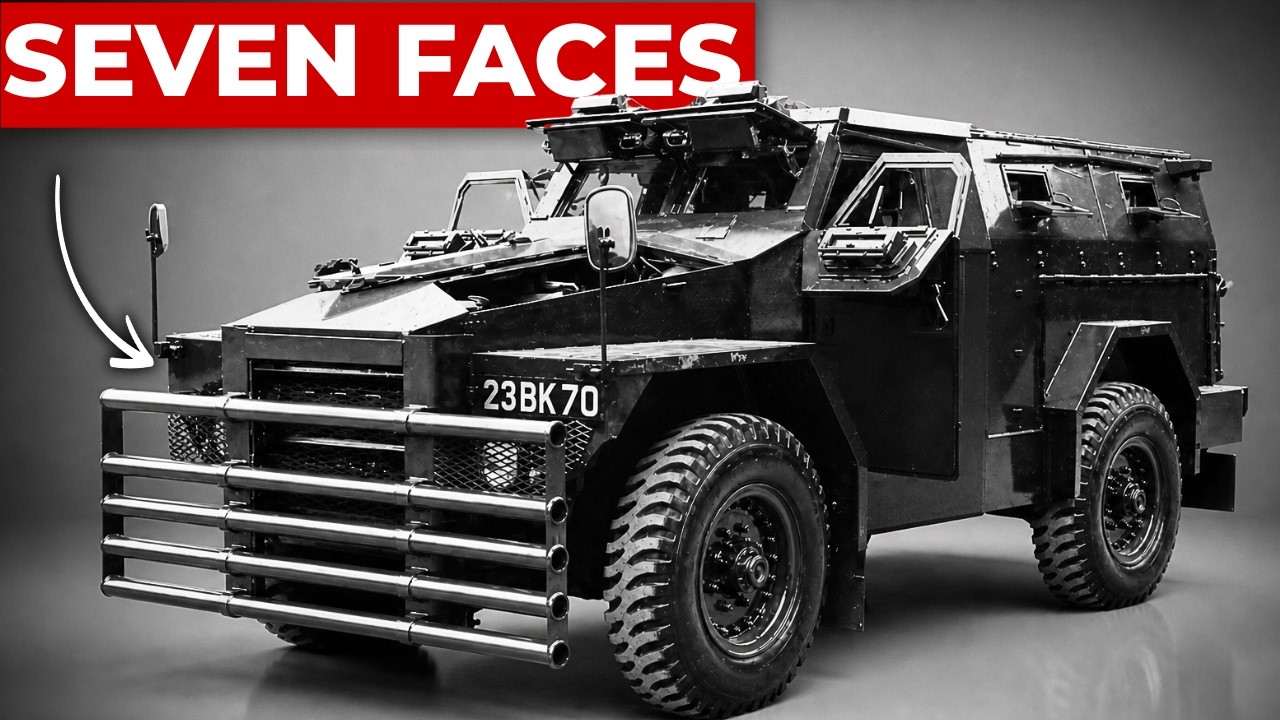
Air-portable from a Blackburn Beverly, the Hornet gave airborne forces a Cold War tank killer until Swingfire armed Ferrets replaced it. The reactivated pigs paid in blood. On January 30, 1972 in Derry, the 1st Battalion, the Parachute Regiment Support Company, entered the Bogside in pigs.
18-year-old Alana Burke had her pelvis crushed in Rossville Street by a British military vehicle identified at the Saville Inquiry as a pig. Six months later, on July 31, Operation Motorman moved 27 battalions and 30,000 troops into the no-go areas. Centurion bulldozers smashed the heaviest barricades. The pigs took the rest. Of Free Derry’s 29 barricades, 16 had been impassable until that morning, even to 1-ton armored vehicles.
By the afternoon, everyone was gone. The IRA hunted them. Beechmount Avenue in West Belfast became known as RPG Avenue. On February 6, 1973, 22-year-old Private Michael Murtagh died on Servia Street in the Lower Falls when an RPG struck his vehicle. It would not be the last. On paper, the pig should have been replaced before it ever reached Belfast.
The Saracen FV603 carried 16-mm armor, a 160-horsepower Rolls-Royce B80 engine, 45-mph top speed, and rolled on six wheels. 1,838 were built. By every technical metric, the Saracen was the better vehicle. But the Saracen looked like a tank. The pig looked like a truck. In the political theater of 1969 Belfast, that was the only specification that mattered.
The pig’s NATO contemporaries were a different generation entirely. The French VAB, fielded from 1976, was a 13-ton 4×4 with 220 horsepower, 92 km/h, full amphibious capability, and a complete NBC protection system. Over 5,000 were built. The American M113 in Vietnam from April 1962 carried 11 troops in a fully amphibious tracked aluminum hull, becoming the most produced armored fighting vehicle in US history at over 80,000 units.
The Soviet BTR-60, in production from 1960, was an eight-wheeled amphibious vehicle with a 14.5-mm heavy machine gun. The pig had none of these things. No swim capability, no NBC system, no smoke discharges, a cramped petrol engine that overheated in summer and refused to start in winter. Veterans called the original canvas rear roof about as useful as a chocolate fire guard, but it had something none of those vehicles had.
Political invisibility. A British government that did not want to be photographed sending tanks into a British city sent in something that looked in every photograph and every headline exactly like what it was, a 1950s truck with steel bolted on. The replacement, the GKN Sankey AT105 Saxon, evolved from the commercial failure of the AT104.
Only 28 AT104s were built. The Saxon patrol variant began replacing pigs in Northern Ireland in 1993 alongside the new Snatch Land Rover. Bulk Pig withdrawal occurred between 1992 and 1994. A handful served on into the late 1990s. The British Army’s last operational pigs left service before the Good Friday Agreement of 1998.
Today, the Imperial War Museum holds an FV1611A Mark II with full provenance back to the Royal Ordnance Factory at Nottingham in February 1960. The National Army Museum in London holds the Squirt Pig. Coventry Transport Museum, Aldershot Military Museum, the Muckleburgh Collection in Norfolk, Ashworth Barracks at Doncaster, and the Parola Tank Museum in Finland all display Pigs.
The Tank Museum at Bovington holds the Hornet. Restored road registered examples trade for between 5,000 and 25,000 pounds today. 1969, a scrapyard in the English Midlands, men in coveralls dragging a rust-streaked truck onto a low loader. It was underpowered. It was top-heavy. It was politically chosen rather than militarily justified.
It was bought back from civilians and from scrap dealers because the army had nothing better available. Its handling was poor, its brakes worse, and its chassis carried five times the weight it had been designed to bear. And yet it worked. It worked at Crater when 22 British soldiers died around it. It worked in Derry on Bloody Sunday.
It worked at Operation Motorman when 16 barricades fell in a single afternoon to 1-ton armored vehicles that should not have been able to move. It worked on RPG Avenue where it took rockets and brought its crews home more often than not. It worked for 30 years in seven different conversions against an enemy that had not existed when the first prototype rolled off the line at Sankey.
The Pig was not elegant. It was not fast. It was not modern. It was British. And it survived when better vehicles would not have been politically permitted to try. 1,700 were built. Some still drive today. That is not luck. That is improvisation, refusing to fail.