The Real Reason Thriller Became The Biggest Album Ever: It Wasn’t The Music D
The real reason Thriller became the biggest album ever. It wasn’t the music. Everyone knows Thriller is the best-selling album of all time, 70 million copies worldwide, seven top 10 singles, a record that stood for over 40 years. But here’s what most people don’t know.
The music had almost nothing to do with it. There was a calculated business decision made in a conference room in early 1983 that changed the entire trajectory of the album. A decision so controversial that half the executives at CBS Records thought it would destroy Michael Jackson’s career. And by the end of this story, you’ll understand why Thriller’s success wasn’t about the songs.
It was about breaking a system that was designed to keep artists like Michael Jackson off television. Let me paint the picture for you. It’s December 1982. Thriller has been out for exactly 1 month. The album is selling well, but not extraordinarily. It’s moving about 200,000 copies per week, which sounds impressive until you realize that’s actually standard for a Michael Jackson release after Off the Wall sold 10 million copies.
The first single, The Girl Is Mine, is climbing the charts, but it’s a duet with Paul McCartney, safe, soft, exactly what radio stations wanted. CBS Records is happy. Michael Jackson is frustrated because he knows what he has. He’s sitting on Billie Jean, Beat It, and Thriller, three songs that could redefine pop music.
But there’s a problem, a problem that nobody at the label wants to talk about publicly. MTV won’t play black artists. Now, here’s where it gets interesting. In 1982, MTV has been on the air for exactly 1 year. They’re the most powerful force in music promotion that’s ever existed.
If your video gets into rotation on MTV, you sell millions of albums. But the channel has an unofficial policy. They call it format protection. They claim their audience wants rock music, and therefore black artists don’t fit the format. It’s not racism, they insist, it’s about the audience. Record executives know this is complete nonsense, but they also know MTV controls the market, so they play along.
Except Walter Yetnikoff doesn’t play along. Yetnikoff is the president of CBS Records. He’s known in the industry as one of the most aggressive, confrontational executives in the business. He’s the guy who screams at people in meetings, throws phones, and doesn’t care about making enemies. And in January 1983, he gets a call from Michael Jackson’s manager, Frank DiLeo.
DiLeo tells him they want to make a video for Billie Jean. Not just any video, a high-concept, big-budget, cinematic video, the kind of video MTV can’t ignore. But DiLeo knows the reality. Even if they make the video, MTV might not play it. That word, might, is what sets Yetnikoff off. Here’s what nobody tells you about that conversation.
Yetnikoff doesn’t just agree to fund the video. He makes a decision that will define his entire career. But first, he calls a meeting. January 14th, 1983. CBS Records headquarters, Black Rock building in Manhattan. Yetnikoff gathers his top executives, his head of promotion, his VP of artist relations, and his legal team.
He tells them what he’s about to do. The room goes silent. His head of promotion speaks first. He says this is career suicide. MTV is untouchable. They control youth culture. Threatening them could backfire so badly that it destroys not just Michael Jackson, but every CBS artist who depends on video exposure. Yetnikoff listens.
Then he says something that becomes legendary inside CBS. He says MTV didn’t create music television, we did. We make the artists. We make the music. They just play it. Without us, they’re a blank screen. The meeting ends. Nobody changes his mind. Two hours later, he picks up the phone and calls Bob Pittman, the co-founder and CEO of MTV.
And this is the exact moment everything changes because Yetnikoff doesn’t negotiate. He doesn’t ask politely. He threatens. The conversation, according to multiple sources who were in the room, goes something like this. Yetnikoff tells Pittman that if MTV doesn’t play Billie Jean, he’s pulling every single CBS artist from the channel.
That means no Bruce Springsteen, no Billy Joel, no Pink Floyd, no Cyndi Lauper. MTV’s entire playlist, gone. Pittman tries to explain the format issue, and Yetnikoff cuts him off. He says, “I’m not asking you to change your format. I’m telling you that if you don’t play this video, I’ll destroy your network.
” Now, think about what that means. Yetnikoff isn’t fighting for civil rights. He’s not making a moral argument. He’s using pure economic leverage. He knows MTV needs CBS more than CBS needs MTV, and he’s willing to burn the entire relationship to the ground to prove it. Pittman has a choice.
He can stand firm on the format policy and lose half his programming, or he can put one Michael Jackson video into rotation and deal with whatever backlash comes from it. The decision takes less than 24 hours. MTV agrees to play Billie Jean. But here’s the kicker. They don’t just play it. They put it into heavy rotation. Six times a day.
Prime slots. And the reason they do this is even more calculated than Yetnikoff’s threat. Bob Pittman realizes something that changes MTV’s entire strategy. Michael Jackson isn’t just a black artist. He’s a crossover phenomenon. The Billie Jean video, directed by Steve Barron, is so visually stunning that it transcends race.
The light-up sidewalk, the iconic outfit, the choreography. It’s not a music video. It’s an event. And Pittman sees the ratings. When Billie Jean airs, viewership spikes. Not just among black audiences, among everyone. White suburban teenagers who’ve never bought a Motown record are calling MTV requesting the video.
This is what the channel has been waiting for, a black artist they can market without alienating their base. But that’s not all. CBS Records sees the MTV effect immediately. In February 1983, Thriller goes from selling 200,000 copies per week to 500,000. By March, it’s selling over a million copies per week. Billie Jean hits number one on the Billboard Hot 100 and stays there for 7 weeks.
The album starts climbing back up the charts, even though it’s been out for 4 months. This isn’t normal. Albums don’t peak 4 months after release. But Thriller isn’t following normal patterns because MTV is doing something it’s never done before. They’re treating a black artist like a white rock star. Here’s exactly how that matters.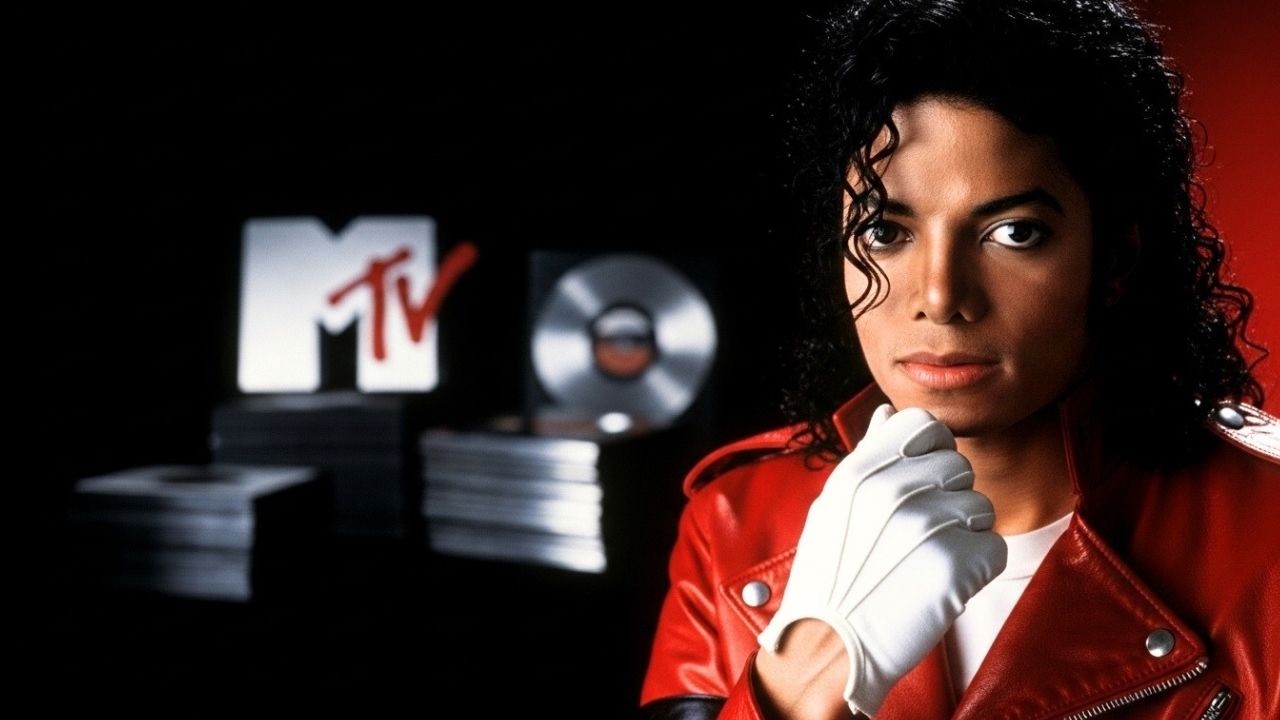
Before Thriller, music videos were promotional tools. After Thriller, they became the product. Michael Jackson didn’t just make videos to support his album. He made videos that were more important than the album. And this shift happens because of one person, John Landis. In May 1983, Michael Jackson approaches John Landis, the director of An American Werewolf in London, and asks him to direct the video for Thriller.
Not a video, a short film. Landis says yes, but he has one condition. He wants a real budget, not $50,000, not $100,000. He wants $500,000. At the time, this is an insane number. The most expensive music video ever made cost $150,000. Michael Jackson’s label thinks he’s lost his mind. But here’s the truth.
Michael Jackson isn’t thinking about making a video. He’s thinking about making history. He knows that if the Thriller video is spectacular enough, MTV will have no choice but to play it constantly. And if MTV plays it constantly, the album will sell forever. So, he funds the video himself when CBS refuses.
He puts up his own money, $500,000 of his own cash, and then he does something even more brilliant. He sells the behind-the-scenes footage to MTV as a documentary special, The Making of Thriller. But, this isn’t just a making-of documentary. This is the birth of an entire business model. MTV pays $250,000 for the broadcast rights.
Showtime pays another $300,000. Vestron Video releases it on VHS for $29.95, and it becomes the best-selling music video of all time, moving over a million copies. Michael Jackson doesn’t just recoup his investment, he profits massively. And the documentary does something no music video has ever done. It makes the creation process as valuable as the final product.
People don’t just want to see the Thriller video, they want to see how it was made, who designed the costumes, how the zombie choreography was developed, what Vincent Price was like on set. That documentary airs in December 1983 and becomes the most-watched program in MTV history.
It’s not a music video, it’s a cultural event. Think about what this means for the album. By the time the Thriller video drops, the album has already sold 20 million copies. It’s already a massive success, but the video pushes it into another stratosphere. In January 1984, Thriller goes back to number one on the Billboard 200, nearly 14 months after its release.
It stays in the top 10 for 78 consecutive weeks. This doesn’t happen because the music is good. This happens because Michael Jackson turned music videos into an art form that MTV couldn’t ignore. He forced them to play him by making content so visually groundbreaking that rejecting it would make them look culturally irrelevant.
But, wait, there’s one more piece to this puzzle that makes Thriller’s success truly inevitable, the 1984 Grammy Awards. On February 28th, 1984, Michael Jackson wins eight Grammy Awards in a single night, a record that still stands. But here’s what most people don’t know. Those wins weren’t just about the music. They were about the industry correcting itself.
The Recording Academy knew what had happened with MTV. They knew Michael Jackson had been shut out of the biggest promotional platform in music because of his race, and they knew that his success, in spite of that barrier, made him untouchable. Giving him eight Grammys wasn’t just recognition.
It was the industry acknowledging that he’d broken their system. Let me break down exactly what Michael Jackson did that no other artist could replicate. He didn’t just make great music. He created a visual language that transcended the medium. The moonwalk, first performed on Motown 25 in May 1983, becomes more iconic than any song on the album.
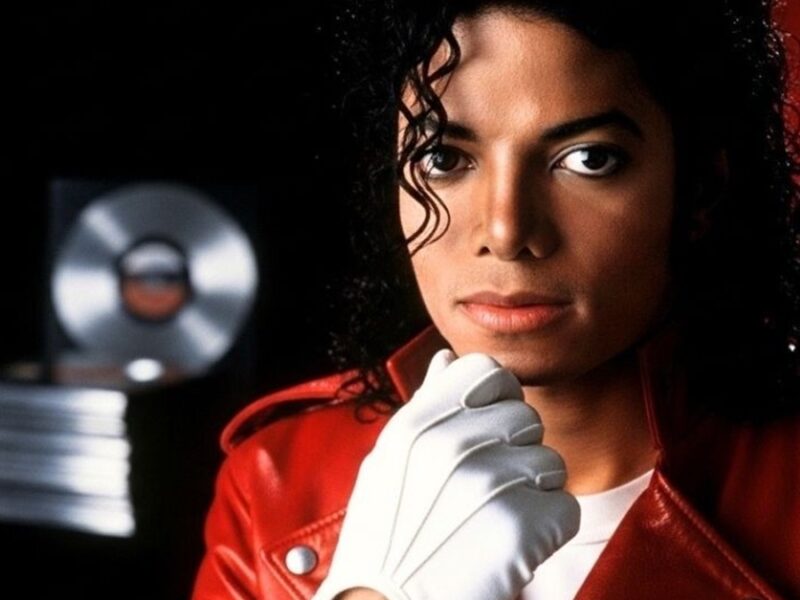
The red leather jacket from Thriller becomes more recognizable than the album cover. The single white glove becomes a symbol of an entire era. These aren’t musical achievements. These are branding masterstrokes. Michael Jackson understood that in the MTV age, image would matter more than sound, and he built an image so powerful that it couldn’t be denied.
Here’s exactly how to think about it. Thriller sold 70 million copies, but how many of those buyers can name all nine songs on the album? Most people know four, maybe five. Billie Jean, Beat It, Thriller, Human Nature, Wanna Be Startin’ Somethin’. But they all know the jacket. They all know the glove.
They all know the dance moves. The music was the delivery system. The visuals were the product, and this shift from audio-based consumption to visual-based consumption is what made Thriller the biggest album ever, because it was the first album designed for the music television era. Now, here’s where it gets even better. The final validation came from the one person whose opinion mattered most in proving this wasn’t just about music, Steven Spielberg.
In 1984, Spielberg called Michael Jackson to tell him that the Thriller video had influenced the way he was approaching Indiana Jones and the Temple of Doom. A film director, one of the biggest in Hollywood, was taking cues from a music video. That’s when everyone in the industry realized what had happened.
Michael Jackson hadn’t just made the biggest album ever. He’d changed the rules of visual storytelling across all media. Let me break down what an album release today, no matter how good the music, could never achieve what Thriller achieved. Modern albums can’t break the system because there is no system.
Streaming has fragmented audiences so completely that no single platform has the power MTV had in 1983. An artist today can’t threaten to pull their entire catalog because no single platform can controls distribution. There’s no Bob Pittman to call, no single gatekeeper to bypass. Viral success today is accidental.
Thriller’s success was engineered. Michael Jackson identified the barrier, MTV’s racial policy, and systematically destroyed it using economic leverage, visual innovation, and cultural timing. That combination can’t be replicated because the conditions don’t exist anymore. And most importantly, no artist today would fund a $500,000 video out of their own pocket because the ROI isn’t there.
In 1983, that investment returned billions. Today, it would return millions at best. Here’s the truth that nobody in the music industry wants to admit. Thriller’s success had nothing to do with the quality of the songs. The songs were great, yes. Quincy Jones’ production was flawless. Michael’s vocals were incredible.
But Off the Wall had all of those things, and it sold 10 million copies. Thriller sold 70 million copies because Walter Yetnikoff threatened to destroy MTV because John Landis made a 14-minute horror film disguised as a music video. And because Michael Jackson understood that in 1983, music was no longer an audio medium. It was a visual one.
So, remember that moment in January 1983 when Yetnikoff picked up the phone and called Bob Pittman. That’s the moment Thriller became the biggest album ever. Not when Quincy Jones finished mixing the tracks. Not when Michael Jackson recorded Billie Jean in one take. Not when the album was released in November 1982.
The moment was when a record executive decided that breaking down MTV’s racial barrier was worth risking his entire roster. That decision unlocked everything that came after. The videos, the Grammy sweep, the cultural dominance. Michael Jackson didn’t just make the best-selling album of all time.
He forced an entire industry to change the way it operated. And that’s something no amount of great music could ever accomplish alone. This wasn’t art. This was war, and Michael Jackson won. So, there you have it. The real reason Thriller became the biggest album ever. If you enjoyed this story, make sure to like and subscribe for more content like this.
Thanks for watching, and I’ll see you in the next one.