The ‘Rejected’ French Armoured Buggy That Walks Sideways Like A Crab And No Army Would Buy D
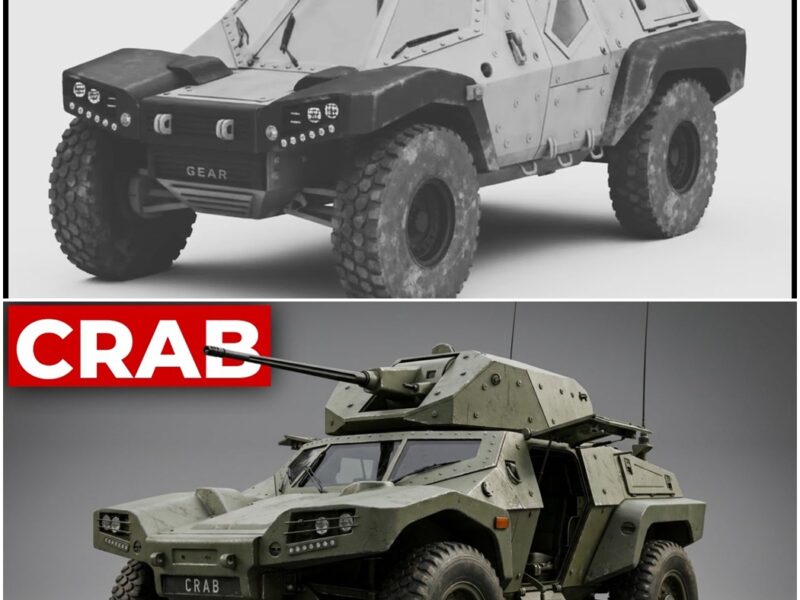
June 11th, 2012. Villepinte, just north of Paris. The outdoor demonstration pad at the Eurosatory defense exhibition. A low faceted vehicle rolls onto the packed earth. Angular armor plates, a stubby turret, four fat tires. The hydraulic suspension hisses. The entire hull rises on its wheels. Ground clearance climbs from a racing crouch to nearly half a meter.
Then the wheels turn, all four together, in the same direction. The vehicle starts moving sideways, not skidding, not drifting, walking. Spectators lean in. Cameras fire. Somebody laughs. It looked like a scale model. It looked like a remote control toy somebody had painted camouflage green. It looked ridiculous. Panhard, the French company that built it, claimed the French army would buy thousands.
Panhard claimed every aging reconnaissance fleet from Morocco to Malaysia would be replaced by this machine. Panhard claimed first deliveries would begin in 2018. Panhard promised a global market of several thousand vehicles. Not a single army bought it. Not one. Not France, not Belgium, not a Gulf state, not an African nation, not an Asian customer.
Zero. Its designation was the Combat Reconnaissance Armored Buggy, or CRAB, and it was the most technically advanced light scout vehicle France built in the 21st century, and also the most complete commercial failure the French defense industry produced in a generation. To understand why the CRAB existed, you have to understand the problem France faced in the early 2010s.
The French army had a small iconic light vehicle called the VBL, the Véhicule Blindé Léger. Panhard had built nearly 2,600 of them. The VBL served in 16 countries. It hunted Iraqi armor in the Gulf War. It patrolled the Balkans. It chased jihadist convoys across the Sahel. It was brilliant, and by 2010, it was aging badly.
Its replacement, a program called VBAE, the armored engagement support vehicle, was being discussed inside the French defense ministry, but no contract had been awarded. No prototype had been commissioned. Panhard did not wait. Panhard built its own answer at its own expense and trusted that somebody somewhere would recognize genius when they saw it.
The man behind the project was Christian Mons, chairman of Panhard. His special advisor was Vincent Deport, a retired French major general who had once directed the Joint Defense College. Their argument was built on economics, not ideology. Modern armies were shrinking. Tanks cost a fortune to operate.
A Leclerc main battle tank burns euros every time it moves. So, you need a lighter tool, a cheap, fast, networked scout vehicle that can do the dirty work before the heavy armor is committed. Desports called it a force sparing tool. Do the reconnaissance with a 1 million euro machine. Save the 60 million euro tank for when the fight is real. The engineering was remarkable.
Combat weight sat between 8 and 10 tons, depending on turret and armor fit. A Steyr Motors turbo diesel in the rear delivered 320 horsepower. Power to weight ratio exceeded 35 horsepower per ton, which is almost tank destroyer territory in a wheeled armored vehicle. Top road speed was 110 kilometers per hour.
That is motorway territory in an armored fighting vehicle. The suspension was hydropneumatic, fully independent on all four corners, and ride height could be adjusted from a hunkered down position up to 450 millimeters of ground clearance. Both axles steered. Turn them in opposite directions, the vehicle pivoted inside a 10 meter circle.
Turn them the same way, the whole hull slid sideways. That is where the name came from, combat reconnaissance armored buggy. The sideways walk was the feature, and the feature was the name. Inside sat three people. The driver in the center, forward, behind a wide panoramic windscreen. The commander and the gunner flanked behind him.
Every seat was a blast absorbing helicopter grade crash mount. Every workstation was identical. Identical screens, identical multi-function joysticks. Any two of the three crew could run the entire vehicle alone, including firing the weapon if one was wounded, the machine did not stop fighting. A ring of day and night cameras fed a 360° video stream into the cabin.
Solar panels on the rear deck trickled electricity into the batteries during silent watch, letting the vehicle sit for hours with the engine completely off, eyes open, weapons live. Three crabs could fit inside an A400M transport aircraft. Two could drop into a C-130 Hercules. The digital backbone came from Thales.
It was built to plug direct into the future Scorpion network, the nervous system being rolled out across every French Army combat vehicle. The Crab’s crew could see what the drone overhead saw, what the tank 2 km away saw, and what the dismounted infantry patrolling the ridge saw, all on the same screen.
Sitting on the roof was an unmanned turret. That phrase caused a lot of confusion online. Unmanned turret, not unmanned vehicle. The Crab always carried a crew of three inside. The turret was remote, operated from within the armored hull, and it could be fitted with a 20-mm cannon, a 25-mm cannon, a 30-mm chain gun, a Mistral anti-aircraft missile launcher, or a heavy machine gun.
At Eurosatory 2012, the demonstrator wore a Belgian-built Cockerill 25-mm turret. Two years later, the same vehicle returned with an upgraded 30-mm fit. The Crab was ready. Panhard was certain. Reality was preparing a very different verdict. Before we get into what went wrong and into the slow, strange death of the best scout vehicle France never adopted, please hit subscribe.
It costs nothing, takes about 1 second, and it genuinely helps the channel grow and reach more viewers like you. The first real test of the Crab was not a battlefield. It was a closed demonstration in April 2012, 2 months before the Eurosatory debut. Panhard invited the French Army Chief of Staff, General Bertrand Rakmadou, and senior officials from the DGA, the French defense procurement directorate, to watch the prototype move.
The generals left impressed. They said nothing publicly. No contract followed. Eurosatory 2012 was the public unveiling. The sideways walk went viral inside the defense press. Defense Update called it innovative. Army Recognition led with it. The American motoring site Jalopnik ran a headline calling it the future of armored scout vehicles.
Journalist Tyler Rogoway wrote that the Crab might be the most important new European armored car of the decade. Vincent de Portes worked the press floor. He told journalists that the Crab was designed to carry out a huge range of missions at very low life cycle costs before committing the major combat assets, the Leclerc, the AMX 10 RC, and the future EBRC.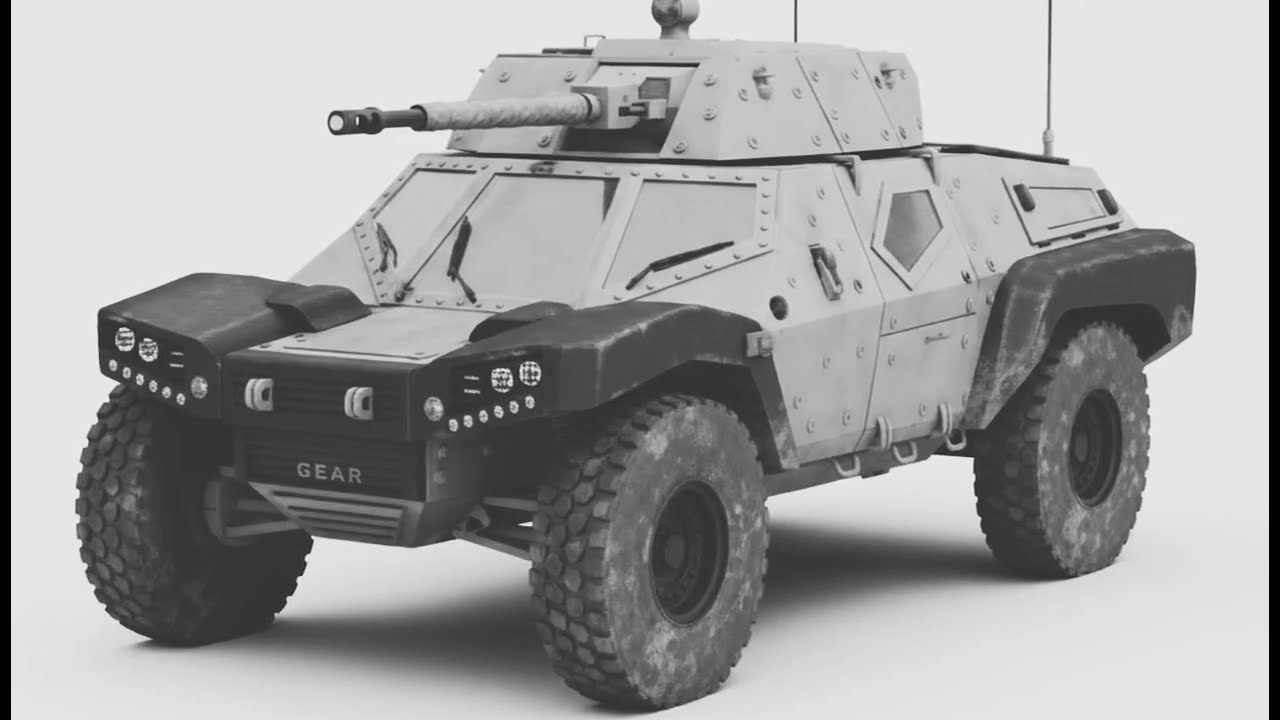
It was a pitch-perfect argument. It was also, with hindsight, the high-water mark. Four months later, in October 2012, Renault Trucks Defense bought Panhard outright for 62 and 1/2 million euros. The Crab was now a product inside a much larger company. The momentum began to leak out quietly. Panhard’s independent sales team was absorbed.
The French army still did not commit. The VBAE program was delayed, then frozen, then delayed again. The Crab returned to Eurosatory in 2014, this time carrying a Cockerill 30 mm turret loaded with the same ammunition used by the Apache attack helicopter. The marketing brochure promised first deliveries in 2018. The addressable market, Panhard still insisted, ran into several thousand vehicles, replacing aging AML, Cascavel, Scorpion, and V150 fleets across Africa, the Middle East, and Asia.
Every single one of those numbers was wishful thinking. No African nation placed an order. No Gulf state ordered one. No Asian army signed a contract. The only organization that ever took delivery of anything remotely Crab-shaped was a Russian video game studio, which added the vehicle to its online armored combat title in 2017.
That was the closest the Crab ever came to operational service, a free-to-play game. In June 2018, Renault Trucks Defense, the French truck specialist ACMAT, and Panhard were fused into a single new brand called Arquus from the Latin words meaning war horse. Panhard, the company, ceased to exist after 131 years.
A name that had built the AMD 178 in the Second World War, the heavy EBR armored car in the 1950s, the iconic AML that served in more than 40 armies, and the VBL that hunted across three continents, was quietly retired. The Crab prototype was driven one final time in the Arquus factory museum. The wheels came to a stop.
The solar panels kept trickling electricity into the batteries of a vehicle that would never move under its own power again. A Ukrainian 30 mm cannon was bolted to the roof as a display piece, giving the preserved demonstrator one last cosmetic upgrade that nobody would ever fire. In 2019, Arquus unveiled the Scarabée, the beetle, lighter than the Crab, hybrid electric drive, center driver layout inherited straight from its older cousin, four-wheel steering, parallel crab walk still possible.
Arquus called the Scarabée the worthy successor to the Crab and the VBL. In truth, the Scarabée was a clean sheet design drawn up by a team of only six engineers in late 2017. It inherited the philosophy. It did not inherit the hardware. The Crab was finished. In December 2023, the French and Belgian governments finally signed the real VBAE contract, 15 million euros and Arquus and Nexter consortium, not the Crab, not even clearly the Scarabée, a new still unfinished vehicle.
The program the Crab had been engineered to win had finally begun. A full decade too late. On paper, the Crab outclassed almost every rival in its weight category. The German Fennek, built by Artec and in service with Germany and the Netherlands since 2003, was of comparable size, but it could not crab walk, and it could not lift its belly 450 mm off the ground on adjustable suspension.
The Turkish Otokar Cobra, the class best seller exported to more than 30 countries, was cheaper, cruder, and far less capable. The Italian Centauro was a different category entirely, a six-wheeled tank destroyer weighing three times as much. The American M1117 Guardian was slower, older, and protection limited.
Nothing drove like the Crab. Nothing turned like the Crab. Nothing looked like the Crab. So, why did nothing replace its predecessor? Three reasons. First, timing. The French Army did not fund the VBAE program on any schedule Panhard could survive. By the time Paris was ready to sign, Panhard had been absorbed twice. Second, the armor ceiling.
STANAG level four, 14 and 1/2 mm armor-piercing, was acceptable in 2012 and inadequate by 2020, when 25 and 30 mm threats were proliferating across battlefields from Ukraine to Yemen. Third, the missing mast sensor. Modern reconnaissance is about seeing first, not fighting first. The Fennek had a mast-mounted optic suite integrated from the beginning.
The Crab offered a mast sensor only as an expensive optional upgrade. Optional reconnaissance on a reconnaissance vehicle is a warning sign to any serious buyer. The DNA lived on. The Scarabee inherited the philosophy. The Arquus Drealer, unveiled at Eurosatory 2024, inherited the ambition.
The Drealer Marseus, shown at Tektite in 2025, carrying MBDA Akeron anti-tank missiles, inherited the aggression. And in July 2024, Arquus itself was sold by the Volvo Group to the Belgian firm John Cockerill Defense for roughly 300 million euros. The French and Belgian states each took a 10% stake. The Crab’s intellectual property now sits with a Belgian firm that by coincidence makes the very turrets the prototype originally carried.
A French invention, a French doctrine, a French engineering triumph, owned in Serain, Belgium. June 11th, 2012. The demonstration pad at Eurosatory. The Crab Crab walked across the dirt for the first time in public. Cameras flashed. Generals nodded. Journalists declared that the future of armored reconnaissance had arrived.
It was under protected for a 2020s battlefield. It lacked an integrated mast sensor in base configuration. It arrived exactly as its maker was being swallowed by a bigger group. It was pitched for a French contract that would not be signed for another 11 years. By the time that contract was finally signed, Panhard was a memory and the Crab was a museum piece.
And yet the machine worked. Every claim Panhard made about the engineering, about the suspension, the speed, the steering, the network crew stations, the sideways walk was accurate. The vehicle moved, the turret tracked, the concept held together under every test Panhard could put it through. The Crab was not flawed.
The Crab was not unlucky. The Crab was right on the engineering and wrong on the calendar. In defense procurement, genius without timing is just a very expensive museum exhibit. That is the lesson of the Panhard Crab.